The Tale of Li Wa (Li Wa zhuan) · Companion Guide
李娃传
长安平康里一道门缝里探出的双鬟少女,让世家公子勒马忘返;雪夜破窑一声哀号,又让倡女以情覆利、督读成名——门第悬绝,终以剑门一拜尽消。
Opening: A Girl Peers Through a Half-Open Door
He was riding back from the Eastern Market, turning his horse into Mingke Lane, when he glanced up — a girl with her hair done in two loops was peering out through a crack in a door. She poked her head out, then pulled it back in. That single glance was enough: he reined in his horse and forgot where he was going. He was the young man of Xingyang, son of the governor of Changzhou, come a thousand miles to sit the examinations in the capital. She was Li Wa, a courtesan of the northern lane in Pingkang ward, twenty years old, said to be a beauty without rival in her generation. This is the first image in The Tale of Li Wa: two lives that had no business crossing, stitched together by a crack in a door.
Every reversal that follows in the book — silk and rags, warm lamplight and cold snow — starts its accounting from this one upward glance.
What Kind of Book Is This
The author, Bai Xingjian, courtesy name Zhitui, was the younger brother of Bai Juyi, famous for his lines about wild grass on the ancient plain. He lived through the mid-Tang, roughly 776 to 826. The Tale of Li Wa was written around the eleventh year of the Zhenyuan reign, a classical-language short story of just over five thousand characters, and one of the most accomplished pieces in the whole Tang chuanqi tradition.
In the history of Chinese narrative fiction it is remembered for one reason above all: it is the ancestor of every later story about a courtesan rescuing a scholar from ruin so he can take first place in the examinations. The Ming dynasty play The Embroidered Jacket, the Yuan zaju about Li Yaxian's wine party at Qujiang Pool, and the regional-opera retellings of the Qujiang story that followed all descend from this one. Grouped with Yuan Zhen's The Story of Yingying and Jiang Fang's The Story of Huo Xiaoyu, it stands as one of the three great love stories of mid-Tang chuanqi. Among classical-language short stories, none renders the highs and lows of ordinary street life with more urgency than The Tale of Li Wa.
Characters and World
Four people carry the story. The young man of Xingyang, son of the governor of Changzhou, had made a name among his peers for his essays before he was even twenty, and held his own worth so high that passing the jinshi examination looked to him like bending down to pick something off the ground. Li Wa, a courtesan of the Li household on Mingke Lane in Pingkang ward, had a beauty that stopped people in the street, but she knew exactly where she stood — a world away from a son of the great clans. The madam, Li Wa's adoptive mother, old and bent, spoke in one register: nothing short of a fortune would move her. And the lord of Xingyang, head of the Xingyang clan and a man of great standing in his day, loved his son so fiercely that the love turned to cruelty, enough to have him whipped half to death in the open street.
The story is staged in Chang'an during the Tianbao era — the Eastern Market, Pingkang ward, Mingke Lane, Buzheng ward, Tianmen Street, the eastern gate of Anyi ward: real wards and streets that can still be traced on a map of the Tang capital. Lu Xun's verdict on Bai Xingjian was that his prose was already accomplished, and that the Li Wa story was both true to feeling and gripping enough to hold an audience. In five thousand characters the tale packs a complete double arc, running from Pingkang ward to Tianmen Street, from a snowbound night by a broken kiln to a reunion at Jianmen Pass. The lacquered carriages of Chang'an and that snowbound kiln become the two poles between which this man and woman's fortunes swing.
The Plot: From a Door Apart to Jianmen Pass
Once he reached the capital, an old friend set him straight: the door on Mingke Lane belonged to no ordinary household but to one of the pleasure houses that cost a fortune to enter. He heard this, straightened his robes, and called on the house with all the bearing of a young nobleman. The madam welcomed him into the hall, and Li Wa came out to meet him. From that day the two of them were, in the story's own words, deeply taken with each other. Within the year he had moved out of his lodgings and was spending money on her as fast as it came.
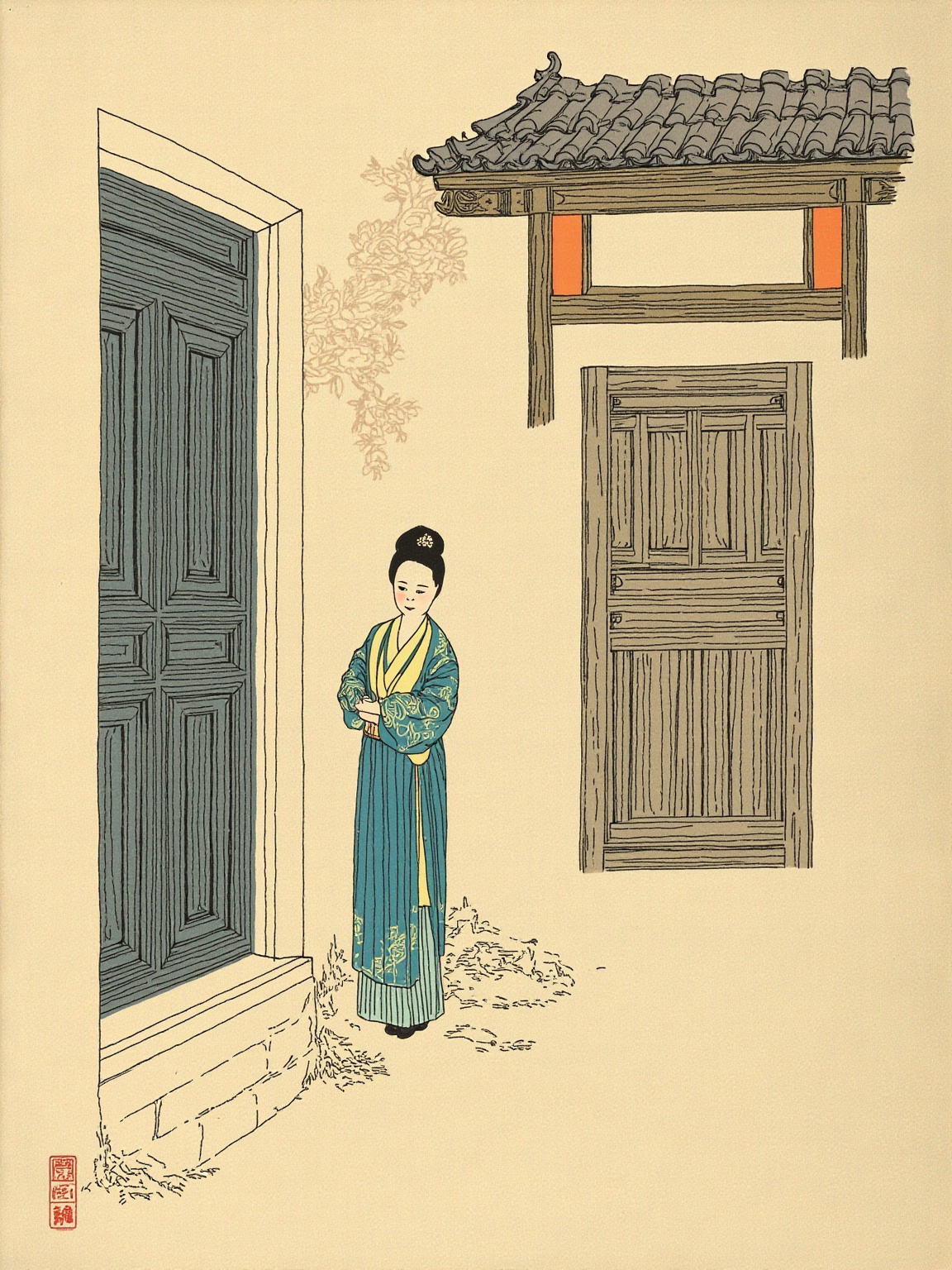
He reined in his horse and forgot the road ahead; from a single glance through a half-closed door, a thousand li of fortune turned on its hinge.
适肆中之扉,向而盼之,见一女子垂双鬟,凭一扇半掩的门扉、半个露出的脸——生遂停骖久之,踟蹰不能去。
金句 · 鸣珂曲初遇 · 凭扉凝望
The money burned faster than the candles of Chang'an. A year in, lodging in Buzheng ward, his pockets were empty. The madam and Li Wa worked it out between them, and in a single night made him and his belongings disappear from the house. Starving and sick, down to his last breath, he was taken in by one of the funeral parlors that handled the city's burials, and his voice was good enough that he learned to sing dirges — soon the finest dirge-singer at the eastern parlor. This is the first fall: from a great clan's son to a man who sings for the dead.
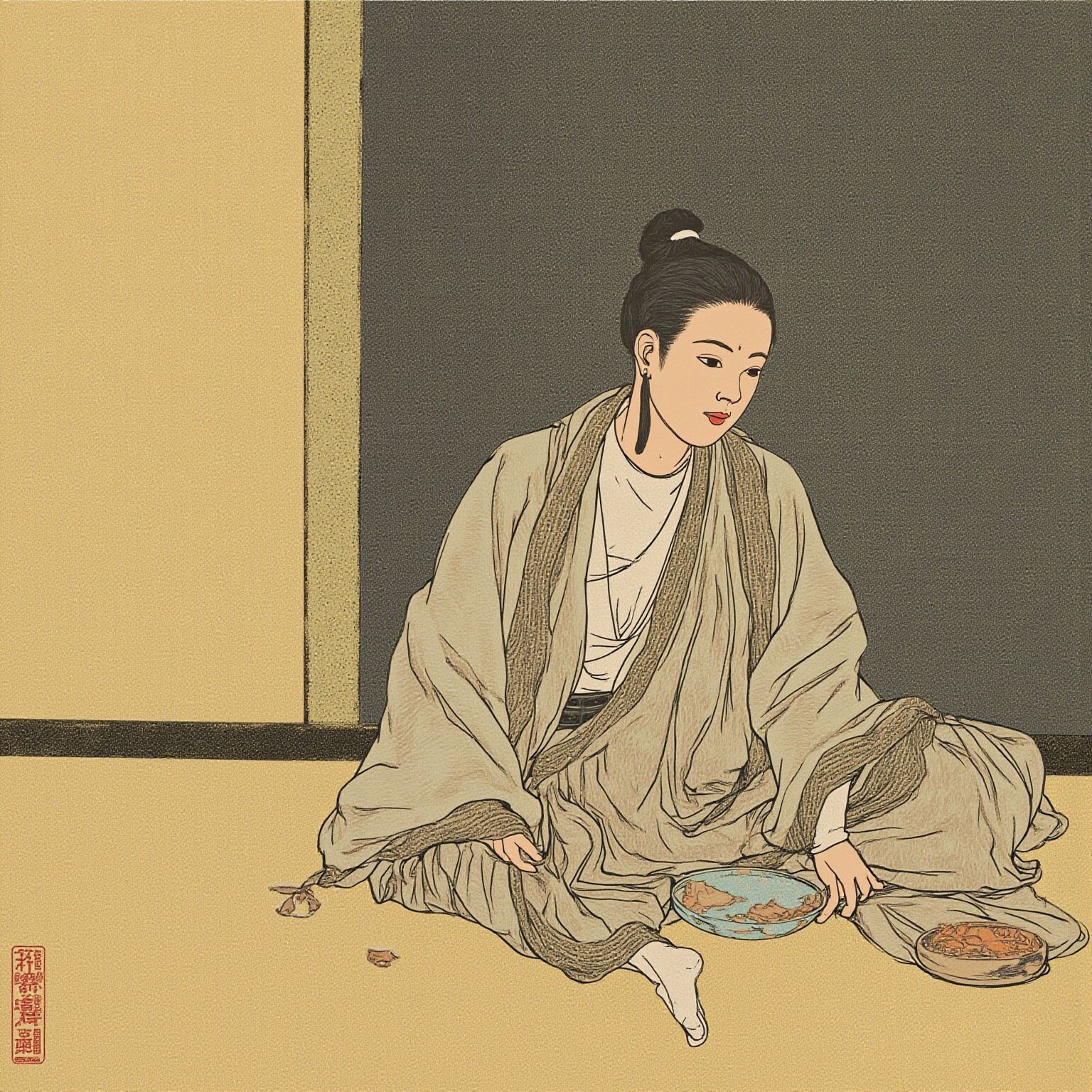
When the candles of Pingkang burned out, the young lord woke in a strange street; his gold spent, his name discarded, he learned the new trade of mourning-songs for the dead.
岁余,资斧既竭;姥与娃设计、徙于别所——生遂由贵介公子,转而为凶肆之挽歌郎矣。
金句 · 资财耗尽 · 沦为挽歌郎
Two years later, the eastern and western funeral parlors on Tianmen Street held a dirge-singing contest, and the crowd packed the street solid. A new voice from the eastern parlor rose above everyone else's, and the onlookers cheered as one — that voice belonged to the young man of Xingyang. In the crowd, a middle-aged man in plain clothes heard the familiar sound and froze: it was his own son. He recognized his beloved child in the open street, raged at the disgrace brought on the family name, and had him whipped until he lost consciousness, then left him by the roadside. This was his own father. In that one stroke, father, clan, examinations, and family honor all turn into the weapon that nearly kills him. His colleagues from the funeral parlor revived him, but his body was too ravaged with sores to keep on, and he was turned out again, left to beg on the streets of Chang'an.
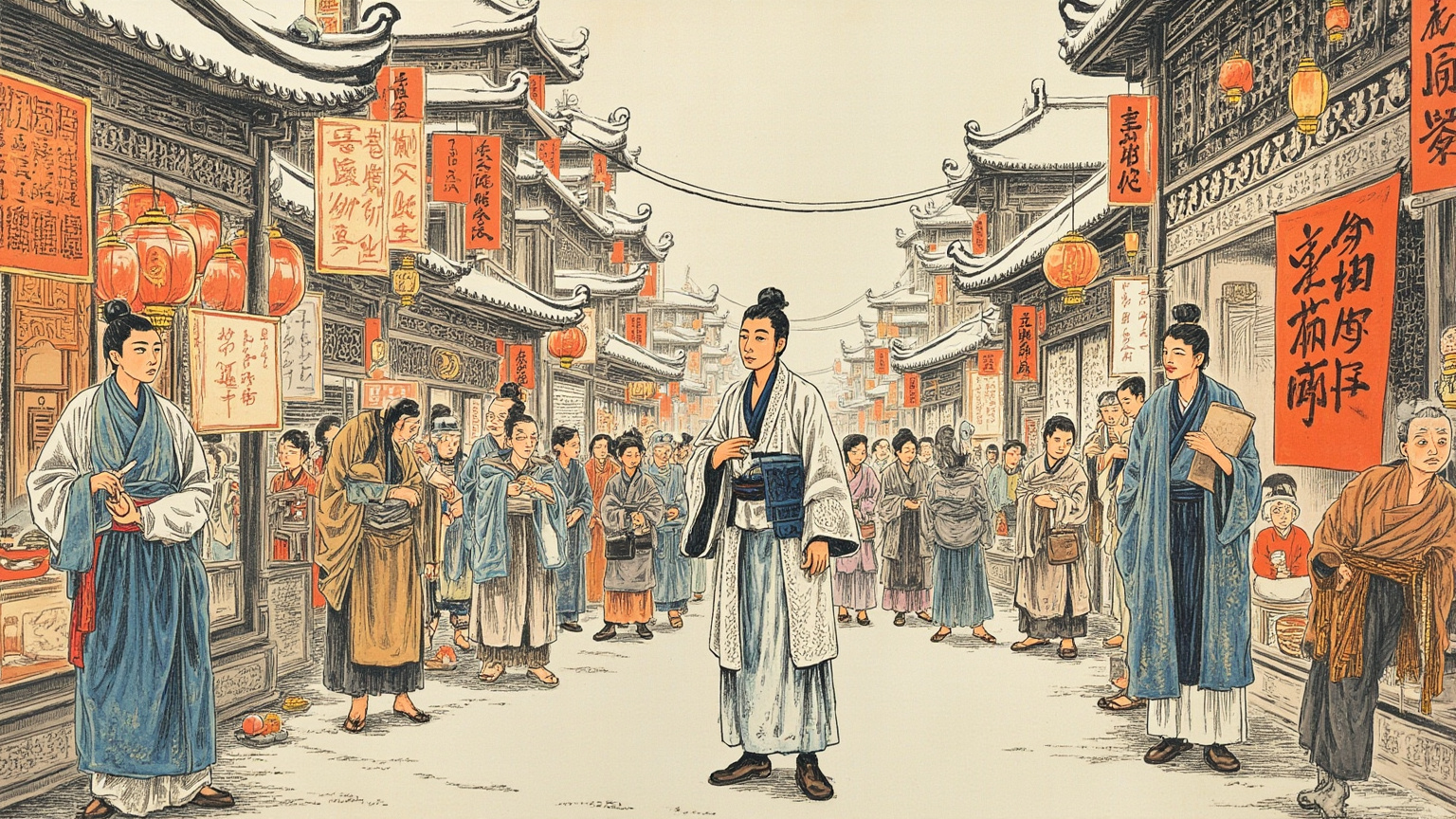
The father, in plain clothes among the crowd, heard that voice and his face changed — a single switch of willow, and his own son lay for dead upon the public road.
父见其声、识其人——乃奋而前,持马鞭击之,数至于毙而后弃之道周。
金句 · 天门街挽歌赛 · 当街鞭至几死
Another year passed. On a night of heavy snow during the Tianbao years, wind and snow tore through the area by the eastern gate of Anyi ward, and a beggar was moaning against a wall, wasted to nothing, covered in sores. Li Wa happened to pass by, heard the sound, and recognized him. By then she had had her own change of heart: she had bought back her freedom from the madam and taken a place of her own outside the pleasure house, living alone with no status and no one to shield her. She took the young man of Xingyang in, nursed him back to health with her own hands for a full year, and once he could stand again, bought him books and drove him to study. This is the warmest stretch in the whole story, and the truest to feeling — a courtesan pulling a nobleman's son out of the mud.
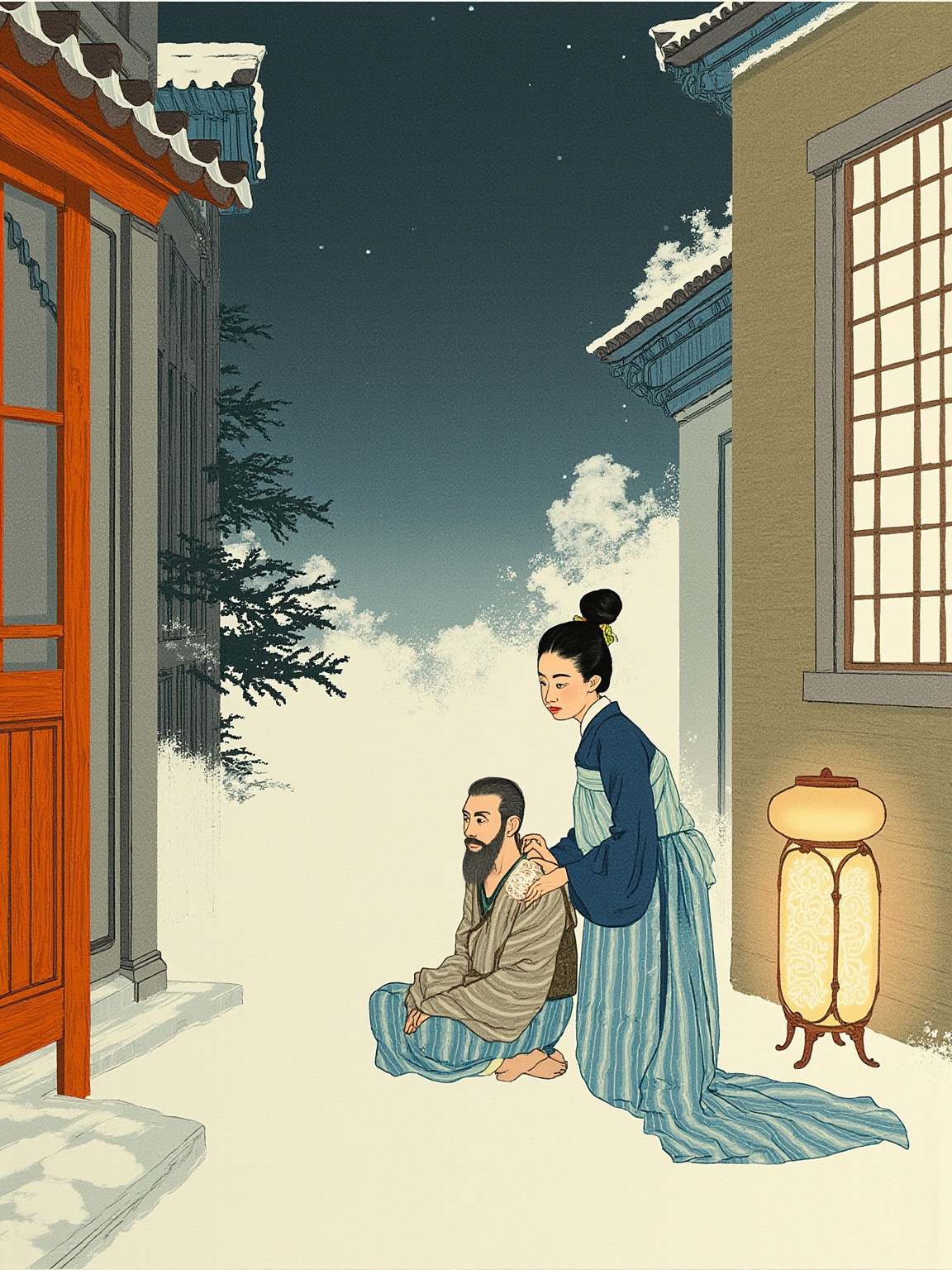
On a night of great snow at Anyi's eastern gate, a voice howled from beneath the wall — so wasted, so eaten by sores, it was scarcely a man at all; and the woman recognized him.
岁大雪,生于安邑东门冒雪行乞,枯瘠疥癞、殆非人状——娃闻其声,遽启帘而认之。
金句 · 安邑东门雪夜 · 破窑重逢
He took up his books again and passed one examination after another — first the jinshi degree, then a special decree examination for candid remonstrance, and was appointed an adjutant in the Chengdu government. From dirge-singer to a fifth-rank official, the distance was measured in years of lamp oil burned while she sat up with him.
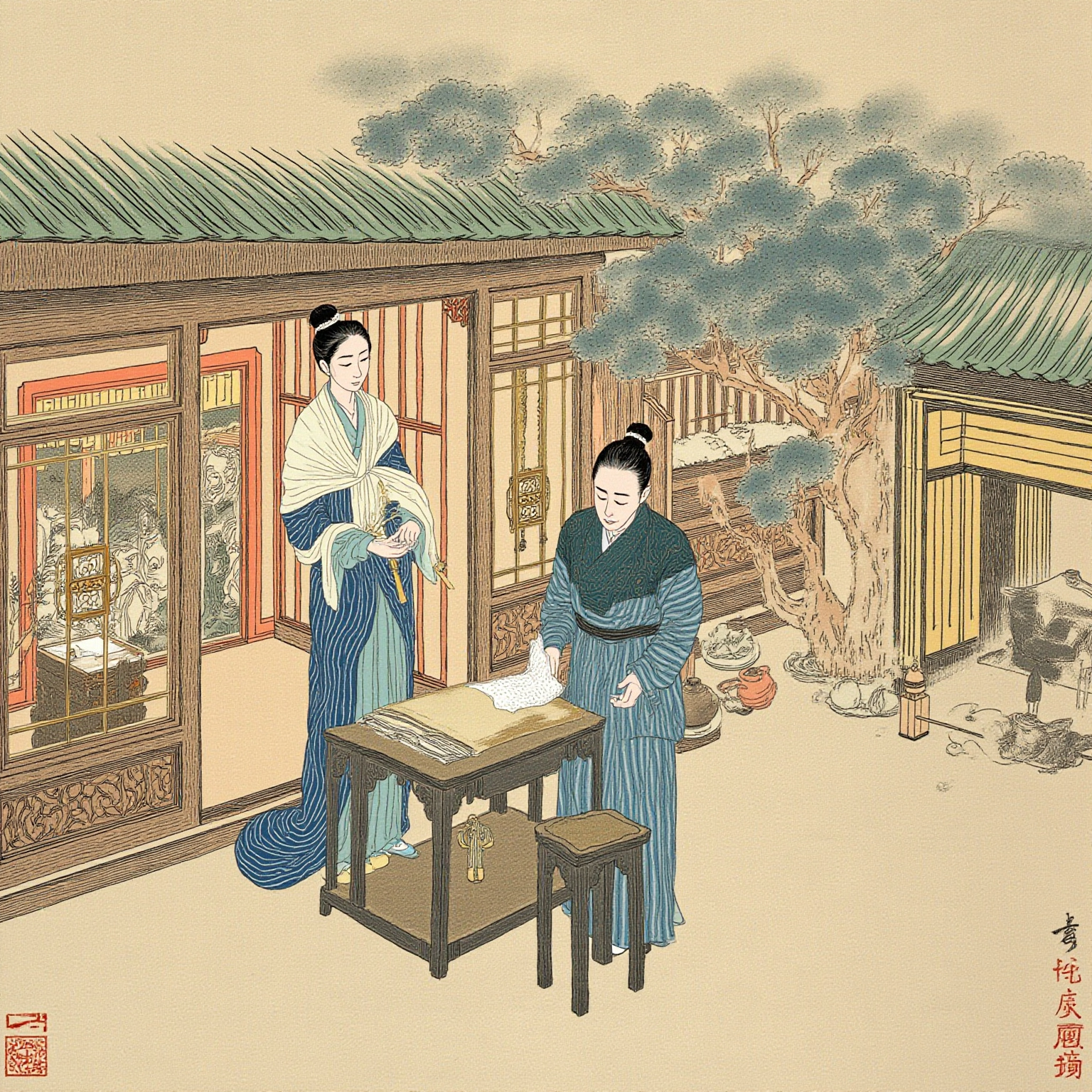
She bought books with her own silver, trimmed the lamp, and watched him read — and year by year the rake who sang dirges was reforged into a ranked official of the fifth grade.
娃自执勤苦,购书命读,膏火荧荧、训督有方——生自此勤于学,连中高第,授成都府参军。
金句 · 赎身别居 · 陪读成名
On the morning he was to leave for his post, Li Wa suddenly knelt before him and said: my birth does not match your family's standing; you should marry a daughter of one of the great clans and carry on your line properly. She asked to leave him. He begged her to stay and could not change her mind, and in the end she insisted on seeing him off herself along the road into Shu, all the way to Jianmen Pass.
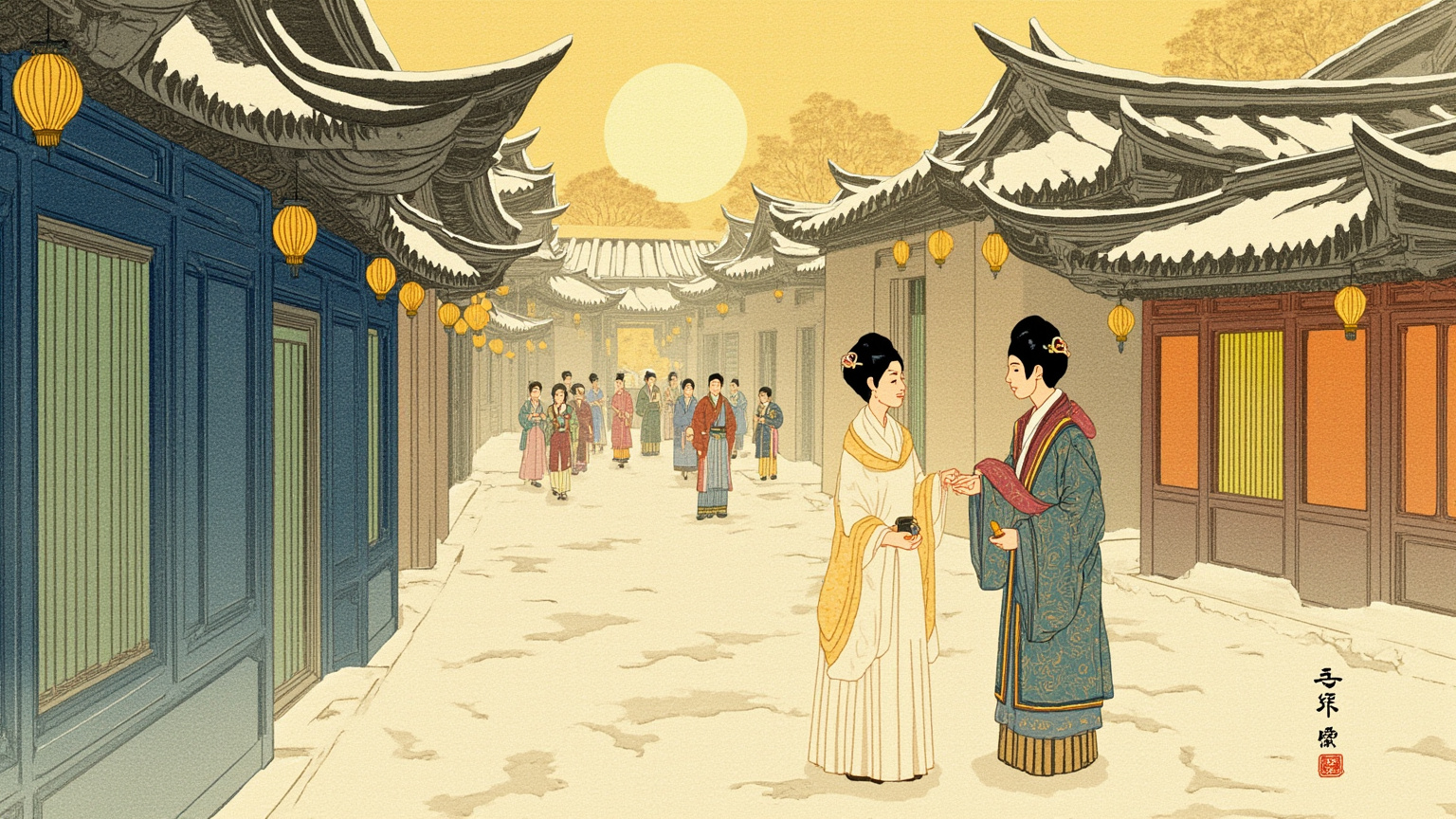
At Jianmen, his father was waiting, by now promoted to governor of Chengdu. Father and son were reunited. The same man who had once whipped his son half to death in the street was moved by Li Wa's devotion, and prepared the betrothal gifts himself to make her a proper bride with full ceremony. Father and son were reconciled, Li Wa became the young man's lawful wife, and was later given the title Lady of Qian.
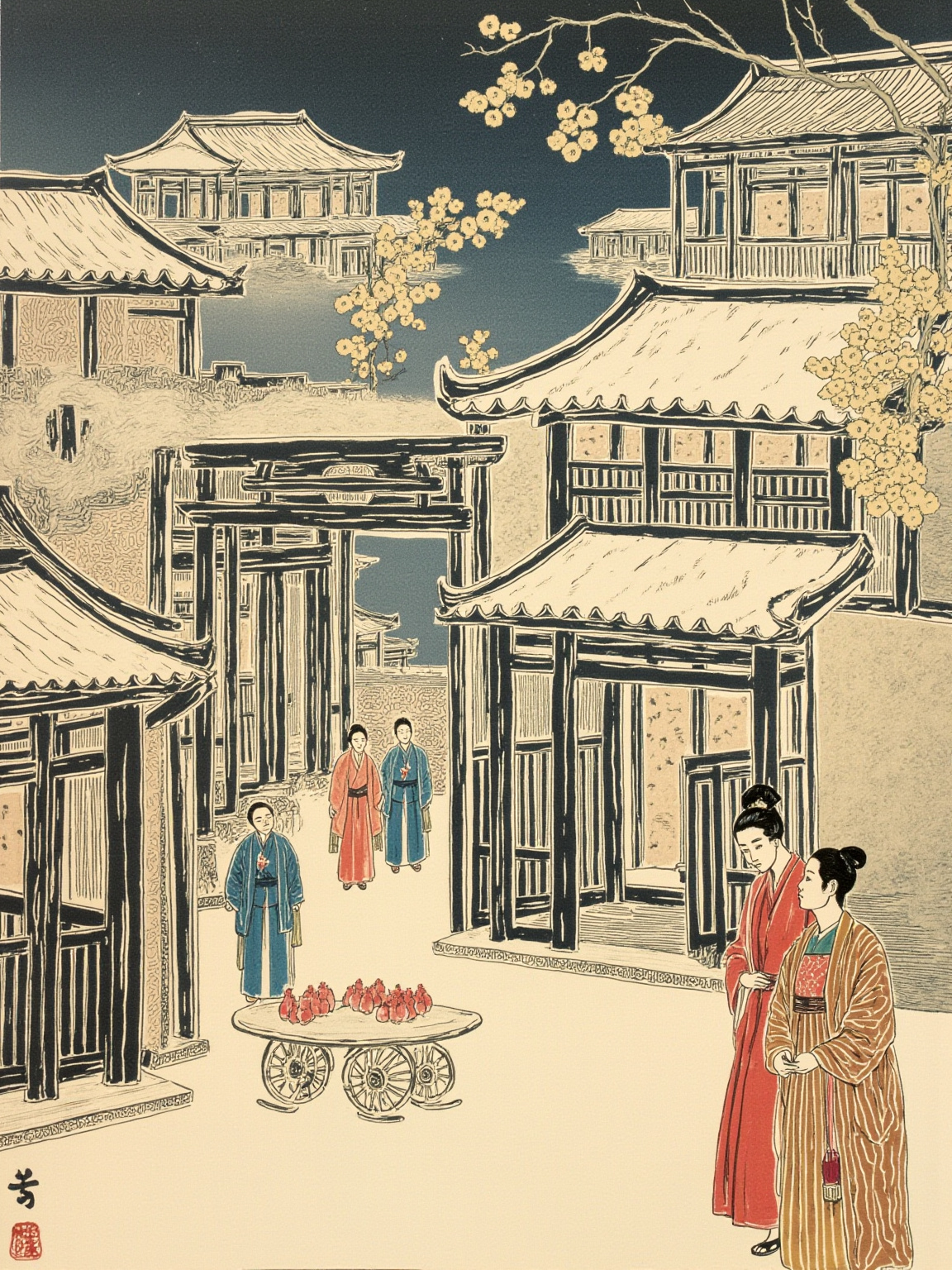
At the Jade Gate pass the old lord knelt and bowed to the woman his son had loved — the same hand that once struck the boy now lifted her, in proper rites, as daughter of the house.
既至剑门,荥阳公已为成都尹——感娃之义,具六礼以迎之,父子如初、夫妻如故。
金句 · 剑门重逢 · 父迎为妇
Themes and Craft
Lu Xun summed the story up: Bai Xingjian's prose was already accomplished, and the Li Wa story was true to feeling and gripping enough to hold you, which is why it lingers in the mind. True to feeling, so you believe it; gripping, so you cannot put it down. What the story is really laying bare is the absurdity of the clan system: a father can whip his own son half to death in the street for disgracing the family name, and years later the same father can personally arrange the betrothal gifts to welcome the very courtesan he once considered a disgrace into the family as a proper wife. Set those two moments side by side and the irony goes down to the bone.
Li Wa's arc is the thing worth turning over the longest. Living in Pingkang ward and earning her keep on her looks and skill, she was on the side of profit when she went along with the madam's scheme. Only when she heard her old lover moaning in the snow did feeling finally win out over profit. But the story's real skill is that it does not stop there: she is clear-eyed to the point of ruthlessness, and at the very moment everything comes together, she is the one who offers to step aside and hand her place back to the rules of clan and rank. The title of Lady of Qian at the end is something her own clear-sightedness earned her, not a gift that fell from the sky. She is a rare thing among mid-Tang short fiction: a female character who does not turn foolish the moment the author gives her one more line.
The sharpest stroke in the whole story is not the whip, not the snow. It is the father's turn from beating his son half to death to personally welcoming that same son's wife. The knife aimed at the clan system is hidden inside the happy ending.
Structurally, Bai Xingjian's real skill is the double arc: the young man's line runs from silk to dirge-singer to beggar to official; Li Wa's runs from the madam's pawn to a woman living alone to a lawful wife; the father's runs from a rage that nearly kills his son to gifts prepared with his own hands. Three lives, three lines, cut back and forth between the wards of Chang'an and the mountain passes on the road to Shu. The two faces of Chang'an — lacquered carriages and a snowbound broken kiln — become the field where this couple's fortunes play out. Among Tang chuanqi, no other story renders the highs and lows of ordinary life so true to feeling.
You Already Know the Ending, So Why Read the Original
What this essay gives you is only a map. The original is the actual snow falling on Chang'an in the Tianbao years. Read a plot summary and you will know who lives, who dies, who rises in rank, but you will not know how Bai Xingjian, in five thousand characters, turns a crack in a door on Mingke Lane, a moan by the eastern gate of Anyi ward, and a bow at Jianmen Pass into a story that will not let you breathe out. Every reversal in these characters' lives is buried in specific objects and specific light, and none of that can be spoiled by knowing the plot.
And there's another reason: on the Chinese shelf, The Tale of Li Wa has long been overshadowed by its own descendants. The Embroidered Jacket and Romance of the Western Chamber tell versions of the same kind of story, but the source lies one layer down, in classical prose, in the atmosphere of the mid-Tang, in the real ward names of Chang'an. Go back to this text and you see it: every one of the later hundred stagings of wine and song at Qujiang Pool was looking out through this same crack in the door.
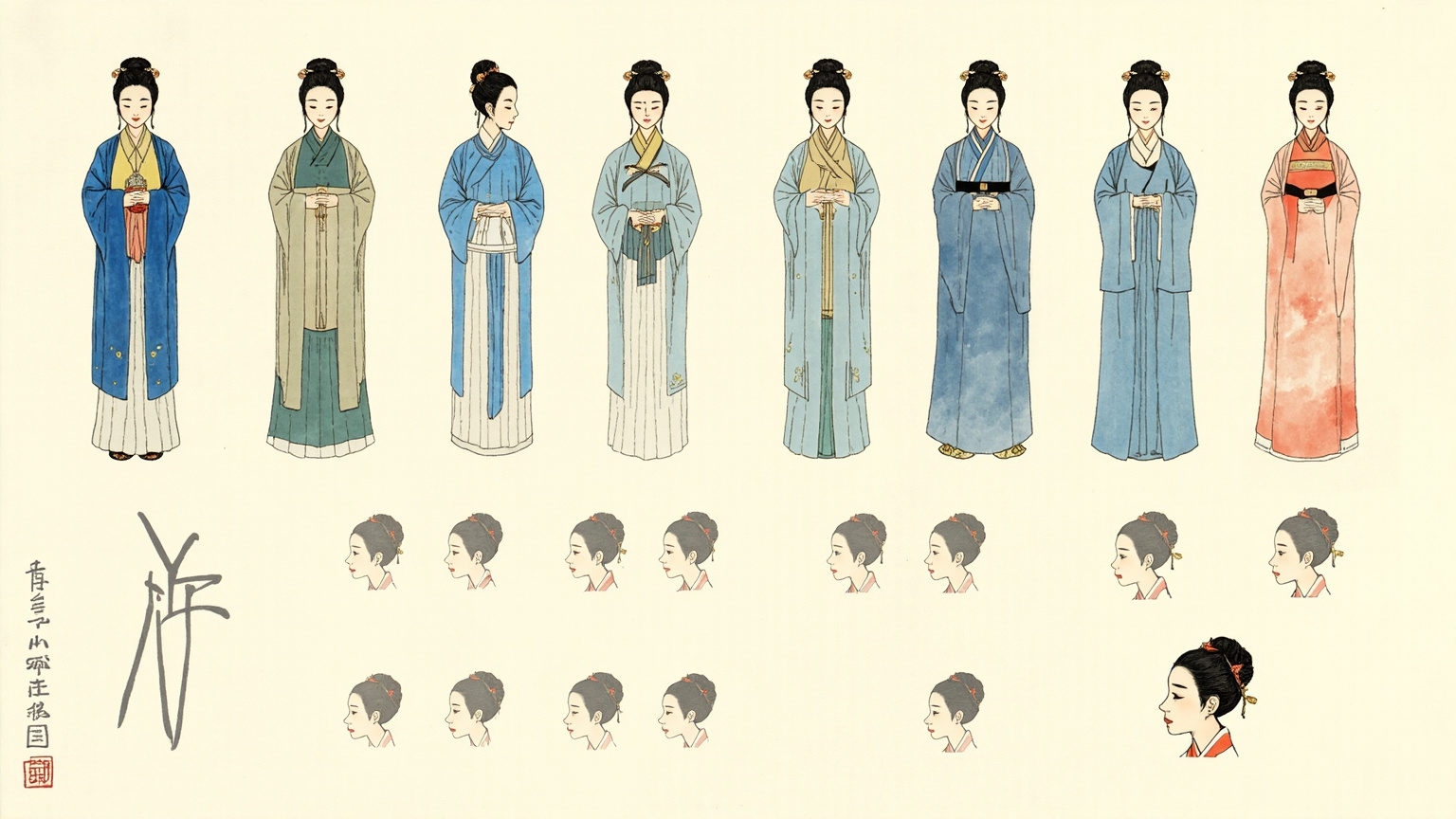
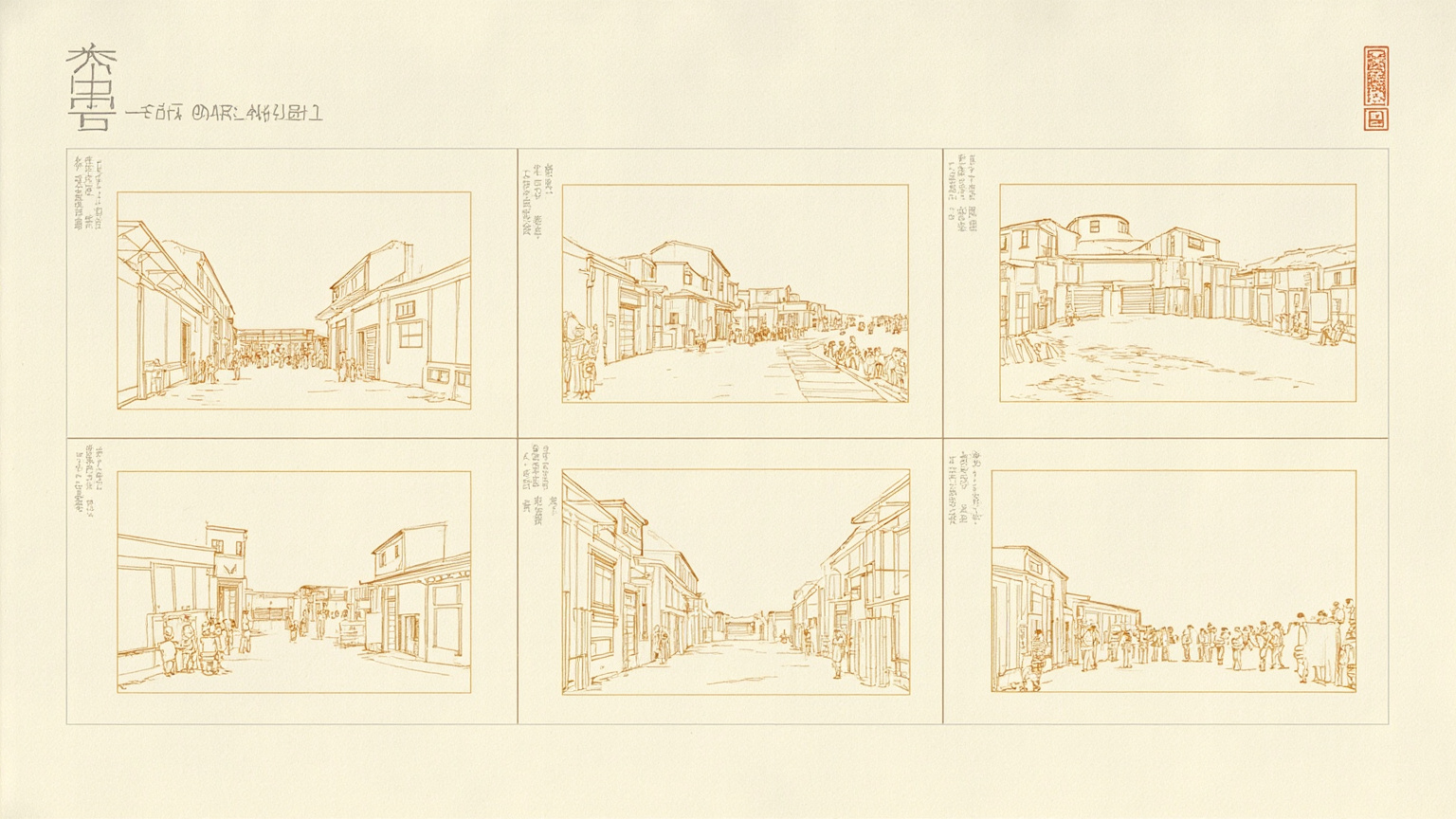
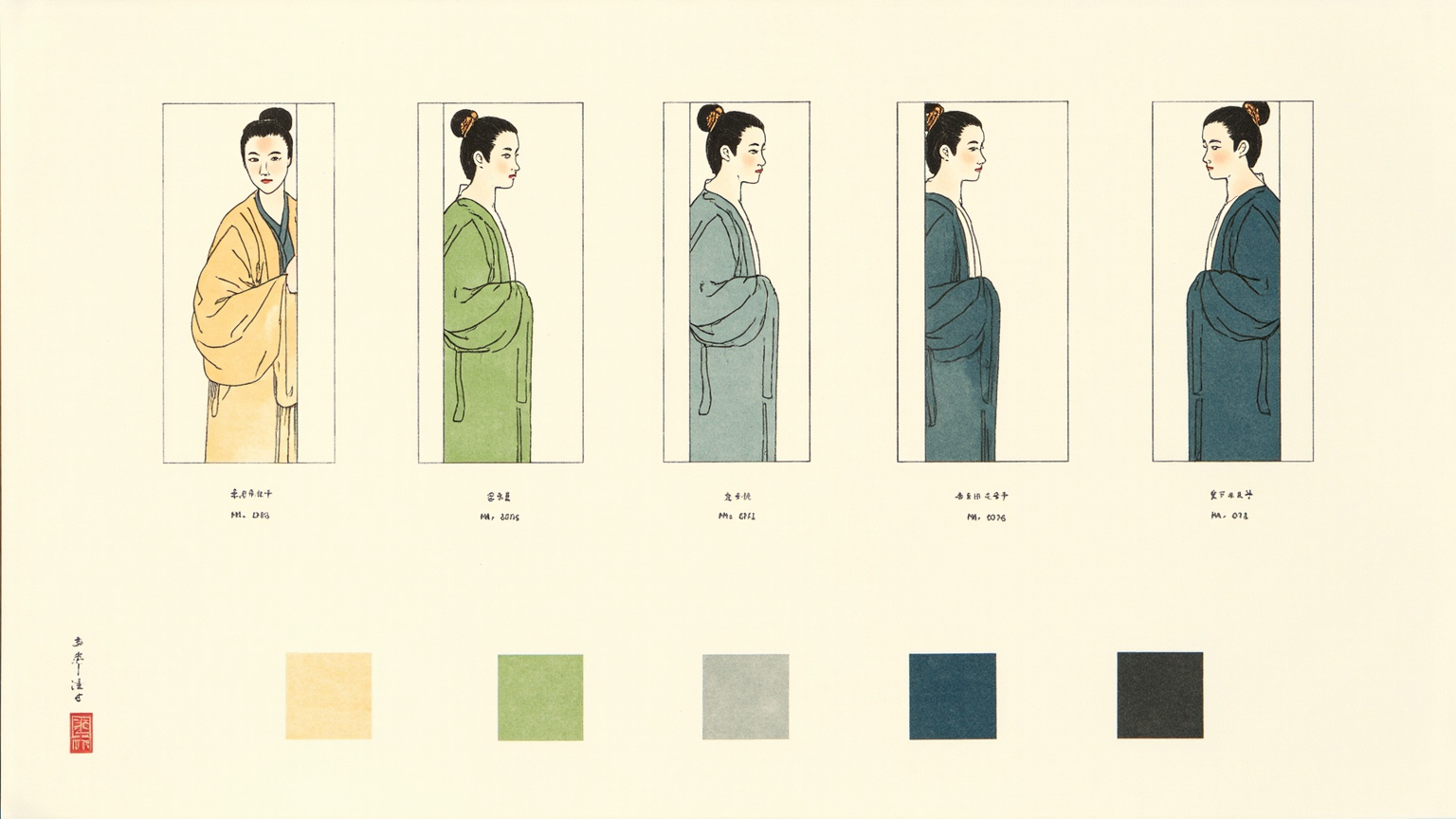
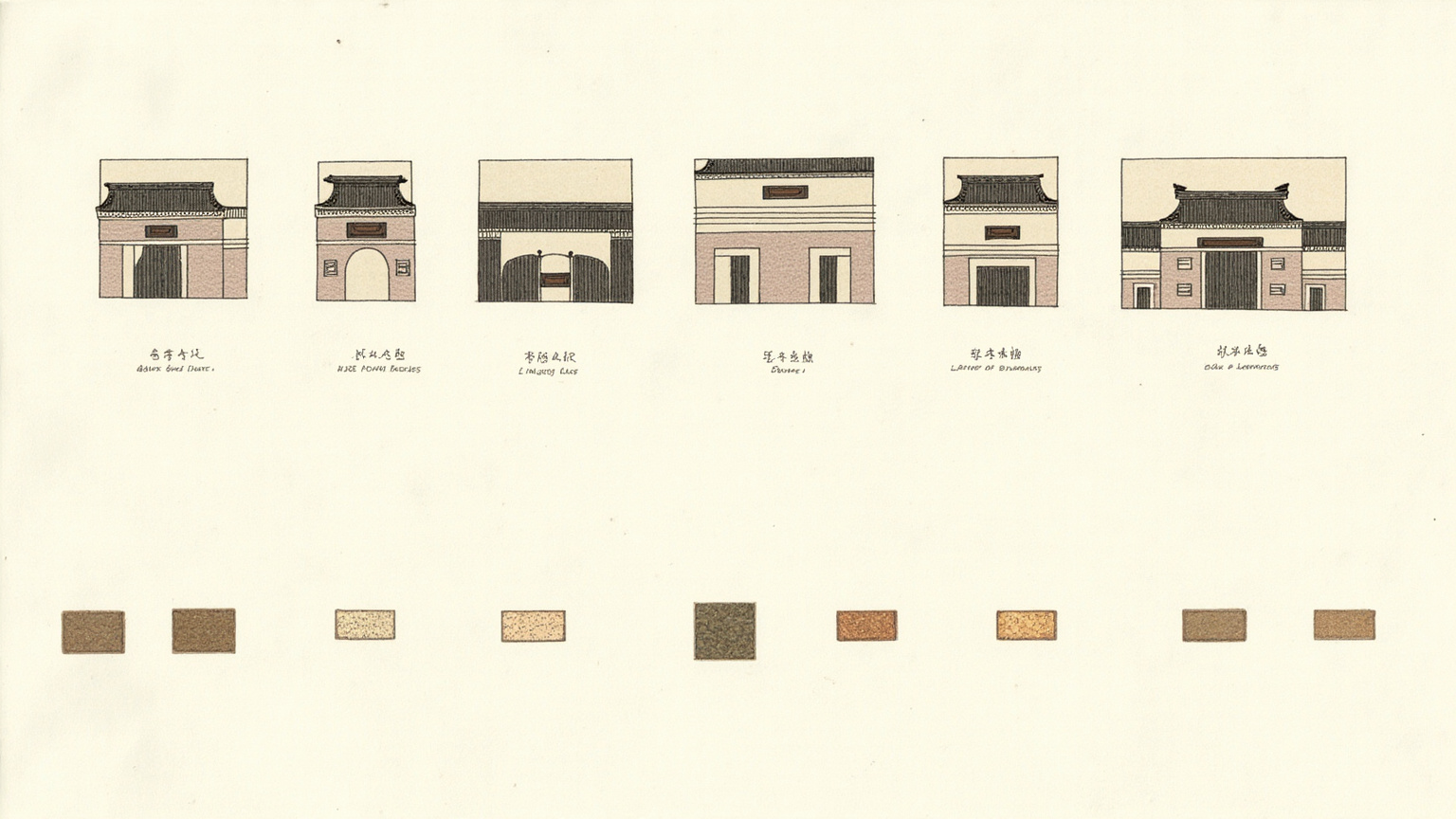
Art Direction4 plates
Before the guide was written, this book got a visual foundation — every illustration you just read grew out of it.