The Vimalakirti Sutra (Vimalakīrtinirdeśa Sūtra) · Companion Guide
维摩诘所说经
一个在家居士装病,文殊揭帘入室辩难十四品,至终一默——方丈之室竟容三万二千狮子座。
The Opening: A Man Who Feigns Illness
A sickbed, and on it a gaunt old layman, fanning himself with a whisk, eyes half closed. The Buddha, holding court in the royal palace, sends his ten great disciples one after another to look in on him — and not one of them will go near the door. Each recalls being cornered by this man before, and each begs off: not me, you go. Ten of the Buddha's greatest disciples, and not one of them dares visit a sick man.
This is not a ghost story. It is the opening of the Vimalakirti Sutra. The old man is a householder in the city of Vaishali — not a monk, never ordained, never taken the precepts, just a layman with a family, a business, money, and learning. But the moment he opens his mouth, even the sharpest minds in the Buddha's own circle take a step back.
What This Book Is
The Vimalakirti Sutra is one of the strangest texts to come out of early Mahayana Buddhism. The Sanskrit original was compiled around the second century CE; Kumarajiva translated it into Chinese in Chang'an in 406, and his version is still the one most Chinese readers know — the same version behind the Dunhuang murals, Gu Kaizhi's paintings, and Wang Wei's own name. It is not the kind of sutra where the Buddha convenes a mountaintop assembly. The stage here is a sickroom, and the action is a bedridden man arguing an entire hall of bodhisattvas into silence. The word that runs through the whole thing is inconceivable — a room ten feet square that holds thirty-two thousand thrones.
The Cast and the World
Vimalakirti, the central figure, is one of the leading men of Vaishali — powerful, learned, unbeatable in debate. His illness is a ruse, staged to draw the Buddha's people to his bedside so he can use it as the occasion to lay out the core of Mahayana teaching. Manjushri is the bodhisattva the Buddha finally sends — first in wisdom among his followers, and the only one willing to lift the curtain and walk in. Shariputra, foremost of the ten great disciples, gets turned into a woman on the spot by a goddess in this sutra — not as a prank, but to break his habit of drawing lines between things. The Buddha himself never speaks on stage. He stays in the palace, giving his quiet consent, setting events in motion, and confirming what happens at the end.
The whole sutra plays out in just three settings: an inner chamber of the royal palace, Vimalakirti's own ten-foot-square room, and the heavens above. Two distant Buddha-lands make brief appearances — one that lives on fragrance alone, another that lends its thrones to the little room — but they are set dressing. The real leads are the sickbed, the whisk, and the room itself. The Chinese word for an abbot's quarters, fangzhang, literally "ten feet square," comes straight from this room.
All Ten Disciples Say No
Word reaches the Buddha that Vimalakirti is ill, and he looks for someone to send. Shariputra is asked first, and begs off — years earlier, one word from Vimalakirti had left him speechless mid-sermon. Maudgalyayana is next, and he has an old wound of his own to avoid reopening. Down the line it goes, ten disciples, all with the same excuse: the man is too formidable, and going would be asking for humiliation. The last name called is Manjushri. Manjushri does not refuse — he is the only one in the whole sutra willing to walk through that door.
The scene is written with real bite. It is not a sermon but an ensemble piece: ten accomplished disciples, and every one of them has already been talked into silence by a layman. Buddhism's sharpest tongues, outmatched by a merchant in plain white clothes. The scene is itself Mahayana's central claim, stated without a word of doctrine: liberation does not live in the robe.
Manjushri Lifts the Curtain
Manjushri arrives in Vaishali at the head of a procession — eight thousand bodhisattvas, five hundred disciples, a hundred thousand more besides. At the door he puts the first question to Vimalakirti: how should a bodhisattva regard living beings? From the bed, Vimalakirti answers: the way you'd regard figures conjured by an illusionist — see that they're conjured, and you won't be fooled. The exchange runs on from there, a dozen rounds of question and answer, working over the core of the bodhisattva path — skillful means, compassion, and holding to no fixed appearance — from every angle.
What makes the writing interesting is the mix — verse, dialogue, parable, and staged drama, all folded together. It reads less like scripture and more like qingtan, the free-flowing debate style of Six Dynasties literati sitting in a circle. That is exactly why this sutra took such deep root among Chinese scholars later on: it reads like the Seven Sages of the Bamboo Grove, not a dharma assembly.
The scene of Manjushri lifting the curtain has been painted again and again — the high Tang mural at Dunhuang Cave 220, Manjushri Inquiring After the Illness, is the best known. Vimalakirti appears as a gaunt invalid leaning against an armrest, the whisk resting across his knee; Manjushri is rendered young, a bodhisattva in flowing celestial robes. The two face each other, and the whole exchange of wits sits in the space between their eyes meeting.
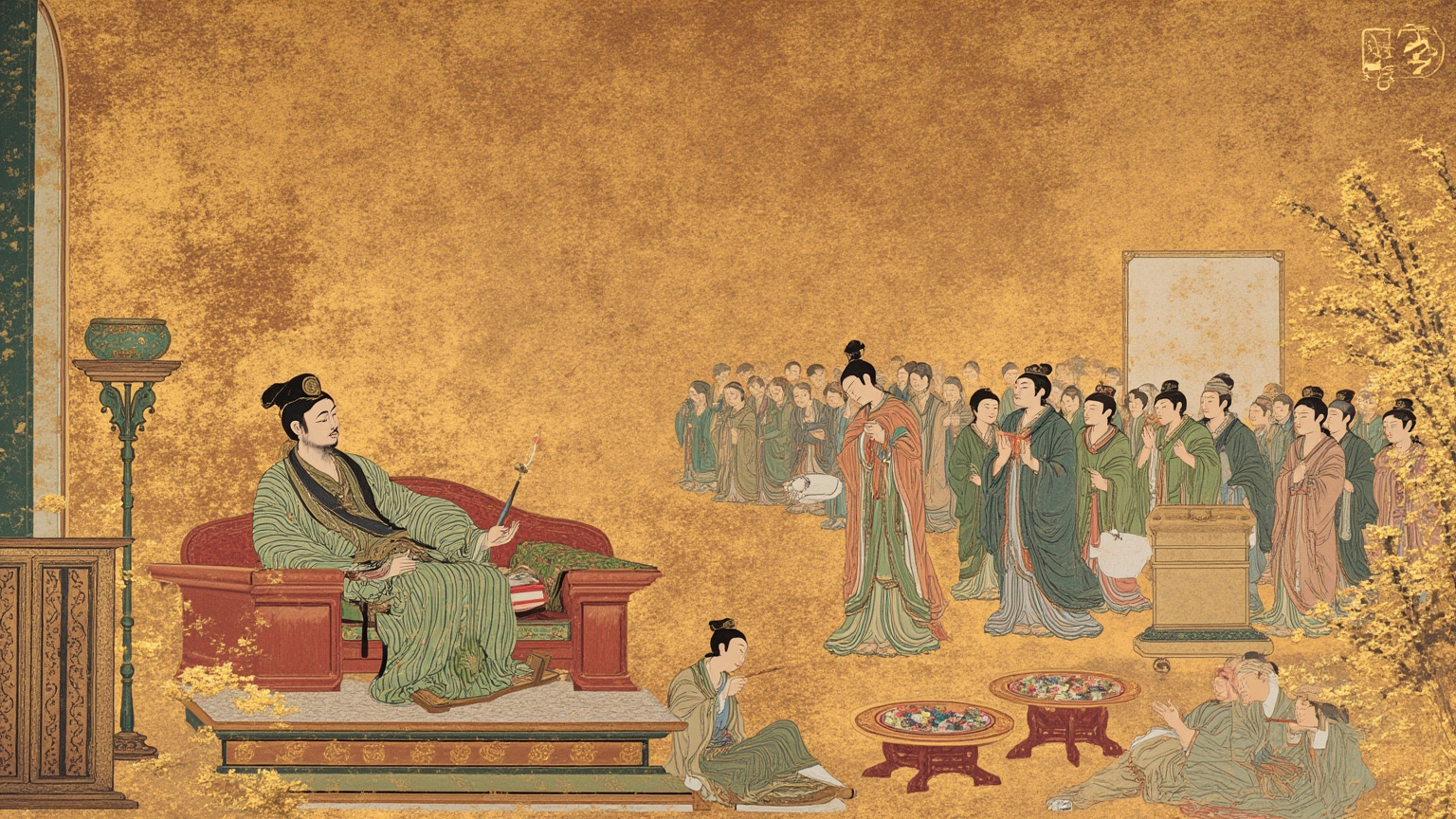
So look upon all beings as you would look upon the reflection of the moon in water, the illusion cast by a conjurer: thus are they to be regarded.
当如幻师观所幻人,如水中月——菩萨观一切众生,应当如是。
金句 · 弟子品 · 维摩示疾
The Goddess Scatters Flowers
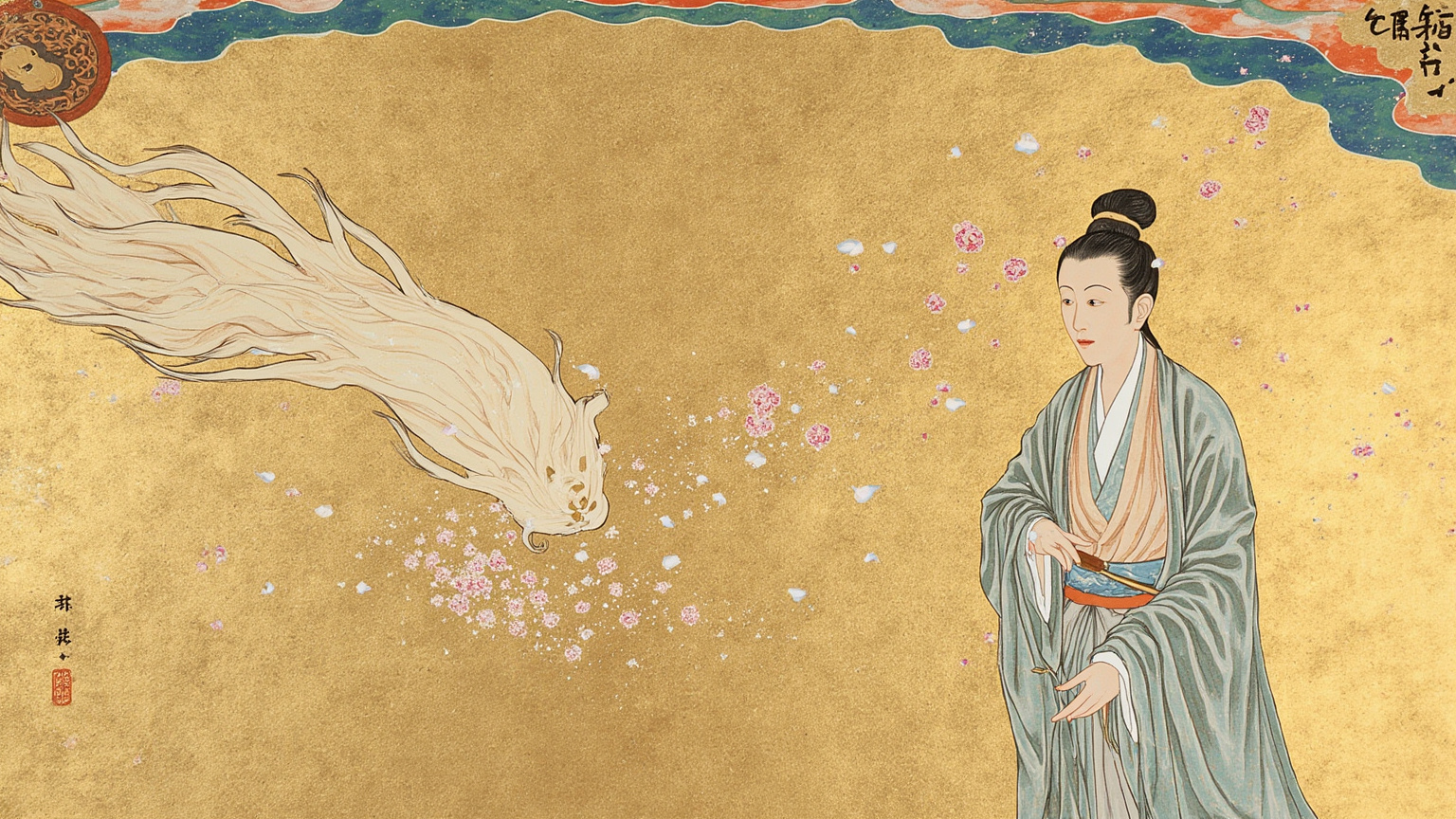
Midway through the debate, a goddess appears in the air and scatters flowers over the whole assembly. On the bodhisattvas the petals fall straight to the floor; on Shariputra they stick fast. Shariputra panics — a monk is not supposed to wear flowers — and tries to brush them off. The goddess tells him: they won't come off because you're still the one deciding what counts as clean and what doesn't.
Shariputra then says something he shouldn't — that being a woman is an obstacle, that a woman cannot become a Buddha. The goddess responds by transforming him into a woman on the spot, and herself into a man. Shariputra is thrown into confusion, and it is Vimalakirti, laughing from his sickbed, who restores him to his own form. None of this is a joke. It is aimed at the one thing a disciple like Shariputra still clings to — the idea of his own purity. The moment you cling to it, you're already caught.
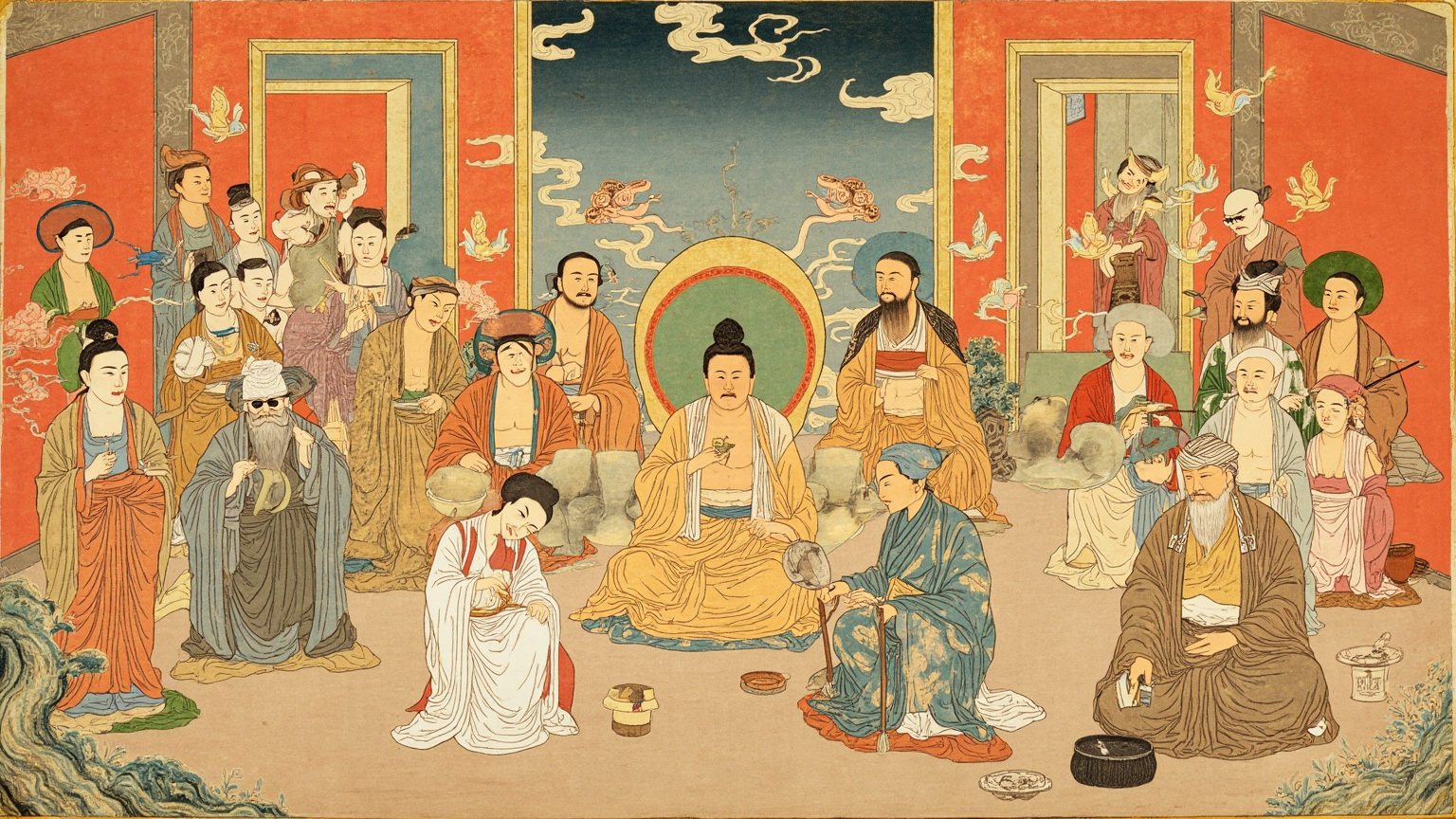
The flowers do not fall upon the bodhisattvas because their minds abide in no attachment; but upon Śāriputra they adhere, for the dust of discrimination still clings.
花不著者无所畏著,花著者以有畏著者,是故不着。
金句 · 观众生品 · 天女散花
This scene, too, became a favorite subject in Chinese painting — Gu Kaizhi and the Dunhuang muralists both returned to the goddess and her flowers again and again. One point is worth clearing up, since it's often misread: the change of sex is a philosophical device, not mockery, and certainly not erotic. In the paintings, the goddess and Shariputra are distinguished only by clothing, posture, and falling petals — there is no depiction of the body at all.
A Ten-Foot Room Holds Thirty Thousand Seats
With the debate more or less settled, Vimalakirti sets out to demonstrate what inconceivable actually means. Without moving from the bed, he calls up a bodhisattva from the Buddha-land of Fragrance Accumulated, a world that lives entirely on scent, who arrives bearing a bowl of that fragrance. Then he borrows the thrones of another distant Buddha-land, ruled by a Buddha called the Lamp King: thirty-two thousand lion-thrones pour into his ten-foot room all at once, and there is still room to sit, still room to move.
This is where the word fangzhang comes from. A room ten feet square holding thirty-two thousand thrones is not a magic trick — it says that the Mahayana understanding of liberated space runs on a different scale altogether. Chinese temples call the abbot's title fangzhang not because the room was built for him, but because the title comes from this very room in the sutra. As a subject for painting, this scene is almost unique: not a Buddha-land, not a bodhisattva's palace, but a scholar's tiny study — and that contrast is the whole point of the scene.
This is the hardest scene to paint. It cannot look like a digital effect, and it cannot be rendered as a grid or a diagram of expanding space. The only way in is contrast: an ordinary street of Vaishali roofs outside the window, and inside, thrones stacked past the edge of the frame, while the sick old man goes on fanning himself with his whisk, face unchanged. The contrast does the work.
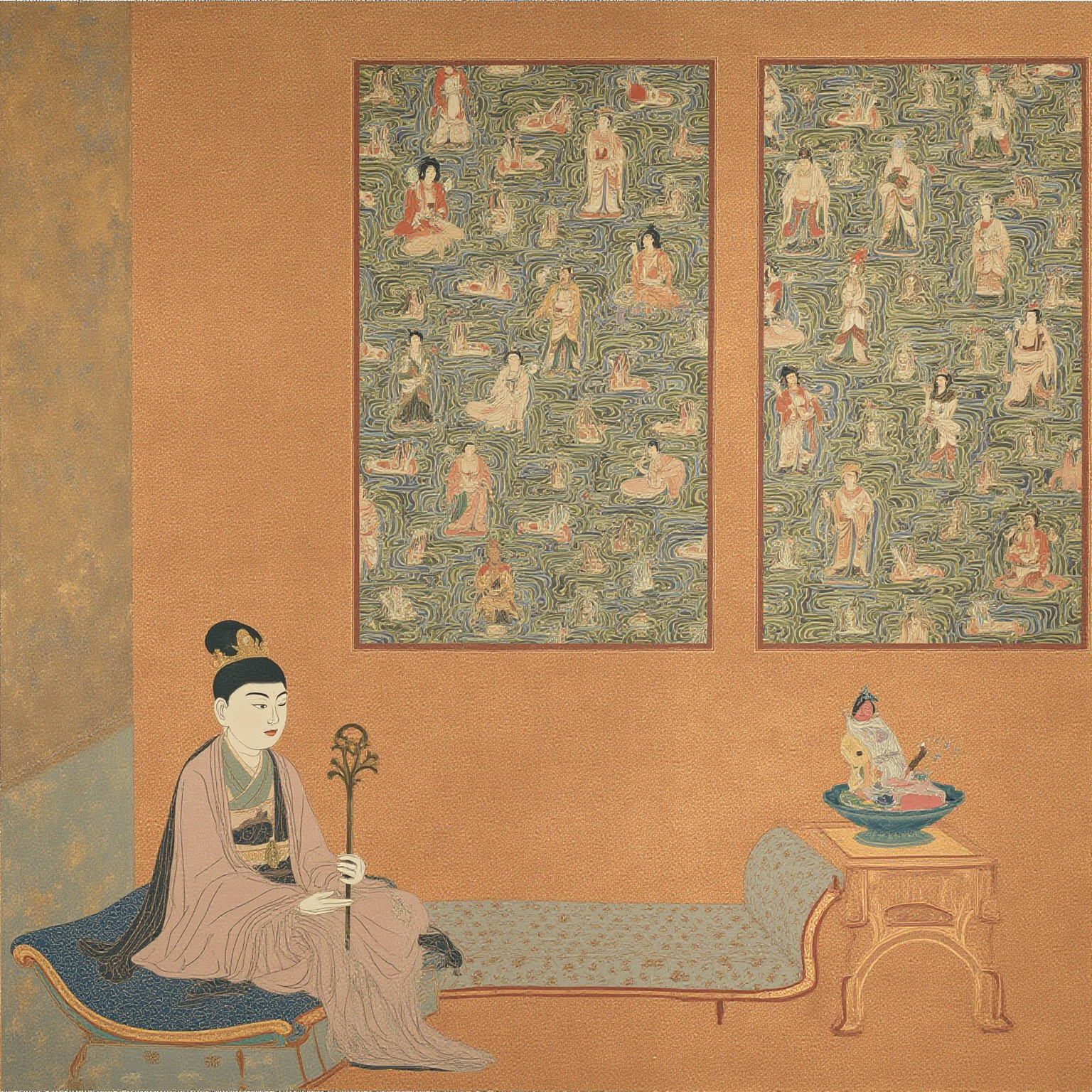
Within this single room let there be thirty-two thousand lion-thrones; yet the house itself shall not grow wider, and none shall crowd upon another.
此室三万二千狮子座皆悉容纳,而此室无所增广,诸座无所迫迮。
金句 · 不思议品 · 方丈容座
Vimalakirti's Silence
The climax of the whole sutra comes in its final scene. Manjushri puts the question: what is the Dharma Gate of Nonduality? Thirty-one bodhisattvas answer in turn — birth and non-birth are not two, arising and ceasing are not two, defilement and purity are not two — working through pair after pair of opposites until none are left to name. Everything that could be said has been said.
Manjushri turns the question to Vimalakirti. Vimalakirti lies on his bed and says nothing. Chinese Chan Buddhism has a phrase for it — Vimalakirti's silence roars like thunder. Those words are a later admirer's line, not part of the sutra itself, but Chan took them up and never let go: everything that could be said has already been said, and the one thing left, the refusal to speak, is louder than thunder. The whole sutra comes to rest here. Every exchange of wits, every parable, every display of power before this was building toward this one silence.
I find this passage genuinely astonishing every time I come back to it. Thirty-one bodhisattvas plus Manjushri — thirty-two people building bridge after bridge out of language — and Vimalakirti pulls out every bridge without saying a word. Readers who get it, get it. Readers who don't assume a line got dropped in printing.
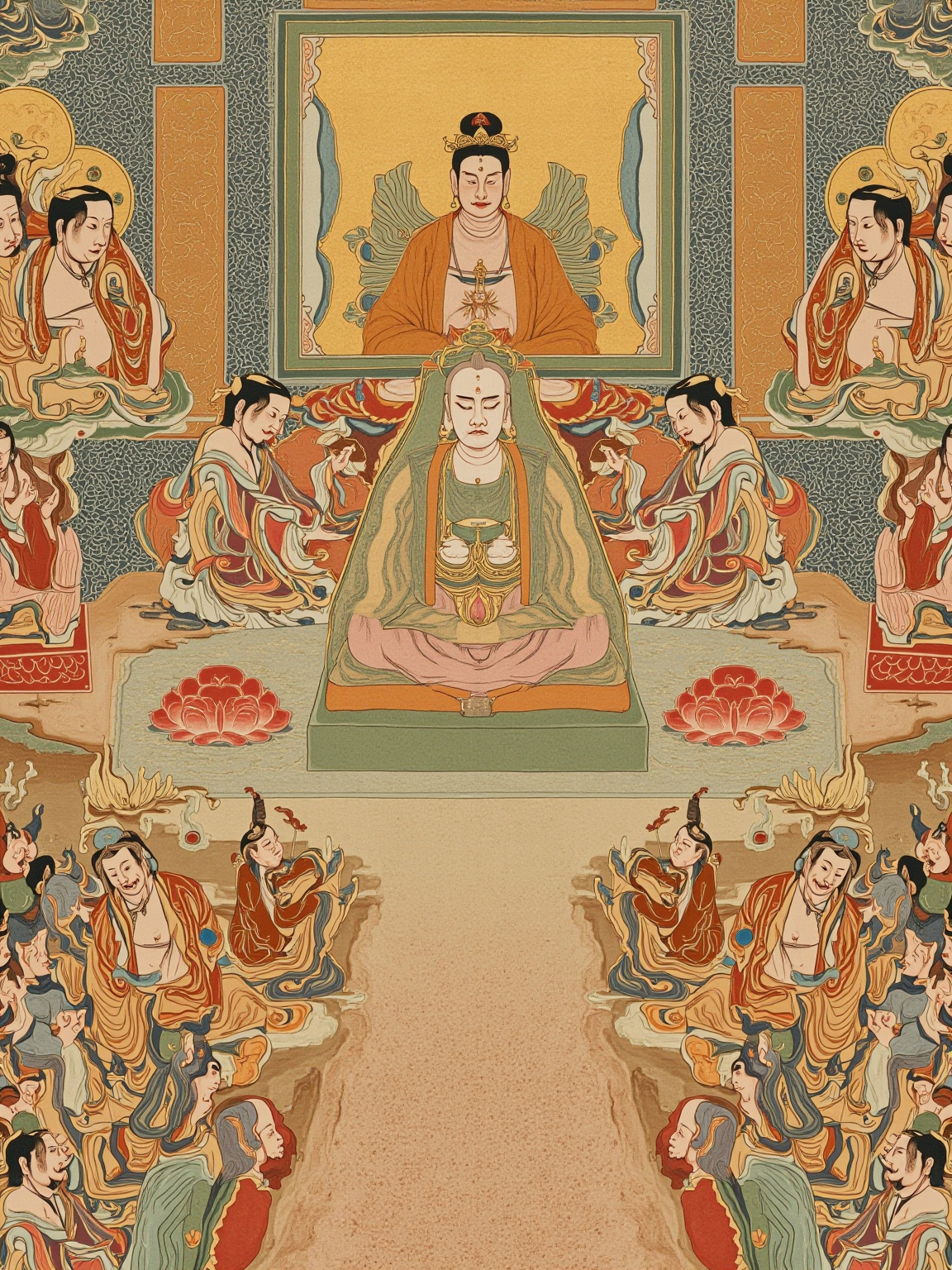
When Mañjuśrī asked of him the gateway of non-duality, Vimalakīrti kept silent and spoke no word — and that silence was the thunder.
文殊问维摩诘何等是不二法门,维摩诘默然无言——如是,如雷贯耳。
金句 · 入不二法门品 · 维摩一默
Why Chinese Scholars Loved This Sutra for Sixteen Hundred Years
The Vimalakirti Sutra was never among the most prominent texts in India, but once it reached China it became something scholars saw themselves in. The reason isn't doctrinal depth — it's that the hero is a wealthy, leisured, learned layman in plain white clothes who never took the tonsure. Who does that sound like, if not the scholar-official himself? Wang Wei took Mojie, Vimalakirti's name, as his own courtesy name. Xie Lingyun wrote himself into verse in the same mold. Gu Kaizhi painted Vimalakirti's portrait at Waguan Temple and set a new standard for figure painting in the Six Dynasties. The high Tang muralists at Dunhuang Cave 220 turned Manjushri's sickbed visit into a fixture of Chinese art history. None of this is coincidence. This sutra let Chinese readers see themselves in it.
What mattered even more was its form: pointed dialogue, argument in the style of qingtan debate. That fit naturally with the Wei-Jin fascination with abstract metaphysics, and later with the Song dynasty scholar-officials' taste for Chan. Every koan in Chinese Chan built on the principle of no reliance on words traces back to this sutra — the discovery that the highest move isn't the thing you say. It's the thing you don't.
At bottom it's making three claims. First, that lay life and monastic life are not two — wearing the robe has nothing to do with attaining enlightenment. Second, that speech and silence are not two — reasoning pushed all the way to its end arrives at not speaking. Third, that the ordinary person and the Buddha are not two: a ten-foot room holding thirty thousand thrones means every mind already has room enough for an entire Buddha-land. The only question is whether you see it.
Why Read the Original When You Already Know the Story
By now you know the whole arc: Vimalakirti's feigned illness, Manjushri lifting the curtain, the goddess and her flowers, the room that swallows thirty thousand thrones, the silence at the end. What no summary can hand you is the jolt of reaching the line that says Vimalakirti said nothing at all. Kumarajiva's translation genuinely leaves nothing there — a blank, after thirty-one bodhisattvas have talked at length. That blank, arriving after all that noise, is what knocks the reader back in their seat.
There's another thing no summary can give you: the rhythm of the piece, which moves like qingtan, like Wei-Jin literati sitting in a circle, like a night's conversation at Wang Wei's country estate on the Wang River. Open Kumarajiva's translation and you'll find the exchanges built from short lines, thick with the give-and-take of conversation, closer to a salon than a sermon. Watch for that rhythm as you read: short line after short line, and then the several lines of nothing where Vimalakirti says nothing at all. You have to go in yourself and let the translation seat you in that room for a while.
Thirty-one people build thirty-two bridges out of language. The last one says nothing, and pulls out every bridge. That is the whole of the Vimalakirti Sutra.
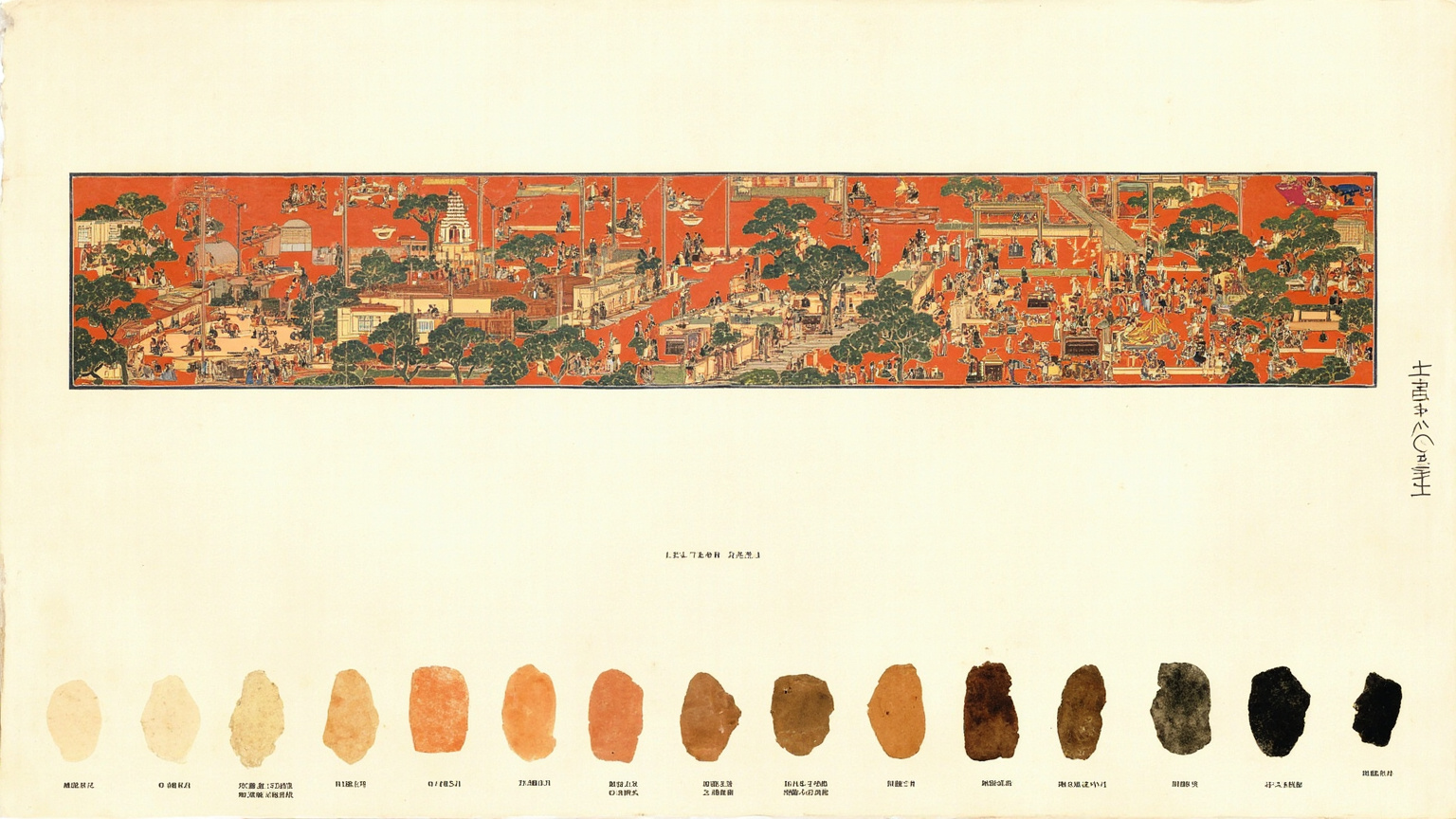
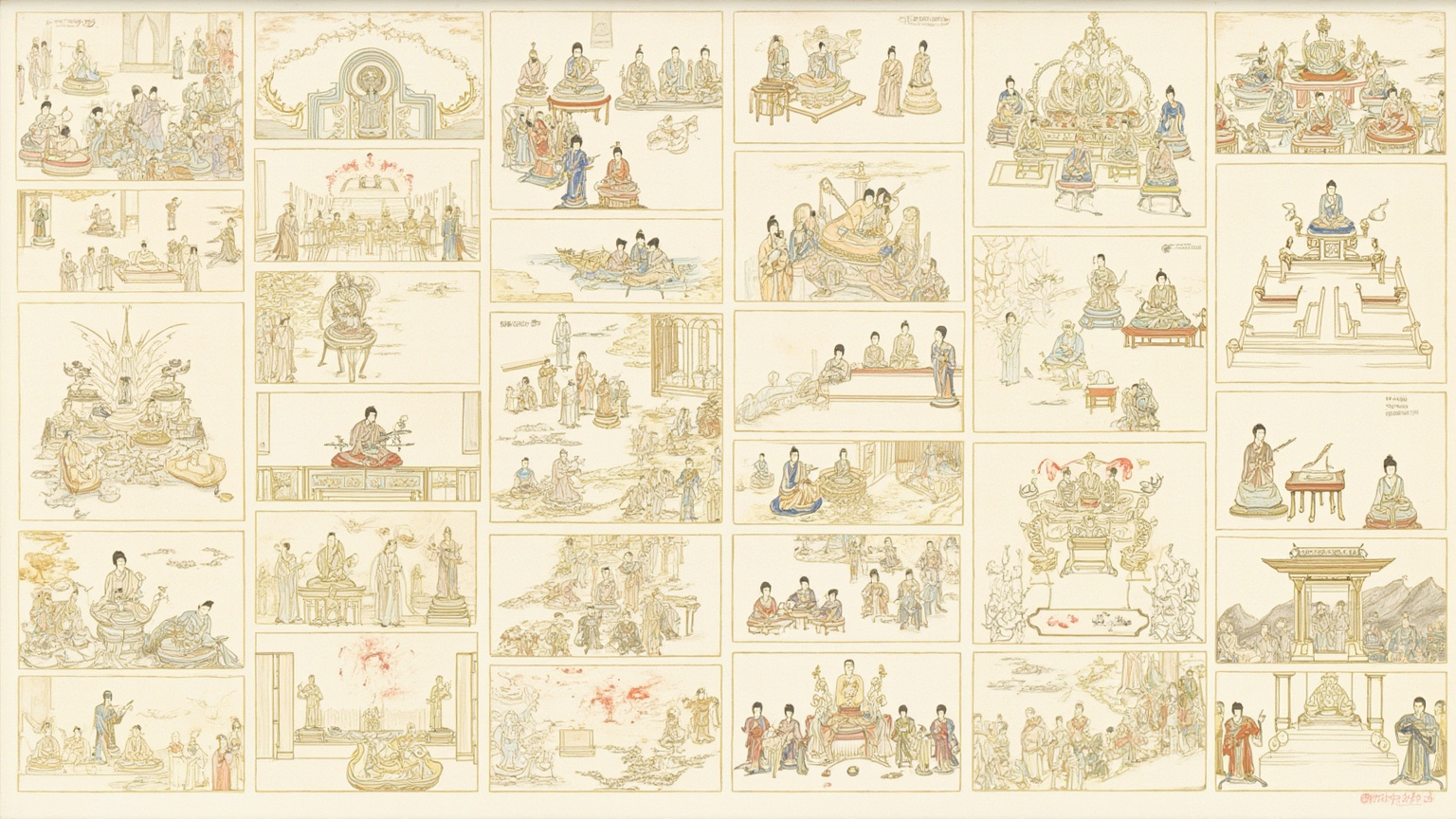
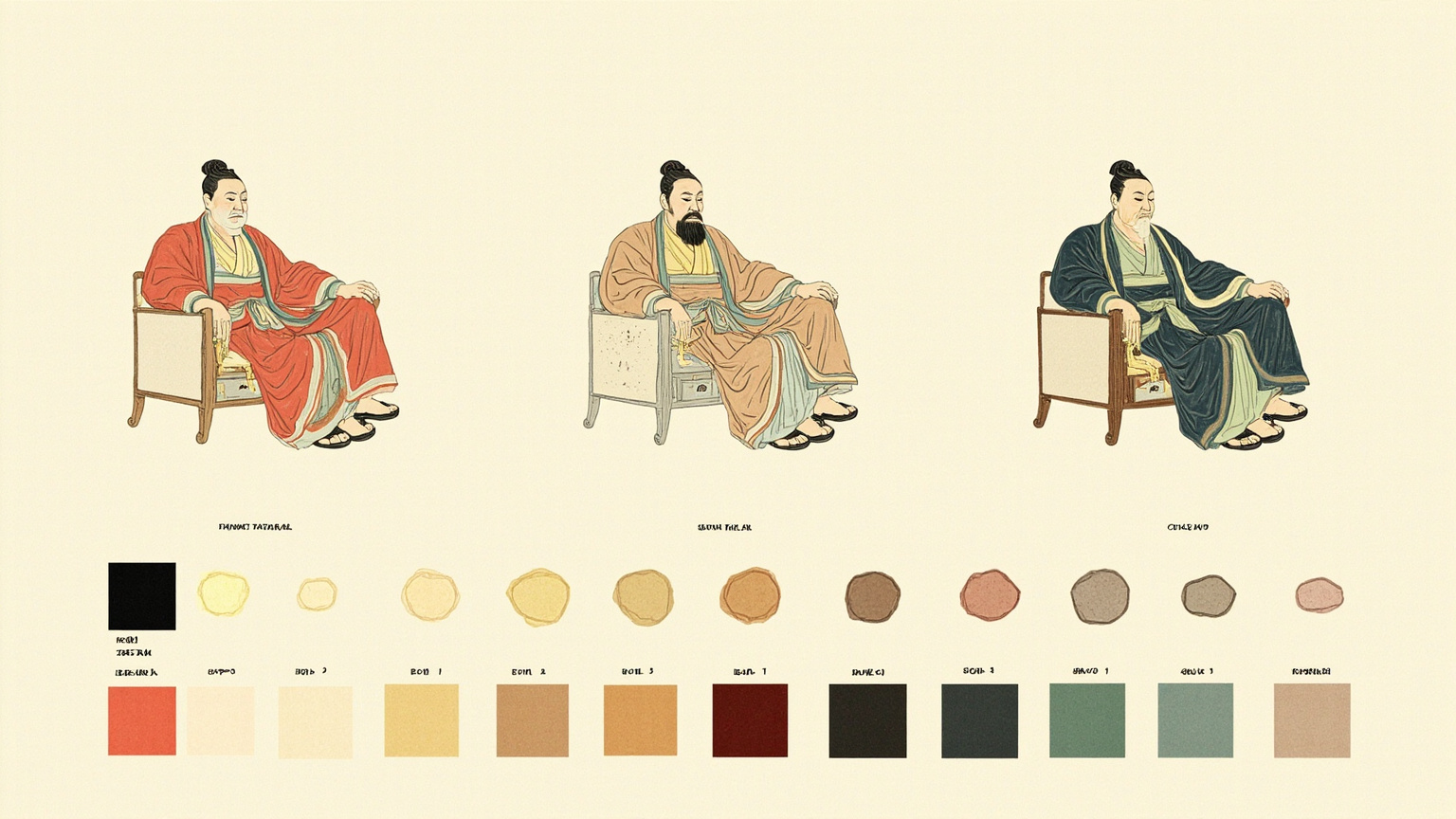
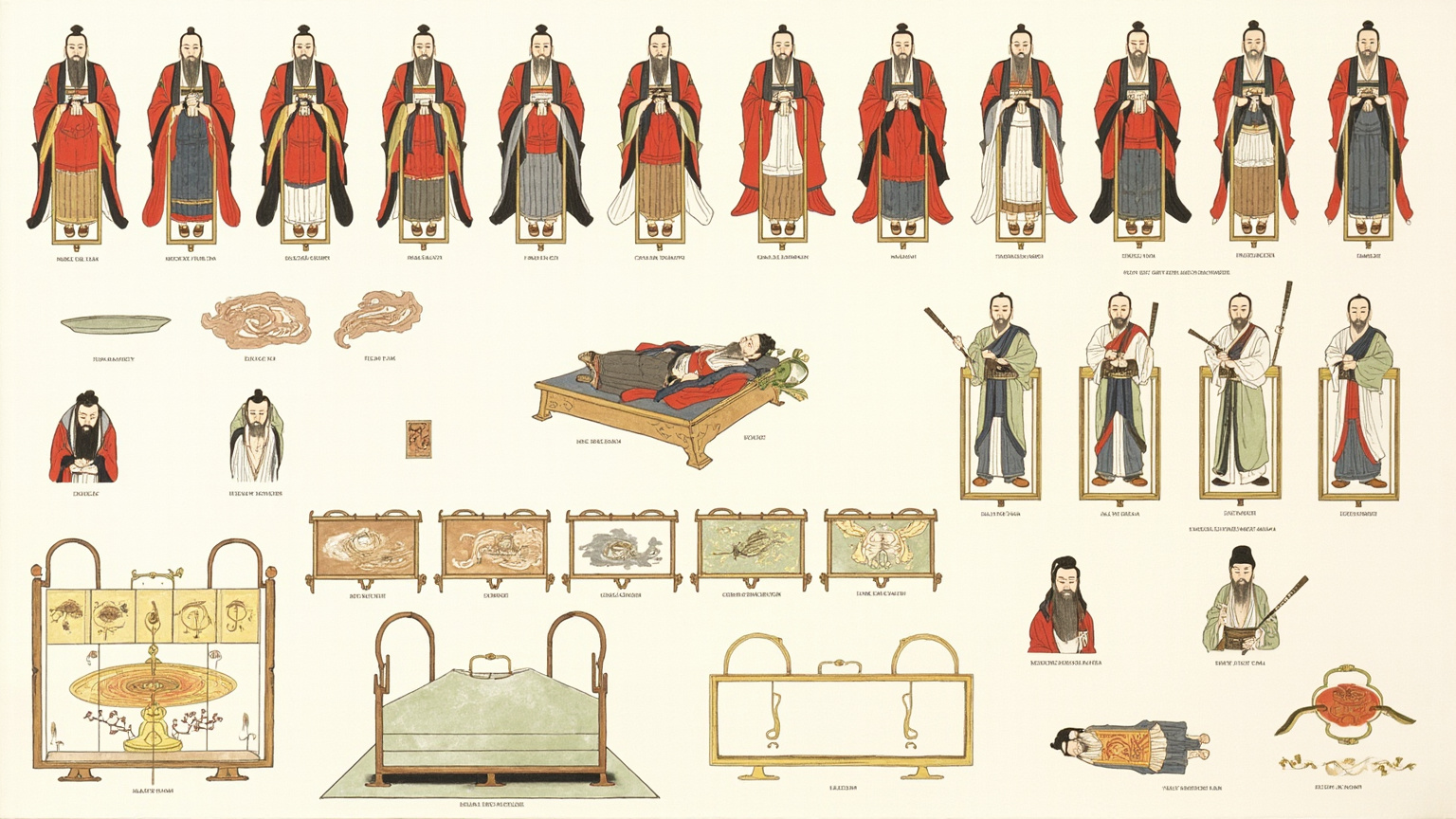
Art Direction4 plates
Before the guide was written, this book got a visual foundation — every illustration you just read grew out of it.