The Way of a Pilgrim (and The Pilgrim Continues His Way) · Companion Guide
朝圣者之路
一个俄国小百姓抛下家园,背起黑面包与一卷《慕善集》,只为学会如何在心里念一句祷文。
Forty Thousand Times, One Line
He said the same words, silently, forty thousand times. Seventeen words in Russian: Lord Jesus Christ, Son of God, have mercy on me, a sinner. He walked through a birch forest until the soles of his boots wore through, and kept walking in the snow. He reached a monastery gate, sat on a bench by borrowed light, closed his eyes, and kept saying it. He said it into the night, said it into sleep, said it in the first breath of waking. This is a book thin enough to fit in a bread sack, and it is about exactly this — how a man turns one prayer into his own heartbeat.
What the Book Is: An Anonymous Russian's Manual for Everyone
The author is a Russian commoner with no name attached, writing sometime in the mid-nineteenth century, when serfdom still held and church bells were part of a village's daily rhythm. He had little schooling but could read and write. He was not a monk, not a nobleman, not an established writer — just a man who set down his own road and his own inner work. R. M. French translated it into English in 1930, and from there it drifted into Western Europe and North America. It is remembered today because it took the Jesus Prayer, a practice locked behind monastery walls and reserved for monks, and told it through the story of an ordinary man walking. Readers in the West meet it as the Eastern cousin of The Pilgrim's Progress and The Imitation of Christ.
Characters: A Limping Pilgrim, an Old Hermit of the Wilderness, and the Faces Along the Road
The protagonist is the pilgrim himself, and he tells his own story. He walks with a slight limp, carrying a coarse cloth sack with a few pieces of black bread, a Gospel, and a copy of the Philokalia. He is not trying to get anywhere. He wants to learn how to pray — he has noticed that the moment a church service ends, his heart goes empty, and that emptiness frightens him enough that he leaves home and starts walking.
In the Stavropol wilderness he meets an old hermit — the figure Orthodox tradition calls a starets, an elder. This elder gives no lectures and writes no books. He sits under a tree and tells the pilgrim: sit down, close your eyes, follow your breath, and say this one line silently with every breath you take. He also opens the Philokalia to the chapters by Saint Symeon the New Theologian, on watching over the heart — on how to keep the words from being swept away by every other thought that passes through. The rest of the cast are people met and left behind on the road: a monk in a monastery courtyard who looks half mad but is praying, a mother by a fence who has lost her only son and cannot stop weeping, a beggar child in the middle of the road whom everyone else ignores, an old countrywoman who lets him sleep by her stove for a night. He lets none of them pass unused — each one answers the same original question, of how a prayer becomes real.
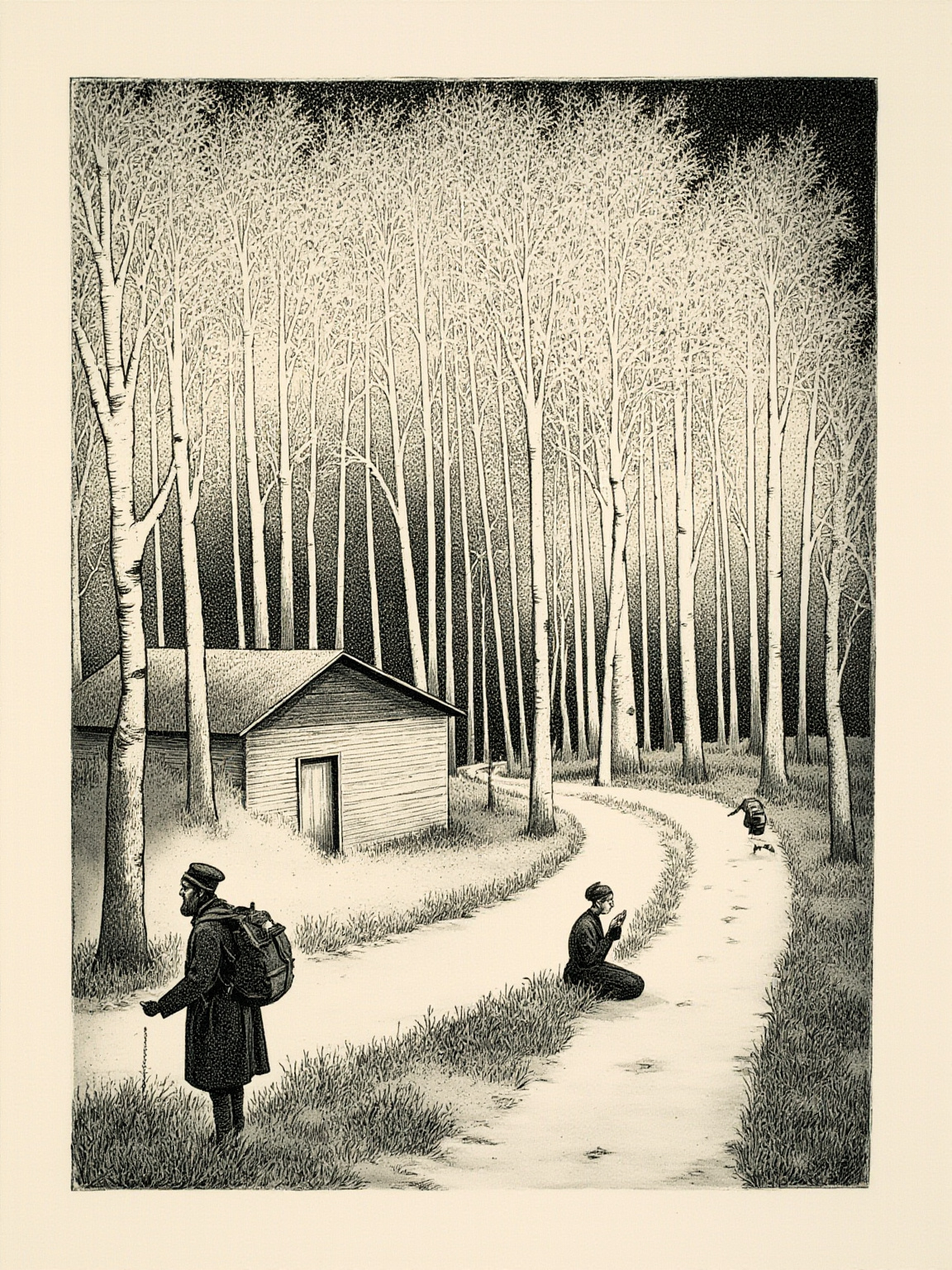
Sit down, be silent, bend your head, close your eyes, breathe softly and say within yourself: 'Lord Jesus Christ, have mercy on me.'
坐下,闭上眼,把头低下来,随你的呼吸,轻轻在心里说:『主耶稣基督,怜悯我。』
金句 · 长老初会 · 荒野树下授心祷
Plot: Setting Out, Learning One Line, Walking On Without Stopping
A Russian commoner who does not know how to pray decides to start walking and figure it out later. He shoulders his bread sack and his copy of the Philokalia and turns onto a country road. The writing here is plain to the point of bareness — no paragraph of motive, no explanation. He simply leaves. What is worth noticing is that this reads nothing like the opening of a novel. There is no hook, only the steadiness of a thing happening because it happens: the decision itself is already the first step of the practice.
In an empty stretch of wilderness he meets the elder. He tells him: I do not know how to pray. The elder asks nothing further. He simply has the pilgrim sit, close his eyes, and say the prayer with his breath. There is no drama in this scene of instruction — two men sitting quietly, only the wind. The old man's guidance is brief: go and study the chapters on Saint Symeon the New Theologian in the Philokalia. This is where the book shows its real weight. The pilgrim is not inventing a practice out of nothing — he is being placed inside an Orthodox contemplative tradition centuries deep.
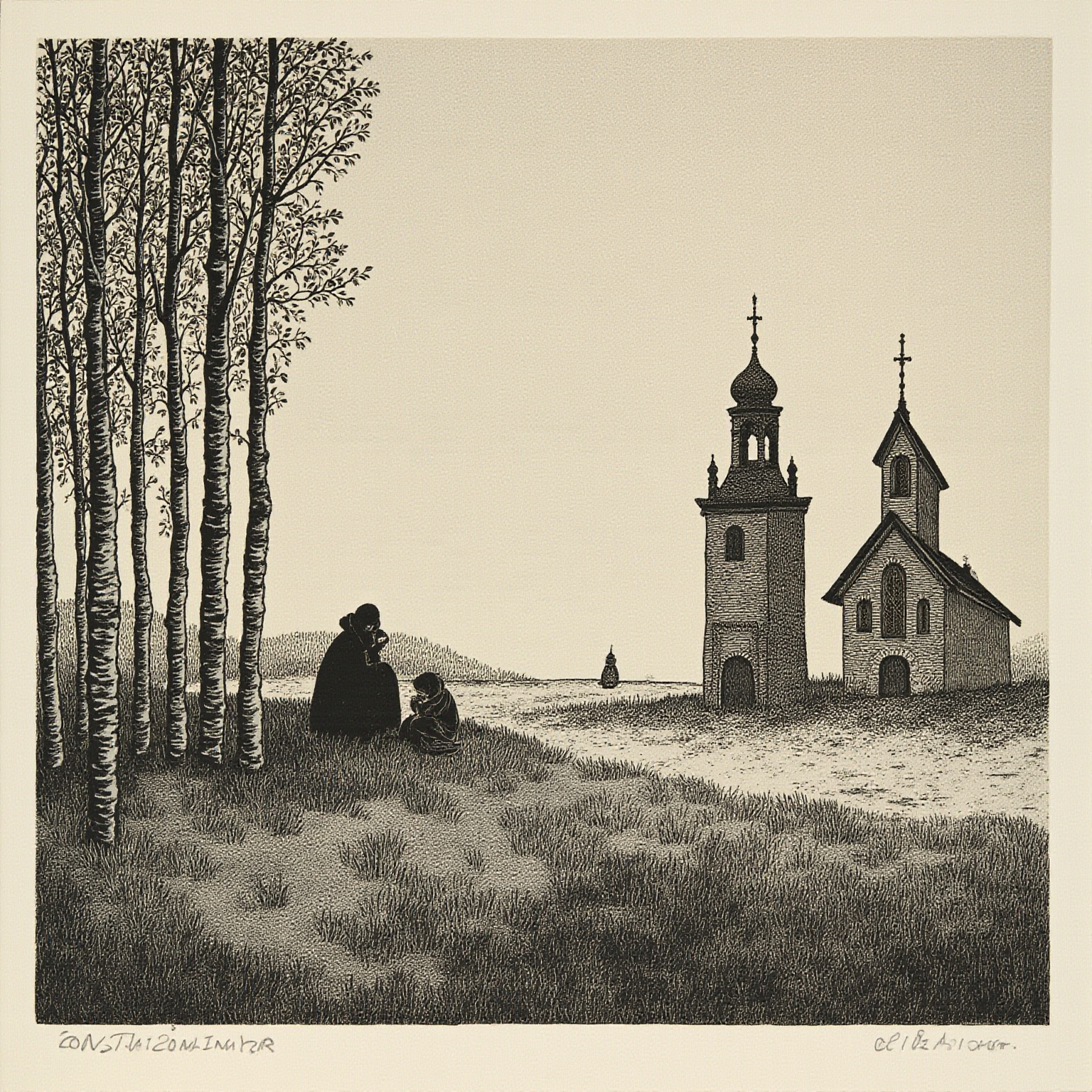
And so I walked, praying without ceasing; the prayer grew warm within me, and a warmth crept over my whole body.
我便一边走,一边不停地念——祷文在我心里渐渐发热,那暖意一点一点漫到了全身。
金句 · 修习之始 · 祷文随呼吸上路
The pilgrim sets out again, and the prose changes with him. It stops moving the way ordinary travel narratives do — he passed a village, he met a man — and starts recording something underneath the walking: he crosses a village with the prayer still running silently underneath, he rests on a roadside boulder and the prayer does not pause either. What the writing does best here is fold walking, breathing, and praying into a single frame, so that as you read, your own breath seems to slow down with his.
Everyone he meets along the road gets pulled into the work of the prayer. The scene not to skip is the mother who has lost her only son — she weeps the whole time, and the pilgrim does not tell her to stop grieving. He simply sits beside her and says the prayer aloud for her to hear. Her crying quiets, and he says that in that moment he understood something: the heart crying out matters more than whether tears come or not. A monk who looks half mad, muttering to himself in a monastery courtyard and treated as a joke by everyone who passes — his answer to the pilgrim is the deepest thing buried in the whole book: prayer is not something said with the mouth, it is a state where nothing shows on the outside while everything is happening within. What the writing is doing here matters: none of these encounters exist to move the plot forward. They exist to overturn what the reader assumes — you think he is the one meeting grieving strangers on the road, but really it is the room inside his own chest learning to open its door.
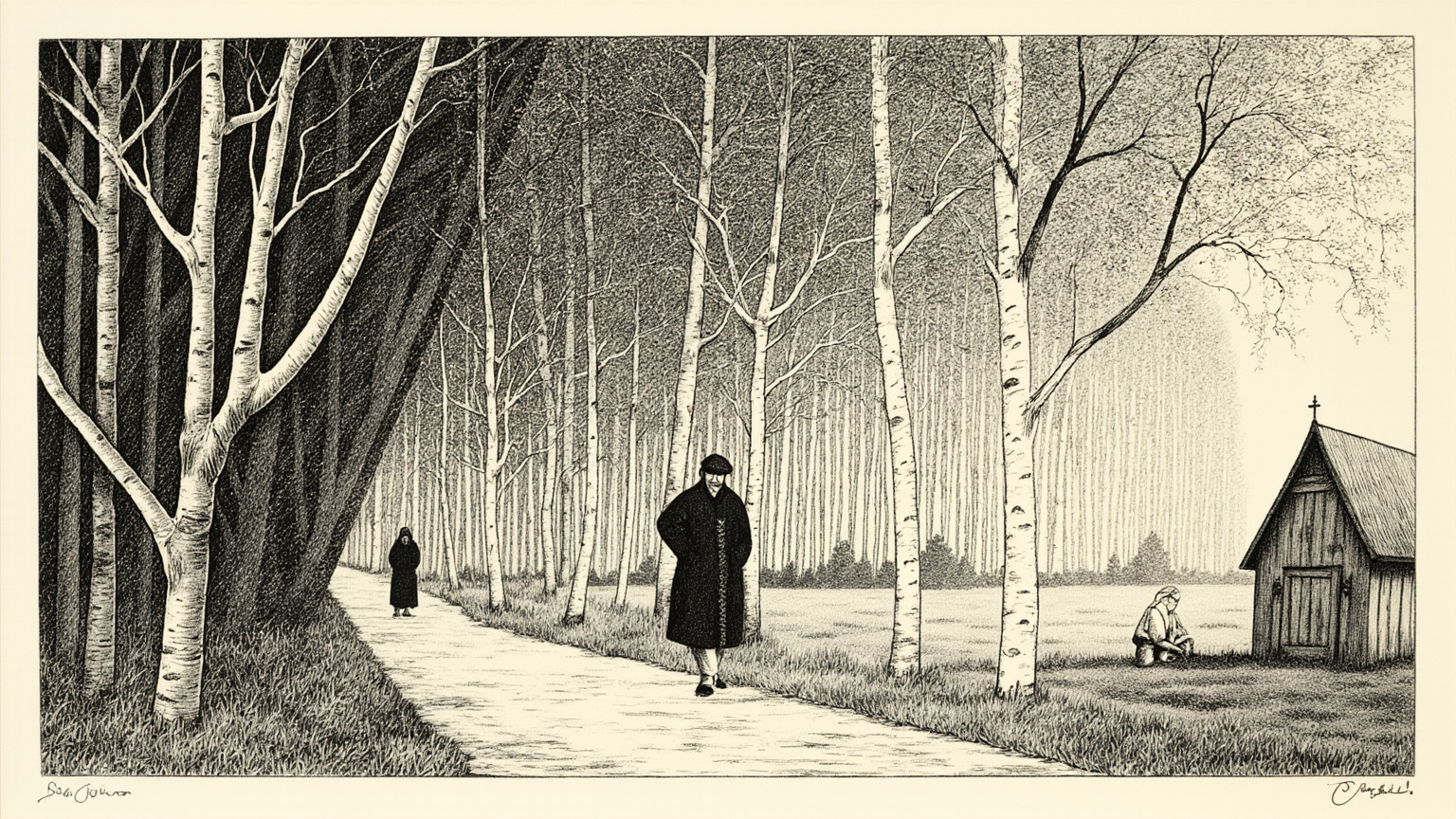
I sat down beside her and began to pray; her sobbing grew quieter, and a stillness came over us both.
我在她身边坐下,也念了起来——她的哭声渐渐低了下去,连我自己的心也跟着静下来。
金句 · 失子之母 · 路边的悲悯一课
He keeps careful count of how many times a day he says the prayer — a few thousand at first, then ten thousand, then tens of thousands, until he records one day at forty thousand. But the book never treats these numbers as a boast. Instead they trace a curve of what is happening inside him: the more times he says the prayer, the less it happens on his lips at all. His mouth barely moves, the sound thins out, and finally there is no sound left, only a steady warmth echoing in his chest like a current of heat. This is the most restrained passage in the book, and the most moving. It never reaches for words like light or miracle. It only says that his heart felt warm.
The ending is the part of this book that refuses to give you anything to be upset about. He does not reach Jerusalem, does not return home, does not fall weeping at some shrine. He simply keeps walking. Winter snow, summer mud, rain soaking the pages of his Philokalia, his bread sack going empty and a farmhouse giving him another piece of black bread, the prayer going on the whole time. That is the ending. Structurally, the book never builds toward the climax-and-resolution arc a novel would give you. The pilgrim does not become a different man. He becomes a man increasingly able to keep that one line from being interrupted inside himself. There is no arc of growth in the usual sense, only a deepening in the sense of duration — and that deepening is exactly what Orthodox spiritual tradition calls prayer of the heart.
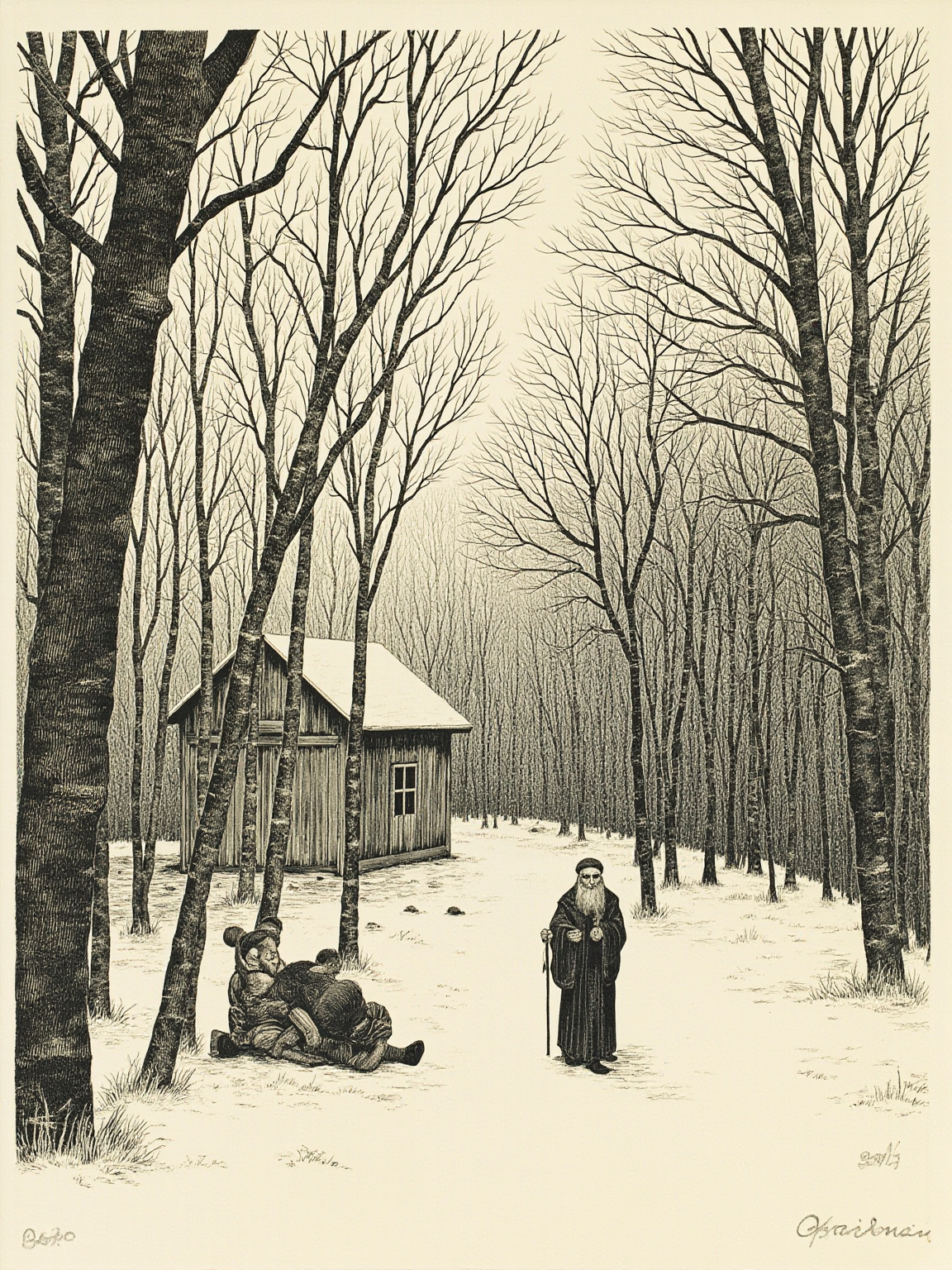
This book turns no one into a hero. It only leaves a man inside his own breath — and that, too, is the practice.
What It's Saying: Breath as Discipline, Walking as Practice
On its surface the book is teaching a technique — how to fold a seventeen-word prayer into breath, into walking, into every waking second. But peel back a layer and it is actually arguing against a habit we know well today: treating the spiritual life as something set apart, something that only happens in a study, on a meditation cushion, on some morning set aside for it. This book insists otherwise. The spiritual life happens in every breath you let out, every moment you notice someone near you in pain, every bite of black bread you swallow. Mercy, in this book, is not an abstract virtue — it is what the prayer looks like when it lands on an actual person. Only when you break off your last piece of bread for the beggar child no one else will look at has the prayer truly moved inside you.
Set against the rest of Russian literature, this book is an anomaly. On one side you have sprawling tragedies with a cast of hundreds of thousands, on the other the soul-storms of aristocratic households — and this book has almost nothing: a nameless commoner carrying a centuries-old church anthology, walking a dirt road. But it carries its own weight, because it takes the idea of living a serious spiritual life and returns it from the privilege of a few intellectuals to a craft any breathing person can practice. Reading it today, after being bombarded with self-improvement language and promises of inner peace, feels almost cooling. It is not selling a course and it is not painting a future. It simply shows you a nineteenth-century Russian man saying one prayer until it beat inside his own heart.
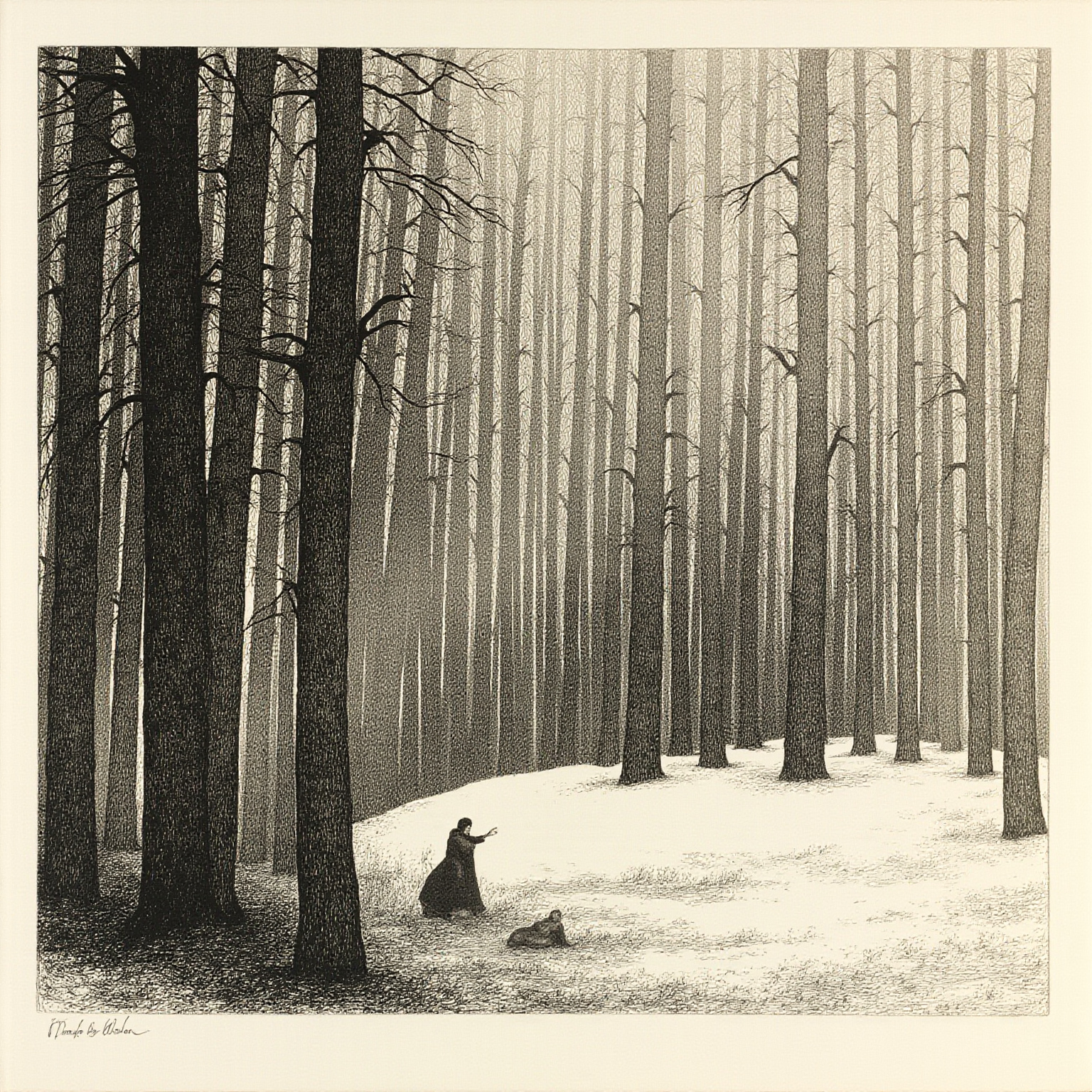
This book makes no man a hero; it leaves him, simply, in his own breath — and that, too, is prayer.
这本书没把任何人变成英雄,它只是把一个人留在了他自己的呼吸里——这件事本身,也是修行。
金句 · 全书尾声 · 行走即修行的归旨
Why You Should Still Read It Yourself
An explainer gives you a map. The ground still has to be walked yourself. This book has a quality that is hard to describe secondhand — it slows a reader down without them noticing. When the pilgrim writes about how many miles he covered in the snow, how many times he said the prayer, your own breathing slows along with the sentence. No summary can hand you that bodily syncing. Then there are the faces along the road — the half-mad monk's answer that isn't quite an answer, the mother's crying trailing off into silence — each one only a few lines on the page, and you only understand why they were written that way, and placed exactly where they are, the moment you reach them. Knowing the plot ahead of time actually makes the reading better, because you can finally give your full attention to how it is written instead of what happens next.
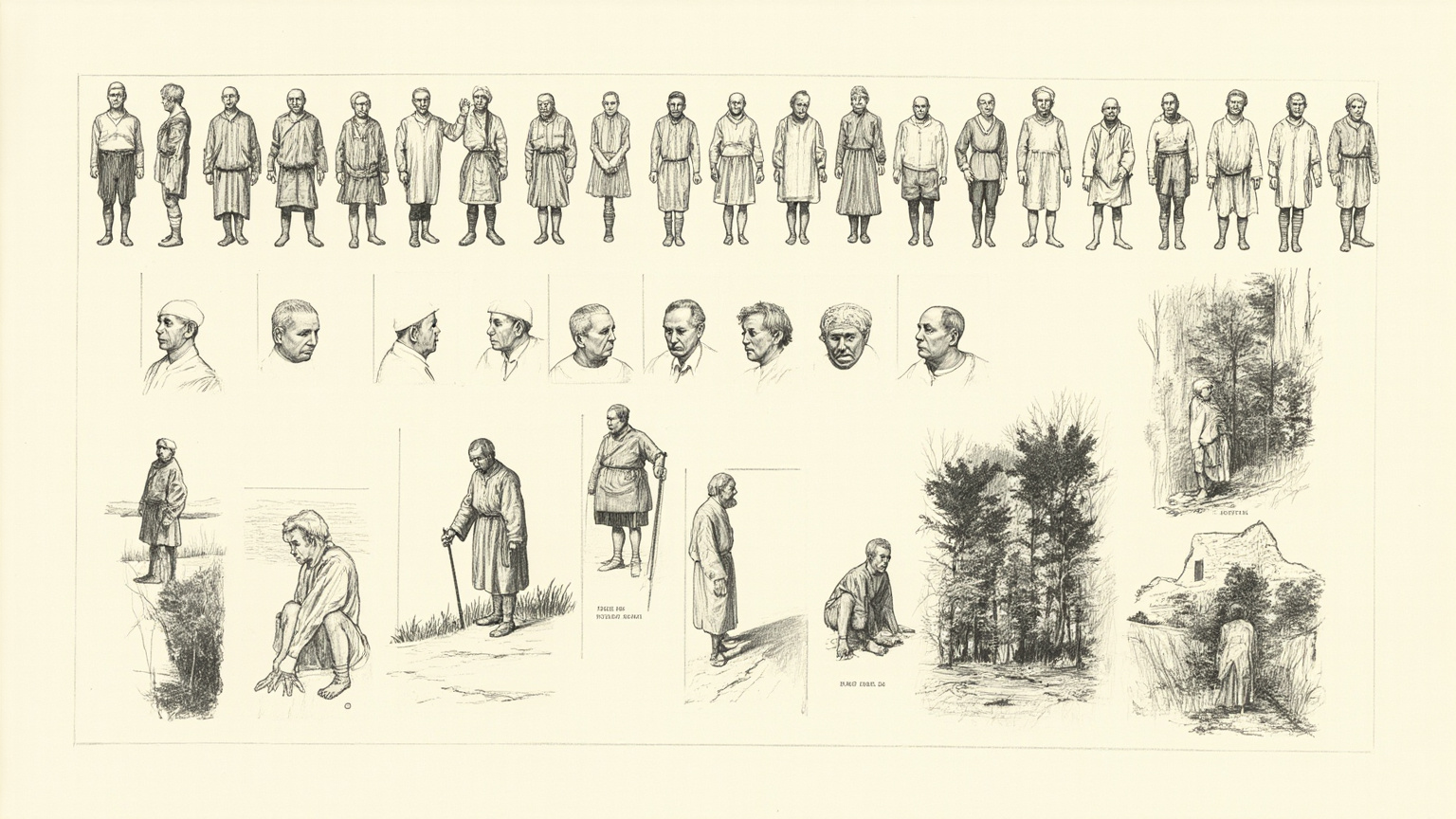
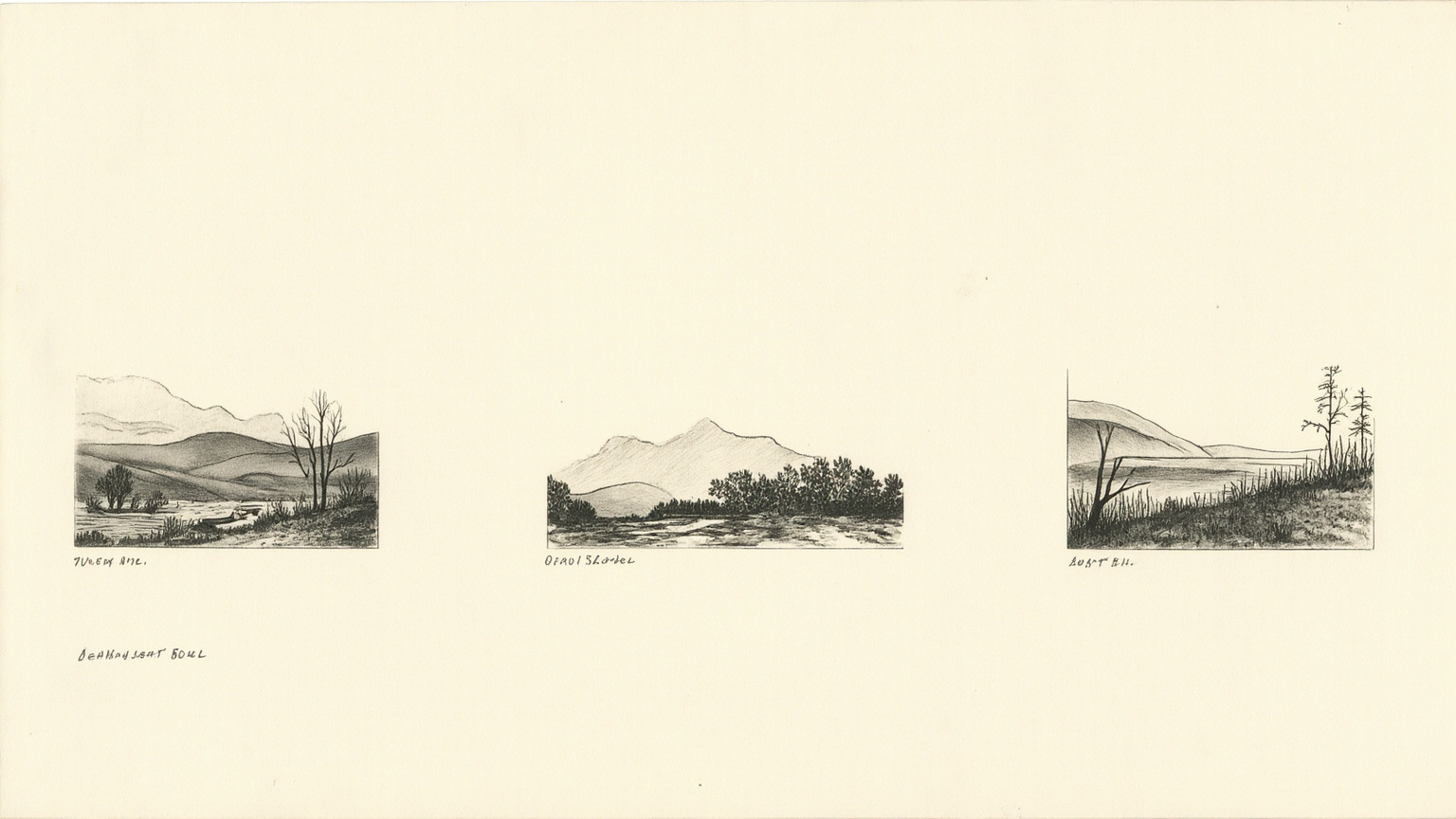
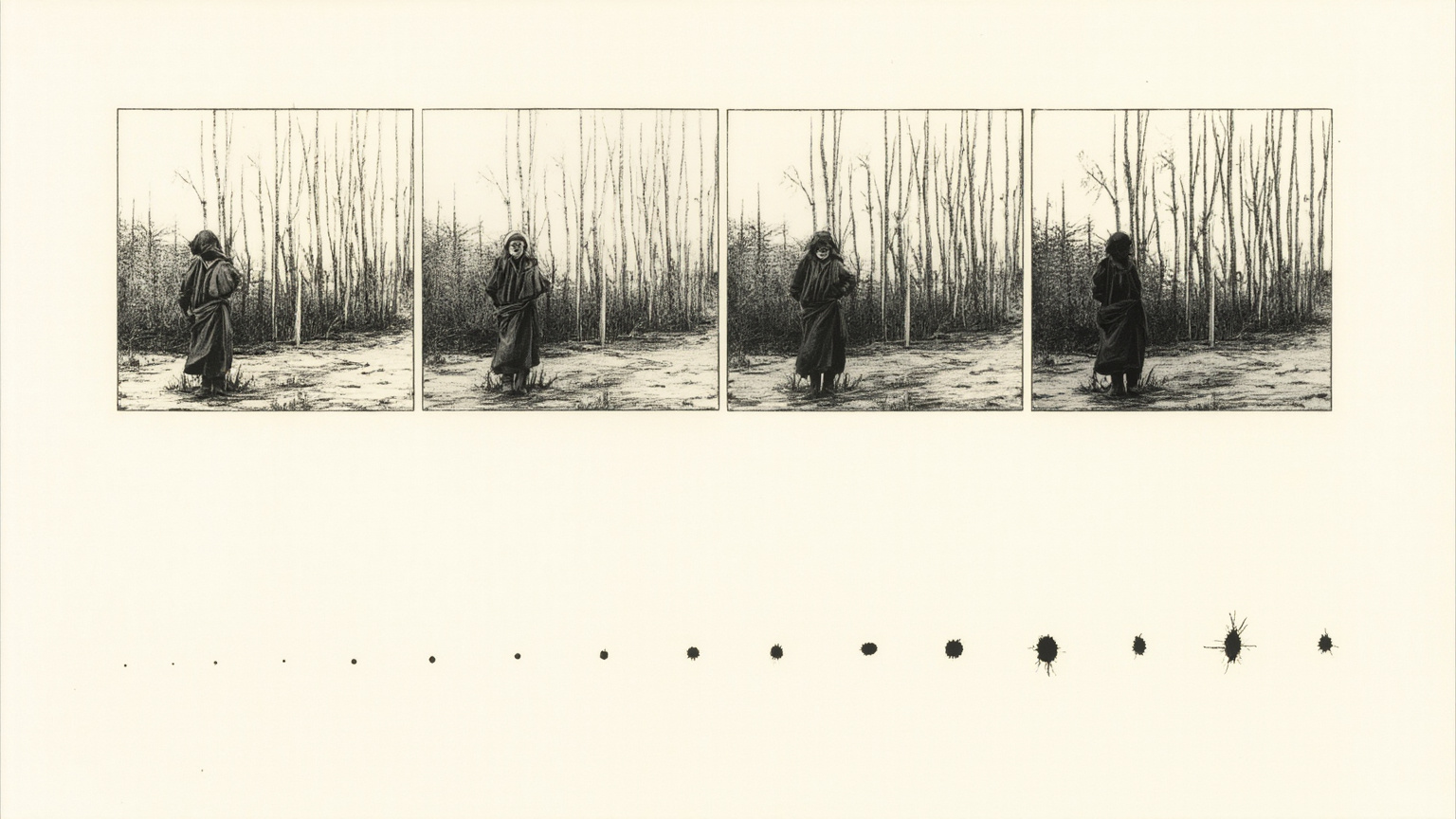
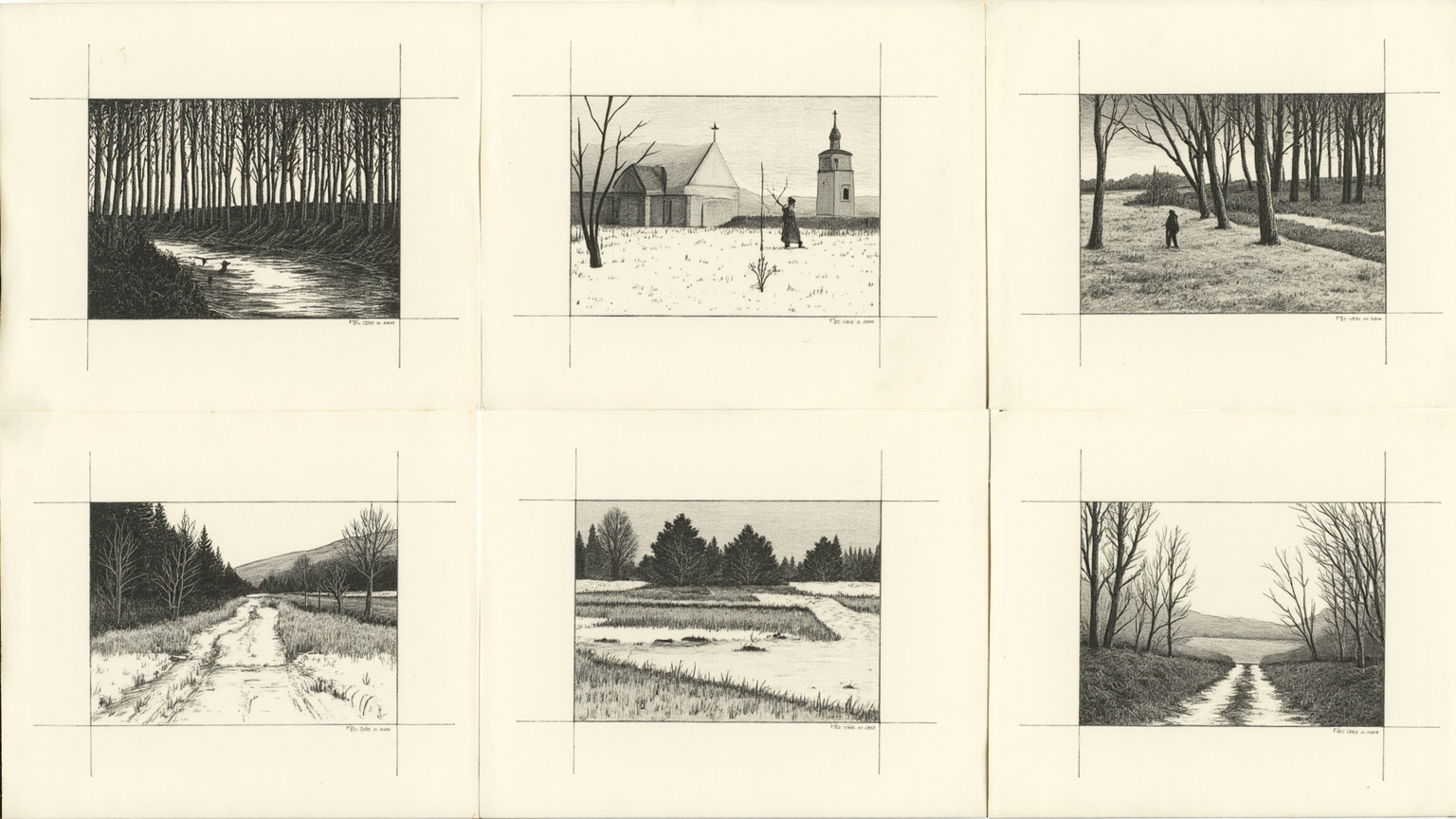
Art Direction4 plates
Before the guide was written, this book got a visual foundation — every illustration you just read grew out of it.