The Worst Journey in the World · Companion Guide
世界最险恶之旅
南极隆冬,三个人拖着雪橇走进永夜,只为带回帝企鹅群落里的三枚蛋——一场几乎没有任何人觉得划算的远征。
The Opening Scene
In a whiteout at sixty below, they could not see their own feet. A rope tied around all three waists was the only way anyone knew the others were still there. Cherry-Garrard squinted into the wind ahead, Wilson at his side, Bowers hauling the sledge behind — all three in fur caps, faces black, their breath turning to frost and falling from their skin the instant it left mouth and nose. The sun had been gone two months and would not be coming back. Sea, ice, and sky had all bled into one color, as if someone had pasted a sheet of white paper over the whole world. They were headed for Cape Crozier, where a colony of emperor penguins was incubating eggs, and they meant to bring three of them back.
What This Book Is
The author, Apsley Cherry-Garrard, was English, a young Oxford-trained naturalist who joined Captain Scott aboard the Terra Nova in 1910 bound for Antarctica. He was barely twenty, the youngest man on the expedition. In 1922 he handed this thick manuscript to a London publisher — he had lived through the expedition's ending, and that was the only reason there was anyone left to write it. Two threads run through the book: the near-suicidal winter journey of 1911, and the summer of 1911 to 1912, when Scott's party of five made their dash for the pole and died on the way back. Cherry-Garrard wrote it looking back across nine years, and the book carries none of the excitement of the events themselves. It reads like a man telling, by candlelight, something that can no longer be changed. The National Geographic Society later ranked the great works of human exploration, and put this one first.
The line everyone quotes from this book — polar exploration is at once the cleanest and the most isolated way of having a bad time ever devised — is saying exactly this. Modern polar writing keeps citing it because it names, plainly, why anyone would go to a place like that: not for glory, but for purity, a purity no absurdity can outshine.
The Hut, and the Men in It
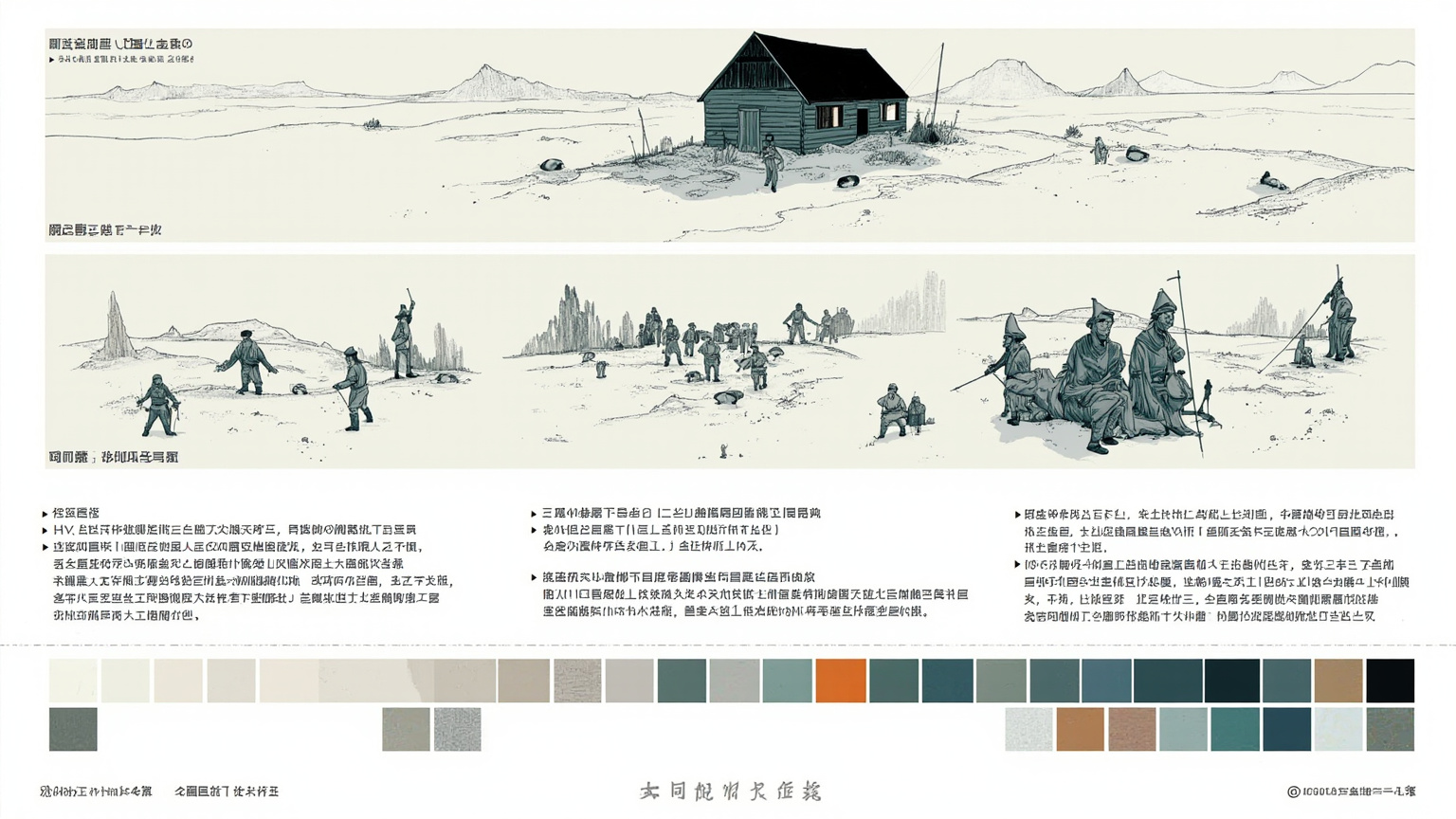
The Terra Nova was locked fast in the ice of the Ross Sea, and the men moved into the hut on shore at Cape Evans. Outside was Antarctica; inside was the orange light of the paraffin stove, wet socks swinging on a line, the smell of tinned bully beef and hard biscuit. Who slept where mattered less than who was there. Wilson, the one who drew, chief scientist and doctor to Scott's party, was the man Cherry-Garrard leaned on most. Bowers, a naval officer who said little and carried anything, was the bravest man Cherry-Garrard said he ever knew. Campbell ran the base and liked to sing. Scott himself was the spine of the whole expedition — the one who chose the three men for the winter journey, and chose the five men, himself included, for the dash to the pole.
Oates deserves his own line. He was a captain in the 6th (Inniskilling) Dragoons, carrying an old wound in his leg, and he never complains once in the book. On the march back, in the blizzard, he knew better than anyone that he was slowing his companions toward death. At the end he said, "I am just going outside and may be some time," and walked out into the storm. He never came back. All that was left were his footprints in the snow, walking off alone, perfectly clear, growing smaller into the distance.
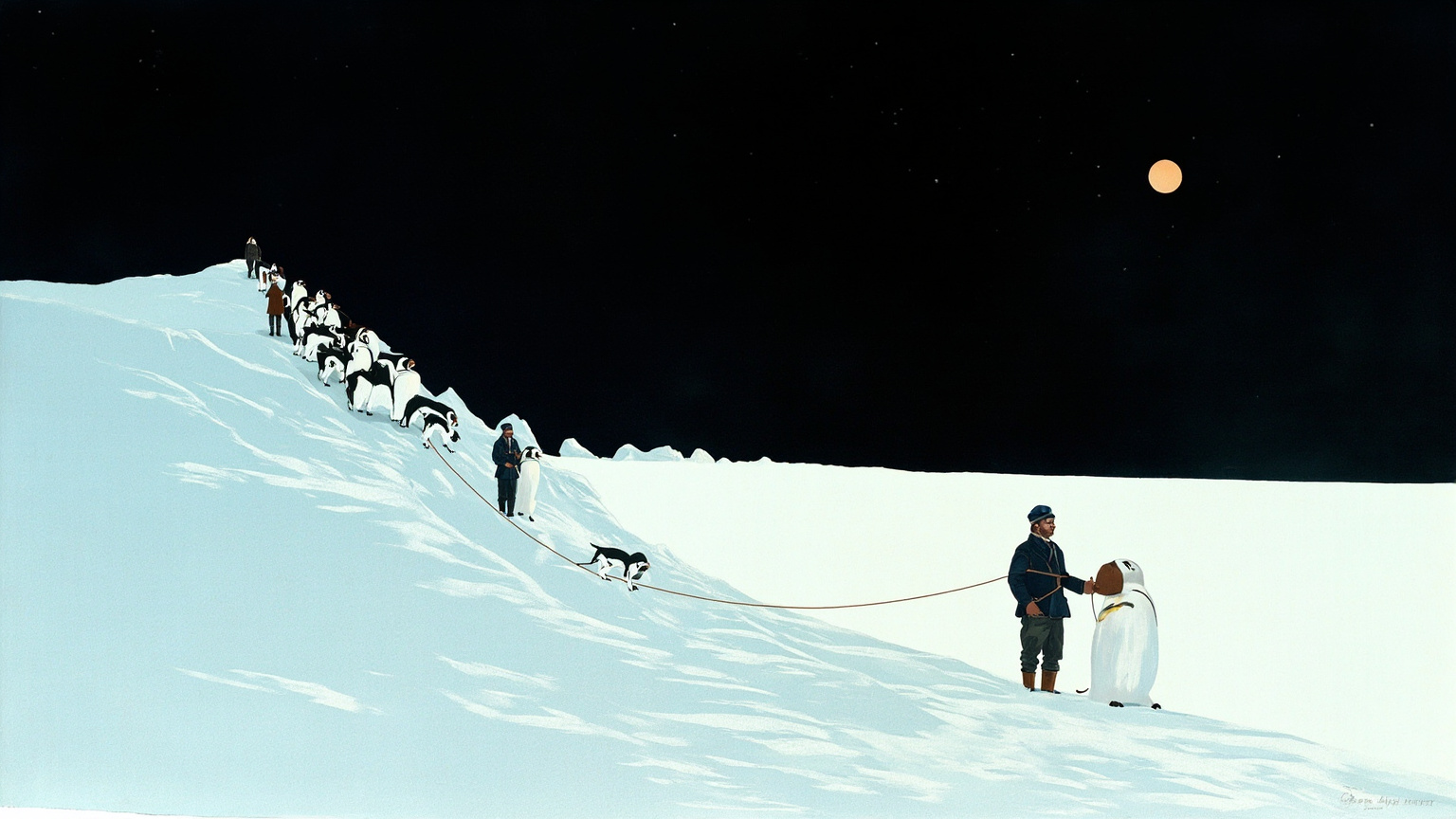
Polar exploration is the cleanest and most isolated way of suffering that man has been able to devise.
极地探险是人类迄今所能设计出来的、最干净也最孤独的受苦方式。
金句 · 序章 · 极地受苦的干净
From Southampton to the Pack Ice
The story starts in the summer of 1910, when the Terra Nova weighed anchor at Southampton and sailed a long stretch of ocean that kept growing colder. The southern sea turned gray, then lead-colored, then a dull, light-swallowing green. Sea ice began to appear, first in broken pieces, then in sheets, and finally as an unbroken white to the edge of sight. The ship froze fast in the ice and had to be hauled by men and dogs. The dog teams ran across the ice like a pack of furred pendulums. The first thing that set the crew alight was a handful of emperor penguins standing far off at the edge of the floe, black-backed, orange-chested, fat as gentlemen in tailcoats, standing motionless in all that white. The scene was almost a preview of everything the rest of the book would go on to ask.
The Winter Journey — Five Weeks, Three Eggs
Winter came to Antarctica in 1911. The sun dropped below the horizon with no intention of coming back. It was then that Scott put forward an idea that struck every old hand as insane: send three men to Cape Crozier in the blackest part of midwinter, into a colony of incubating emperor penguins, to bring back three eggs. The reason had nothing to do with glory. It was science. No one knew what an emperor penguin embryo actually looked like, and the answer might be sitting inside those eggs.
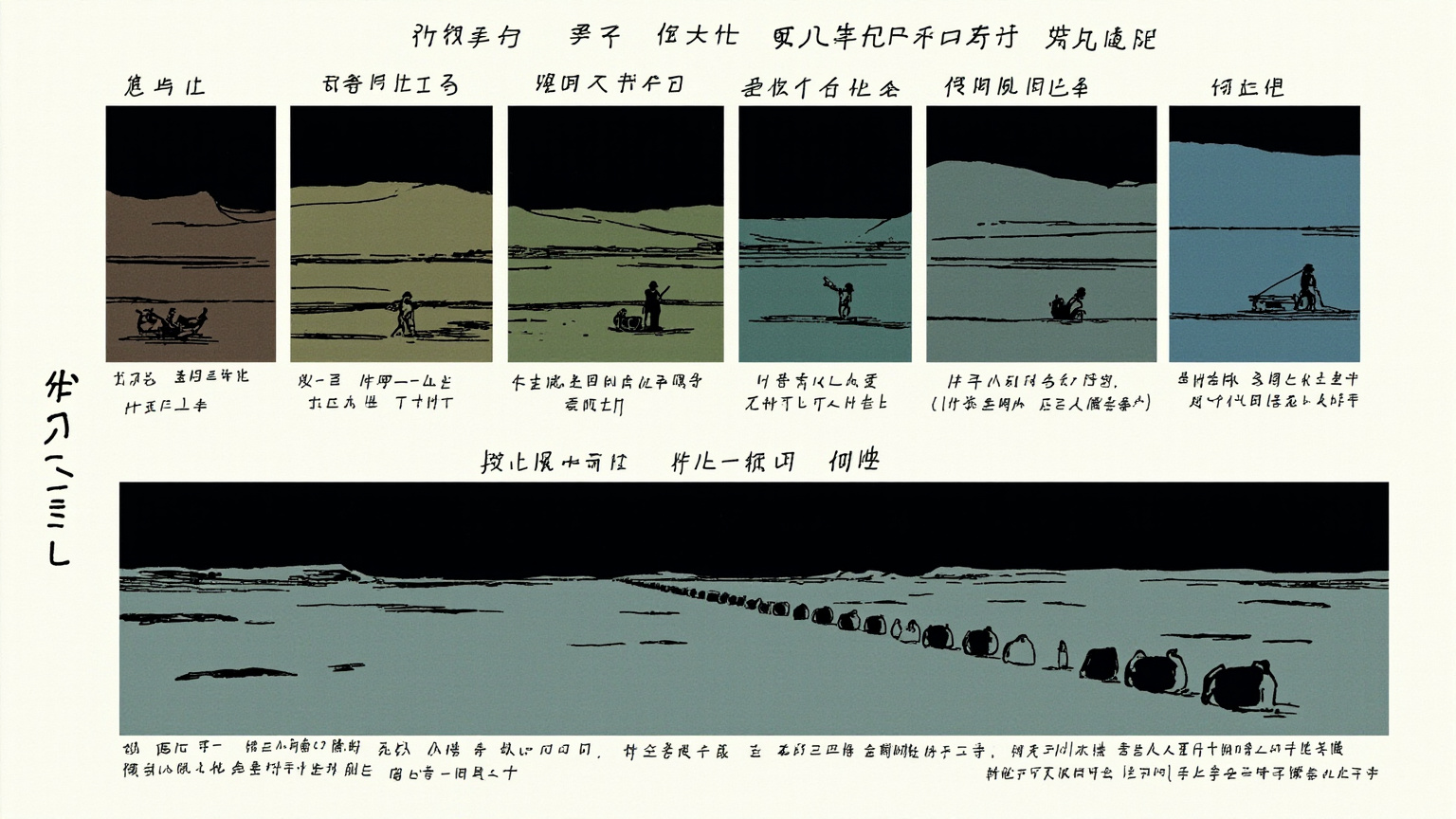
Three men were sent out: Cherry-Garrard, Wilson, Bowers. The sledges carried the barest food, the barest paraffin, the barest tent canvas, every gram accounted for. They ran straight into something particular to Antarctica: a whiteout, sky and ground utterly indistinguishable, unable to see their own feet, the party holding position only by a rope tied around all three waists. Over more than a month they fell, got buried in drift, came close to freezing solid. The snow was too hard for the sledges to slide on, so they let the dogs go and hauled everything themselves. Cherry-Garrard's feet were badly frostbitten by the end, and at some point on that journey he ground his own teeth to pieces.
As a writer, Cherry-Garrard is almost never sentimental here. He records how he froze, how he fell, what time the temperature dropped to what reading. The reader can tell this flatness isn't a pose. He genuinely didn't know what he was feeling at the time, and the feeling only came back to him later, in memory. That delay is the coolest trick this book has.
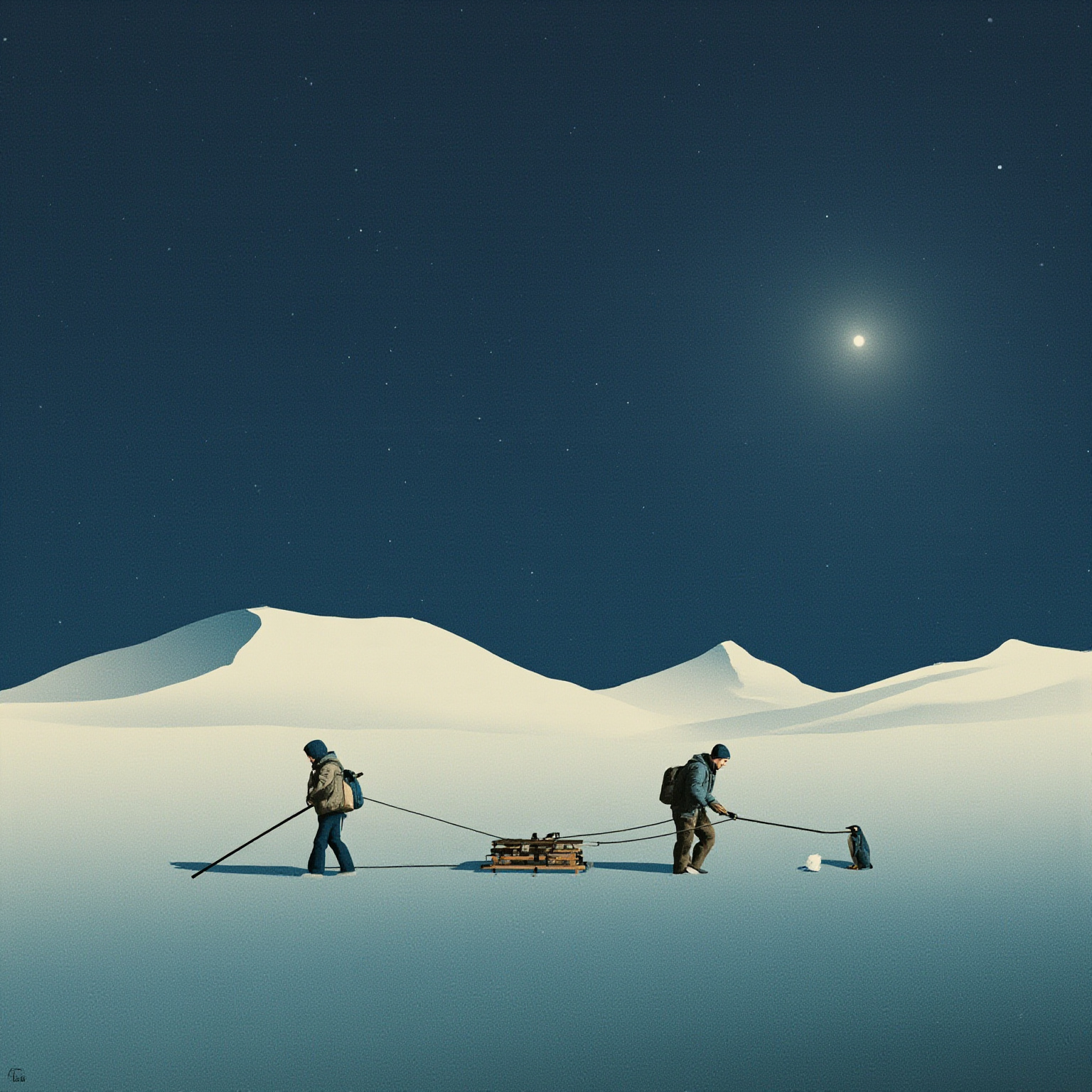
The sun was dropping towards the horizon, and would not rise again for many months.
太阳正一点一点沉入地平线下,再过许多个月都不打算回来。
金句 · 第六章 · 永夜降临之前
They found the penguin colony and brought back three eggs, carried carefully in a fur pouch. Embryology later confirmed these were not infertile duds but eggs with living embryos inside, the first foundational discovery in the life history of the emperor penguin, and the source of the book's title. Three eggs, five weeks, sixty below zero, and three lives nearly lost. Add it up and no one would call it a good trade. But it happened.
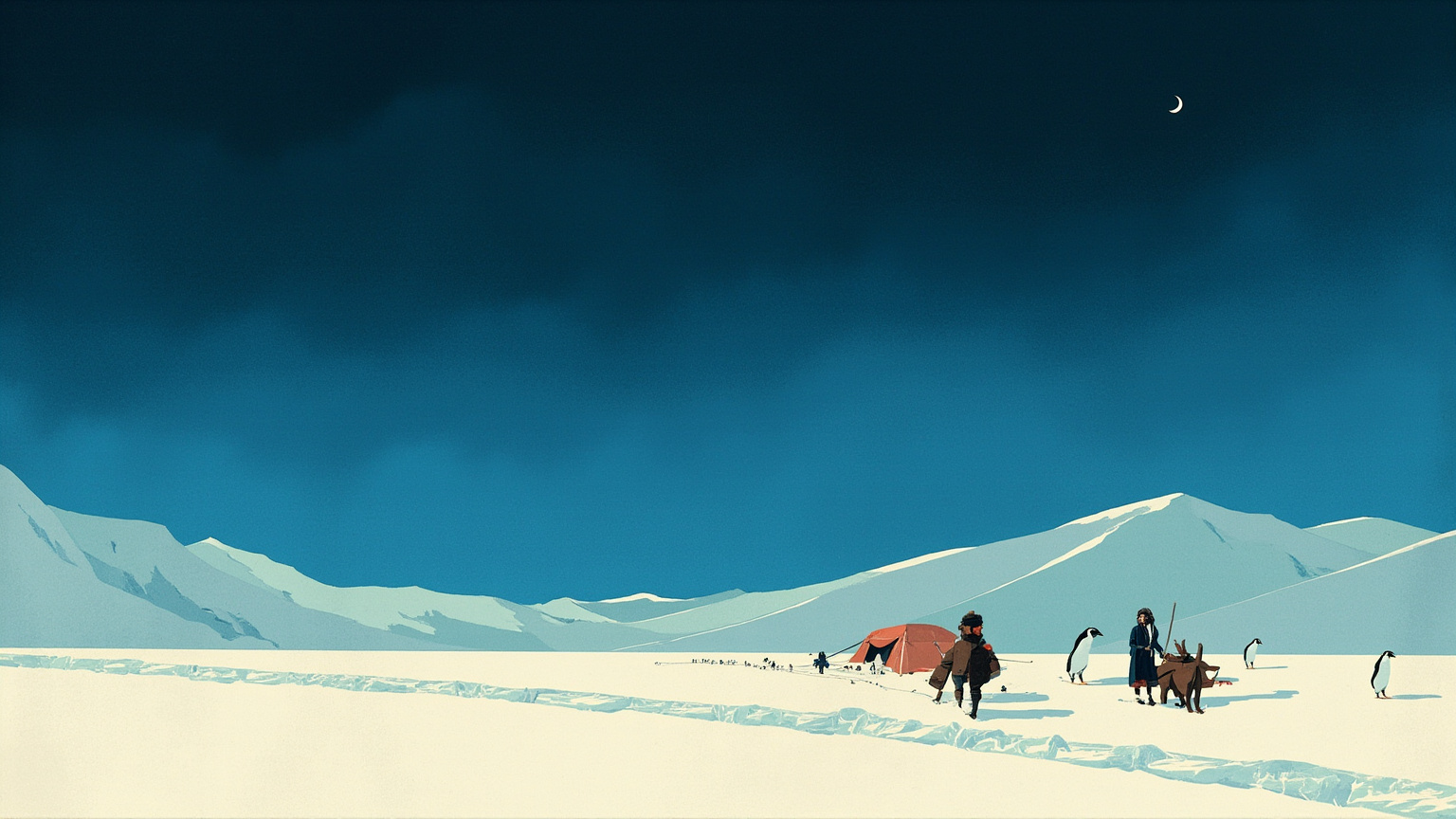
We were the first men to stand at the penguin rookery in the darkness of the Antarctic winter.
我们是第一批在南极隆冬的黑暗里、站在帝企鹅育幼场中的人。
金句 · 第八章 · 三枚蛋
The Pole — the Other Thread, the Shorter Ending
Running parallel to the winter journey was Scott's five-man dash for the pole. In the Antarctic summer of 1911 to 1912, Scott set out from base with Wilson, Bowers, Oates, and Evans, heading for the pole. They reached it and found that Amundsen had already planted the Norwegian flag. The return march was where the real death sentence lay. They went down one by one. Oates first — his old leg wound never healed, and for the whole second half of the march he drove himself on the last of his strength, pulling the sledge, until on the seventieth day, in a blizzard, he said, "I am just going outside and may be some time," and left nothing behind but his own footprints in the snow. Evans died on the trail. The last three, Scott, Wilson, and Bowers, froze and starved to death in their tent after a string of blizzards and the last of the paraffin ran out, eighteen kilometers short of a supply depot.
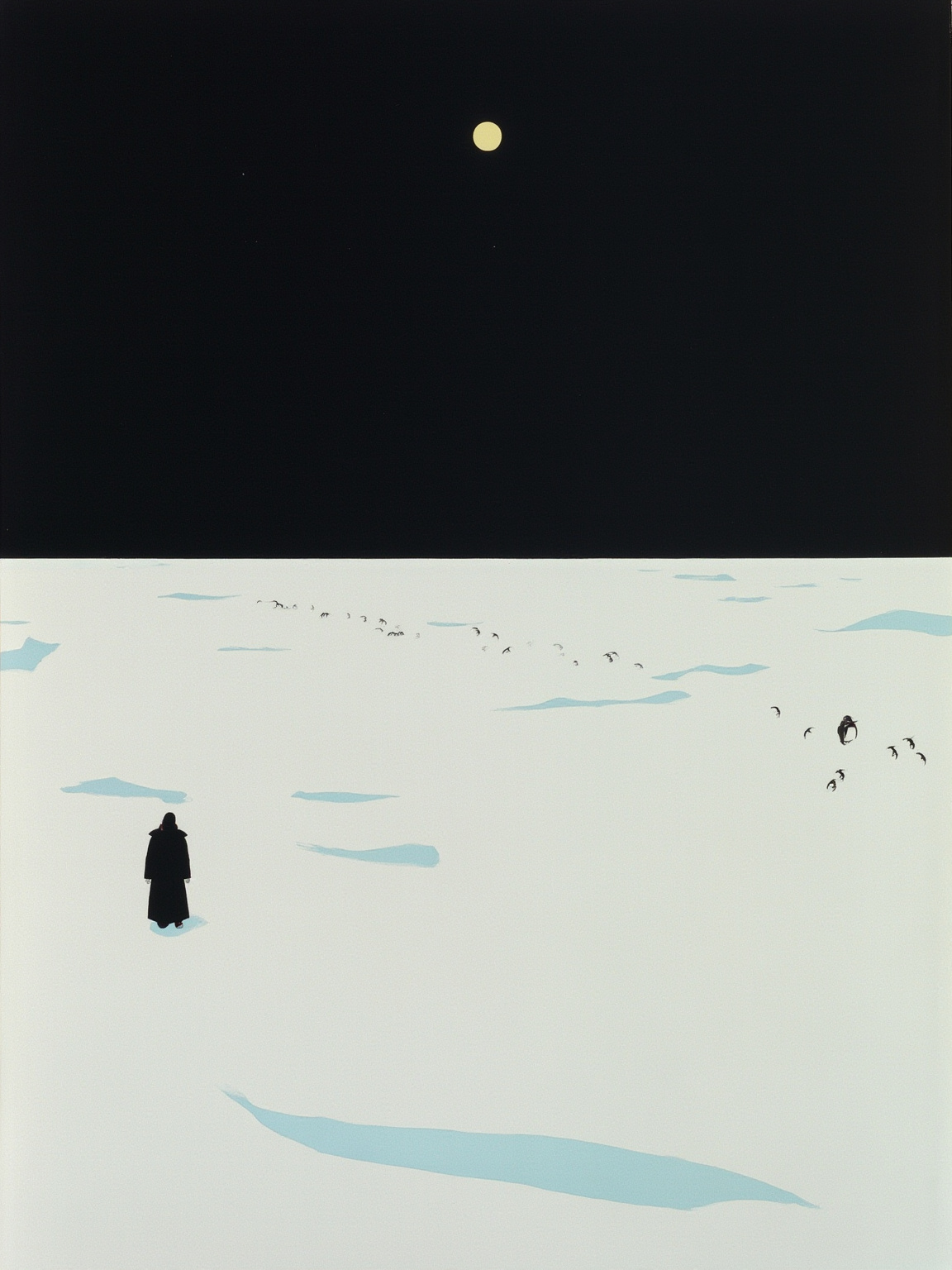
I am just going outside and may be some time.
我只是出去一下,可能要一会儿。
金句 · 第十五章 · 奥茨走进风雪
A search party found the tent in November 1912. Cherry-Garrard was one of them. They marked the spot with black flag cloth laid over a sledge, then dug the tent out shovelful by shovelful. The three frozen bodies yielded diaries, letters, specimens. Wilson's sketchbook came back to Cambridge untouched, and the Scott Polar Research Institute still holds it today.
How a Survivor Wrote About That Expedition
The book's final pages were written by Cherry-Garrard alone, in a room in London. He was the one who lived, and he meant to speak for all five men who died, and especially for the two of them, Bowers and Wilson, who had stood beside him on the winter journey. That standing gives the whole book a particular weight. He isn't writing about other people's ordeal. He is writing about ice he stood on himself, bully beef he ate himself, wind he sheltered from himself.
So there is no vengeance in this book, no accusation aimed at Amundsen, no finger pointed at anyone. It simply sets down what happened. The most restrained passage is the one where Oates walks out of the tent, no rhetoric, no tears, only that lone trail of footprints in the snow. This book doesn't run on style. It runs on fact. But the facts carry all the weight it needs.
Why This Book Works
What works is that this book makes you believe polar exploration is a purity that can actually be described. Plenty of books excite you, frighten you, make you want to go outside. This one makes you believe a person could walk five weeks through darkness over a question in embryology. That purity isn't heroic. It's absurd. Three men nearly died to find out whether there was a chick inside an emperor penguin egg. It's a little ridiculous, and it's true. That is both the joke in this book and the thing that makes you cry.
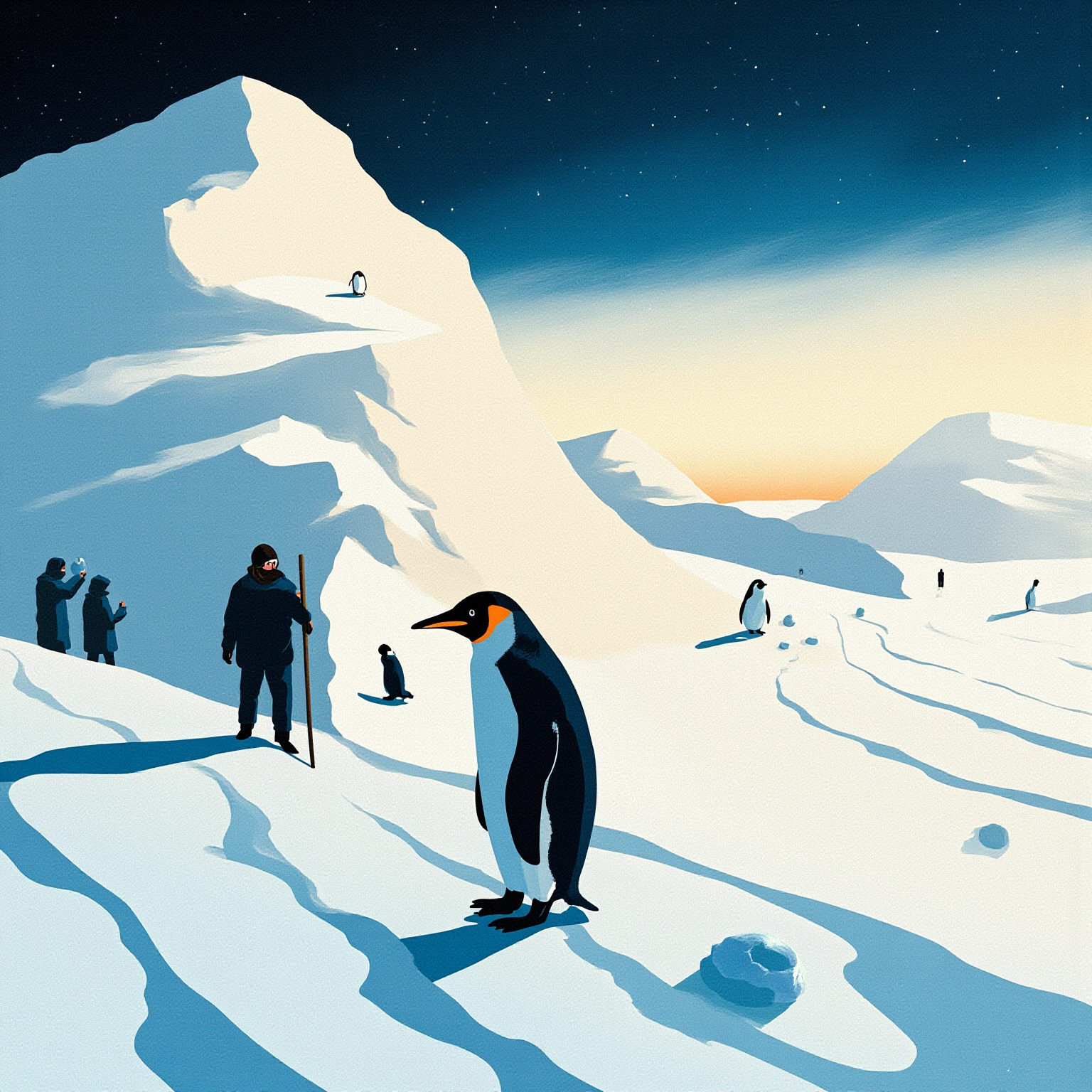
Three eggs, five weeks, sixty degrees below zero, nearly three lives — it does not seem worth it to anyone, yet it happened.
三枚蛋、五个星期、零下六十度、差点搭上三条命——这笔账算出来没人觉得划算,但它发生过。
金句 · 尾声 · 幸存者的挽歌
Three eggs, five weeks, sixty below zero, three lives nearly lost — add it up and no one would call it a good trade. But it happened.
The other thing this book gets right is a new sense of scale for exploration writing. The author almost never dresses up nature. He hands you a number, an action, and lets you unfold the rest in your own head. Sea, ice, wind, white, none of it is adjective here, it's area. In literary history this book isn't a great story so much as a great survey of terrain.
Why Read It, Once You Know the Story
Because no summary can give you this book's pacing. It isn't fast, it's slow — an hour on the sledge can take two full pages, and all the author gives you in those pages is temperature, wind direction, the state of someone's feet. A summary can tell you what Oates said that day, but it can't put you in that wind long enough for your eyes to start losing focus. You have to read this book slowly, the way you'd sit by a fire in camp, and let the cold work its way in on its own.
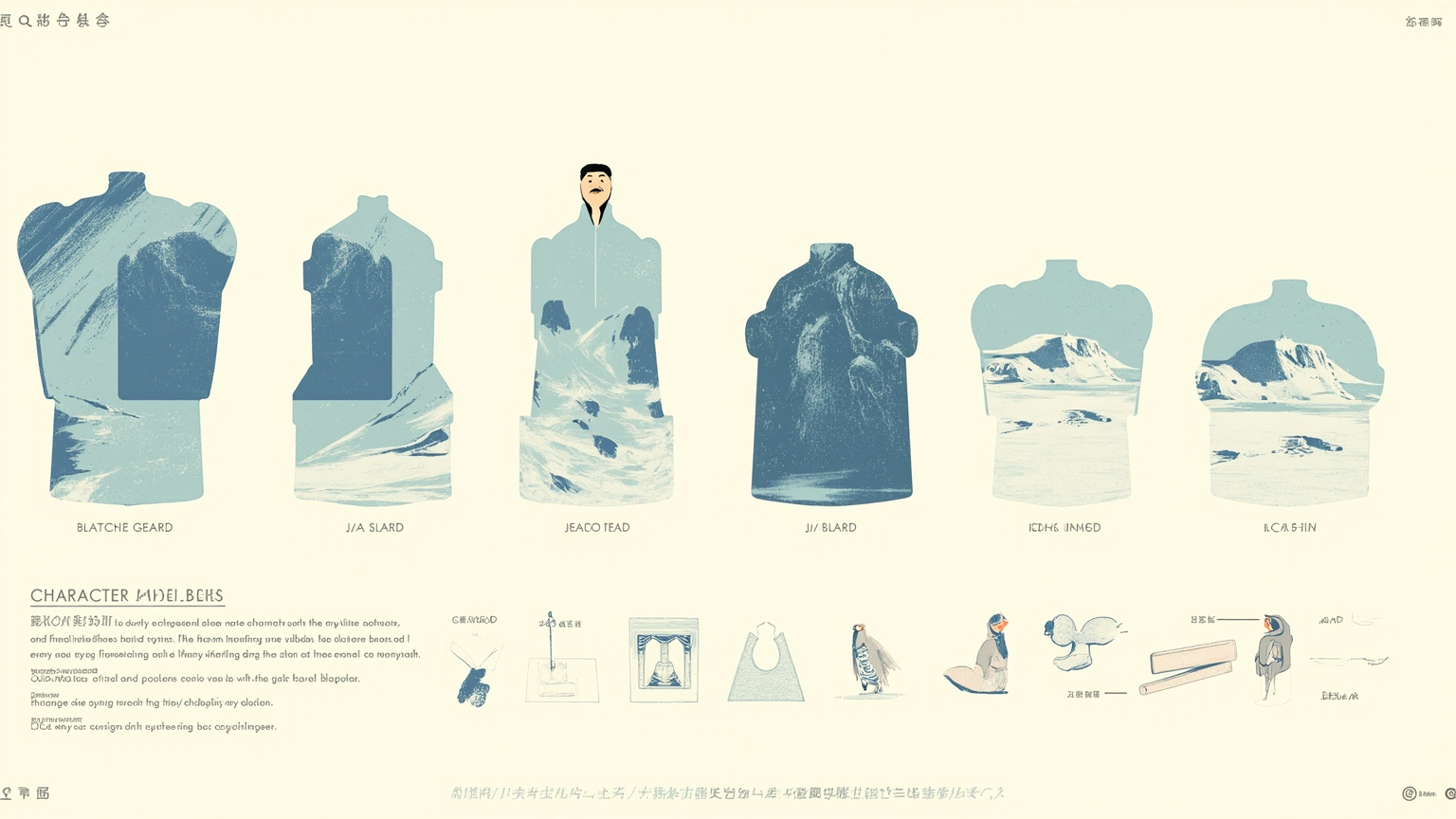
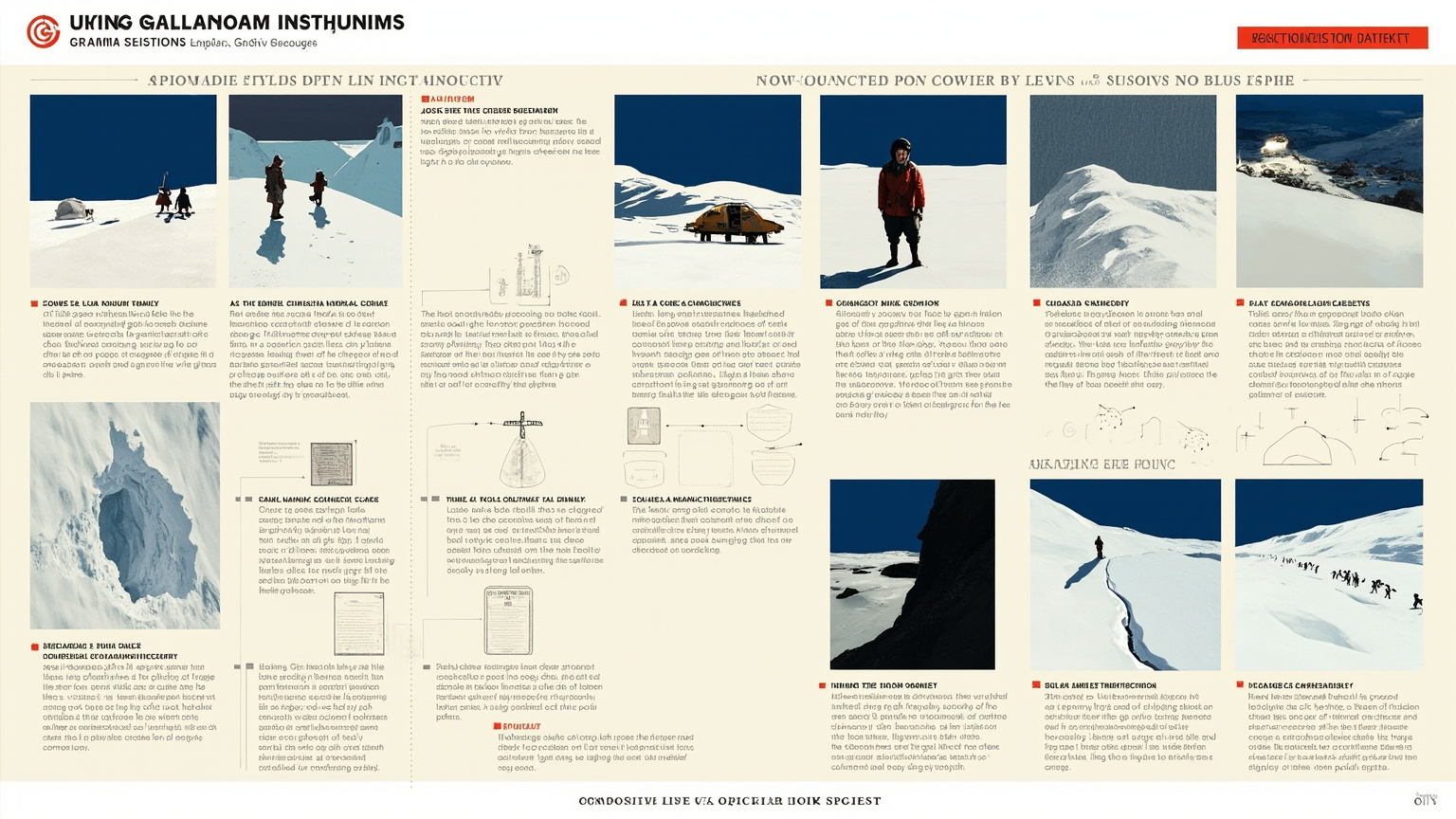
Art Direction4 plates
Before the guide was written, this book got a visual foundation — every illustration you just read grew out of it.