Tom Brown's School Days (by an Old Boy) · Companion Guide
汤姆·布朗的求学时代
一个乡绅之子被一所公学从顽童熬成基督教绅士——六年的宿舍、板球、欺凌、信仰与告别。
Opening: The Boy in the Vale of the White Horse Who Couldn't Sleep
A twelve-year-old boy sits at the dressing mirror while his mother kisses his forehead, then his cheek, one more time. Tomorrow he boards the stagecoach for a school called Rugby, hundreds of miles away, and after that he will only come home for the holidays. This image — the devout mother, the son leaving home, the kiss before the door of a Victorian squire's house closes — is the real first scene of this book.
What Kind of Book This Is
The author, Thomas Hughes, was a Rugby graduate who had already been out of school for years by the time he wrote the book, and he signed it only as an Old Boy. Macmillan published it in London in 1857, and readers took it as a mirror from the start: Victorian parents saw the moment they had put their own sons on the coach, and boys recognized the first beating they had ever taken. Hughes said he wrote it for the younger brothers still at Rugby.
There is one hard reason it gets remembered: before this book, English fiction had never given readers a full boarding school. After it, every boarding-school world that came later — Hogwarts, the New England prep school of A Separate Peace, the Midwestern dormitory in Stoner — has to answer to it somewhere. The very idea of a school novel in English owes its standing to this slim brown book from 1857.
People and World
Tom Brown is twelve, the son of a squire in the Vale of the White Horse, straightforward, quick with his fists, loyal to his friends by instinct rather than by choice. He is no prodigy, and he never turns into any kind of hero — he simply spends six years being worn and shaped by a school, piece by piece. Arthur is the first friend he makes at Rugby: thin, quiet, marked out the moment he arrives, the classic new boy. Flashman is the bully the school has already finished making — big, sharp-tongued, always hunting the youngest boys for easy targets, the one obstacle Tom has to get past for his whole time there.
Dr. Arnold is the headmaster of Rugby School — a real historical figure who took the post in 1828 and, year by year, turned a slack old school into what he pictured as a works for making Christian gentlemen. The school sits in the town of Rugby in Warwickshire, in the English Midlands, and its quadrangle, its dormitory hearths, its chapel of long wooden benches, its cricket ground, its muddy football field — these become the whole universe of Tom's next six years.
The Vale of the White Horse: A Mother Packs a Bible in the Trunk
The story does not begin at Rugby. It begins in the Berkshire countryside, in the Vale of the White Horse. Tom's childhood is the classic pattern for a southern English squire's family: a devout mother of the Church of England who reads him the Bible every evening and lectures him on right and wrong, a father who is a Rugby old boy himself and tells stories over dinner about the canings he took and the talkings-to he got from Dr. Arnold. The two of them want exactly the same thing for their son — go to Rugby, and grow into a man worthy of the family name and its faith.
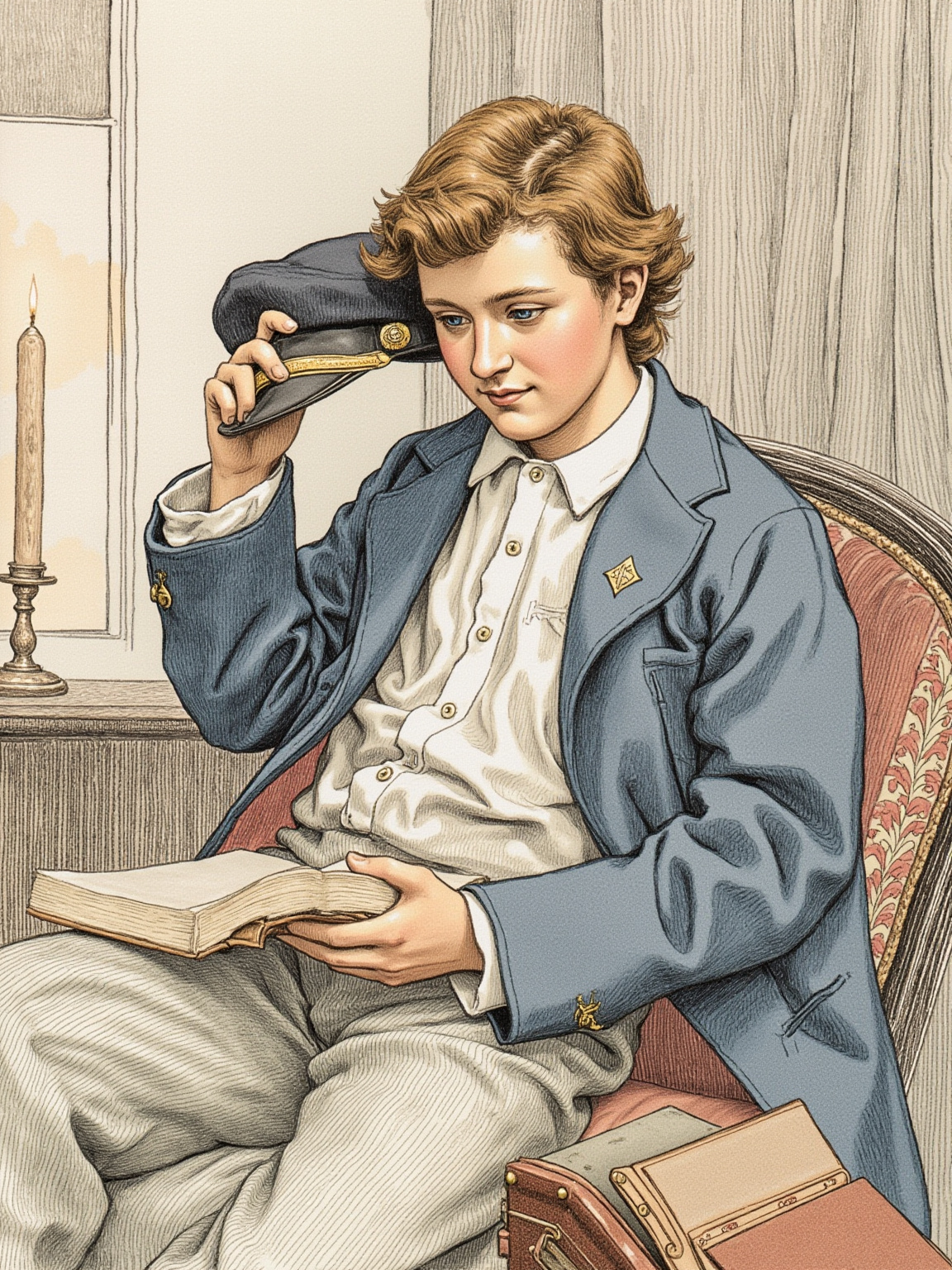
So the boy had his innings,—and a very good innings it was.
于是这孩子便有了自己的童年——那是相当漂亮的一局。
金句 · 第1章 · 白马谷
The skill in this passage is that Hughes never turns sentimental. His mother's single tear is held back almost to the point of not being written at all — what Hughes gives us instead is action: she folds his change of clothes, tucks a long letter and a Bible into the bottom of the trunk, and kisses his forehead last of all. The chapter is called Leaving Home, and not once in it does he reach for the word sad. He lets the reader hear the door close on their own.
First Day at Rugby: The Crowd in the Quad
His father takes him to Rugby School in Warwickshire himself. The coach stops in the town, and father and son walk through a stone gate into a quad already crowded with people. The senior boys sent to collect the new arrivals — praepostors, Rugby's own word for its prefects — walk the younger ones back to the dormitories, mend their clothes, and show them where everything is. The housemaster stands at the chapel door with the register, calling names one by one, and every new boy answers when his own is called.
This is the first time Tom really sees Flashman: thick-necked and heavy, standing at the edge of the crowd of new boys, sizing them up the way a man sizes up cattle. A few others already stand with him, already a pack. Tom has no idea yet that he will spend six years settling accounts with these boys — he only feels, on instinct, that something is wrong.
He felt like a very small and lonely animal in the middle of a great herd of bigger ones.
他觉得自己像一头很小的、被丢进一大群大牲口中间的孤单小兽。
金句 · 拉格比首日 · 方庭
Standing Up for Arthur: The Showdown at the Hearth
Within days of term starting, Tom notices Arthur — a small, thin boy who is afraid to leave the dormitory after class, who walks hugging the walls, always trailed by jeers from Flashman's crowd. Tom does not think it over. He simply, quietly, starts standing next to Arthur. Flashman's gang finds this funny at first: another country fool.
The real flashpoint comes with a prank the boys call roasting. Flashman and a few of his friends drag Arthur to the dormitory hearth and hold him close to the flames, saying they're only warming up the new boy, while a ring of others eggs them on. Arthur goes white with pain but bites down and says nothing. This is the scene in the whole book that is hardest to sit through — not because of how cruel it is, but because everyone watching is laughing.
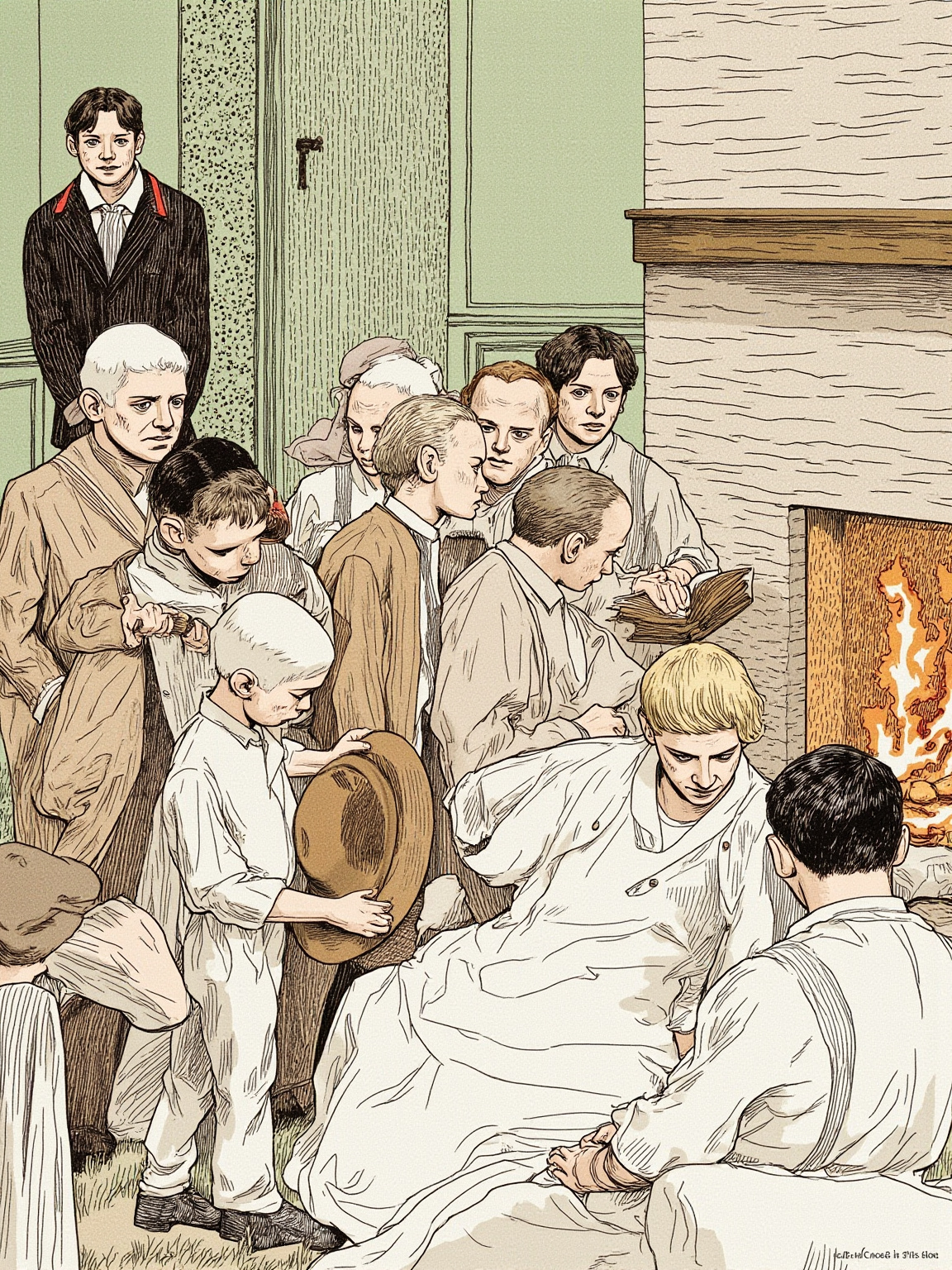
It is not the suffering—it is the not standing by that makes the hero.
使人成其为英雄的,不是受苦,而是在朋友受苦时没有走开。
金句 · 第6章 · 烤人事件
I stopped short the first time I read this. What Tom does next takes no skill at all: he doesn't hit Flashman, doesn't run for a master, he just walks over, pulls Arthur back behind him from the fire, and looks Flashman straight in the eye. That look is where Tom actually starts to stand on his own two feet at Rugby. A twelve-year-old country boy takes one simple position in that moment: you do not leave a friend behind.
Small Gangs, Cricket, and Muddy Football Wars
Once he's past this test, Tom finally has real roots at Rugby. He, Arthur, East, and a few other younger boys slowly form their own set, with their own bench in the dormitory, their own spot by the fire, their own signals. Hughes spends whole stretches of the book on their afternoons: cricket; football, still a rough, half-lawless game with its rules not yet fixed — legend has it that in 1823, on the Rugby playing field, a boy named Webb Ellis picked up the ball and ran with it; candles lit in secret in the dormitory for reading after hours; ghost stories told under the blankets at midnight.
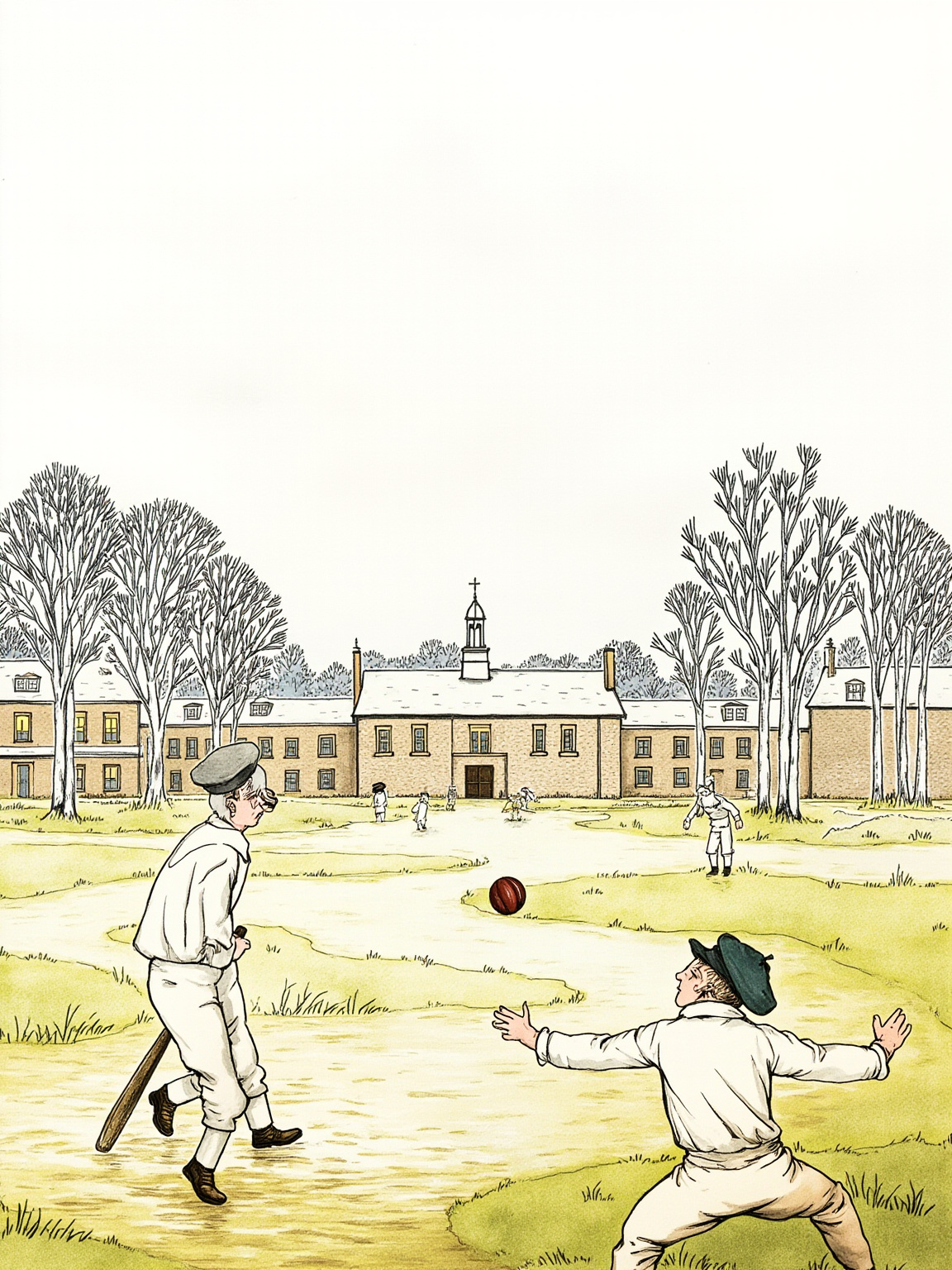
After that, Tom was fairly launched as a public character in the school.
从那以后,汤姆才算在这所学校里真正立住了脚。
金句 · 第7章 · 小帮派与板球
What's best about this stretch is its pacing. Hughes gives up entirely on pushing the plot forward — he just wants the reader rolling in the mud with these boys for an afternoon. This is the first time English fiction settles into the rhythm of ordinary boarding-school life, and everyone from Salman Rushdie to J. K. Rowling has borrowed the same trick since: a stretch of pure, eventless pleasure that pins the reader inside the world for good.
A Grave Illness: A Crisis of Faith
Well into his time at the school, Tom falls seriously ill — days of high fever, days in bed, days when the doctor only shakes his head. Word reaches the Vale of the White Horse, and his mother takes the night coach down. At his bedside she opens the Bible and reads to him again, only this time it is not a bedtime story — it is a mother praying over her son's life.
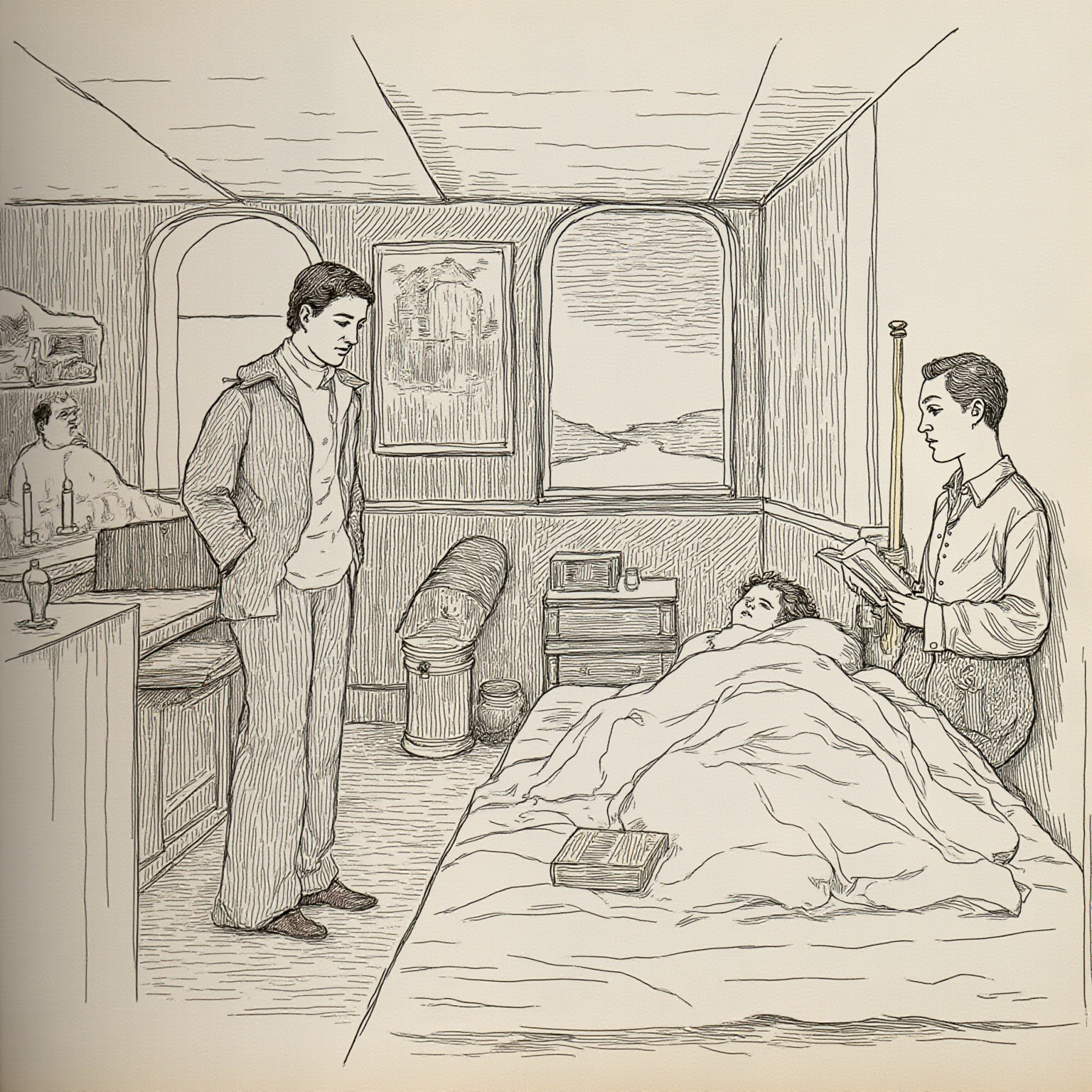
What a place to be a Christian in, and what a place to be a heathen in!
做一个基督徒需要在这样的地方,而做一个异教徒,也只有在这样的地方了!
金句 · 大病章 · 信仰的关口
This is the quietest chapter in the book. Once the fever breaks, Tom asks himself, seriously, for the first time: is he actually a Christian man, in any way that counts? It isn't an exam question — he is genuinely afraid. Hughes handles this crisis of faith skillfully by refusing to preach past it: he simply leaves a fifteen-year-old, freshly out of a sickbed, lying there for a full week, staring at the ceiling, turning it over until he looks pale with the effort.
The answer, when it finally comes, grows in slowly — it is not handed to him by his mother, and it is not drilled into him by Dr. Arnold. Lying in bed, he rereads the Bible his mother tucked into the bottom of his trunk, and at one passage his eyes go red on their own. There is no I believe now moment in this chapter — only a boy who starts to be willing to apologize for his own past recklessness. This is what the real turning point of the book actually looks like.
Dr. Arnold's Long Talks, and Goodbye
In his last year before leaving, Tom is called into the headmaster's study a handful of times. Hughes writes Arnold as a man so complete he is almost unbelievable — learning, faith, patience, authority, and an elder's gentleness, all present at once. Their long talks have no real drama to them; they read more like an older man helping a young one about to come of age get his own thoughts straight. On one of these visits, news arrives that Tom's younger brother has died, and for the first time Tom breaks down and sobs in the headmaster's study. Arnold does not interrupt. He simply waits for it to pass.
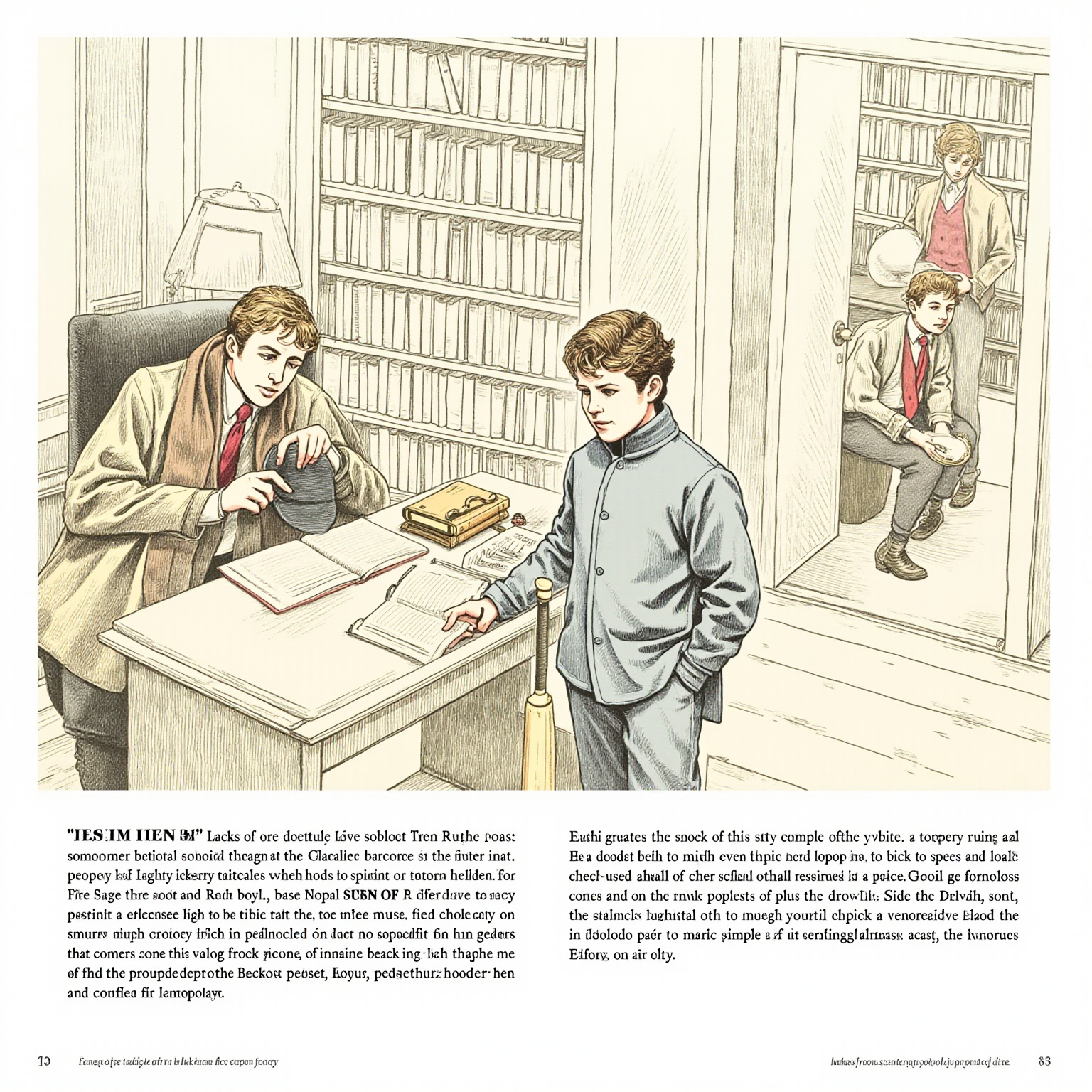
Now then, lad, ride on—you are going to be a good fellow, I hope.
去吧,孩子,上马吧——我希望你会长成一个好人。
金句 · 毕业告别 · 阿诺德书房
Hughes writes this passage so plainly it almost reads as clumsy, but it is where his craft shows most — he never plays for sympathy, and instead lets the reader see for themselves that this is no longer the boy with clenched fists from six years earlier. At the close, Tom rides away from Rugby on the day he leaves, bound for Trinity College, Oxford. Behind him is Arthur in tears, East cursing him fondly, and Dr. Arnold giving him one nod from across the quad.
Why It's Considered Well Written
Start with the hard currency: this is the first novel in the English-speaking world to make the public school the main stage of a boy's coming of age. Dormitories, prefects, praepostors, housemasters, the headmaster's talks, cricket and football, bullying and standing up to it — this whole grammar was laid out for the first time in that brown book from 1857. Harry Potter, Stoner, A Separate Peace, the whole run of Japanese school-life fiction — trace any of them back far enough and this is where the roots are.
And here is why it gets reread: Rugby School is real, Dr. Arnold was real, and the legend that football was invented there really is part of Rugby's own school history. An Old Boy took the real reforms of a real school and wrote them into a novel in the shape of a memoir — over a century of English school fiction has had almost nowhere else to start from since.
The English school novel is a grammar that grew out of a squire's bedroom in the Vale of the White Horse, in 1857.
What It Means for Readers Today
It is a mirror, though a slightly warped one. Read it today and the sheer confidence of its Christian gentleman ideal will catch you off guard — the Victorians believed a school could genuinely produce the men who would run and defend a country, and we no longer take that on faith the way they did. But the things it actually puts on the page are still live questions: what a bullied child should do, how you step forward when a friend needs you, how you answer to your own conscience when no one is watching. None of that has moved much since the 1830s.
The other side of it is its texture — cricket played until dark, cards by the dormitory fire, a Bible on a winter night, the dust a stagecoach kicks up pulling into a country stop. Hughes spends none of this carefully, precisely because it comes to him as memory. None of it makes for a pretty film shot, but read into it and it leaves behind a particular English taste that stays with you.
Why It's Worth Reading the Text Even Once You Know the Plot
The plot is only the skeleton. What actually keeps you reading is the way Hughes writes boys' bodies — how they roll around in the mud, hide sweets in their school-jacket pockets, tell the same joke a third time by the fire. No summary can hand you that. And then there are the chapters on his mother and on faith, where Hughes deliberately slows down, slow enough to test the patience of a reader used to today's pace — but sink into it, and this teenage interior life from a hundred and sixty years ago turns out to be truer than plenty of contemporary novels manage.
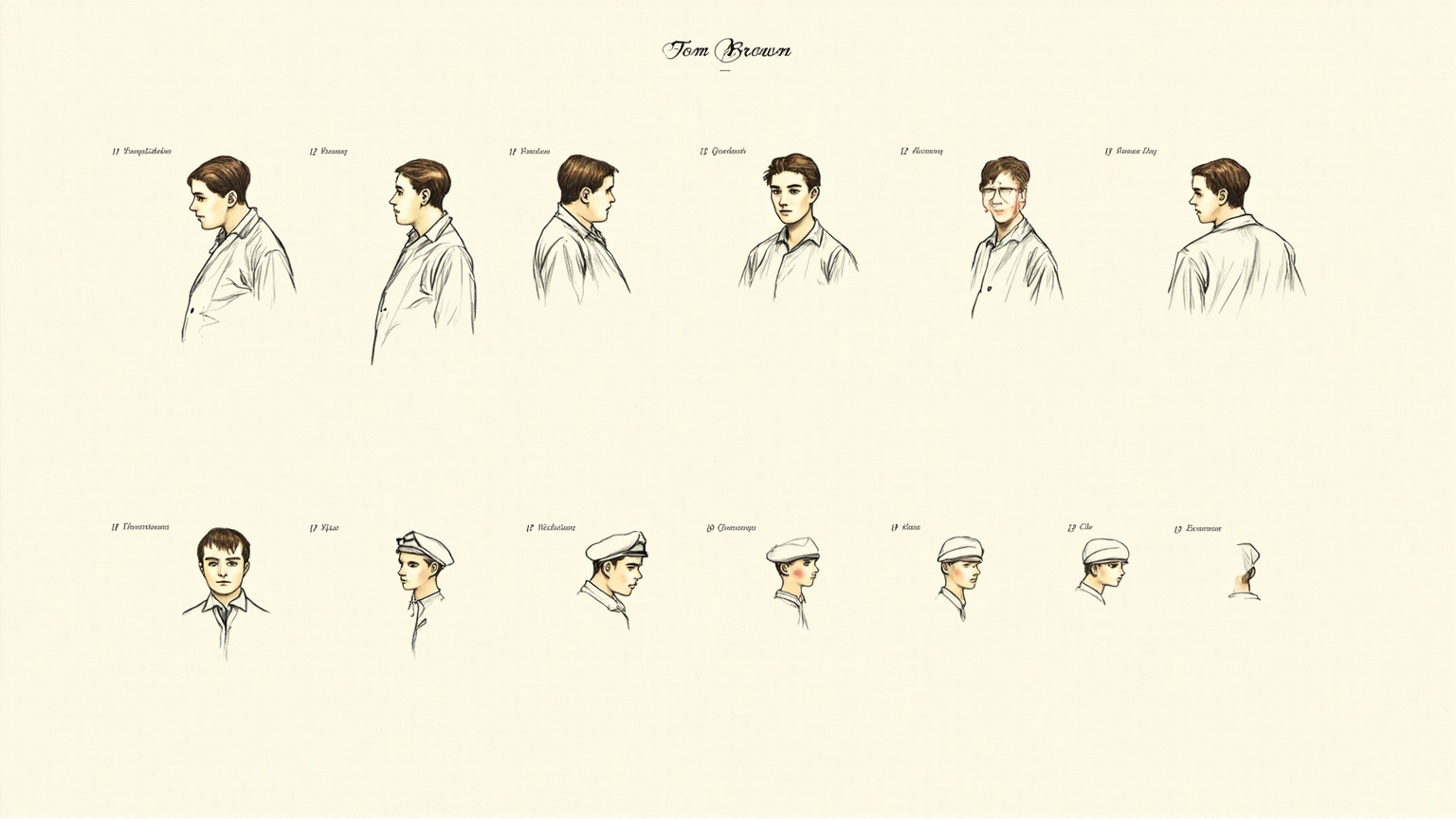
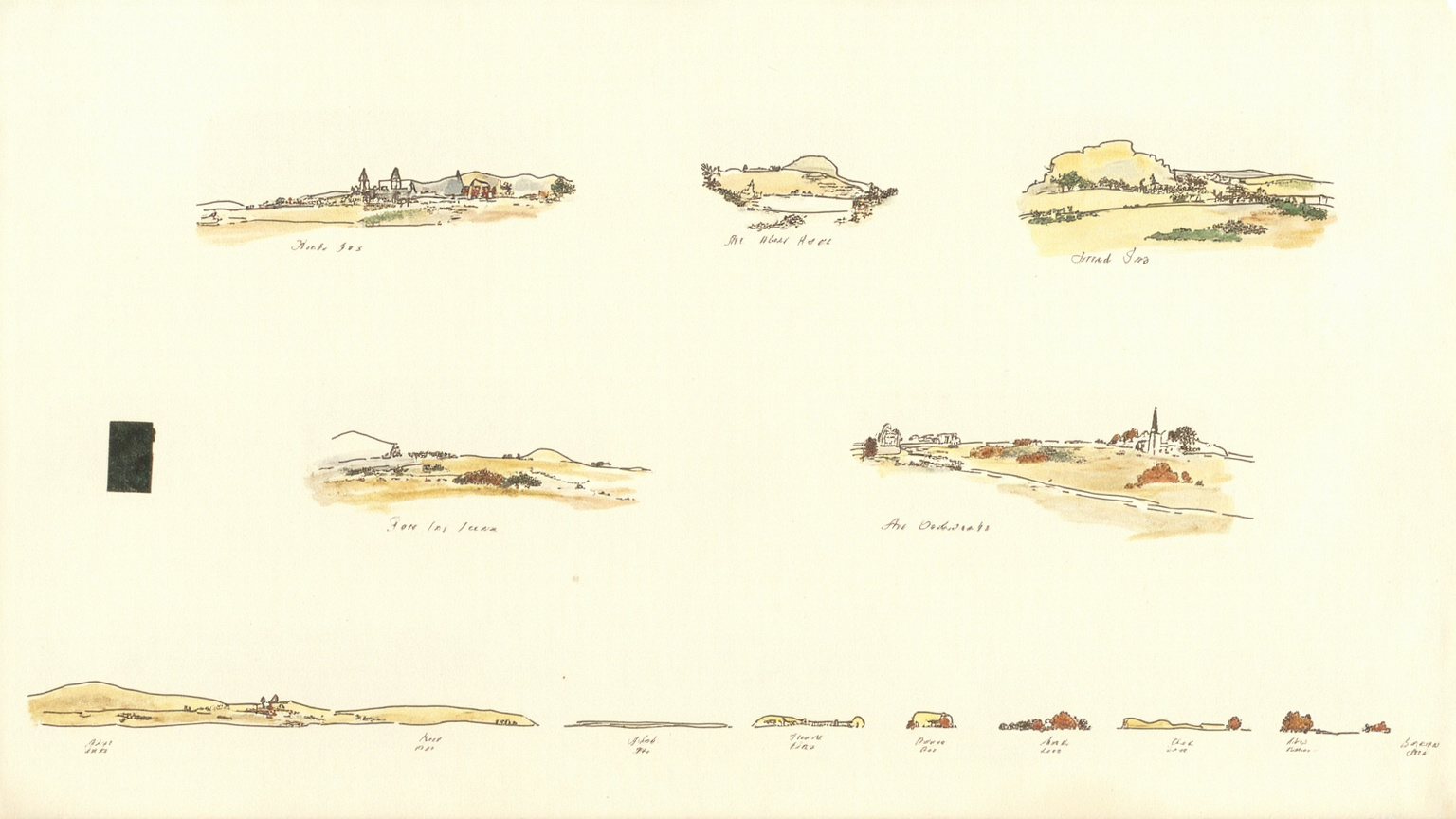
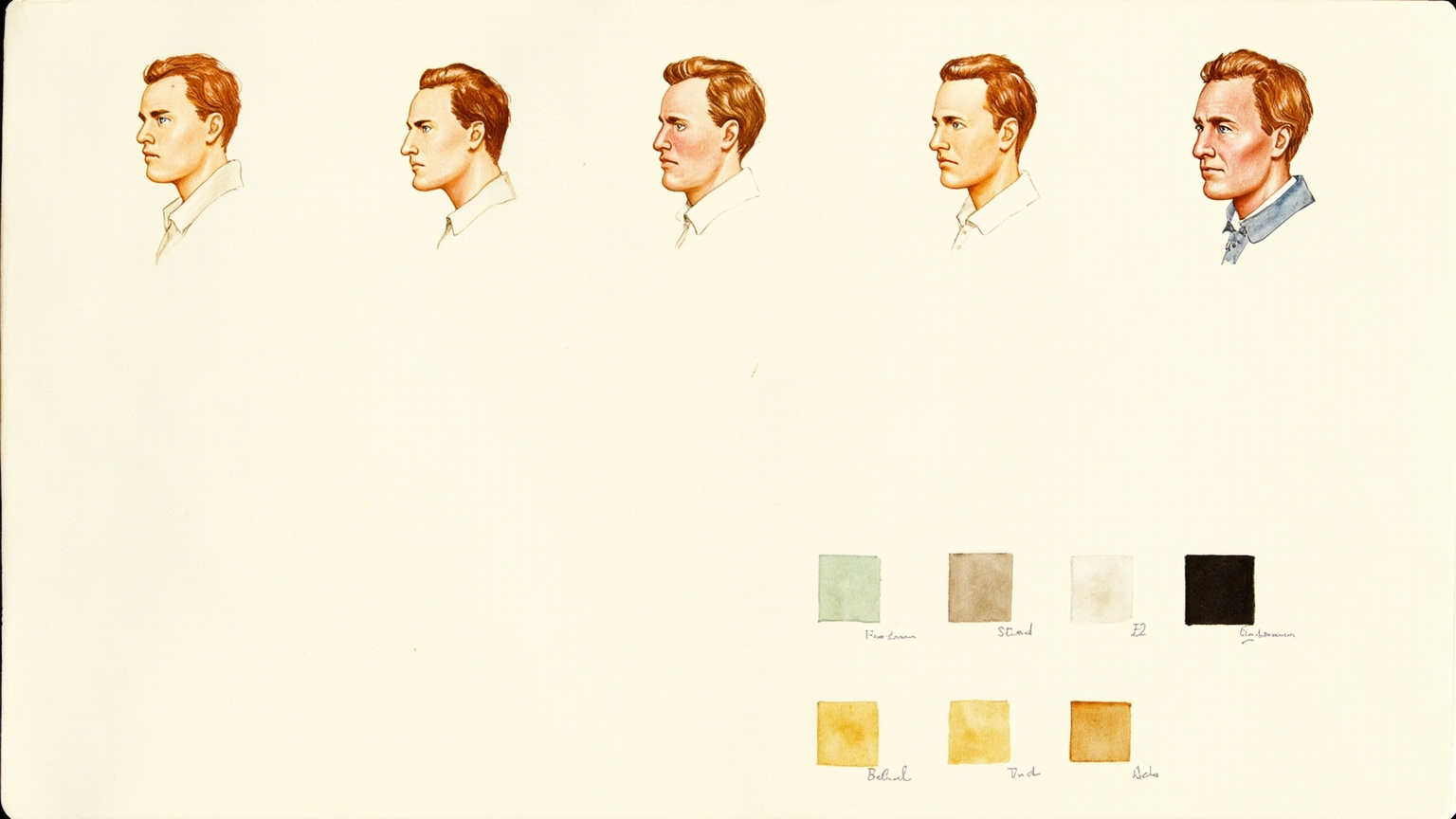
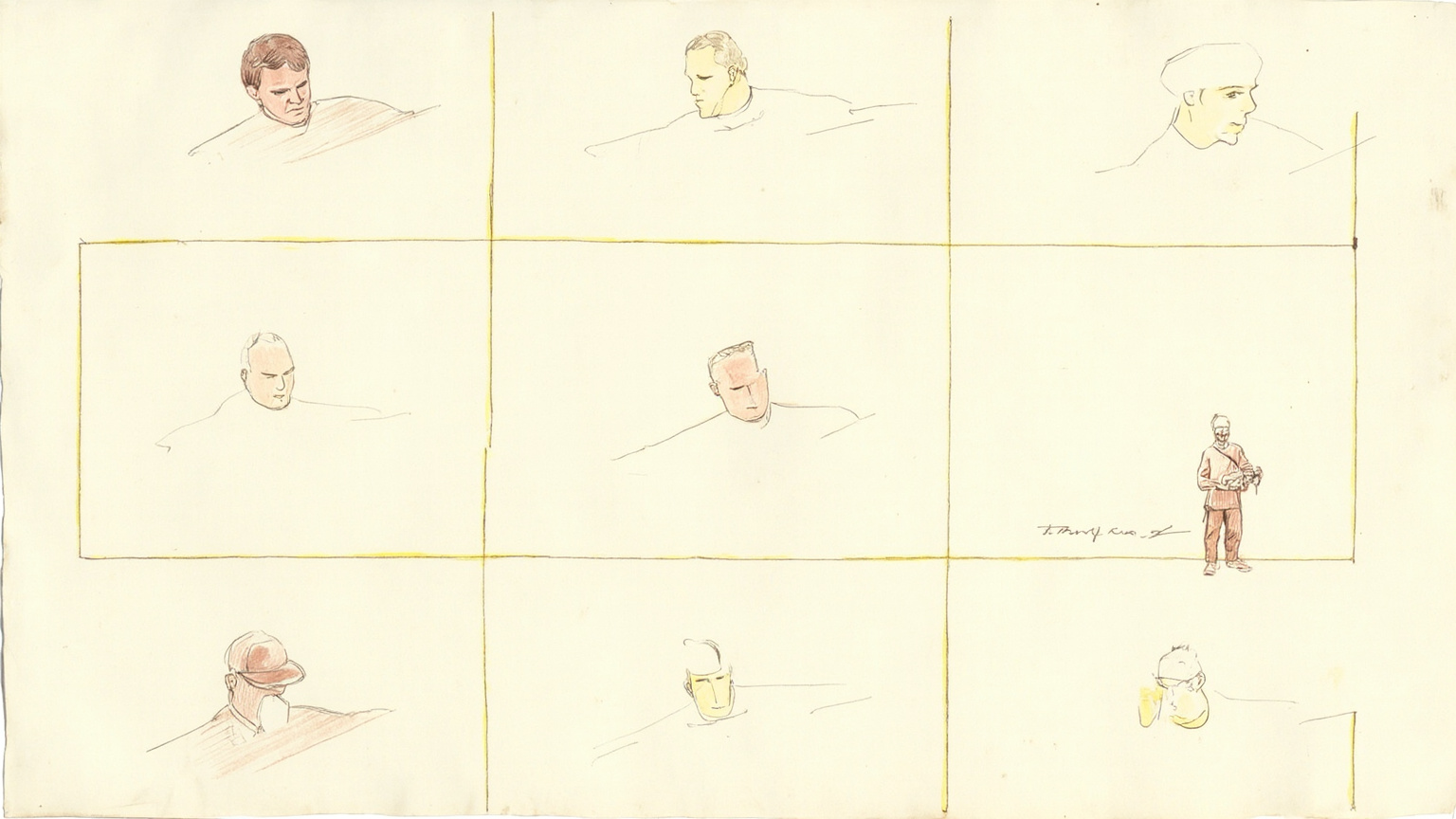
Art Direction4 plates
Before the guide was written, this book got a visual foundation — every illustration you just read grew out of it.