The Tower of Myriad Mirrors (A Supplement to Journey to the West / Xiyou bu) · Companion Guide
西游补
一只打遍三界的猴子,遇上他力气赢不了的那个对手——情。镜子套镜子,过去未来上下翻,人还是不是原来那只猴?
Opening: The Flaming Mountain Inside a Mirror
The embers of the Flaming Mountain haven't even cooled when Sun Wukong sets down his iron rod and goes off to beg for food. He pushes open a door he has no business opening and walks into a place called the Tower of Myriad Mirrors, where every mirror holds its own time and place. One moment he is standing in the court of the King of Qin. The next he has become Lady Yu inside Xiang Yu's war tent. The moment after that he is presiding at the bench in the Hall of King Yama. No one drags him in, no one chases him — he loses himself entirely on his own. This is not the monkey from the original Journey to the West. This is the monkey Dong Yue wrote, pulled by something called qing, desire, into the most carefully built dream of three hundred years ago.
What Kind of Book Is This
The Tower of Myriad Mirrors was written by Dong Yue at the end of the Ming dynasty and published under the Chongzhen reign. Three sequels to Journey to the West exist — this one, Continued Journey to the West, and A Later Journey to the West — and only this one is read by scholars as a work in its own right, not a footnote to the original. Lu Xun called it rich and many-sided, dreamlike in its inventions, its strangest turns still startling to read, which is another way of saying that once you open it, you can't put it down. It's also the earliest Chinese text regularly compared to stream of consciousness and metafiction: a dream folded inside a dream, and twelve questions the author asks and answers himself at the very end. Readers three hundred years later still find the technique fresh.
Who's in the Dream
Sun Wukong is still the hero, but this time his god-nature is flattened and his human nature blown up to full size — anxious, suspicious, certain something is wrong at every turn. The fighter who once cleared a hundred and eight thousand li in a single somersault becomes, in Dong Yue's hands, a monkey lost in a maze. The one who traps him is the Mackerel Demon, a spirit whose name carries the sound of qing and whose form is soft and beguiling, and whose art is not combat but the weaving of dreams. The old text says the Mackerel Demon and Sun Wukong were born in the same year, month, day, and hour, one grown up righteous, the other crooked, both sides of the same moment. Tripitaka, his master, has stopped chanting sutras in this dream too. He has returned to lay life, married a woman named Cui Shengniang, and been given the title General Shaqing by the new Tang emperor, riding off on a tall horse to wage war in the west. Back in the waking world, the real Tripitaka is being led around by a young monk who is actually the Mackerel Demon in disguise. Master and disciple, real and false, have simply traded places.
The Verdant World: A False World Woven by the Demon of Desire
While out begging for food, Wukong kills a band of men he had no business killing, and while he's still sick with regret, a gust of wind sweeps him into the Verdant World. The place looks bright and vivid at first, but the longer you look, the more wrong it feels. King Xiaoyue sits enthroned in his palace, calling himself lord of the land, and his very name is built from the pieces of desire: take 'moon' and 'king' and you're one stroke short of spelling 'craving.' The whole city is a stage set that King Xiaoyue and the Mackerel Demon built together, tailored to trap Wukong and no one else. He rushes to find his master, to find a way out, but every road leads him back to a mirror.
This is the book's sharpest move: qing isn't a person, it's an entire set of rules the world runs on. A mirror holds the past. A mirror holds the future. A mirror holds another self entirely — and the moment you accept the self in the mirror as your own, there's no way back out. Dong Yue sends Wukong in and out of the mirrors again and again, and every step follows the logic of a dream, not the logic of martial combat: there's no enemy to fight, only a self that keeps splitting itself into pieces.
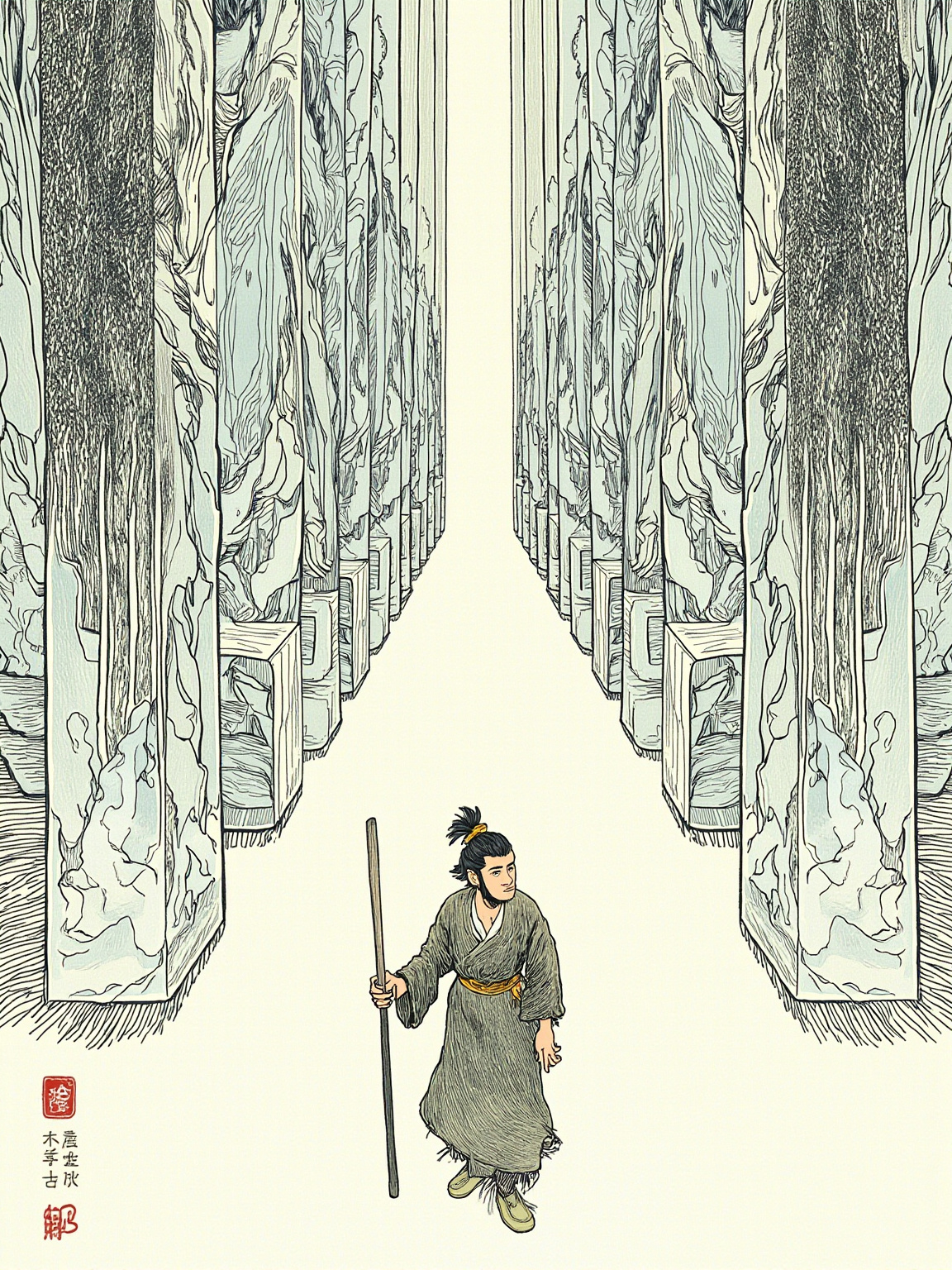
He killed the wrong men on the road, and the wind caught him before his remorse could settle — a whole green world folded shut around him.
他一棒打杀的余悔未消,那阵青风便已卷到;眼前明明朗朗一个新天地,竟是粉黛骷髅的门面。
金句 · 卷首 · 青青世界卷入
The World of the Ancients: Disguised as Lady Yu in the Camp of Chu
Wukong needs to borrow the Mountain-Driving Bell from Qin Shi Huang, a treasure that can drive away the Flaming Mountain itself, but the First Emperor is hidden away in the World of the Ancients, and Xiang Yu stands in the way. Wukong grits his teeth, transforms himself into the likeness of Lady Yu, and slips into the Hegemon-King's camp. Xiang Yu, his face streaked with the tears of a tragic hero, is played for a fool by a monkey wearing a beautiful woman's face. Wukong pumps him for information behind that borrowed face, and finally engineers it so that Xiang Yu kills the real Lady Yu with his own hands — a clean way to get what he needs and slip out of the Chu camp. This is the most farcical stretch in the whole book: the fearsome Hegemon-King, pouring out his heart to 'Lady Yu,' with no idea he's confiding in a monkey holding his voice down to a whisper.
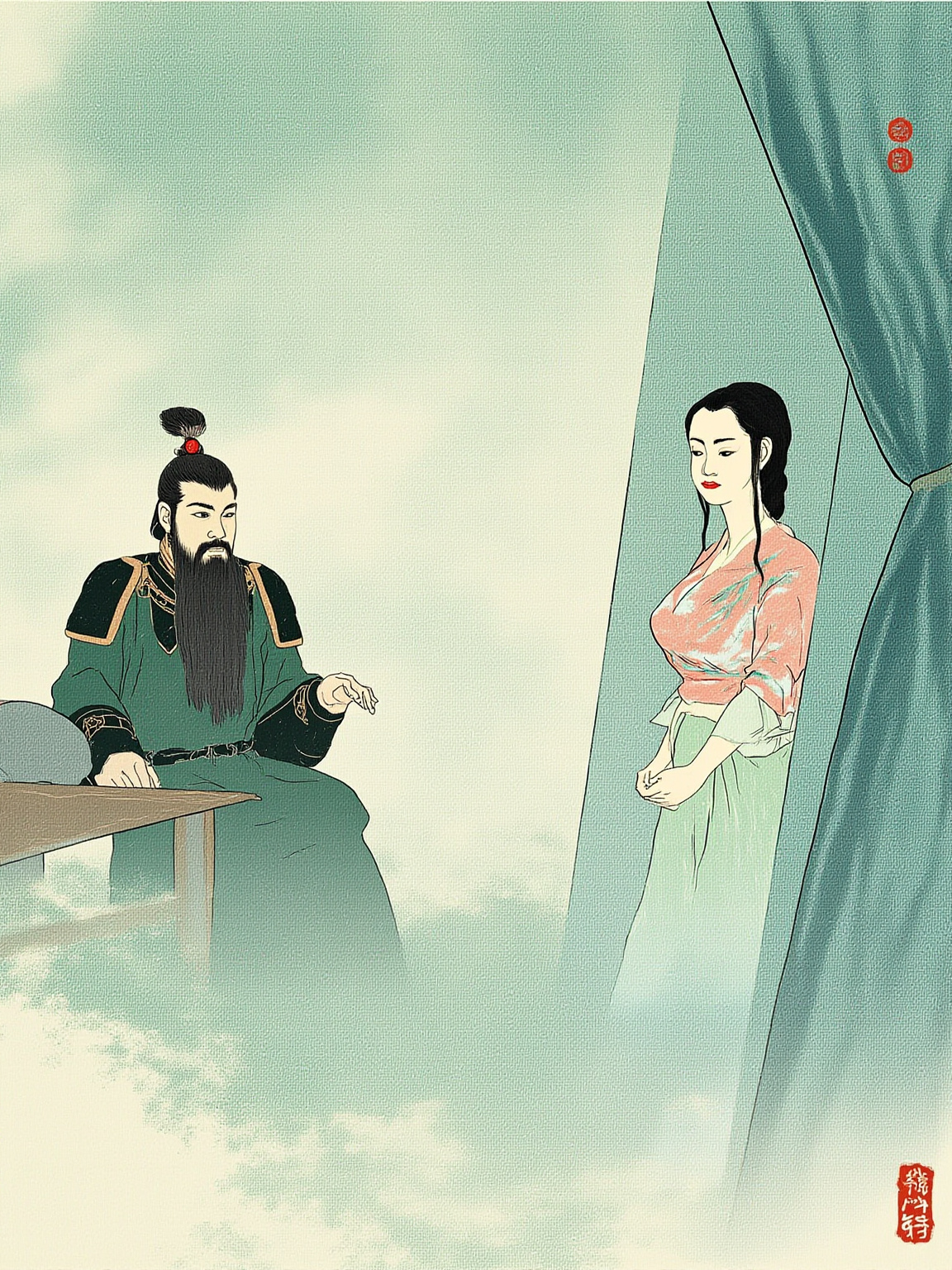
Slipped into the beauty's silk at the tent's edge, he found no past and no future waiting there — only a hero whose tears had already been counted.
他化作虞姬低低唱进帐中,却见那霸王半面泪痕,早已是别人替他写定的收场。
金句 · 第七回 · 悟空扮虞美人入楚营
The World of the Future: Half a Day as King Yama, Judging Qin Hui
Turn away from the mirror of the ancients and Wukong lands in the World of the Future. In the Hall of King Yama, he's put on the bench for one day, Yama for a half day. Waiting in the dock is Qin Hui. Wukong brings down the gavel and tears into the chancellor who destroyed Yue Fei, reading off his crimes of treason one by one and sentencing him to torment after torment. Midway through the trial, he recognizes a soul standing below the bench: Yue Fei, the most wronged loyalist of the Song dynasty. Wukong drops to his knees on the spot and takes Yue Fei as his third master, after Patriarch Subhuti and Tripitaka. When the trial ends, Qin Hui dissolves into a pool of blood, and Wukong personally escorts Yue Fei out through the gate of the dead. This section reads heavier than the rest — after all that frantic running through the dream, it feels like being shut inside a bell.
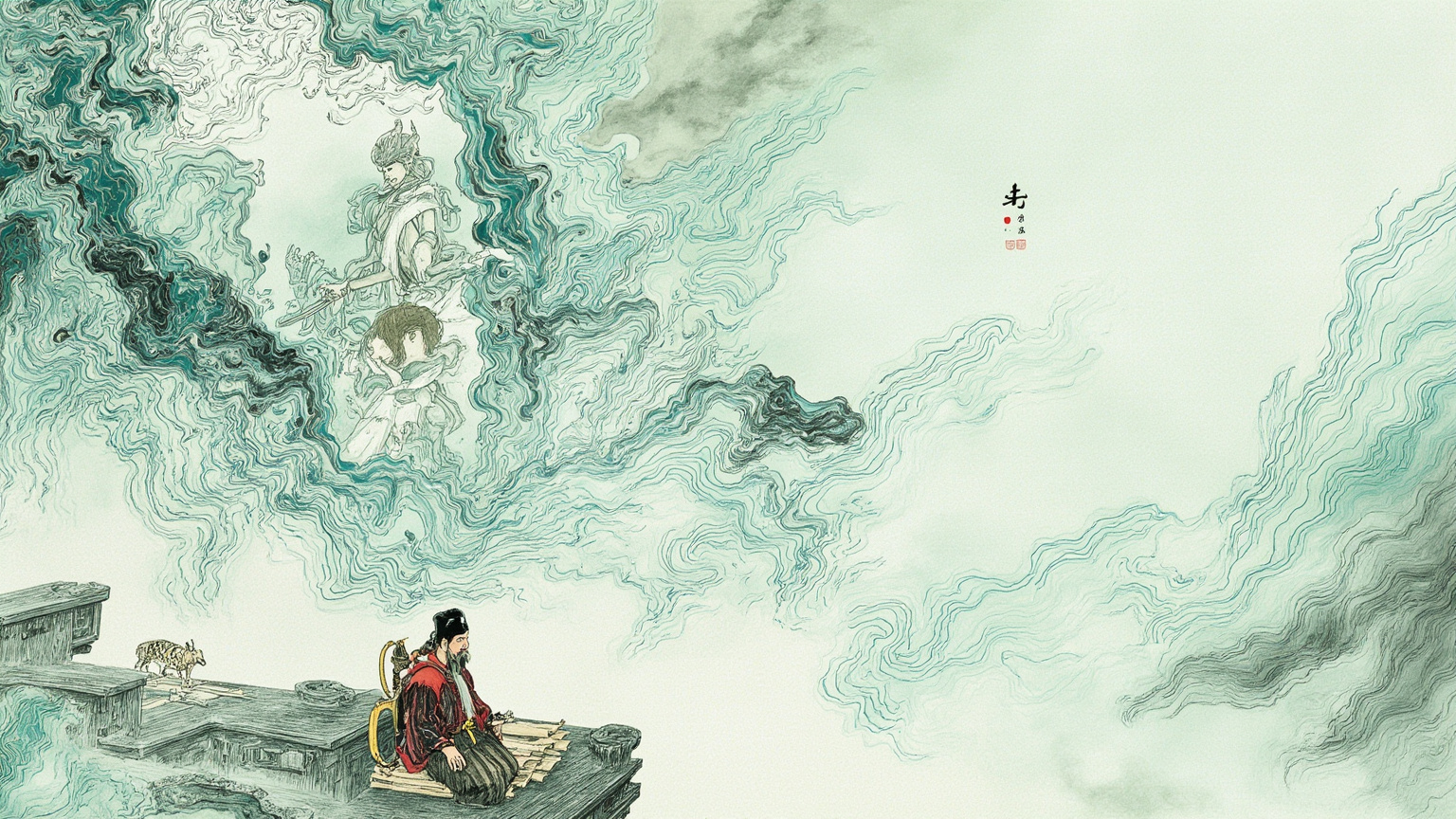
He sat behind the Judge's desk, slammed the gavel once, and read out the long indictment a traitor's name had waited centuries to hear.
惊堂木一拍,三百年的卖国账一齐翻到台下;那只半日阎罗,正是八百年前的花果山主。
金句 · 第十一回 · 半日阎罗审秦桧
Tripitaka Returns to Lay Life: The Absurdity of Master and Servant Trading Places
The dream's main thread is even more absurd: Tripitaka has left the monastic life behind. He's no longer a sutra-chanting monk but General Shaqing, a title bestowed by the new Tang emperor, married to Cui Shengniang, riding off on a tall horse to conquer a kingdom called Paramita. Wukong goes looking for his master and finds a general busy mustering troops instead. And the real Tripitaka, back in the waking world? He's being led along by a young monk who is really the Mackerel Demon in disguise. Master and disciple have been entirely swapped inside the dream: the real master is led by the nose inside a false dream, while the false master leads an army inside what feels, for him, like reality. This is Dong Yue's cruelest stroke: the solemn pilgrimage to fetch the scriptures, in the hands of a late-Ming writer, becomes a joke about who is really in charge and who is just along for the ride.
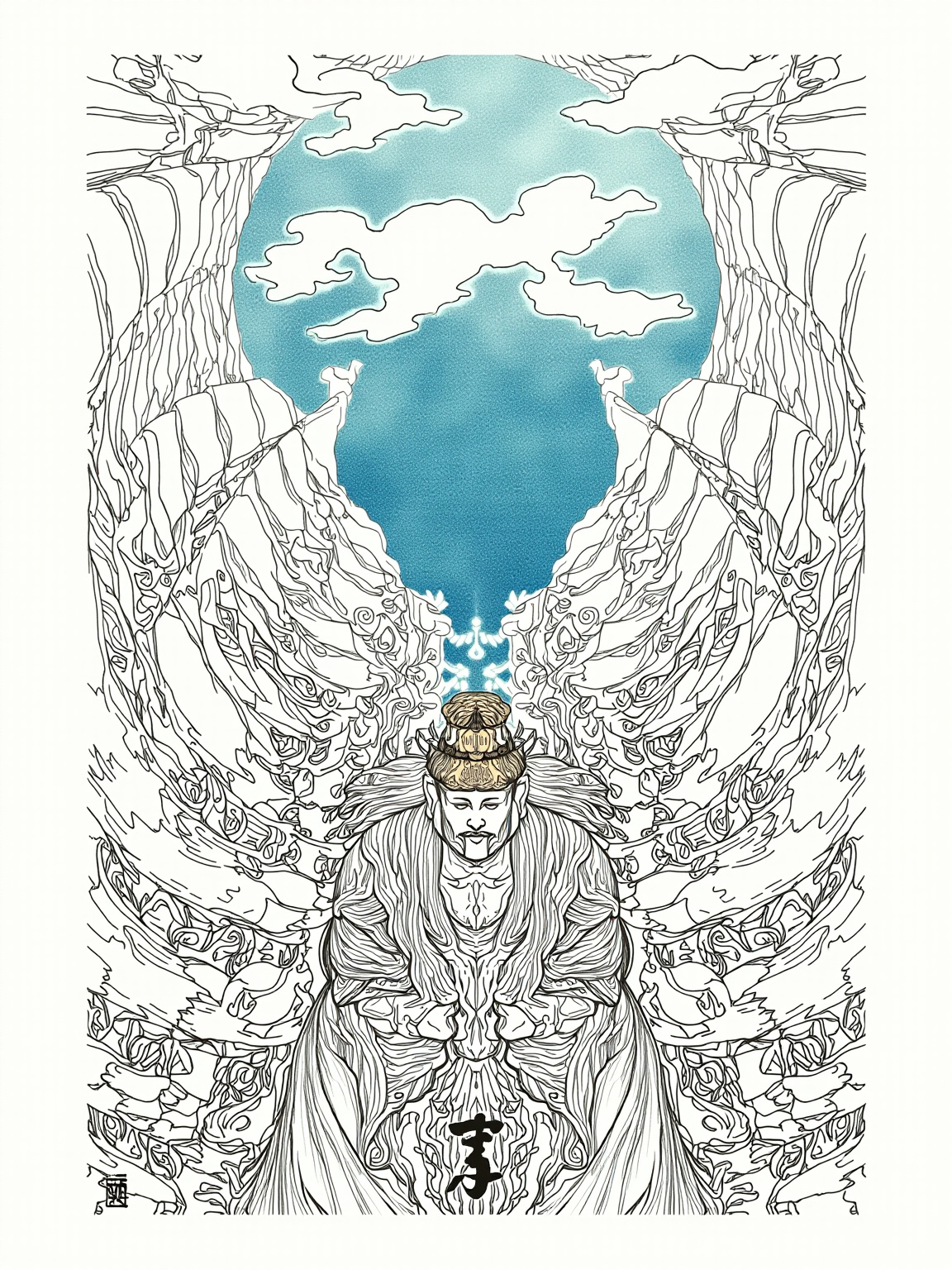
The Master who once rode in silence had taken a wife, a title, and a westward campaign — and would not look up from the muster roll.
师父已经还了俗,翠绳娘在侧,杀青大将军的令旗正卷向西天;他急着要寻的那个唐僧,正在点兵。
金句 · 第十二回 · 唐僧挂帅征西戎
The Venerable of the Void Knocks Him Awake
Wukong sinks deeper and deeper into the dream, until at last he runs into a figure called the Venerable of the Void, or the Lord of Emptiness. One sentence from him yanks Wukong straight out of the Tower of Myriad Mirrors: 'You are still dreaming.' Wukong opens his eyes and finds himself back on the old mountain road behind the Flaming Mountain. He looks up and sees the Mackerel Demon, transformed into a young monk, whispering sweet words to Tripitaka. Wukong swings his rod and strikes — and the young monk drops dead on the spot, revealing a foot-long mackerel's corpse. Master and the three disciples set out on the road again, the Flaming Mountain still ahead of them, the west still far away. That one blow is what finally drops the novel back into its main story.
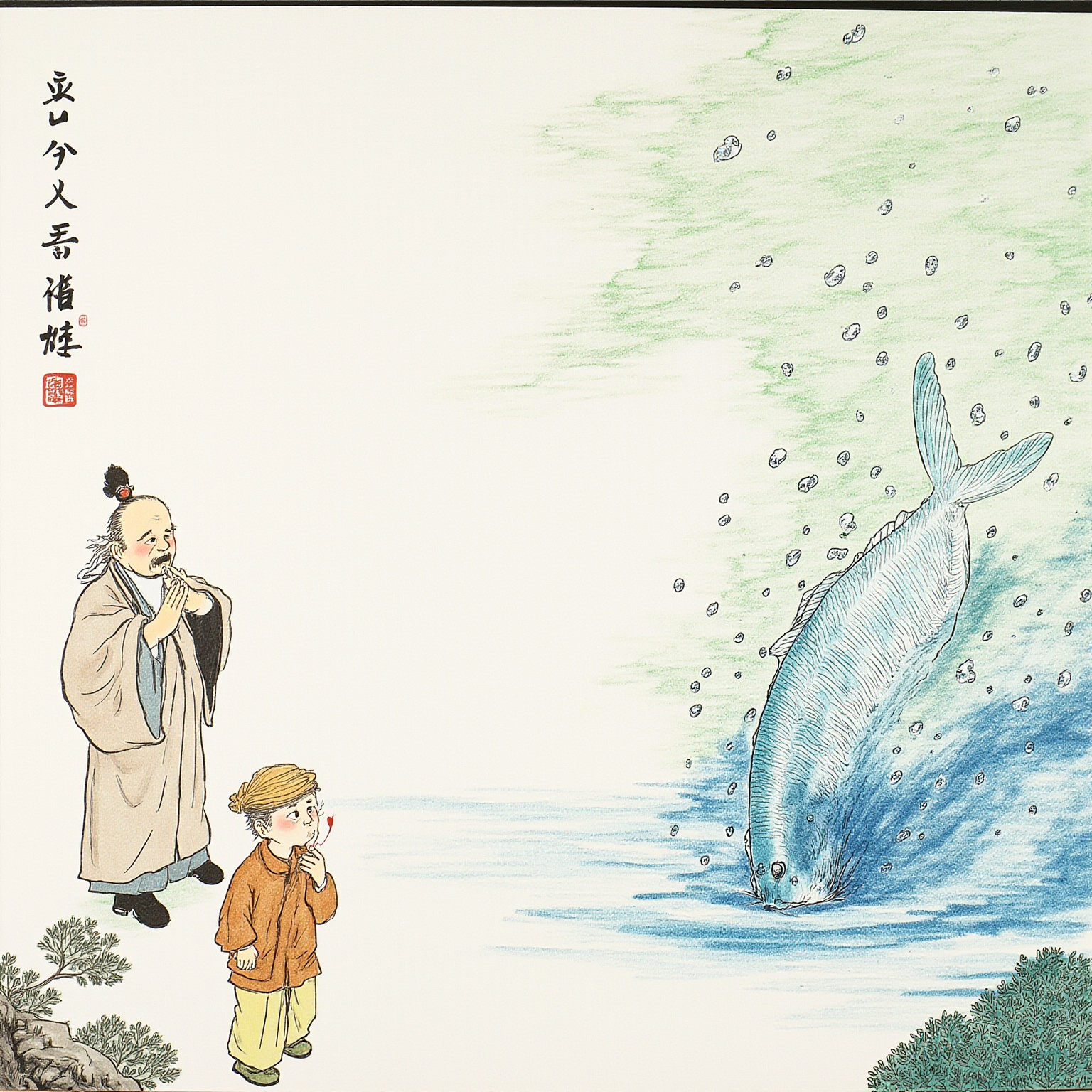
One stroke, and the dream cracked cleanly open; the old mountain road was still under his feet, and the mackerel spirit lay where the monk had stood.
棒落处,万镜楼台一时粉碎;他睁眼还在旧山路,那哄弄师父的小和尚,却是一尾现出原形的鲭鱼。
金句 · 第十六回 · 打杀鲭鱼归本相
Twelve Questions, Twelve Answers: The Author Steps Onto the Page
After the story ends, the author has one more move saved up: the book closes with twelve questions and twelve answers, staged as a dialogue between a 'questioner' and an 'answerer,' in which Dong Yue takes apart the thing he just wrote. The most candid answer is this: he gave Wukong an opponent strength alone can't beat. Across the first eighty chapters of Journey to the West, Wukong fights his way through the Three Worlds with his iron rod. In The Tower of Myriad Mirrors, the rod stops working, because the opponent this time isn't a demon but qing, desire, and the harder Wukong strains against it, the more frantic he gets, the less he can find his way out. Writing that kind of self-dissection three hundred years ago put the idea of metafiction on the page centuries before the term existed.
Why It's Remembered
There are three reasons. First, it gives Sun Wukong an opponent he cannot defeat by strength: desire. In the original novel, the Great Sage Equal to Heaven is a perfect being; in Dong Yue's hands, he becomes a restless, suspicious human. Second, the dream-within-a-dream logic of the Tower of Myriad Mirrors takes time and identity apart completely: to find the Qin Shi Huang of the past, Wukong first has to disguise himself as Lady Yu; to judge a traitor, he first has to become King Yama for half a day. That twistedness is itself how a late-Ming writer felt about a world gone absurd. Third, the dream becomes a blade turned on the late Ming itself: the examination system, the bureaucracy, the treacherous ministers, the threats at the frontier. It lets us see the state of the world through a monkey's eyes, then read the monkey's mind back through the state of the world.
What It Means for Readers Today
The pleasure of reading The Tower of Myriad Mirrors has nothing to do with what it 'supplements' in Journey to the West. It's that someone was already writing this structure three hundred years ago — the maze, the mirror, the swapped identity, the self taking itself apart. We watch Inception, Black Mirror, Last Year at Marienbad today and think they feel new. Go back to Dong Yue and you find that vertigo already fully written. The difference is that today's storytellers reach for special effects. He had a brush, a monkey, and a mirror.
Why Read the Original
A guide gives you the map. The original text is the ground itself. What this essay can never give you is the original's rhythm — the sheer speed of Dong Yue's dreaming, where every page feels like being pulled through another mirror. Or the crackle of his late-Ming vernacular: the tirade against Qin Hui lands like a knife, the Lady Yu masquerade plays like a comic sketch, and the final blow that snaps the Mackerel Demon back into its true shape lands like a slap you can hear. None of that comes through until you open the book yourself.
It gives Sun Wukong an opponent he cannot beat — not a demon, but desire itself. The harder he fights, the less he can get out.
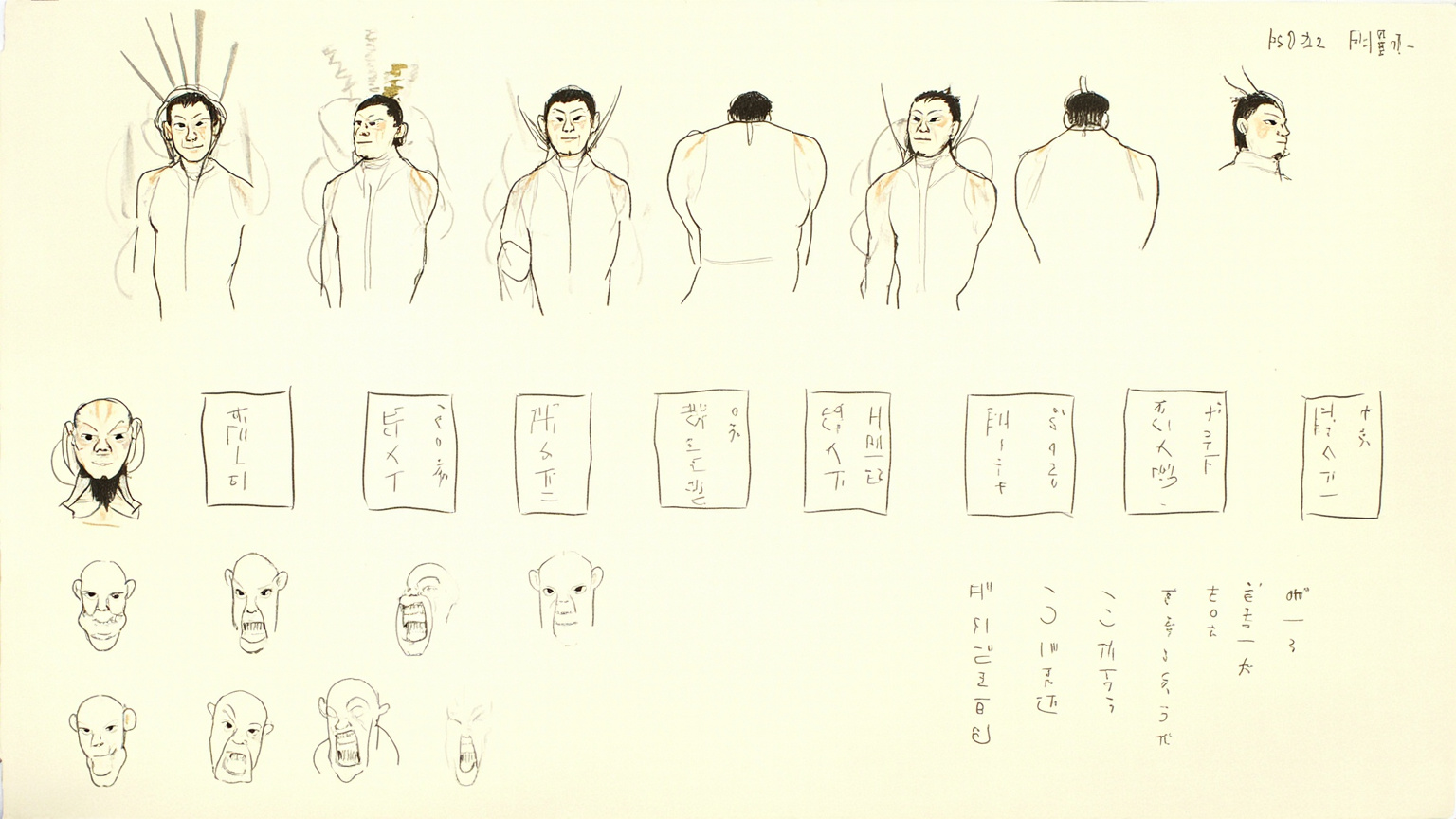
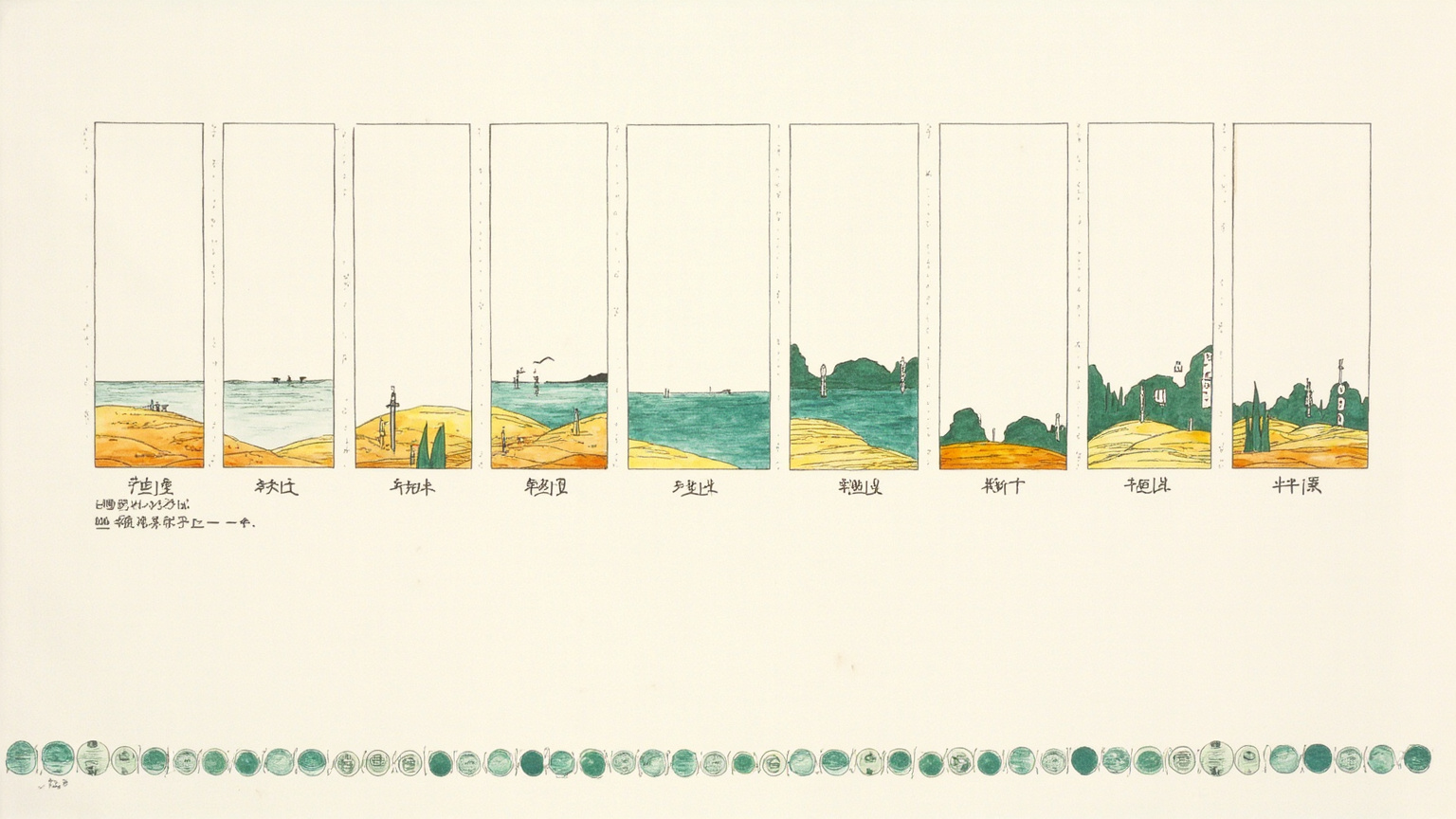
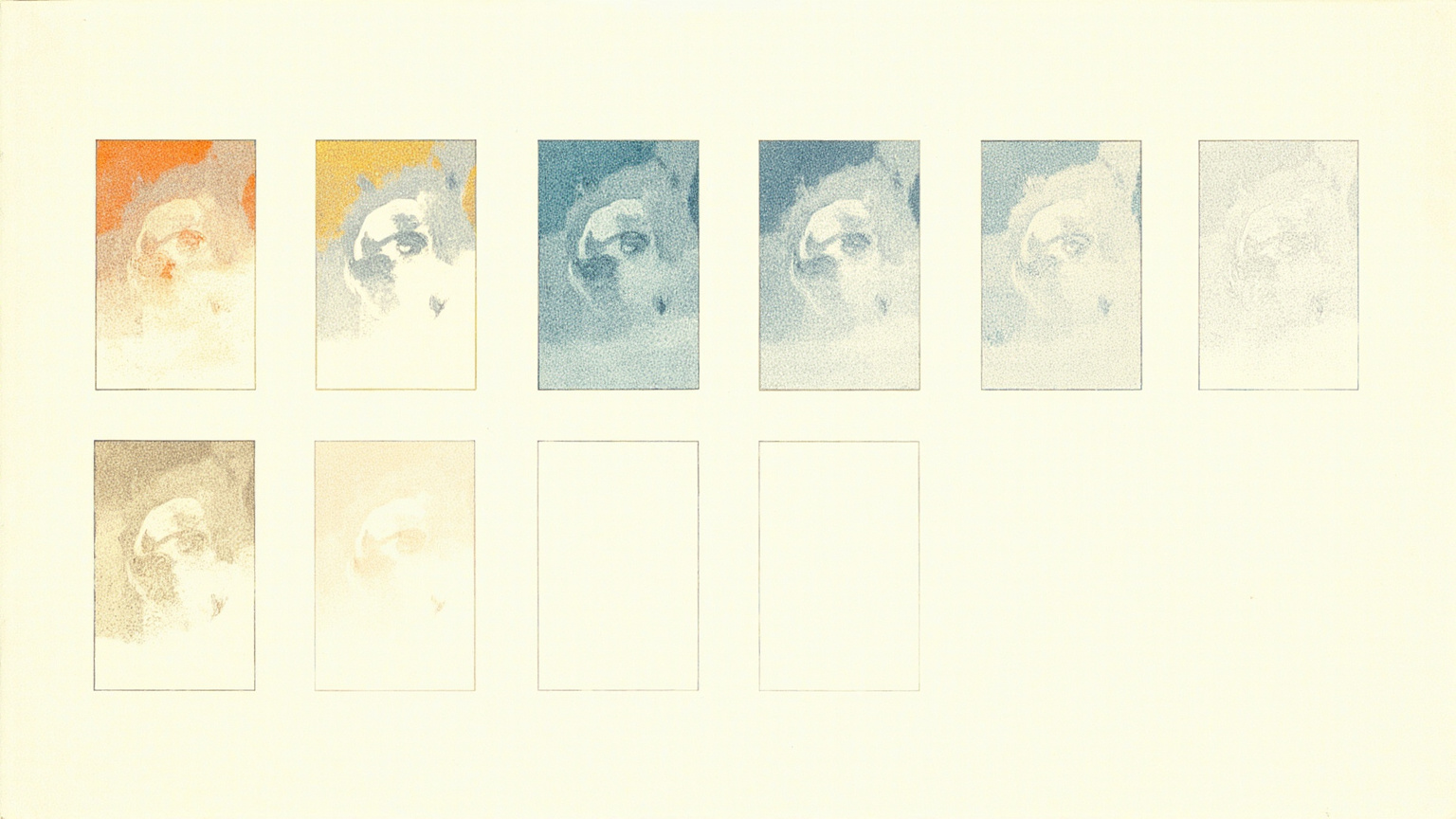
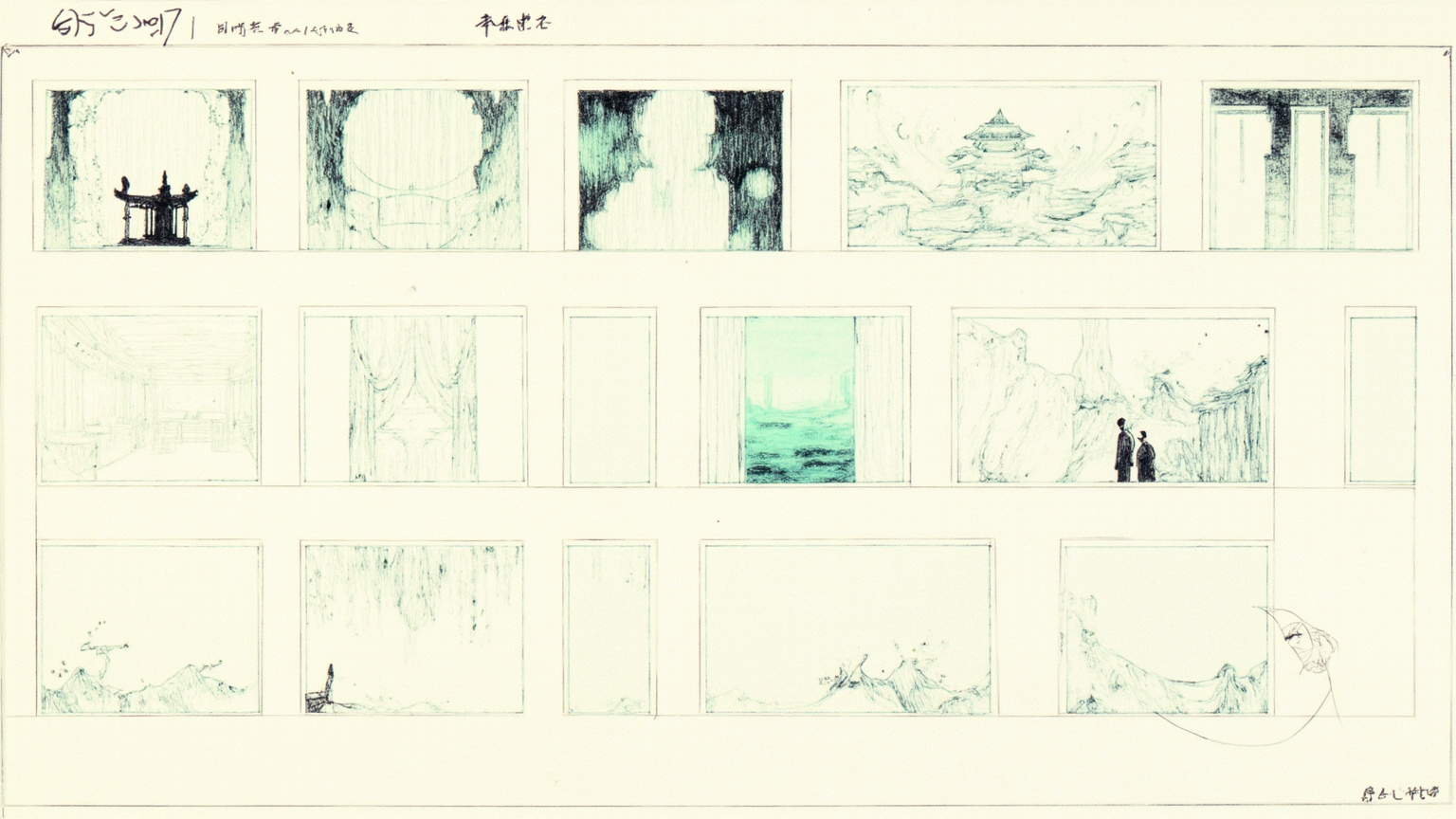
Art Direction4 plates
Before the guide was written, this book got a visual foundation — every illustration you just read grew out of it.