The Romance of Tristan and Iseult (Le Roman de Tristan et Iseult) · Companion Guide
特里斯坦与伊索尔德
一瓶错递的巫酒,把两个本该嫁给叔父与国王的人,绑进同一条不可拆解的命运——忠贞以一把横搁的剑写成。
One Cup of Wine, Three Days and Three Nights
A ship crosses the Irish Sea, and in the hold a small casket of wine is handed by mistake to the two people who should never have touched it. On deck stands Tristan, the young knight from Cornwall; below, the golden-haired Irish princess Iseult, the bride he is escorting home to marry his uncle, King Mark. They take the cup and drink together, and after one swallow the cabin falls silent. They understand: for the rest of their lives, nothing will pull them apart.
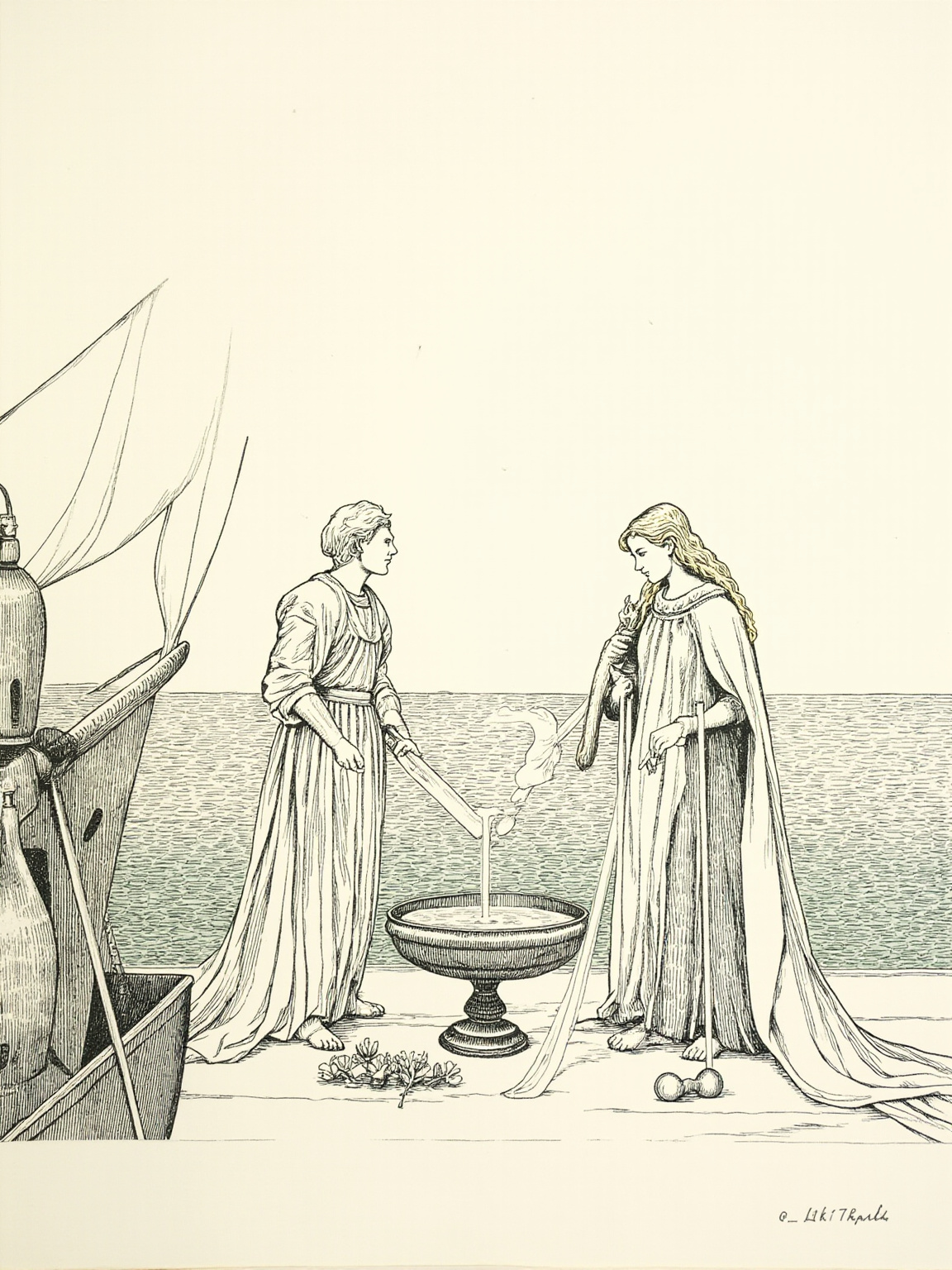
They drank the wine together, Brangian and Tristan, he and she, and from that hour their lives were no longer their own.
他们把那酒共饮了——布拉尼安与他,骑士与她;从那一口起,两人的性命便再也不属于自己。
金句 · 序章 · 错递的那一剂药
What This Book Is
The French scholar Joseph Bédier, working at the end of the nineteenth century, took the surviving twelfth-century verse fragments, scattered across Old French, Old English, and German, and stitched them back into one continuous romance, published in 1900. He was not the original author; the original authors were a scattering of medieval minstrels who left no names behind. He was the one who sewed the fragments into something a reader could follow, something that could still pull a twentieth-century reader into the same fate. Every later story of love that cannot be — from Romeo and Juliet to Wagner's 1865 music drama, the one that dragged the whole of modern music off its old foundations — answers to this one.
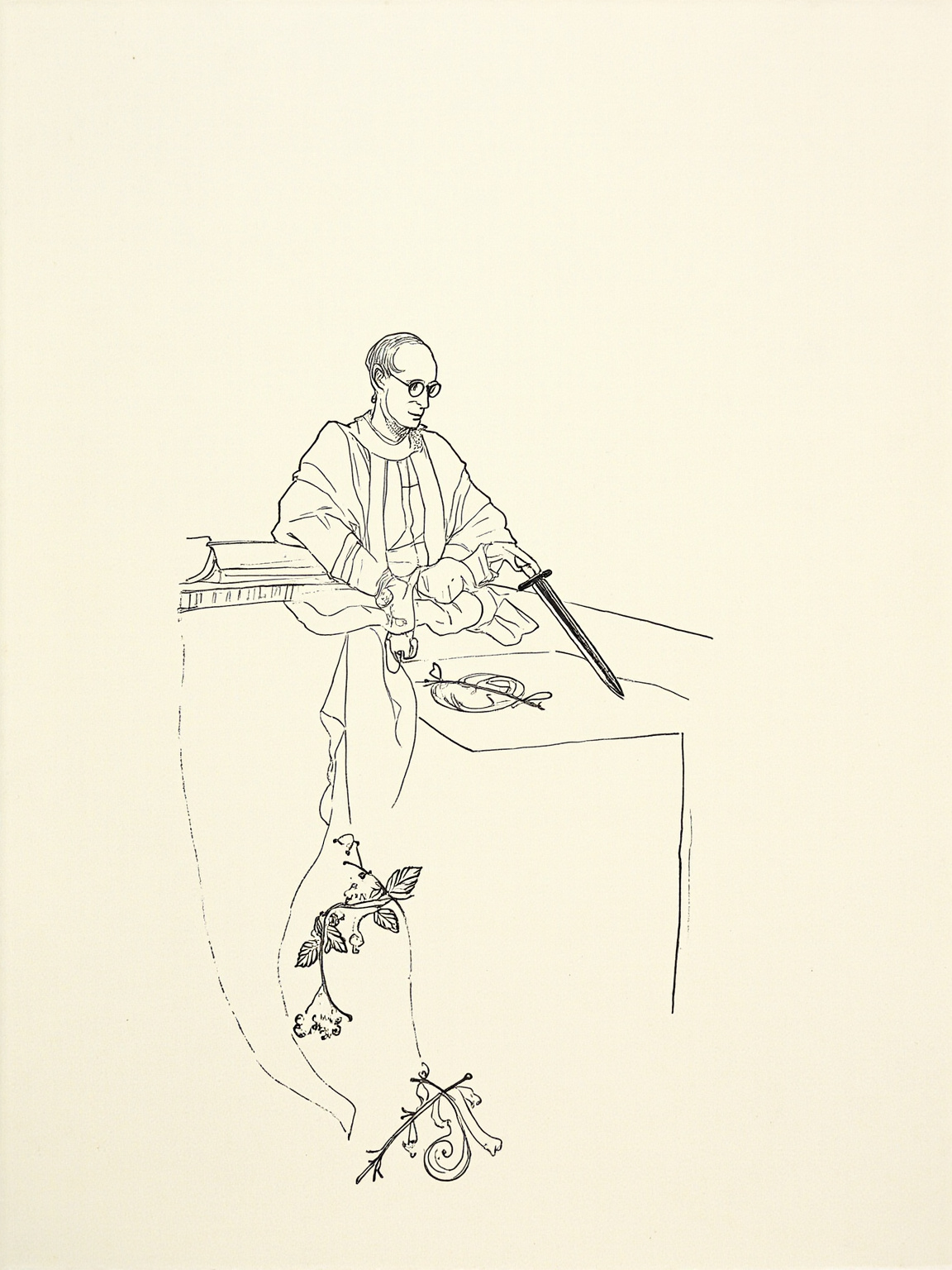
The Boy on the Cliff, Famous for His Harp Before His Sword
Tristan grew up at Tintagel Castle on the Cornish coast, a stone keep that seems to have grown straight out of the cliff, where the sea wind can knock a person backward. He played the harp more movingly than anyone and handled a sword just as beautifully. Grown, he sailed to Ireland on his uncle King Mark's behalf to bring the golden-haired princess Iseult home as queen. King Mark is his uncle by blood and loves him deeply. Iseult is the one treasure the Irish queen trusted to send away from home, with her closest companion, Brangien, at her side. The world the story opens in is a Celtic world of sea and fog, and Tintagel is its geographic anchor, not the tourist ruin it is today — it is a stone set against a cliff, the spine the whole romance is built on.
The Potion Handed to the Wrong People
The voyage home is the single most important night in the whole story. Before Iseult left, her mother had given her a secret potion brewed by a sorceress, with instructions to drink it together with her future husband, King Mark: three days and three nights of love beyond letting go. It was meant as glue for the marriage between Mark and Iseult, to make a political match unbreakable from then on. The potion sat in a small wooden casket in the cabin. The sea was rough, the sailors were thirsty, and by mistake they poured out that wine and gave it to Tristan and Iseult instead. Up to that point she had hated him for killing her cousin back home, and had kept a cold face toward him the whole voyage; that was the real tension in the cabin. The cup drained, they looked at each other, and everything changed. The bond meant to lock a king and his queen together had been delivered by mistake into the hands of two people who had no claim to it. This is Bédier's most elegant move, a piece of medieval moral suspension: love here is not a sin to be judged, it is something swallowed whole by fate. Three days and three nights, unstoppable and unbreakable, and that sense of compulsion is cleaner than any love freely chosen.
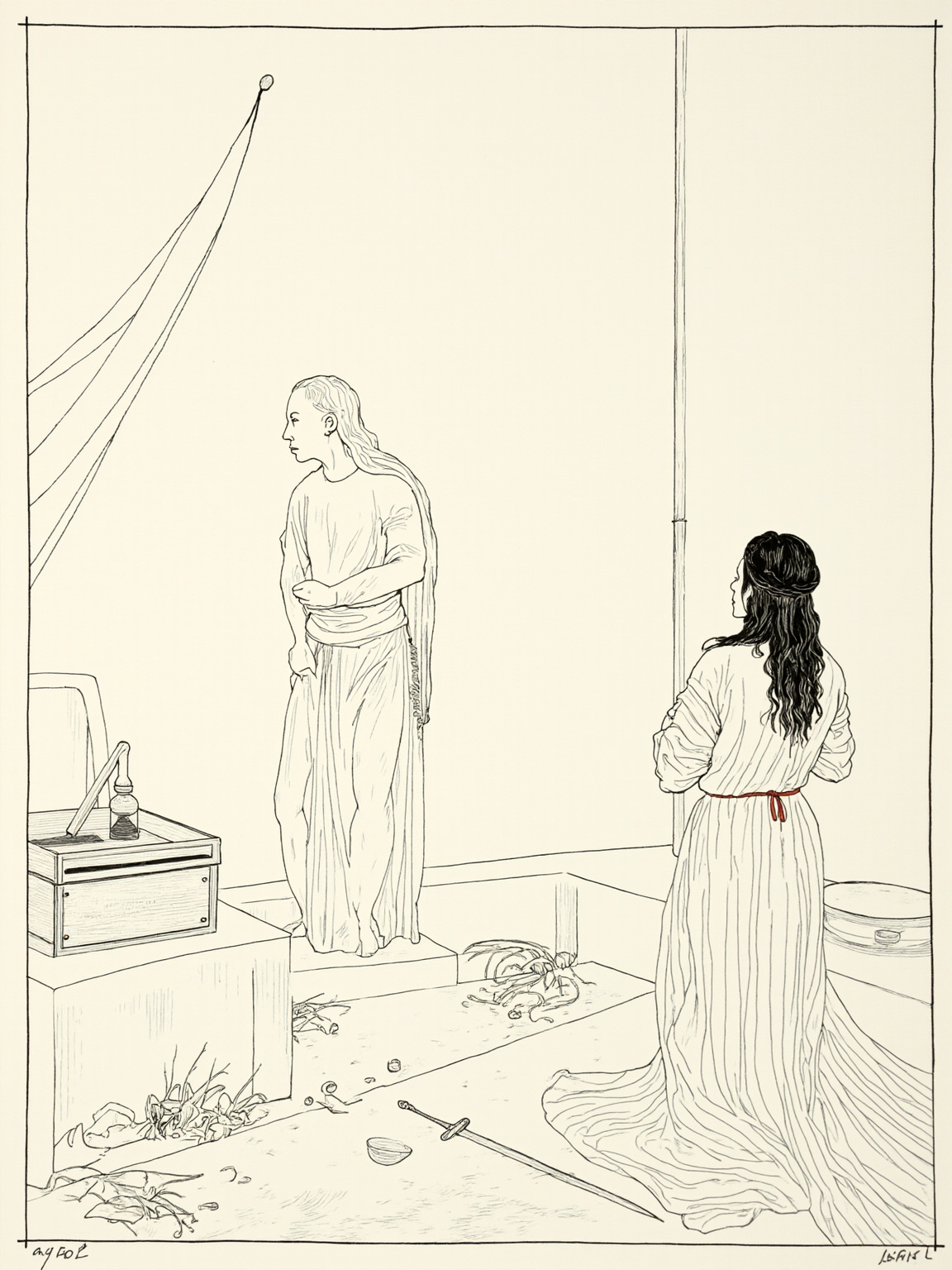
And the ship went on, and the sea was wide, and the draught was strong.
船依旧向前,海依旧辽阔,而那药性已一发不可收。
金句 · 第一章 · 海上三日三夜
Lovers Under Watch, a King Forced Into Villainy
Back at the Cornish court, the two of them do everything they can to hide the love. The court's informers watch day and night, and Mark does not believe them at first; he is talked into suspicion only gradually. Bédier's Mark is no cardboard fool of a king. He is a man ground down again and again by love and jealousy, anger and forgiveness rising in him by turns. At first he forgives, over and over, even blessing Tristan in what seems like sincerity. Later, pushed past the edge, he hands down the cruelest sentence in the whole book, condemning Iseult to the lepers. The sentence is never carried out: a monk passing by steals her away and hides her in an abbey. Bédier does not linger on that scene. What he wants the reader to see is a betrayed man being slowly, almost against his will, turned into a villain, not a verdict delivered in one blow.
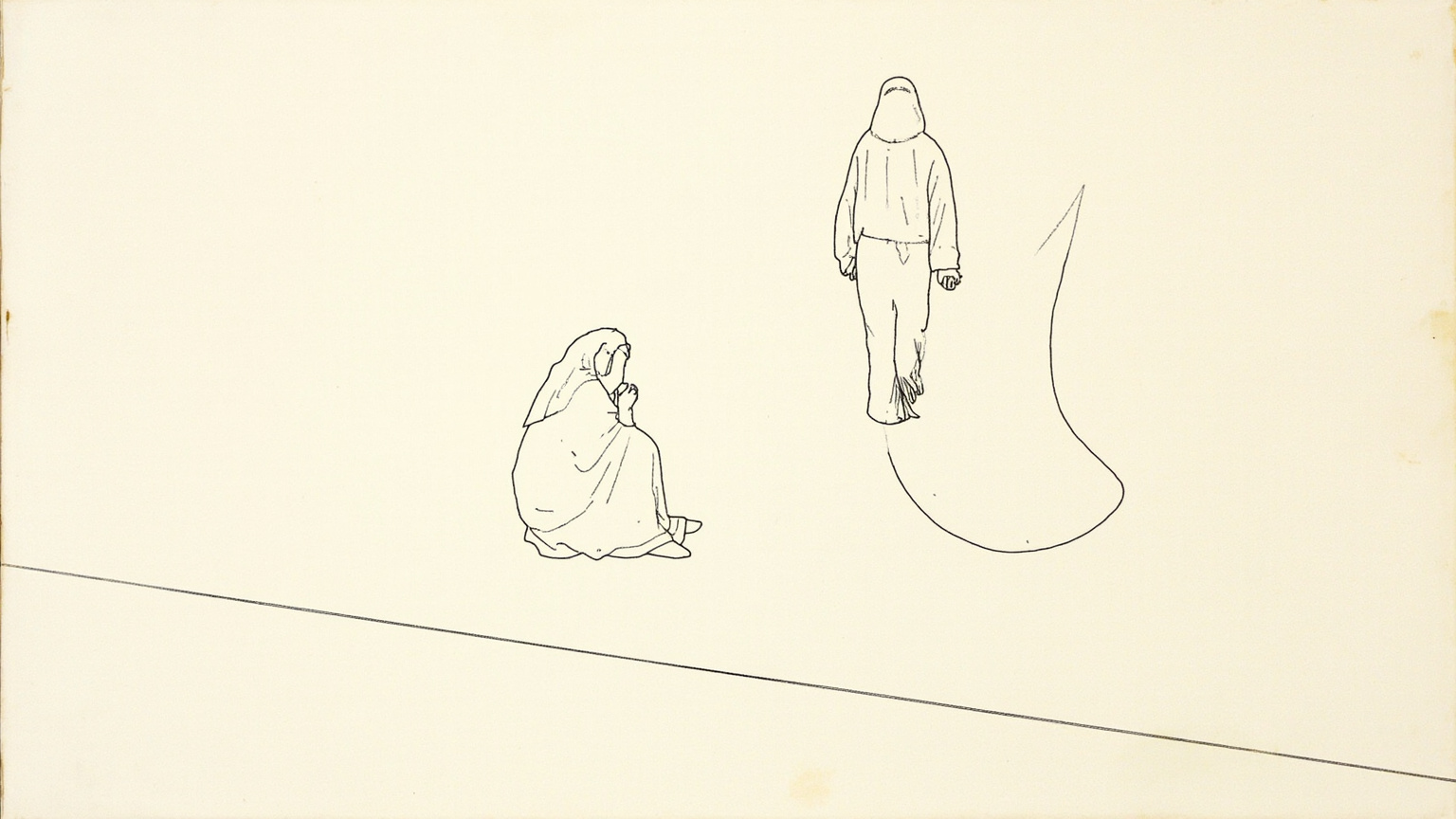
The Forest of Morois: A Sword Laid Between Them
After their exile, Tristan and Iseult flee to the Forest of Morois, on the far side of England, a stretch of medieval wilderness no one dared enter far. They settle into a hut of bark, drink from a well whose water runs sweet, and keep the harp with them still. The scene that stays with you most is one night when neither of them will share the bed: Tristan lays his long sword between them, blade turned up, and the two of them sleep each on their own side of that cold iron. Bédier writes them guarding this love with loyalty, restraint, and propriety — no looking, no touching, no embrace. This is not restraint as a kind of sweetness. It is love kept as chastity, after everything else has been taken from them. Nowhere else in medieval literature is fidelity written this quietly.
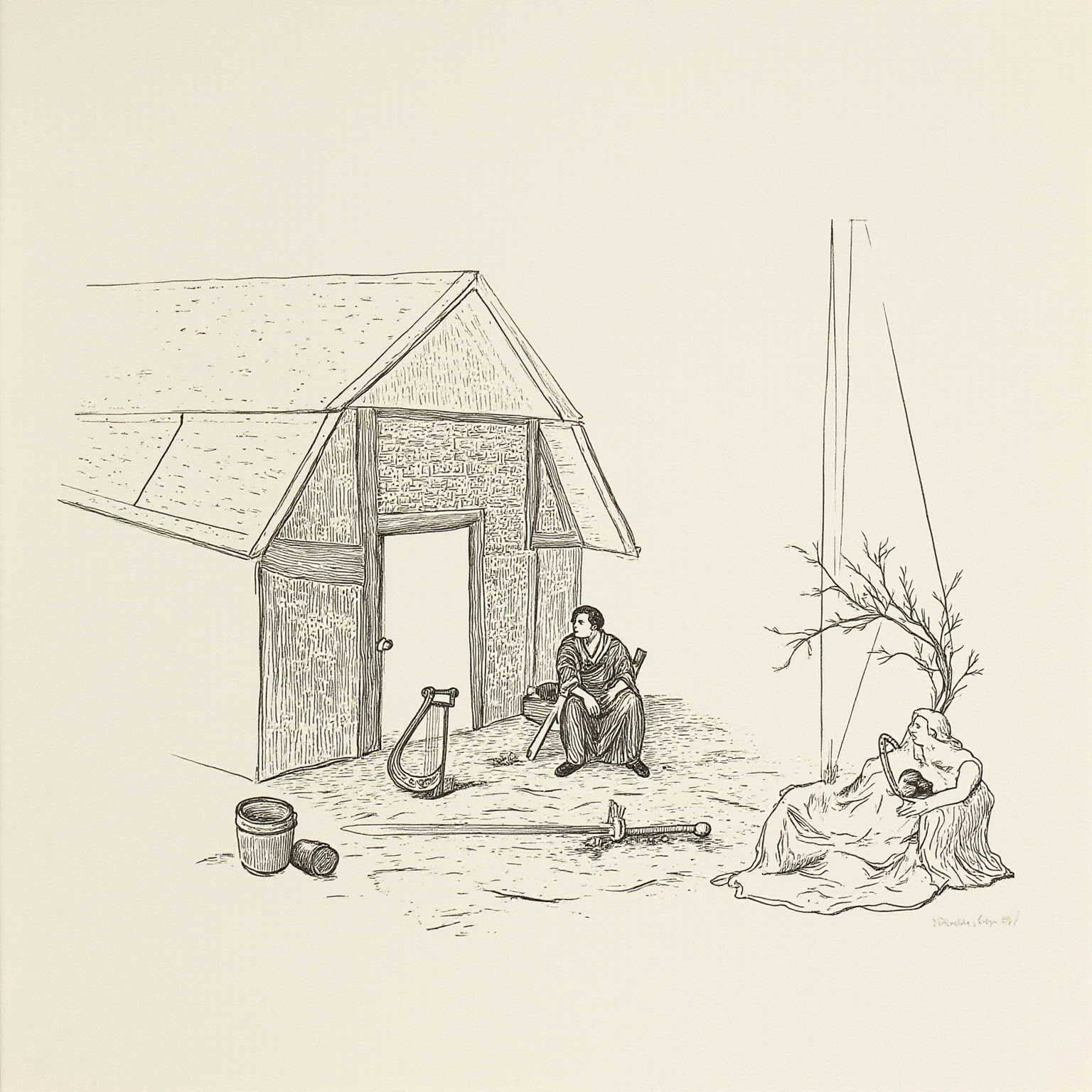
Between them lay the naked sword; and they loved one another, and never touched.
两人之间横着一柄出鞘的剑;他们彼此相爱,却从不曾相触。
金句 · 莫鲁瓦卷 · 井畔之誓
The Ordeal: Bare Hands on Red-Hot Iron
The plot is pulled back to court more than once. At one point Mark pretends to take Tristan back into favor and sets an ambush in a church, but a monk in white warns them beforehand, leads Iseult out, and Tristan slips through the pursuit alone. The high point of the whole story is the ordeal of the red-hot iron. Iseult is required to carry a bar of glowing iron barefoot and bare-handed across nine furrows of plowed field to prove her fidelity to her husband. Before the crowd she declares that the man she loves is, at this very moment, standing among the king's own men, a hint that Tristan is there in the church, and then carries the iron the full nine steps. Her hands come away unburned, as if by miracle. This is the miracle of a medieval ordeal, not an interrogation. Bédier leaves the moral question hanging in midair: who does she actually love? Who is she really answering? The ordeal covers for her in silence, and the reader is left to weigh it alone.
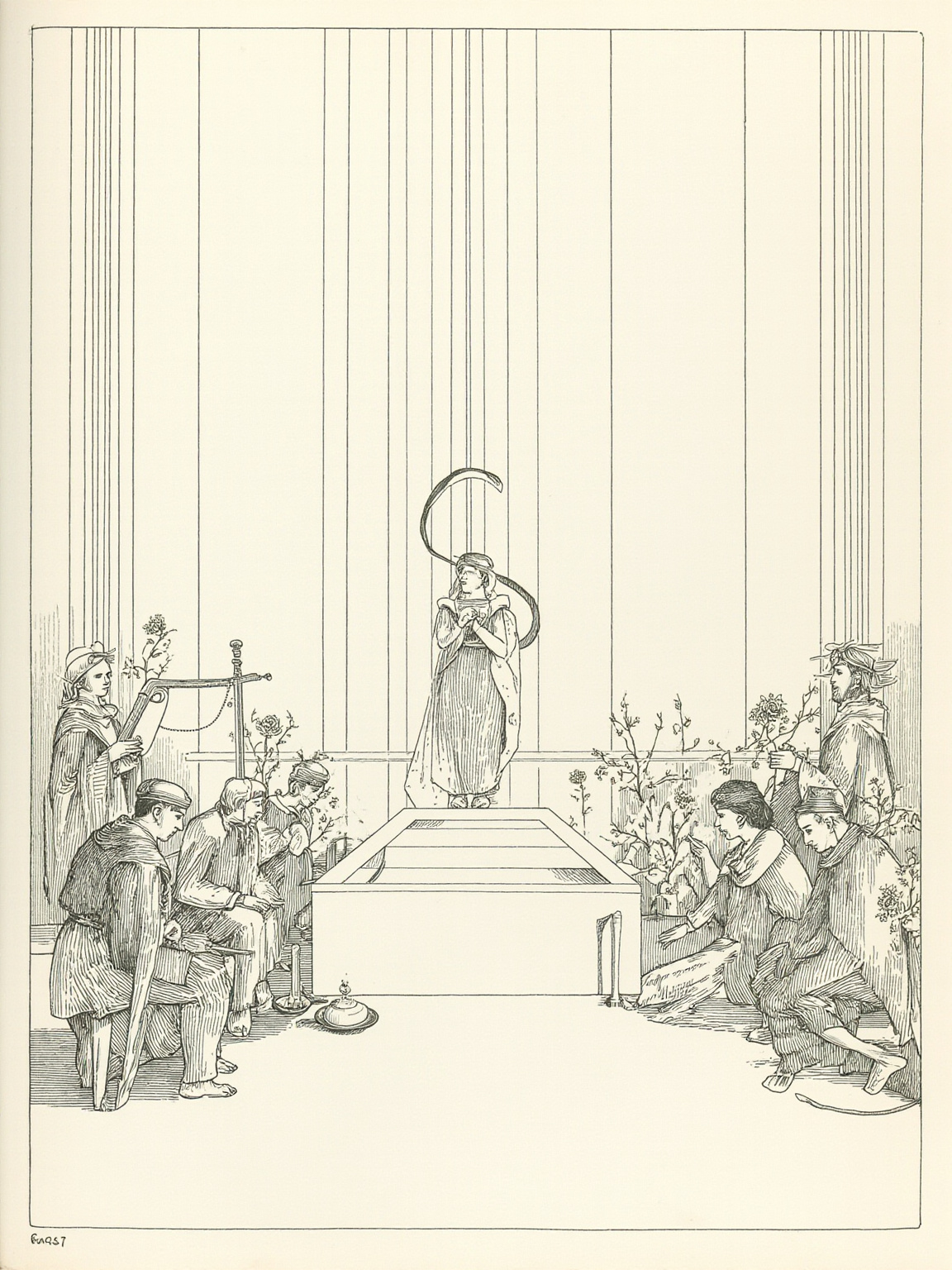
She took the iron in her bare hand, and came forth unhurt before the people.
她赤手握起那块烧红的铁,走过众人面前,手竟不曾灼伤。
金句 · 宫廷卷 · 神裁
Brittany: Another Iseult, a Fatal Jealousy
Tristan is eventually exiled to Brittany, where he meets another woman also named Iseult, later known as Iseult of the White Hands. He marries her, and yet night after night he calls out a different name: Iseult, my Iseult. His wife listens, answers him, and buries her resentment in her sleeve. Later he takes a wound that will kill him, and sends men by sea to Cornwall to beg the golden-haired Iseult to come with a cure. The messenger arranges to fly a white sail, the signal they agreed on, white for life and black for death, and rows back with everything he has.
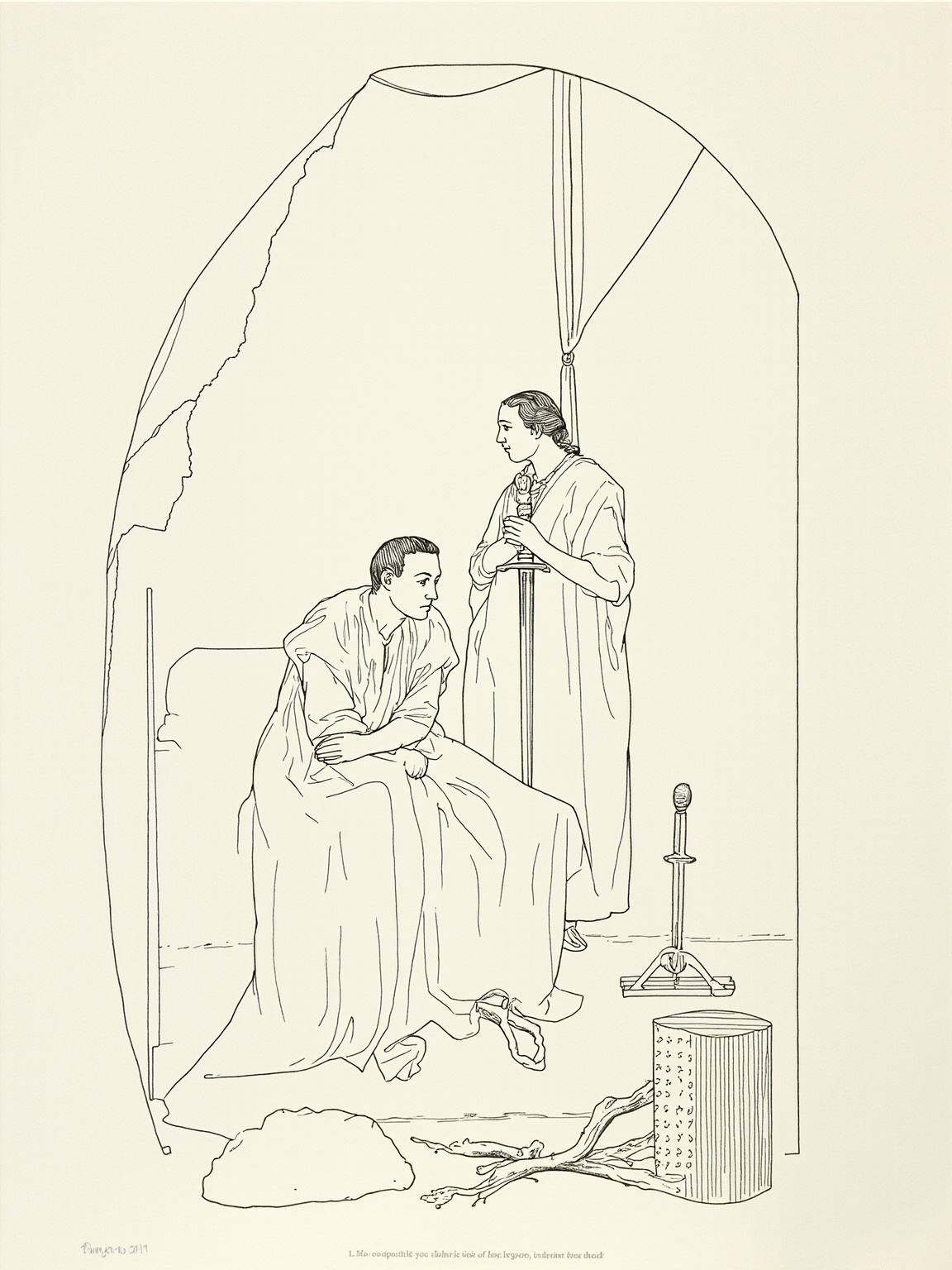
He called her name — Yseult, my Yseult — and there was none to answer.
他唤着她的名字——伊索尔德,我的伊索尔德——而无人应答。
金句 · 布列塔尼卷 · 白手伊索尔德
The Sail: Doom in Black
When the ship appears on the horizon, Tristan can barely raise himself and cannot see clearly; his eyes are bandaged, or he is simply too weak, and can only lean against the window to look at the distant sail. He asks his wife whether it is white or black. Iseult of the White Hands, her resentment now deep, answers: black. He believes her, closes his eyes, and dies. This is not a trick of fate. It is two layers of story laid one over the other. Above is the sea, the potion, the sail, the layer of destiny; below is the wife, the human being, the jealousy, the ordinary layer. Both are present, and Bédier hides neither. When the golden-haired Iseult's ship comes ashore, she throws herself over his body and will not go on living. They are buried together in the chapel at Tintagel. From the grave grows a briar that passes through both tombs and comes out the other side as a rose, and no one can ever cut it back. It is the classic nature-miracle of medieval romance, pinning even the two dead together.
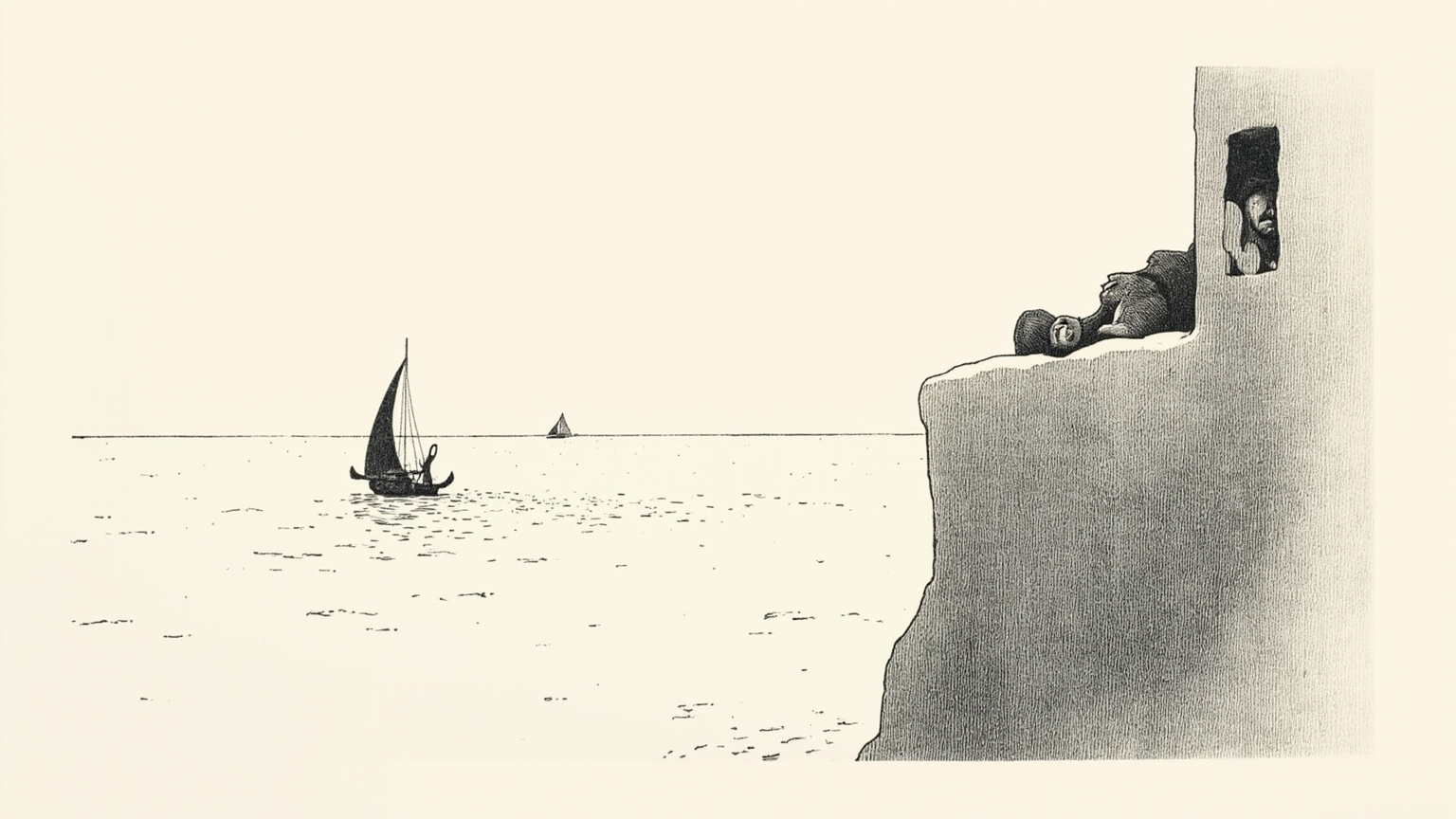
The sail was black, and he turned his face to the wall and died.
那帆是黑的;他便把脸转向墙壁,死了。
金句 · 终卷 · 黑帆
What This Book Is Really Saying
The potion is medieval literature's most elegant trick for rewriting sin as fate: love here is not a choice, it is compulsion; not an affair pursued for pleasure, but a force no one can resist. A sword laid between two bodies writes fidelity more clearly than any embrace could, and that runs directly against how a modern reader expects this story to work. Mark's side of it is harsher still. He is not a villain; he is the process of a betrayed man being slowly, unwillingly turned into one. The whole book is love, jealousy, forgiveness, and collapse, four forces grinding against each other inside a single court. And the earliest motifs of Celtic-French literature — the ship, the sea fog, the castle, the forest, the potion, the sword, the harp, the sail — come together here for the first time as one complete set. Every chivalric romance after it, Wagner after it, the Romantics after it, all grew up inside this same set of motifs.
The most ruthless move medieval literature ever made was writing love as fate — every tragedy Europe told after that drank from this same cup.
Why Read the Original
An explainer gives you the map; the text itself is the land. The value of Bédier's medieval French reconstruction is not in the plot, which has already been laid out here, it is in the rhythm of the prose itself. The Old French verse has a plainness as if washed by sea wind, sentence after sentence short, full of pauses, like a harp finishing a string and letting the echo run all the way out. The passage in the Forest of Morois, that restraint written into the very breathing of the prose; the ordeal's nine furrows, every step trodden like a blade's edge: you only feel that tension once you have read it yourself. Knowing the plot in advance and then reading it only hurts more, because you already know the sail was white.
Art Direction4 plates
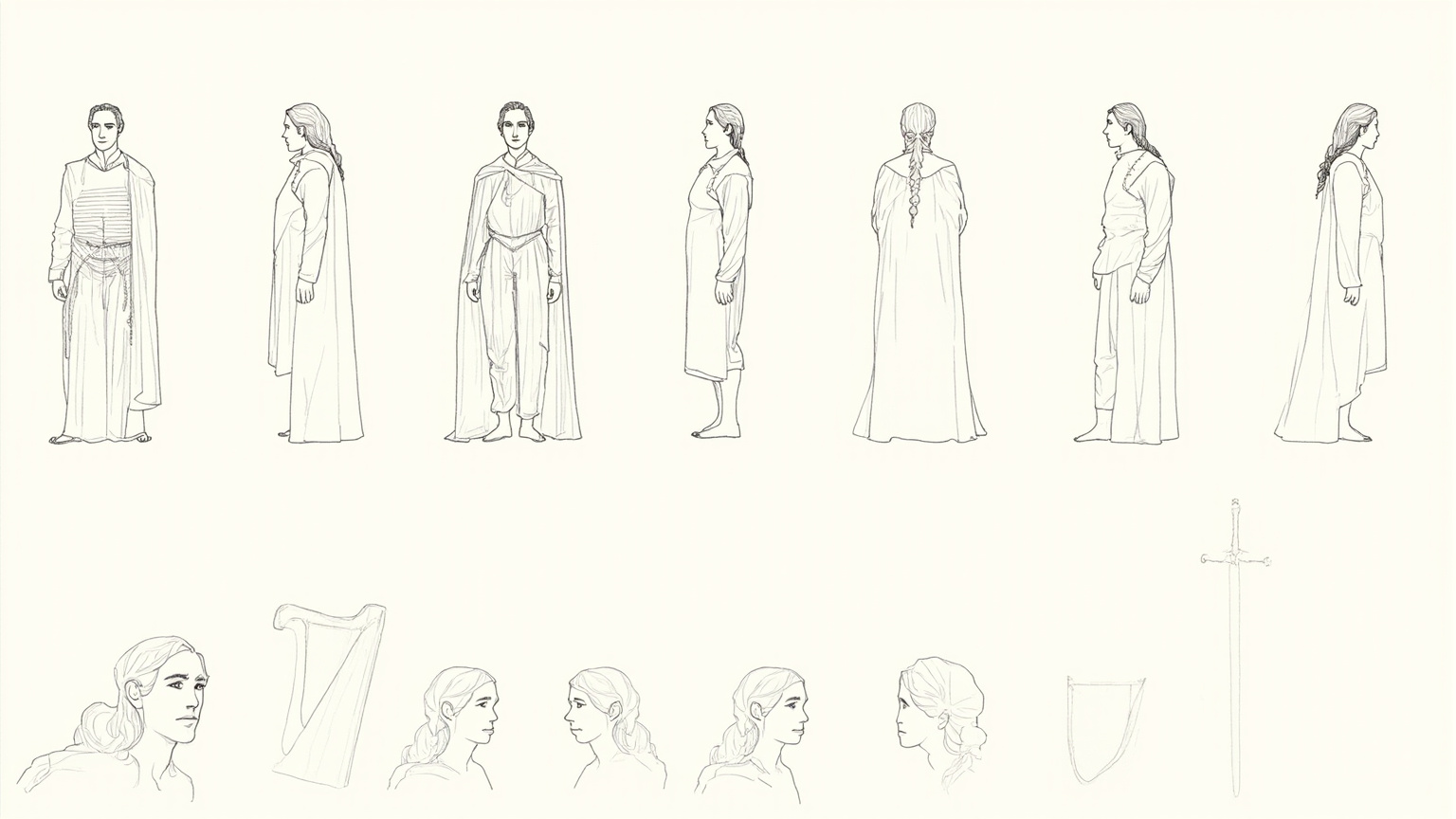
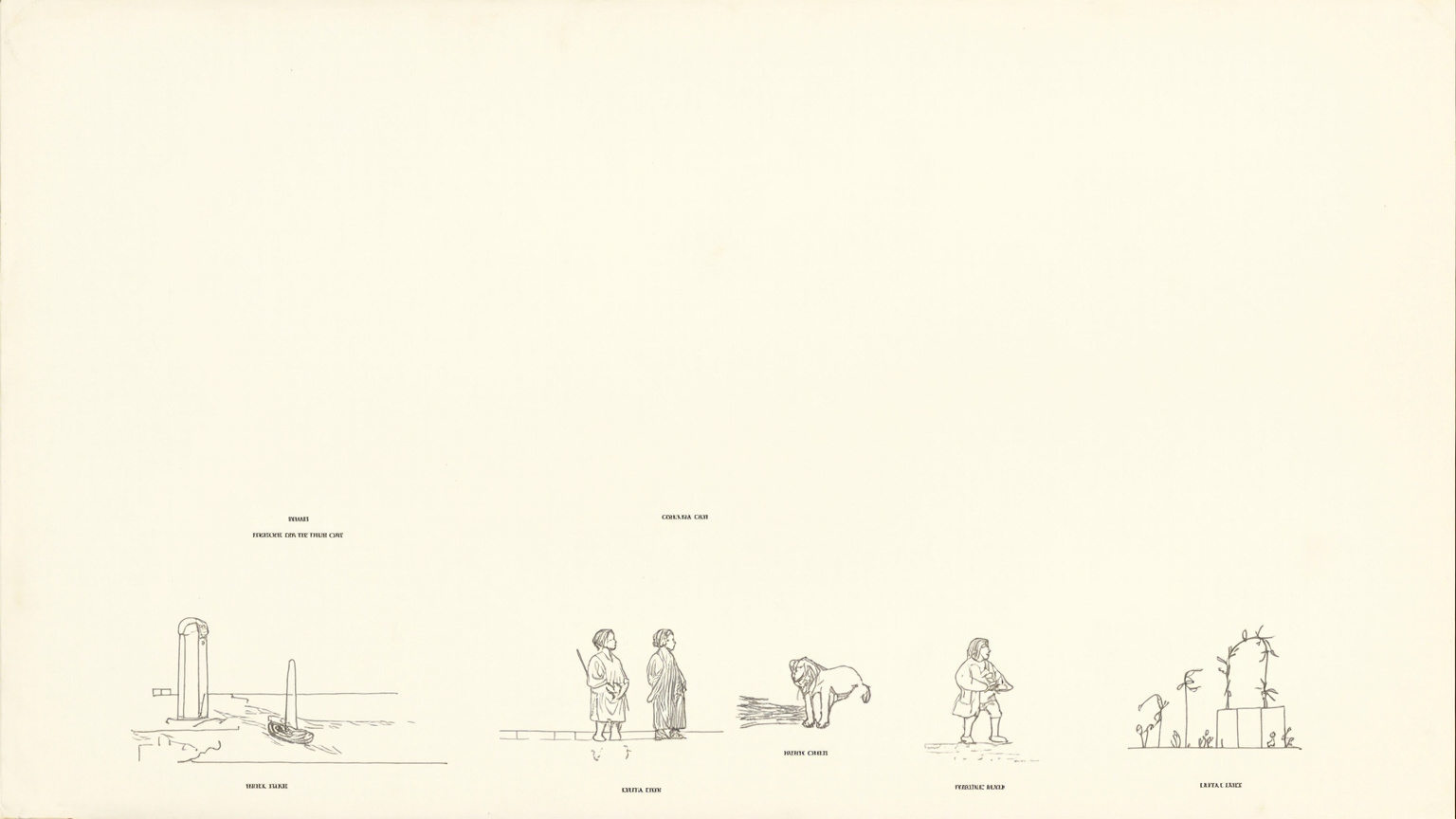
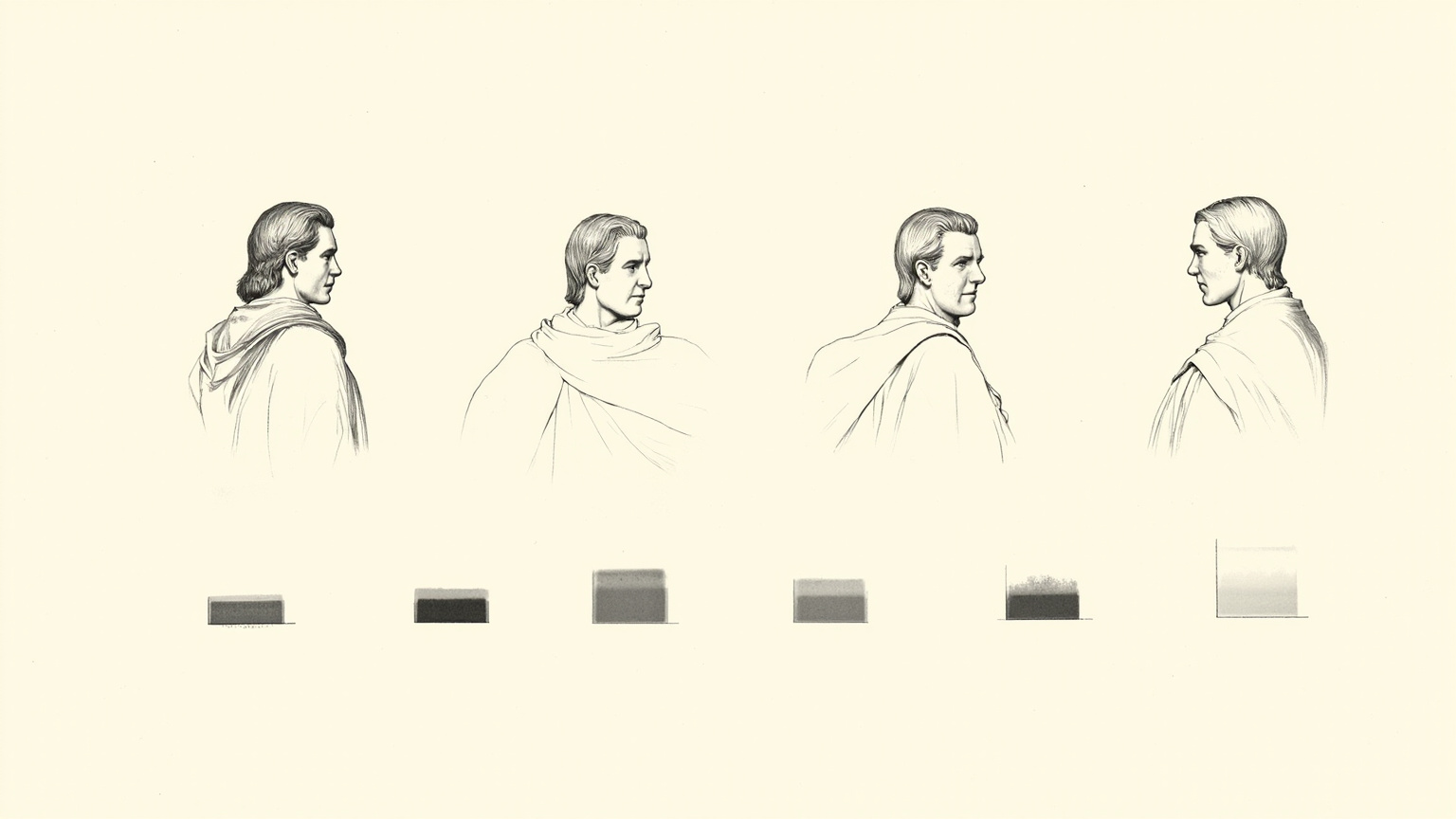
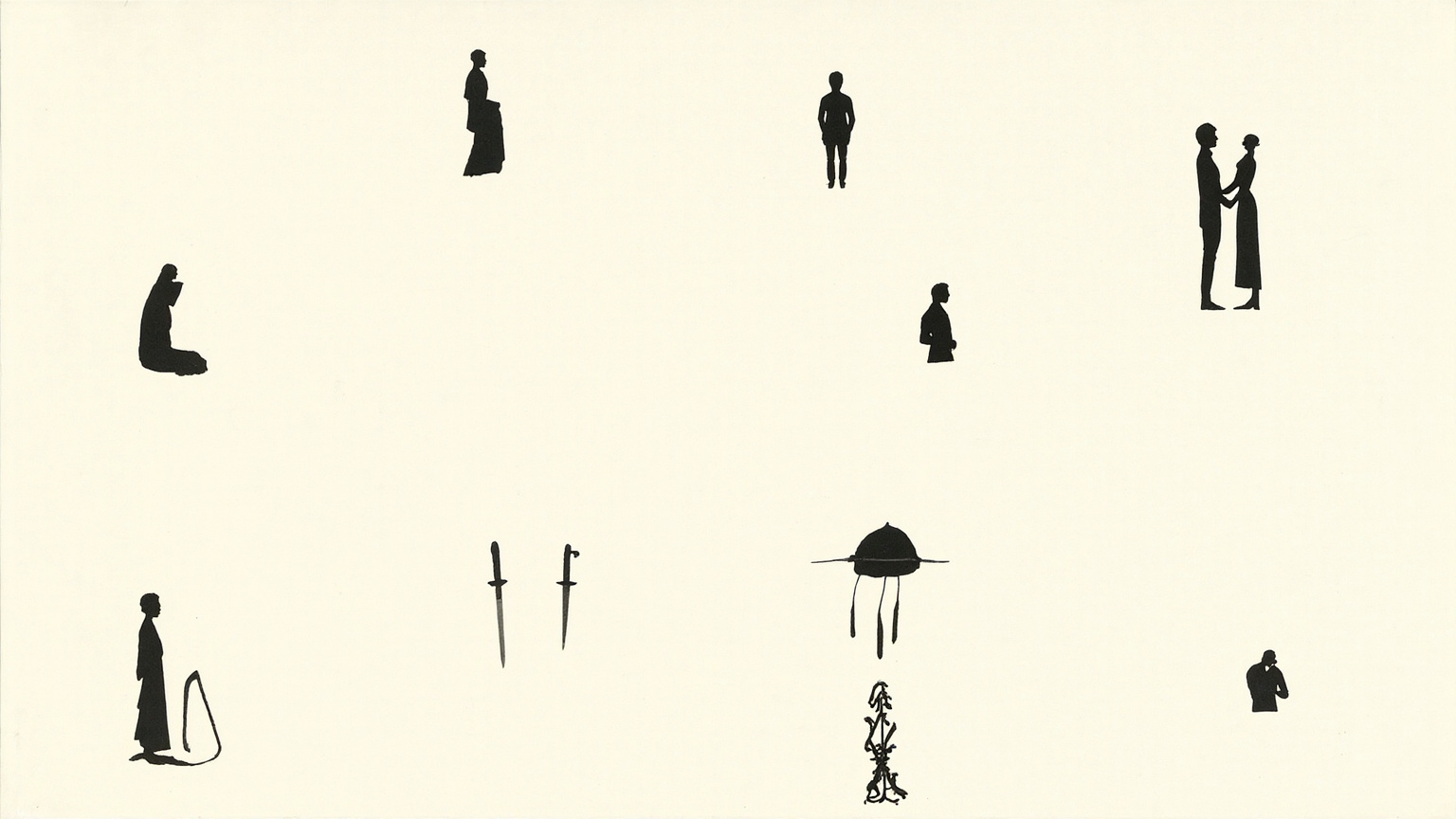
Before the guide was written, this book got a visual foundation — every illustration you just read grew out of it.