Truyền Kỳ Mạn Lục (Casual Records of Transmitted Wonders) · Companion Guide
传奇漫录
红河稻乡的雷雨夜里,锦书贴在亭的门楣上;被掳的丽娘以死守志,狐女在湿雾里招手——因果与情愫在同一座亭阁里悄然落定。
Opening
The rain hadn't started yet when the thunder hit. In a đình somewhere in the Red River Delta, a gust of cold wind cut an oil lamp down to a single bean of light. A woman in an old-style áo tứ thân stood outside the door. She said nothing, just pressed the brocade letter in her hand against the lintel, then turned and walked away. Inside, the young scholar who had waited three days and three nights heard her skirts brush the steps. He never saw her face. This is the oldest ghost-story scene in Vietnamese literature. It comes from a book called Truyền kỳ mạn lục, some twenty tales of the strange that its author, Nguyễn Dữ, set down, or so he claimed, almost carelessly, in the early sixteenth century.
What kind of book is this
Truyền kỳ mạn lục is the founding work of classical Vietnamese tales of the strange. In the history of Vietnamese literature it holds roughly the place that Strange Tales from a Chinese Studio holds in China, or Kŭmo sinhwa in Korea. The word mạn lục in the title is the author's own modesty: a record jotted down carelessly, in passing. But open the book and you can tell how hard he worked at seeming careless. Nguyễn Dữ wrote it in Chinese characters. That's no surprise: in sixteenth-century Đại Việt, the literati read and wrote in Chinese, the standard script of literature. What's strange is what he wrote about: fox spirits, rice paddies, village shrines, women in áo tứ thân, none of it looks anything like the Chinese heartland. The book's literary language is Chinese. Its breath is the smell of rice from the Red River.
Characters and world
The cast falls into roughly four groups. First, the young scholars: country gentry who read late into the night, wander into some pavilion by mistake, and let a moment's weakness draw them in after a fox spirit. They're the eyes the reader borrows. Second, the fox spirits and ghosts, Vietnam's own ghost brides, dressed in old-style áo tứ thân, faces veiled in gauze, materializing in moonlight and wet mist, beautiful enough to raise the hair on your neck. Third, the village elders, shrine keepers, and headmen, who preside over the rites in the đình and rule on where the human world ends and the spirit world begins. They give order a body. Fourth, the powerful, who are mostly absent, appearing only as a decree handed down, an embroidered couch, the distant shadow of a state umbrella and its retinue. They leave their weight behind without ever showing a face. The rule underneath this world is cause and effect. What you sow, you reap. Chastity and filial devotion are rewarded in the end; lust and seizure are punished in the end. It's the Vietnamese version of the old idea that a tale of the strange should also teach virtue.
The stories are set in the countryside of the Red River Delta. The đình is a fixture unique to Vietnamese villages, not the earth-god shrines of southern China, not the dragon-king temples of the north. It's where villagers gather to deliberate, to hold rites, to welcome the spirits, and it sits at the point where the human, divine, and ghostly worlds meet. On a night of thunder and rain, the đình is the door that keeps swinging open.
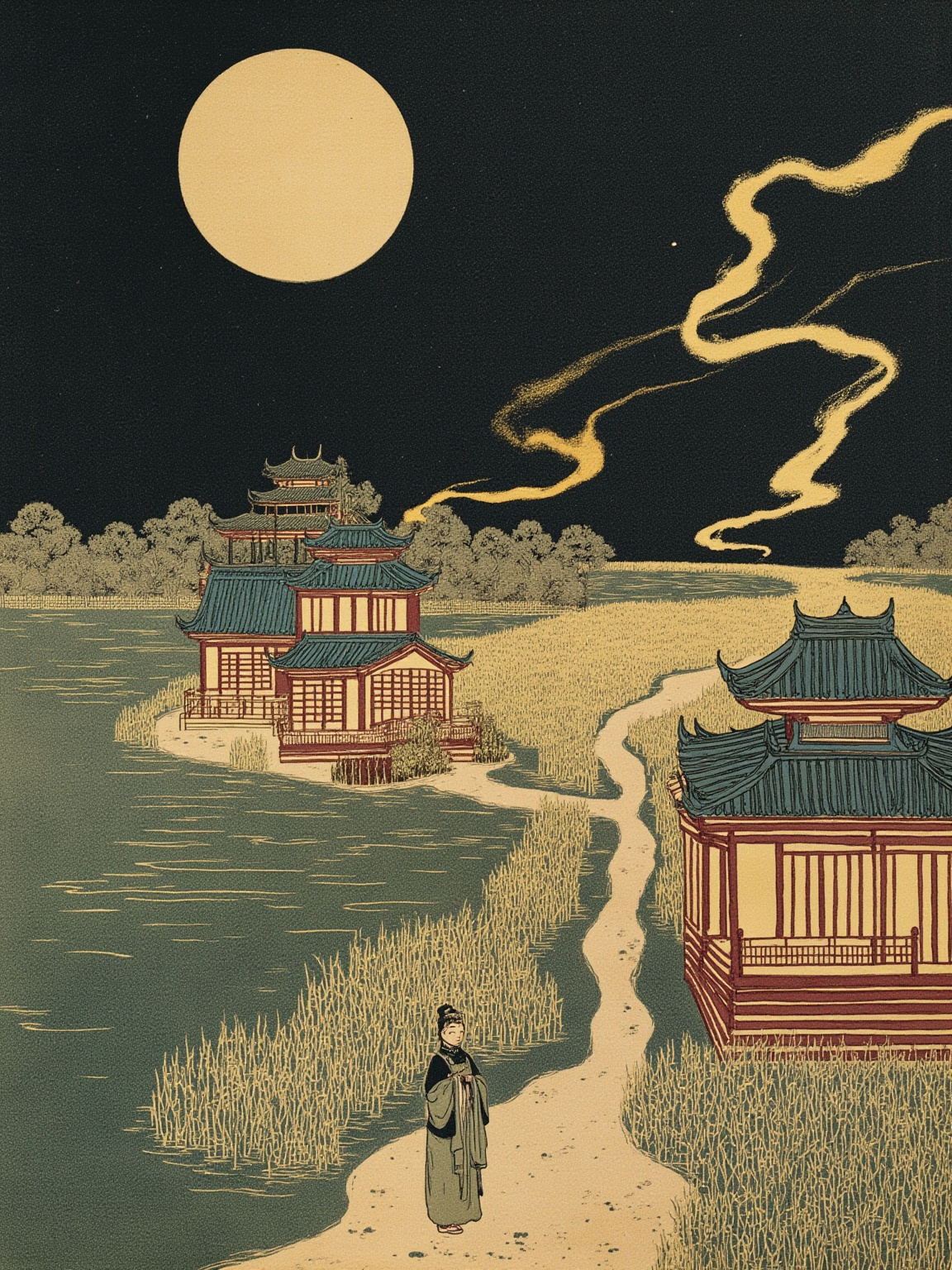
On nights when the thunder stilled and the river wind had not yet risen, one could hear, beneath the rafters of the village hall, the faint sound of footsteps where no one walked.
雷雨初歇、夜未深时,村亭的檐下便隐隐有履声——那是无人行走之处传来的脚步。
金句 · 开篇 · 亭下异响
How the plot moves
The book's twenty-some stories can be followed along two threads. The first is the Tale of Lệ Nương, the earliest prototype in Vietnamese literature of a tragedy built around chastity. The second is the fox-and-ghost seduction stories, a run of encounters between young scholars and ghost brides. Both threads move through the same visual world: rice paddies and waterways, hot wet nights of thunder, meetings in and around the đình. Start with the night at the center of the Tale of Lệ Nương.
Lệ Nương is a girl from a village on the Red River, raised alongside a scholar from the next village over. By the paddy's irrigation ditch, the two pledge themselves to each other, a brocade letter their only proof. The scene is written so lightly it reads like a single rice stalk bending in the wind. Then comes the decree.
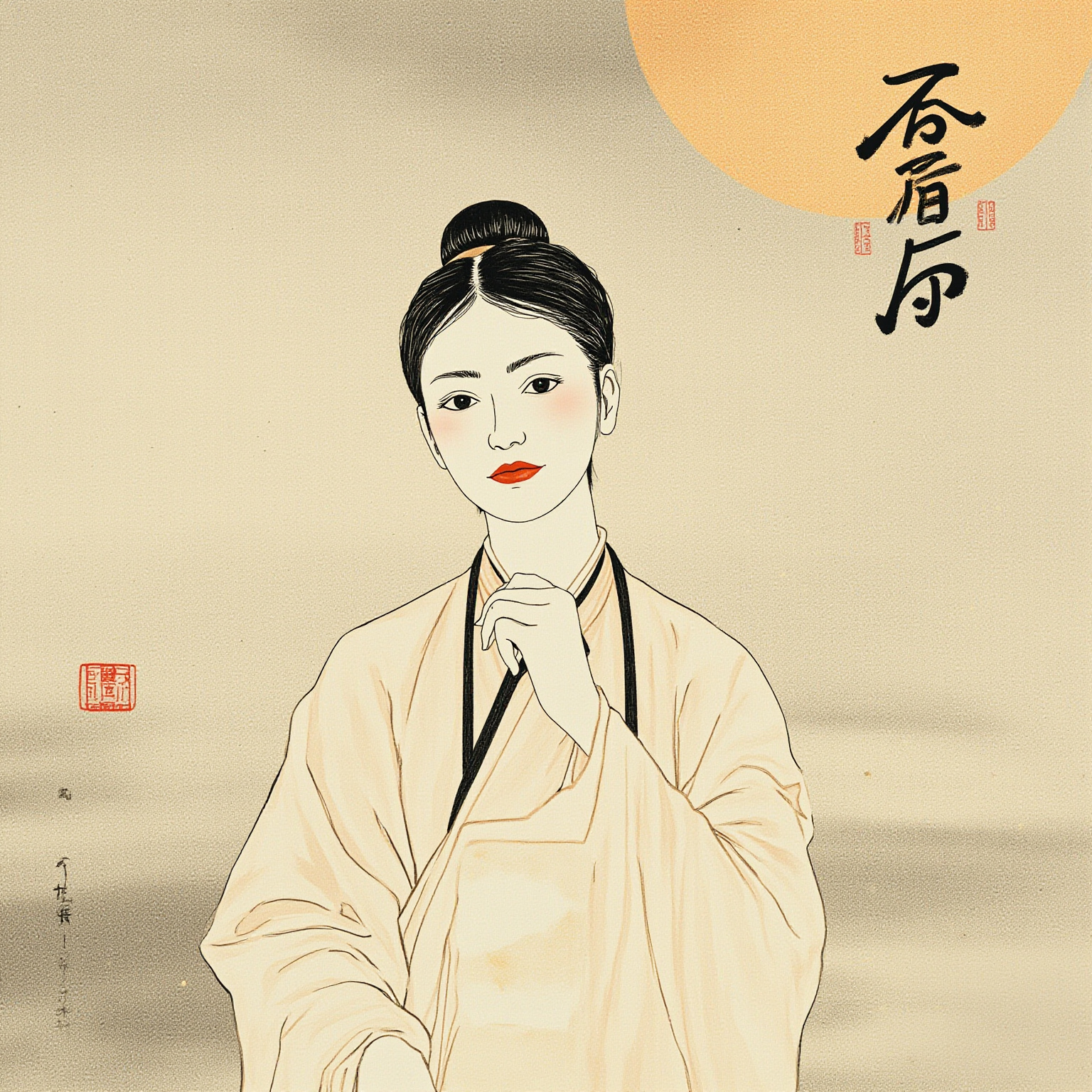
They had grown up side by side by the dikes of the paddy; the word was given, and the word was sealed — as lightly as a stalk of rice bending once before the wind.
同里长于稻畦之畔,一言既定,便如稻穗在风中一俯,再不曾起。
金句 · 《丽娘传》· 私定终身
A man of power issues a decree, and Lệ Nương is seized and taken into the palace by force. The book never shows her being dragged away. The decree shows up only as a sliver through a half-open door: an embroidered couch, a palace lantern, the distant shadow of a state umbrella and its retinue, while outside the door the rice paddy just keeps moving in the wind. Lệ Nương and her betrothed are cut off from each other for good. Worth noticing here: Nguyễn Dữ makes the violence itself absent on purpose. The reader sees only what it leaves behind, never the act. It's a kind of blank space particular to classical Vietnamese tales of the strange, and it chills harder than a direct account would.
In the palace, Lệ Nương dies by her own hand to prove her faith. She leaves the brocade letter behind and sends her spirit home. What her betrothed gets back isn't a person, it's a keepsake, and the letter pressed to the lintel. An empty room, a single lamp, a brocade letter on the doorframe, a strange sound deep in the night. This scene is the Vietnamese archetype of parting in life and death. For centuries afterward, Vietnamese theater and nôm fiction keep coming back to rewrite it.
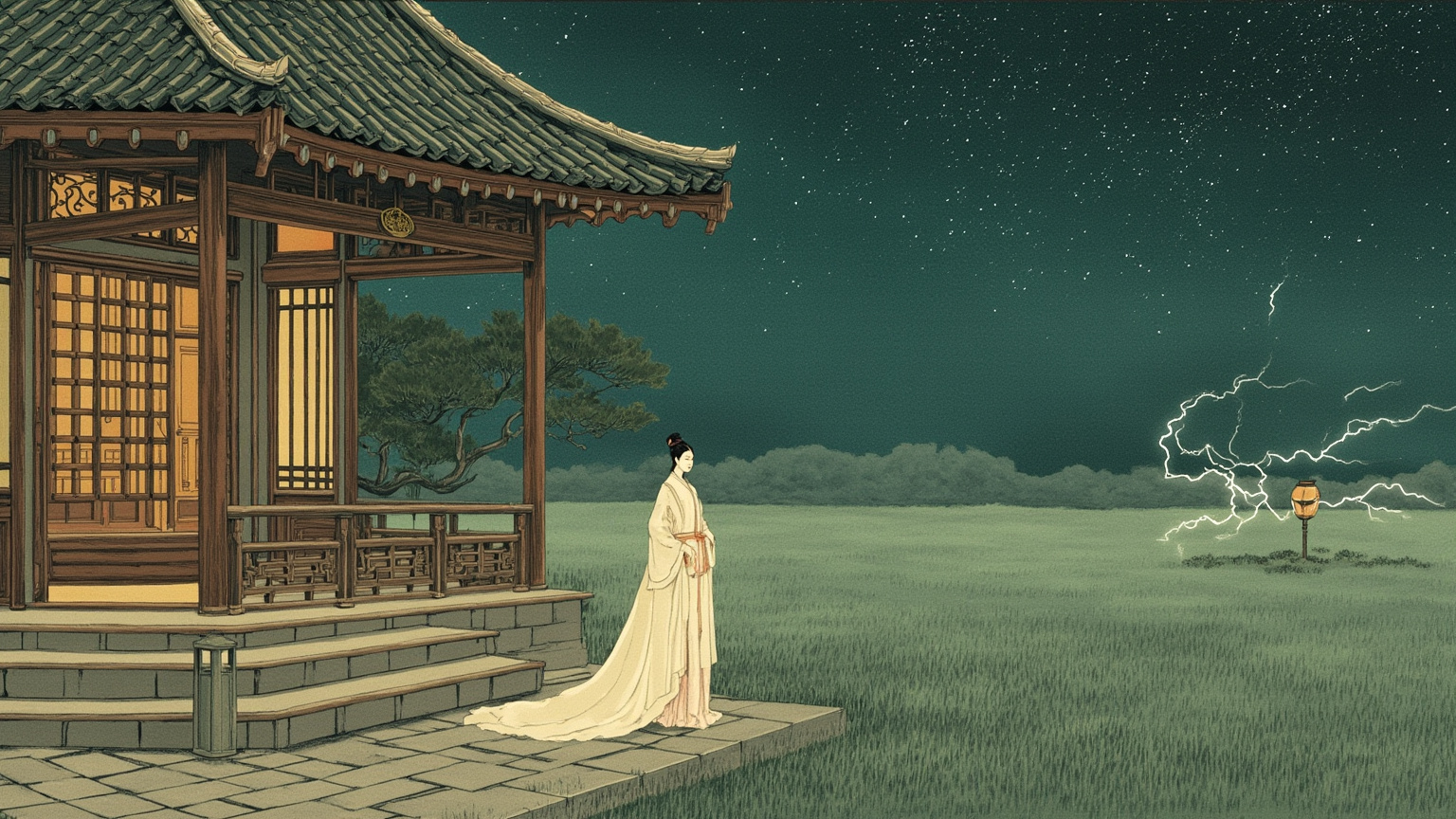
The empty room kept its single lamp; the brocade letter clung to the lintel — and what returned was not the bride, but only the relic of her, and the silence that walked in her stead.
空房孤灯如故,锦书犹在门楣——归来的不是人,只是一缕遗物,与代她行走的寂然。
金句 · 《丽娘传》· 空房孤灯
Cut to the other thread. On a rainy night in the Red River Delta, a scholar reading late wanders by mistake into an old house. The lamp inside burns a damp red, and the gauze curtain stirs where there is no wind. He looks up and sees a woman standing in the moonlight in an old-style áo tứ thân, face veiled in gauze, a smile at the corners of her eyes. She says nothing. She only beckons. He follows.
The scholar is drawn into the spirit's house. The seduction is handled entirely through shadow, gauze, and wet mist, never stated outright. This Vietnamese ghost bride shares her roots with the fox women in Pu Songling's tales, but she looks nothing like them: not a ruqun but a tứ thân, not a derelict manor in the north but a bamboo-fenced house by the Red River. Halfway into the seduction, one decent impulse in the scholar's heart, or maybe just one flicker of doubt, is enough to turn the cause and effect around.
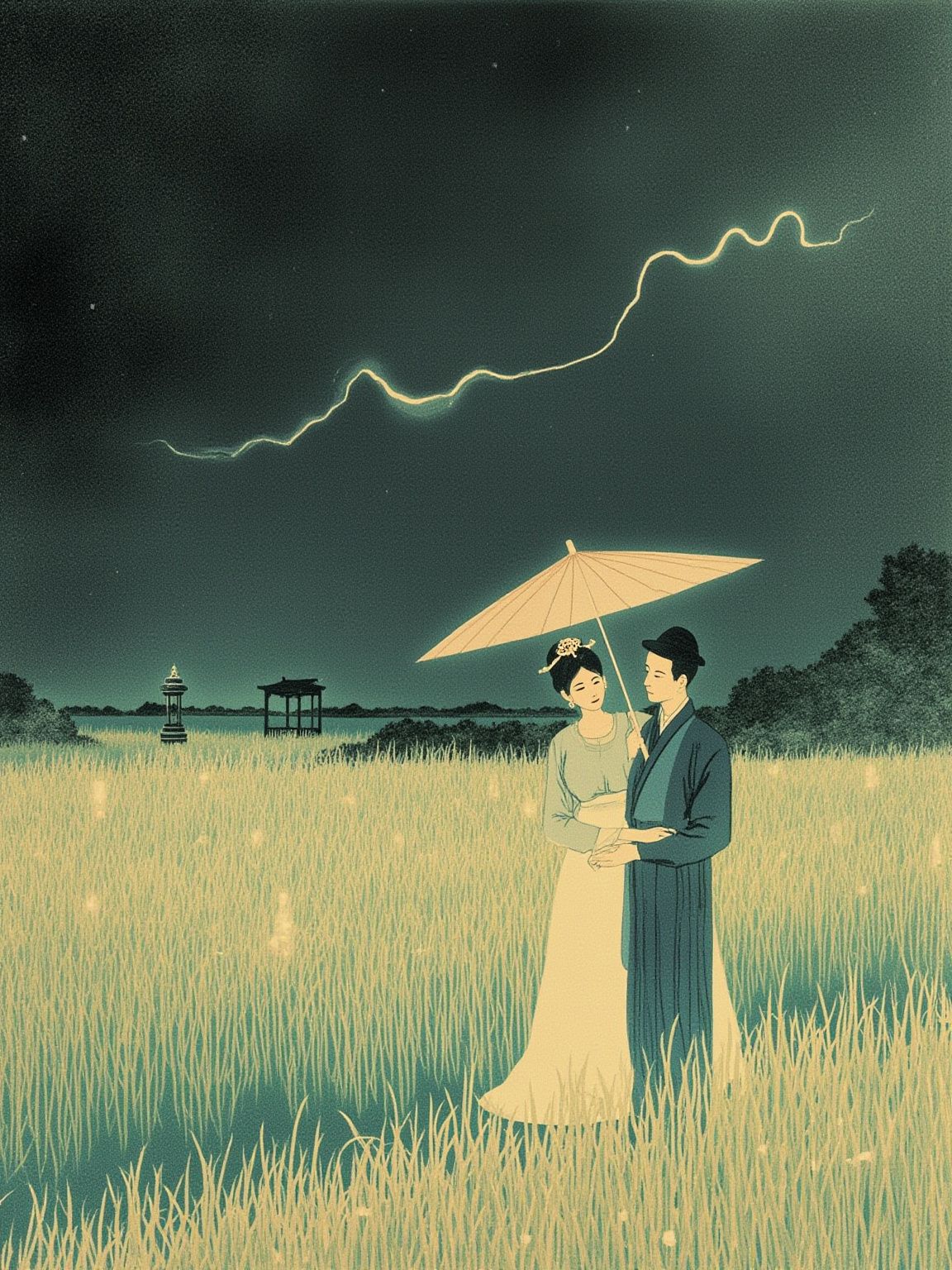
In the wet moonlight she stood, robed in the old four-paneled gown, a veil across her face; she did not speak, only beckoned with the curl of one slender hand.
湿月之下,她衣 tứ thân 古制,轻纱覆面,并不言语,只将纤手一招。
金句 · 狐鬼篇 · 月下鬼妻
Punishment and release come one after the other. The spirit reveals her true form, the mist draws back in on itself, the damp red lantern goes out on its own. Then the shrine keeper, a village elder, presides over the rite of release in the đình and rules on where the human world ends. The scholar is returned to the world of the living. The rice paddy is still there, the đình is still there, and the storm has passed. Worth noticing here: seduction, testing, punishment, release, that four-part structure is common currency across East Asian tales of the strange, but Nguyễn Dữ sets it to a local rhythm. This isn't the cold of a lonely grave in the north. It's the wet, warm calm that settles in after a night of thunder in the Red River Delta.
Theme and craft
What is this book actually about? On the surface, cause and effect, virtue rewarded and vice punished. One layer down, it's about the powerful taking from the common people: the faceless decree in the Tale of Lệ Nương is the first time Vietnamese literature puts the fact of seizure by force plainly on the page. Deeper still, it's about the border between the human and the divine: the đình as a threshold where order and transgression are separated by no more than a sheet of oiled paper. East Asian tales of the strange draw from one shared pool of motifs: New Tales Told by Lamplight, Kŭmo sinhwa, Strange Tales from a Chinese Studio all dip into it. Truyền kỳ mạn lục is Vietnam's share of that pool: the same fox spirits, the same reckoning between human and divine, a different smell of rice and a different thunder.
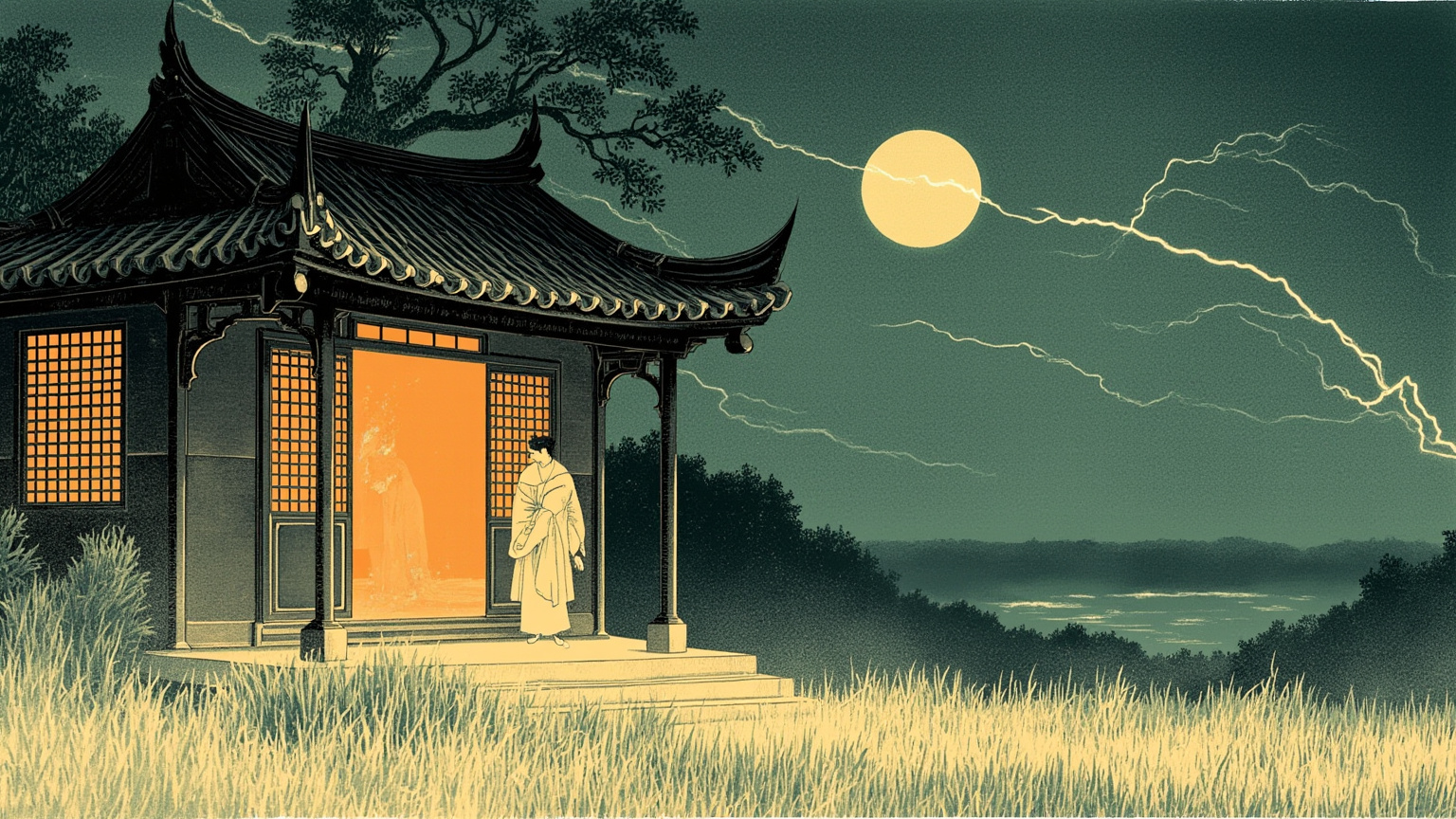
As craft, Nguyễn Dữ does something few other tale-of-the-strange writers bother with: he makes violence absent. The scene of Lệ Nương's abduction shows no action, only objects; the pressure of the powerful shows no face, only the shadow of a retinue in the distance. That blank space makes the weight of it worse, not lighter, the reader is forced to finish the scene in their own head. The first time I got to the end of the Tale of Lệ Nương, I went back and reread the detail of that brocade letter on the lintel. It's written so lightly you'd almost think the author had swerved around the sharpest cut in the whole story. He hadn't. He'd just changed the angle of the blade.
This book uses Chinese characters to write Vietnamese things: rice paddies, the đình, áo tứ thân, a hot wet night of thunder, and not one inch of it looks like the Chinese heartland. This isn't Vietnam in translation. This is Chinese script that has been breathed through by Vietnam.
Why read the text itself
Knowing the plot is still no substitute for the text itself, and there are three reasons for that. First, the prose: Nguyễn Dữ's short classical Chinese sentences read as clean as if rinsed by rain, his scene changes carried by nothing more than a phrase like "another day" or "a moment later"; the rhythm is local to Vietnam, not borrowed from the Chinese heartland. Second, the physical sense of it: the wet heat of the Red River paddies, the oil lamp inside the đình on a night of thunder, the instant the brocade letter touches the lintel. In a summary these are just names; on the page they're things that raise gooseflesh. Third, something only the full text carries: buried in the ending of every seduction-testing-punishment-release sequence is a Vietnamese scholar's own private understanding of ritual and propriety, and you don't get the whole of that meaning until you've read all twenty-some tales. What Truyền kỳ mạn lục fills in is the Vietnamese-shaped gap on the map of East Asian tales of the strange. To read it is to plant rice in that empty patch on the shelf.
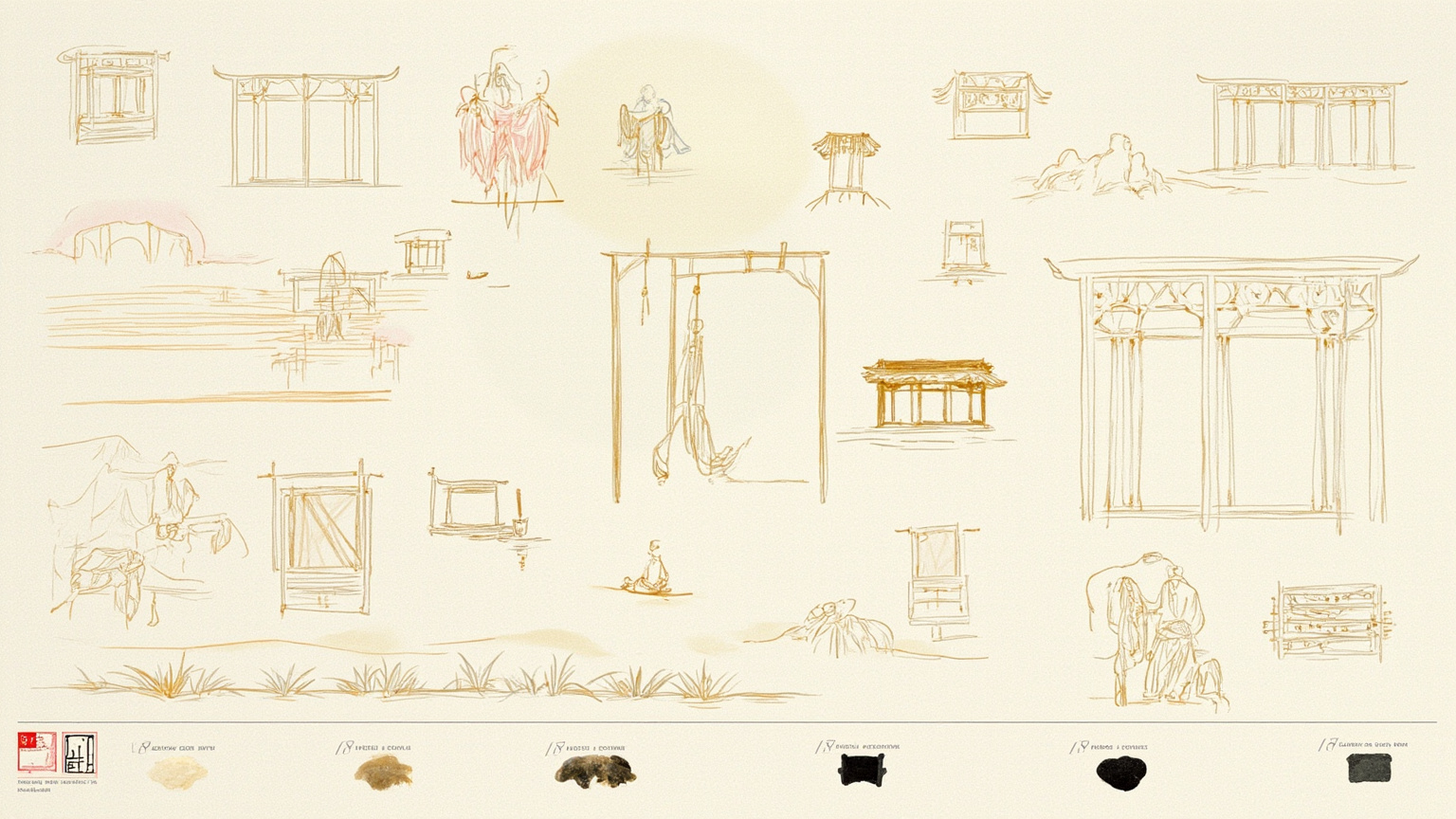
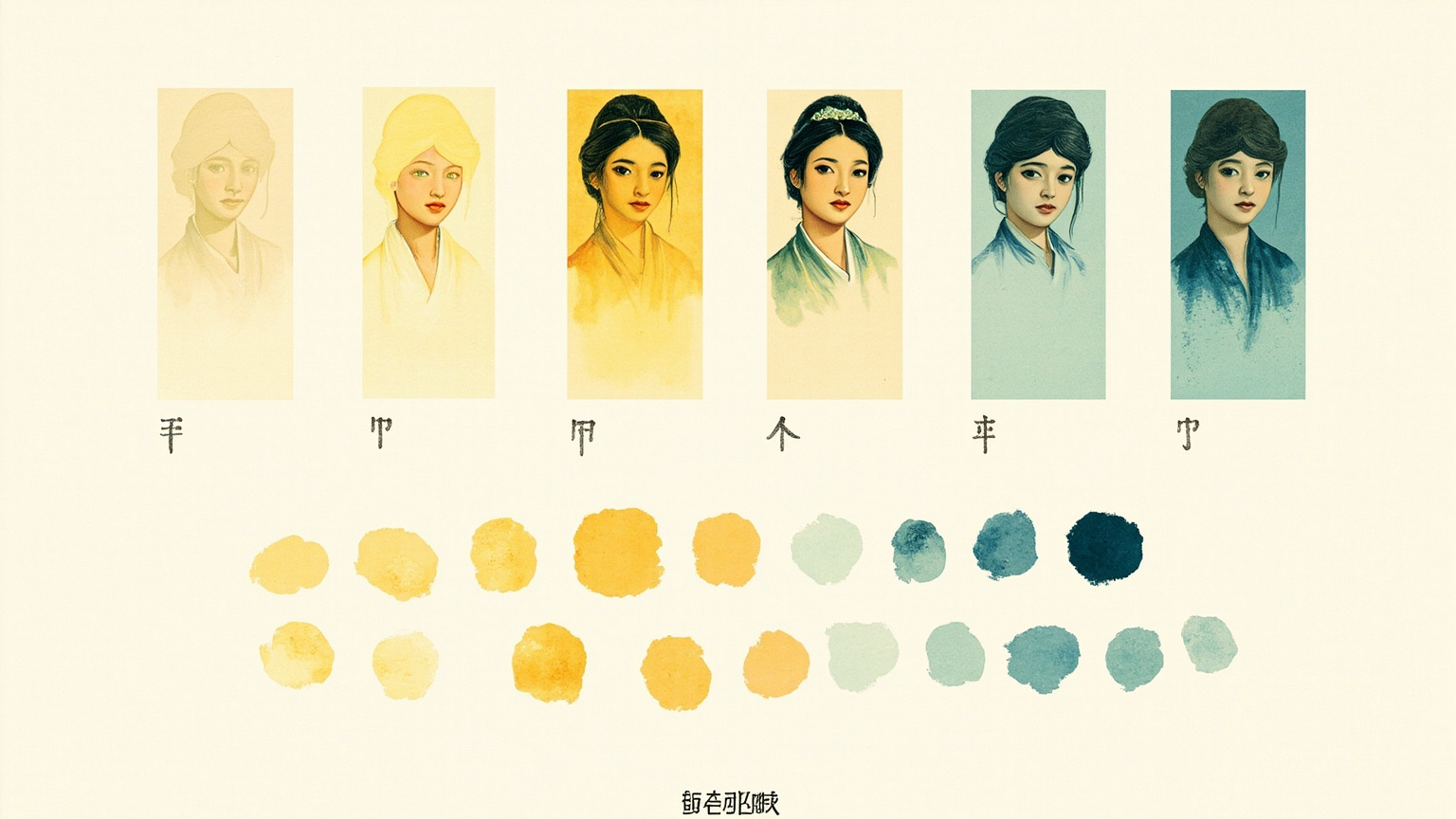
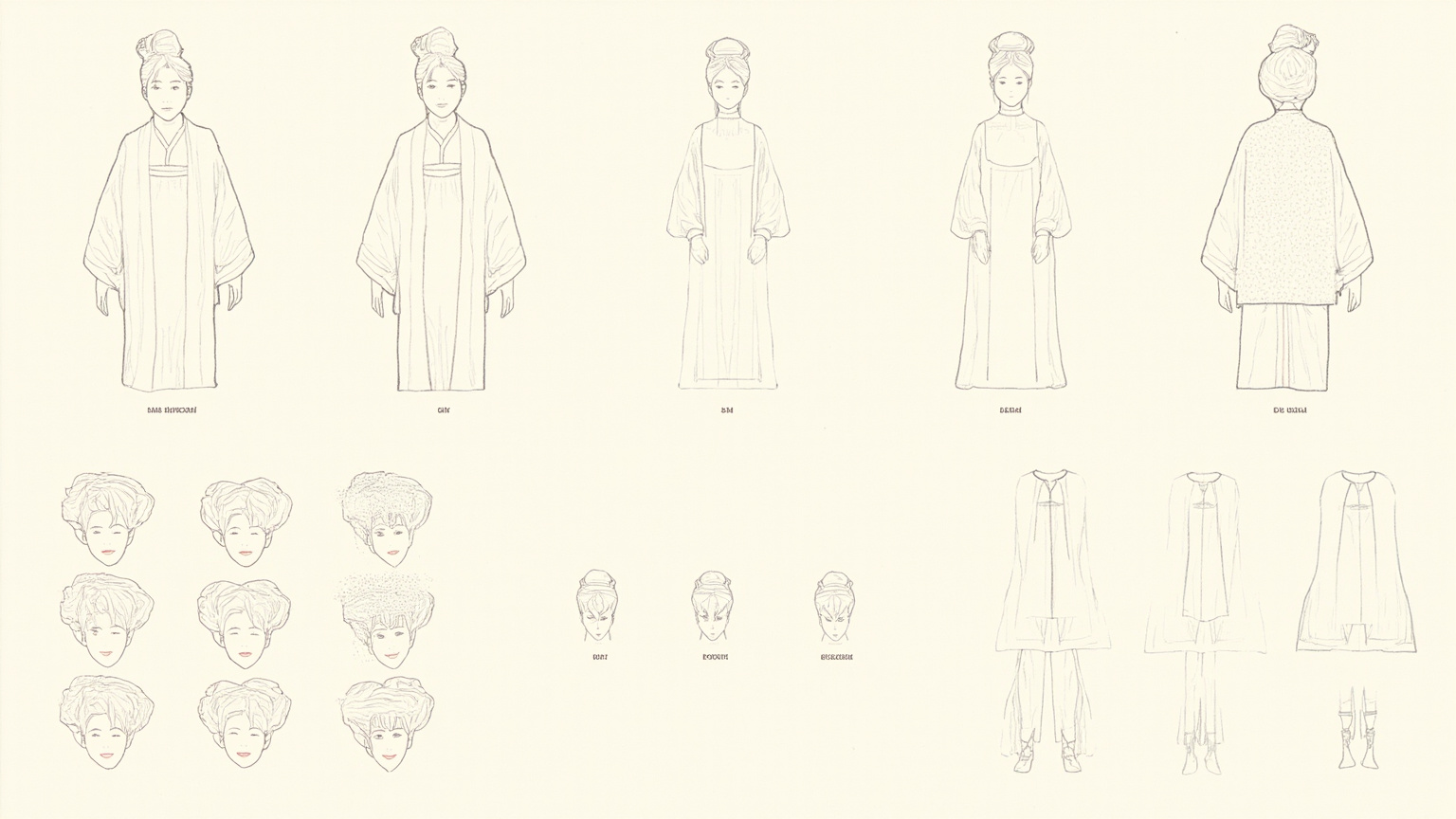
Art Direction4 plates
Before the guide was written, this book got a visual foundation — every illustration you just read grew out of it.