Tun-huang · Companion Guide
敦煌
一张陌生的西夏文残片,把落第书生赵行德拽过河西走廊——他最终在城破前夜,与僧众封死五万卷经卷
Opening
A creased scrap of Hsi-hsia writing gets stuffed into the pack of a scholar who has just failed his exam. He cannot read a word of it. He has never heard of the country that produced it. But that year, that night, on the streets of K'ai-feng, Chao Hsing-te's life turns off the path of the scholar's study. It bends west, then west again, all the way into the eleventh-century Hexi Corridor — and into a cluster of caves that the world would later call Tun-huang.
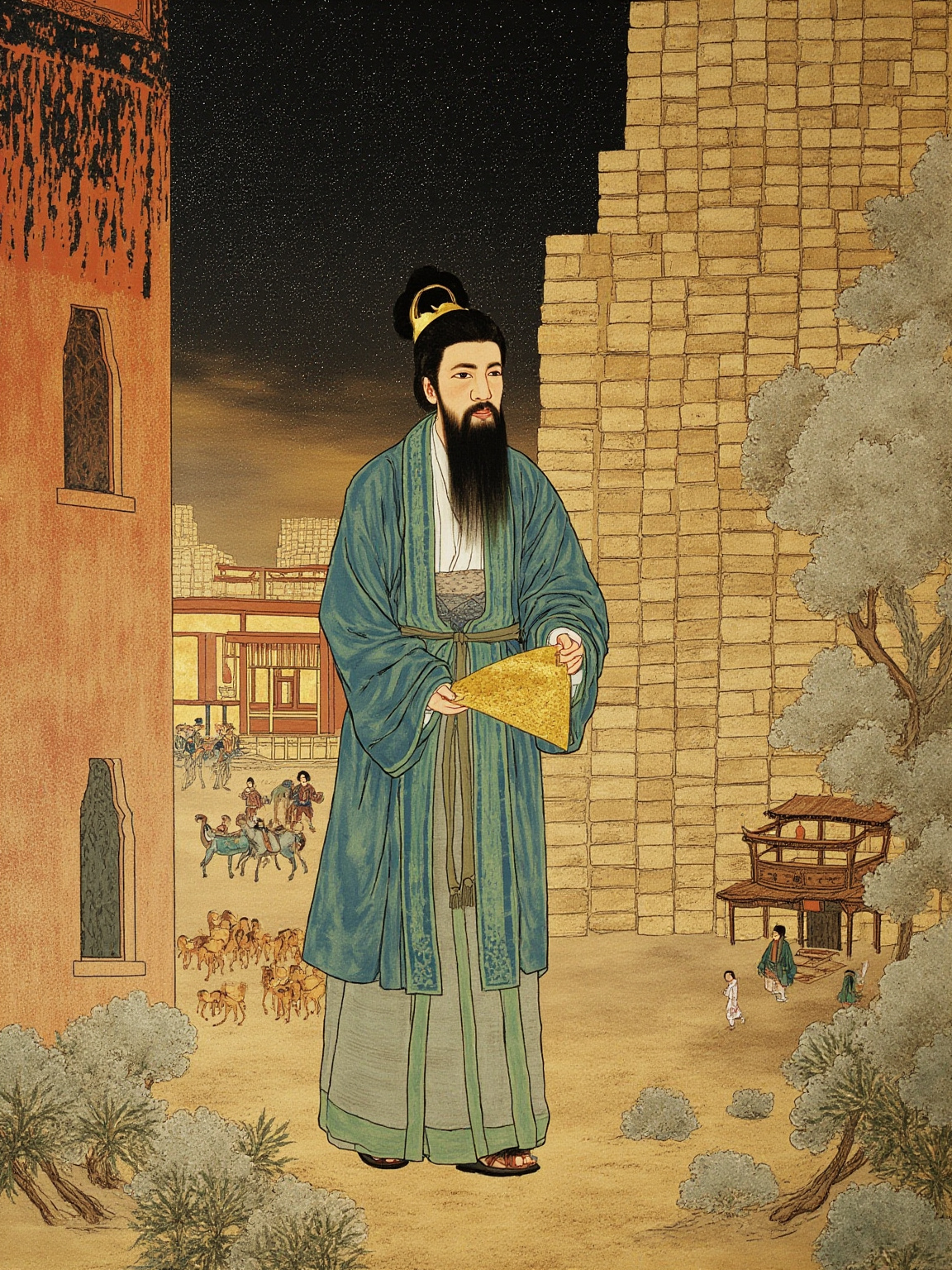
He folded the torn slip of paper and tucked it into his sleeve—the writing was unknown, the country unnamed, yet from that night his road turned west.
他把那张残片折好,塞进袖中——字不识,国无名,只那一夜起,脚下的路便一路向西了。
金句 · 开篇 · 汴京街头残页
What Is This Book
Tun-huang is a historical novel by the Japanese writer Yasushi Inoue, written in the late 1950s. Its Japanese title uses the same two characters — Tonkō. Inoue spent his career writing about the Western Regions, the Silk Road, the Tang dynasty, the Yuezhi. But he said later that Tun-huang was his favorite among all of them, because it takes on a real question head-on: who sealed those tens of thousands of scrolls into the Library Cave at Mogao, on what night, and why? The novel was translated into Chinese and made into a joint Chinese-Japanese film of the same name, and it became a shared piece of literary memory for readers in both languages. Most Western Regions stories reach for the same shelf — the Tang dynasty, Xuanzang, Marco Polo. Tun-huang is a rare exception: an eleventh-century epic of the Hexi Corridor rewritten in modern novel form, with the Dunhuang caves themselves as the one true protagonist.
People and World
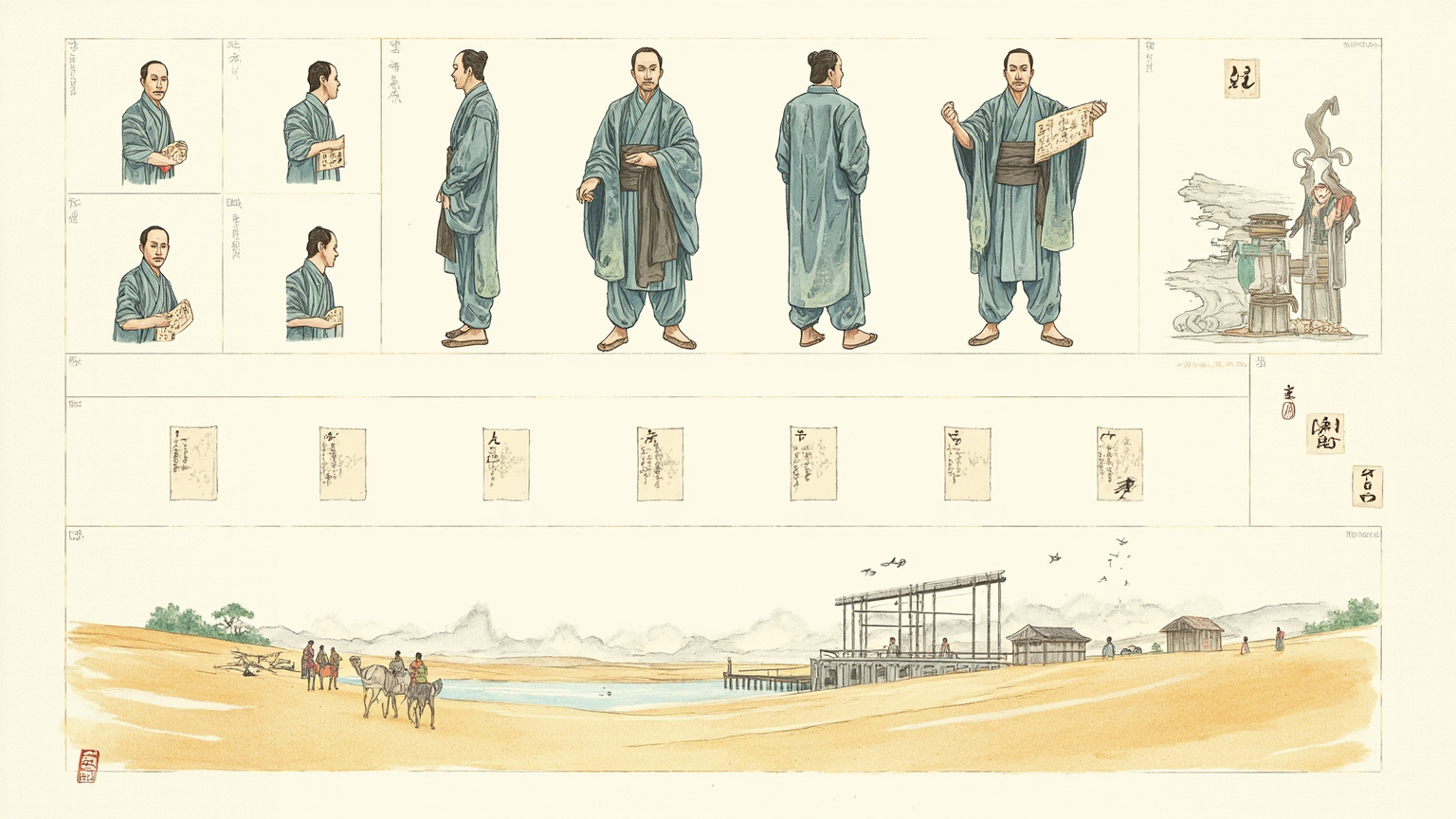
The protagonist, Chao Hsing-te, is a scholar from the south who fails his examinations at K'ai-feng during the Taiping Xingguo years of the Northern Song. He is no general, no eminent monk, not even a hero in any usual sense — just a man who missed his chance at the civil service and instead got pulled west by a scrap of writing he could not read. In time he masters both Hsi-hsia and Chinese script, and that one skill carries him back and forth between the Hsi-hsia army command and the Guiyi Army headquarters, until it makes him the single person the scrolls in the caves are finally entrusted to.
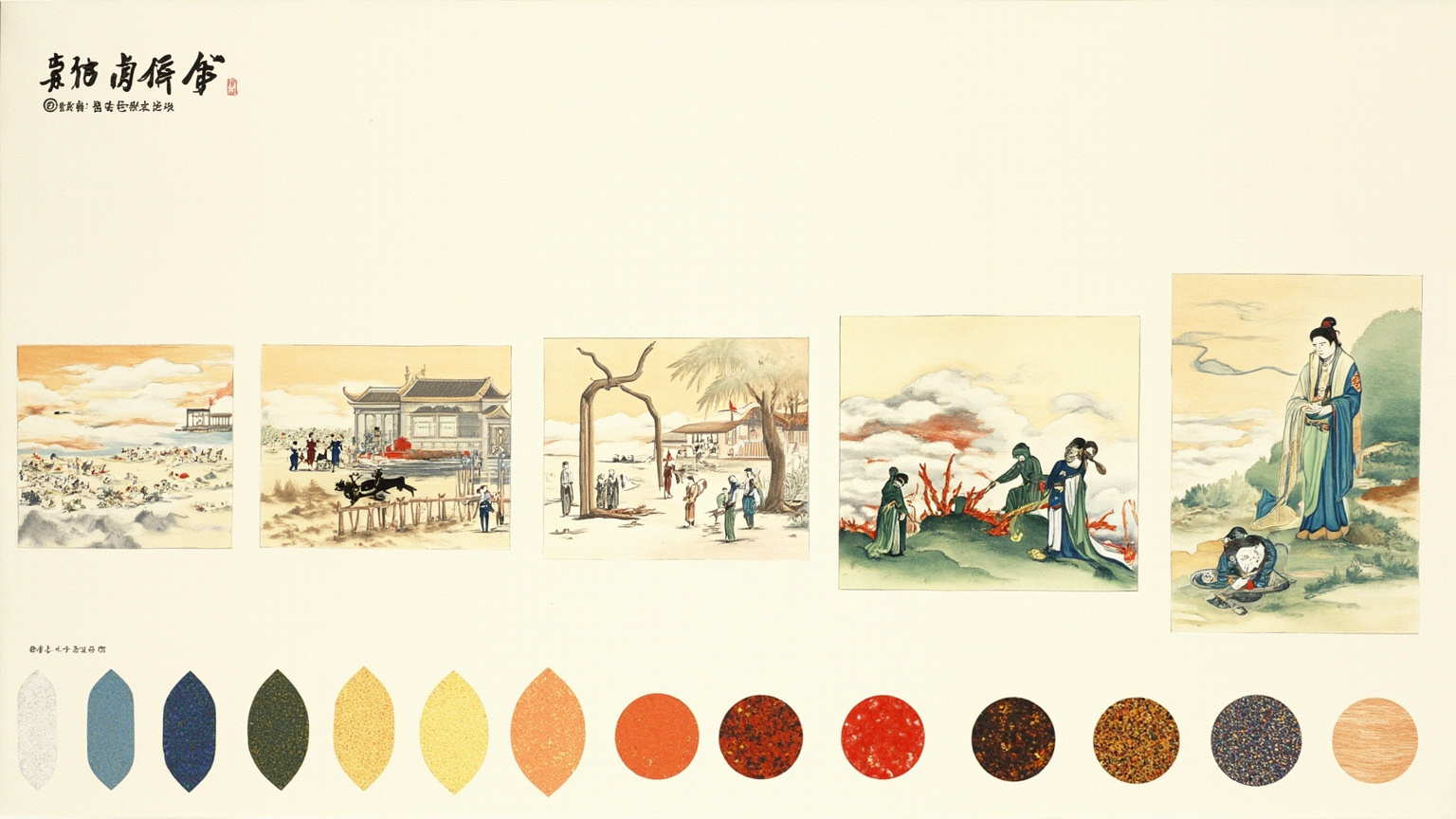
Outside Sha-chou, the Chinese military governor Chu Wang-li and the Uighur chieftain Wei-ch'ih Kuang swear to hold the city to the death; the two families are bound by marriage, and just beyond the walls rise the Mogao caves under Mount Mingsha. Inside the city there is one more figure, Ts'ao Yen-hui, the last military governor, who will eventually lead the local gentry out to surrender to Hsi-hsia. Farthest away, in Hsing-ch'ing, sits the Hsi-hsia king Yüan-hao — his newly invented script is the newest, most aggressive, and most frightening symbol in the entire region, at least to the old dynasties around it. The setting is the first half of the eleventh century, with the Northern Song, Hsi-hsia, the Uighurs, and the Guiyi Army all holding ground at once. The gold and ochre of the desert sand and the blue-green and cinnabar of the cave murals give the whole novel its visual skeleton.
How the Story Moves
The story makes its first cut on the night the exam results go up at K'ai-feng. Hsing-te has failed. Walking home, he sees a torn page spread out on the ground — Hsi-hsia script on one side, a Chinese translation running beside it. A country he has never even heard named is rewriting itself, in a script it only just invented. Hsing-te crouches down, folds the scrap, and tucks it into his sleeve. Inoue lets this moment land with almost no weight at all — no inner monologue, no sense of destiny calling, just one gesture: picking it up. From here on, Hsing-te never goes back to his books.
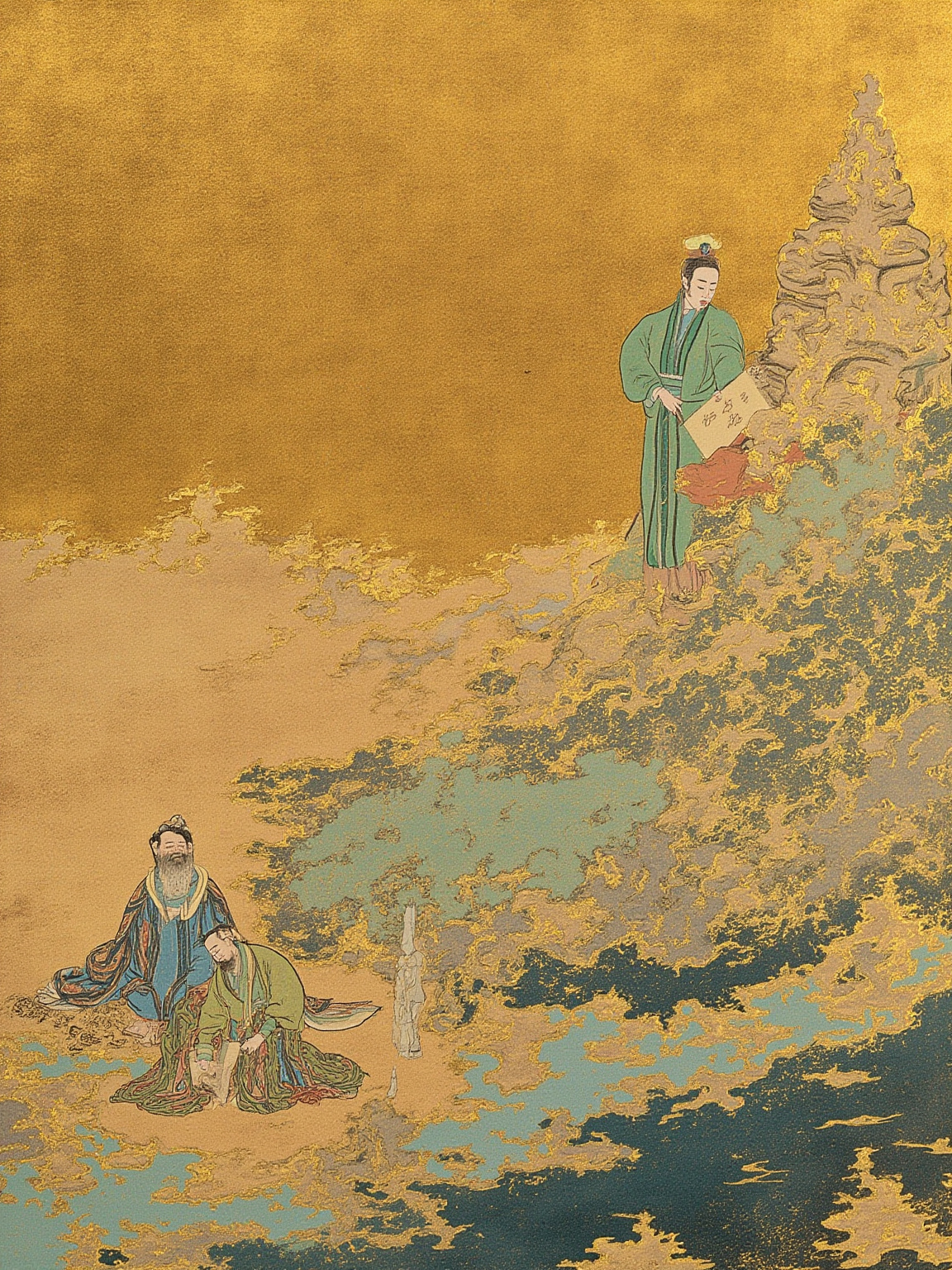
Beyond the palace wall, the war-banner of a kingdom no one had yet heard of was already rising.
一个从未被听说的国度,正在宫墙之外竖起它的旌旗。
金句 · 第一章 · 落第之夜
Instead of going home south, Hsing-te joins a caravan trading tea west, following the old road from K'ai-feng into the Hexi Corridor. Along the way he rescues an Uighur woman who has fallen on hard times, and the two marry. Riding on camelback, he listens to merchants and monks from Khotan describe a city called Sha-chou, caves cut into a cliff face, and a temple stacked with manuscripts in half a dozen languages. The caravan eventually reaches Hsing-ch'ing, the new Hsi-hsia capital, where Hsing-te sees for the first time a new script, a new army, and new laws all landing on one city at once — an empire remaking itself down to the bone with symbols it invented for the purpose. Because he can read and write both Hsi-hsia and Chinese, he gets pulled back and forth between the Hsi-hsia army command and the Guiyi Army headquarters, and drawn into the chaos on the Sha-chou front.
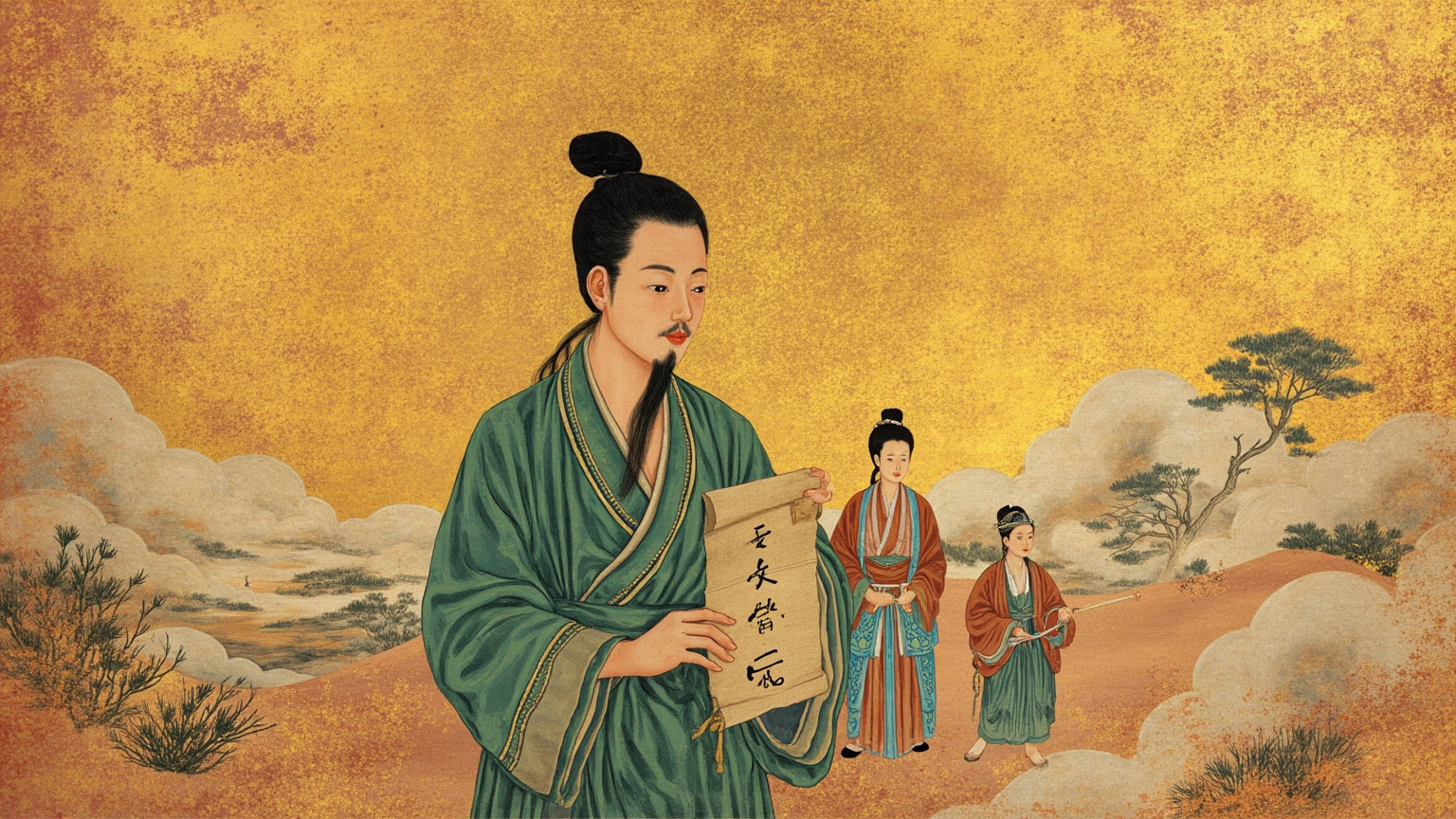
From the camel's back he heard merchants speak of a walled city called Shazhou, of caves hollowed into cliffs beneath a mountain of singing sands.
骆驼背上他听人说起一座叫沙州的城,一片凿在鸣沙山下断崖里的石窟。
金句 · 第二章 · 西行商队
By the time he follows the camel bells to Sha-chou, the arrangement is already fixed: Chu Wang-li's Chinese troops hold the city, Wei-ch'ih Kuang's Uighur cavalry holds the beacon towers outside it, and the two houses, bound by marriage, have sworn not to retreat. The Hsi-hsia banners draw closer by the day, and up on the cliffs of Mount Mingsha, the monks of Mogao keep copying sutras, scroll after scroll. Inoue writes these monks with something like an archaeologist's patience — men from different monasteries, writing in different languages, carrying a century's worth of Chinese, Tibetan, Uighur, and Khotanese manuscripts into the caves one scroll at a time. The merchants and monks who moved along the Silk Road were the ones who actually built this composite library, scroll by scroll.
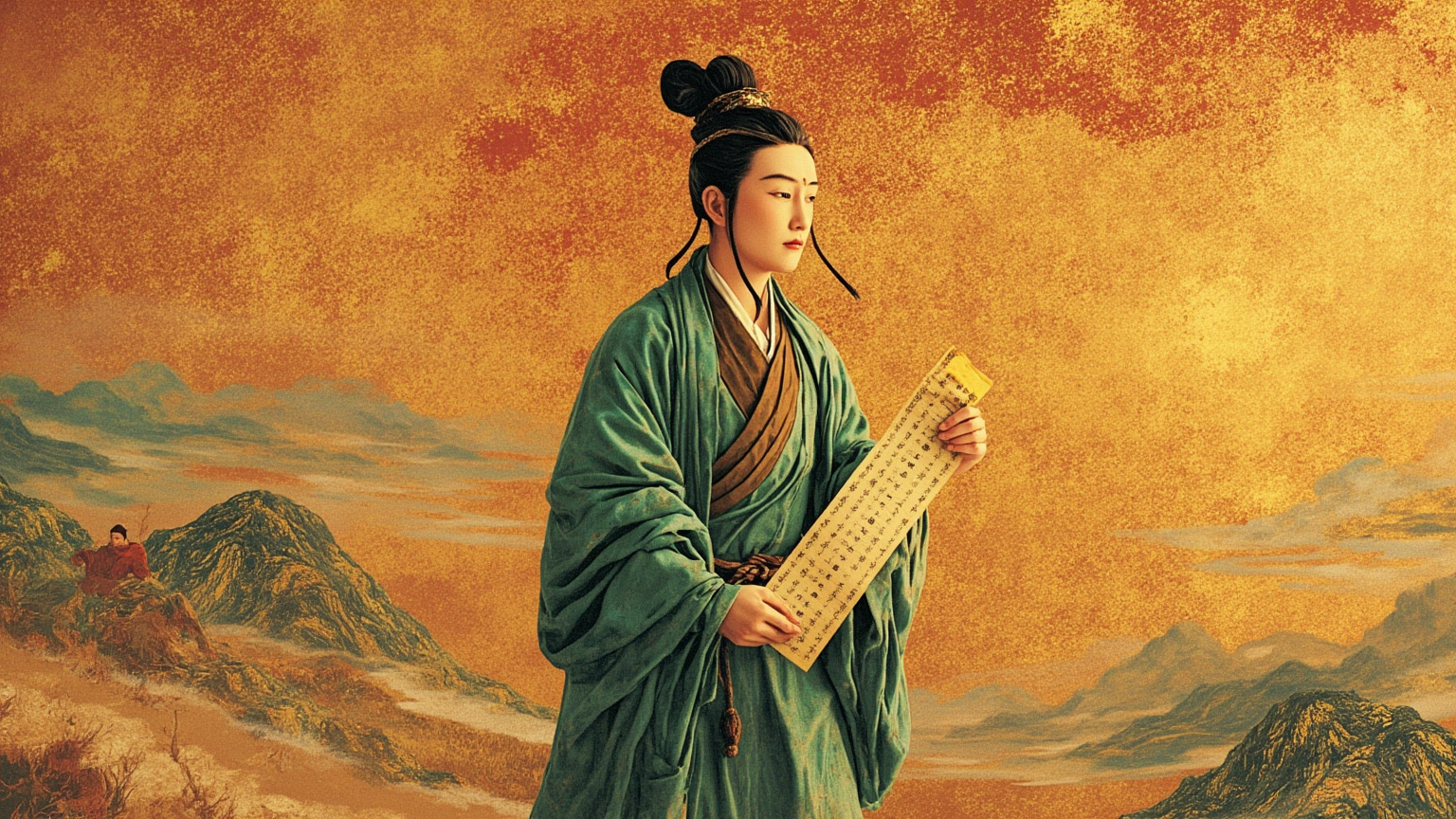
Day by day the Xi Xia banners drew closer upon the desert, yet within the caves the monks still copied sutras, brushstroke after brushstroke.
西夏旌旗一日近过一日,窟中僧人却仍在,一笔一画地抄经。
金句 · 第三章 · 沙州之围
Hsing-te enters Sha-chou. He moves between the city walls and the headquarters, listening to Chu Wang-li and Wei-ch'ih Kuang debate strategy, listening to Hsi-hsia envoys deliver terms of surrender below the walls. But what actually stops him is an old monk at Mogao, the one in charge of the copying work, who leads him into the caves and shows him the manuscripts stacked against the walls — Chinese sutras, Tibetan dharani, Uighur donor inscriptions, Khotanese vows. The old monk speaks, and hands the tens of thousands of scrolls that generations of monks built up in relay to an outsider, a Chinese scholar who happened to wander in.
But Hsing-te hesitates. He has a wife now, a private life he has only just put down roots for in this foreign country. While he wavers, his wife — the Uighur woman — is the one who tells him to let the small household go and guard the scrolls instead. One line from her turns the whole book on its axis, from a war story into a story about guardianship. Inoue keeps the parting plain: no weeping, no vows sworn to heaven, just a spare, deliberate argument that puts duty ahead of everything else. Once she has made her case, she turns and goes back to her own Uighur people, handing her husband over to a city and a cave full of scrolls.
On the night the cave is sealed, Hsing-te and the monks carry roughly fifty thousand scrolls, silk paintings, and hemp-paper manuscripts, one by one, into a hidden side cave, then wall up the entrance with mud and paint over it. Inoue refuses to write this night as a climax — he writes hands instead: carrying, stacking, passing, sealing. Gold-brown desert light, the blue-green glow of a guttering candle inside the cave, scroll after scroll cradled in a monk's arms and carried in. By the time dawn is close, you can already hear the hooves of Hsi-hsia cavalry.
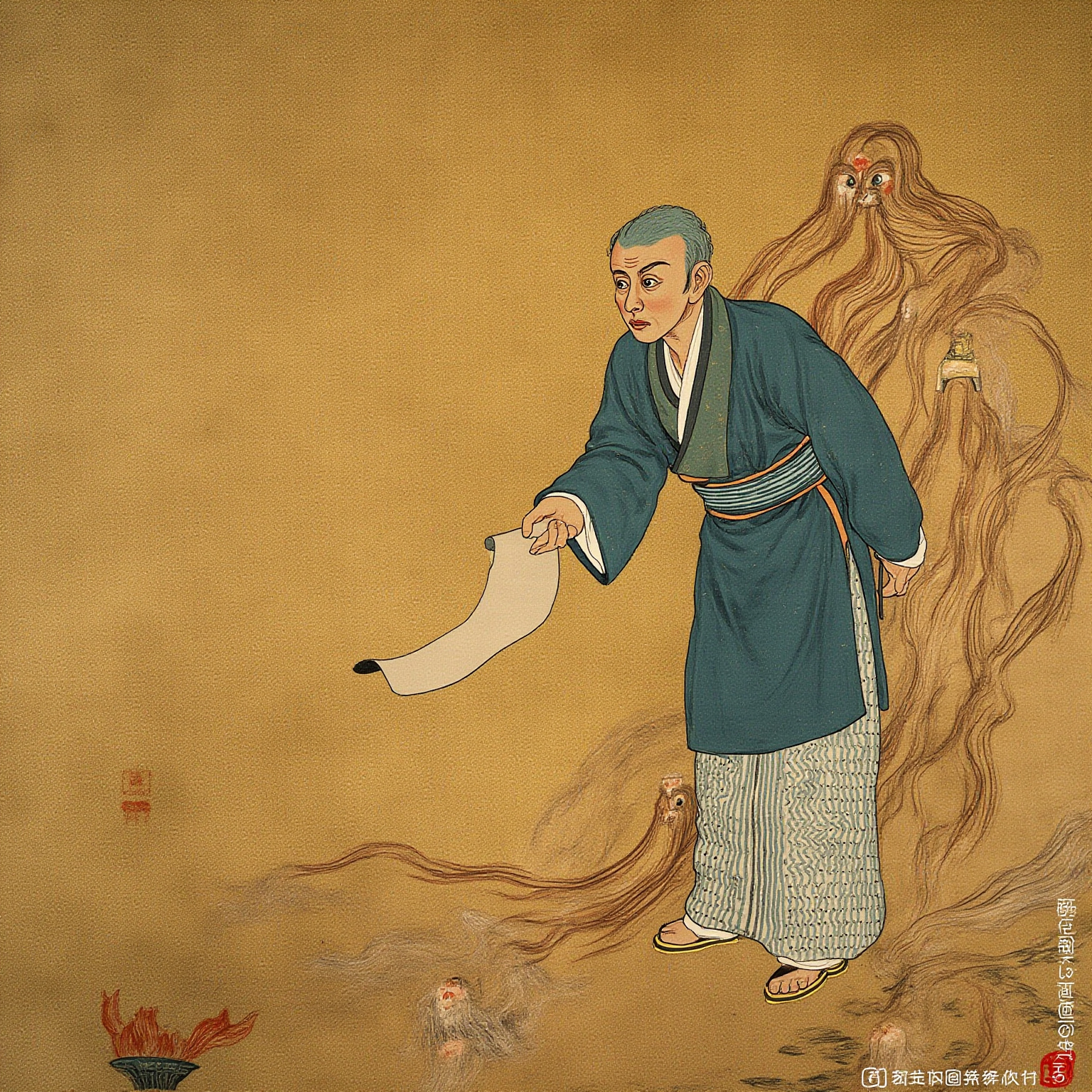
He did not write of glory—only of hands: lifting, stacking, passing, sealing. That night the desert's gold light fell upon five thousand scrolls hidden in a side cave.
他写的不是辉煌——只是手的动作:搬、码、递、封。那一夜,沙的金光落在侧窟里五万卷经卷之上。
金句 · 第五章 · 封洞之夜
The city falls almost the same night. Chu Wang-li cuts his own throat on the wall; Wei-ch'ih Kuang flees with what is left of his men, and the beacon fires burn all the way to the edge of the city. Ts'ao Yen-hui opens the gates and leads the local gentry out to surrender to Hsi-hsia. Sha-chou becomes part of the Hsi-hsia territory from that point on; the banners on the wall change, and dust begins to pile up outside the caves. Mogao itself is never destroyed — the wooden eaves and the murals are simply buried, slowly, by wind and sand, and the sealed side cave is forgotten inside the mountain, its painted entrance fading out of memory over the years.
The last echo Inoue writes in is a morning more than eight hundred years later, when an Englishman named Stein and then a Frenchman named Pelliot each break open that sealed side cave. Tens of thousands of manuscripts see daylight again, in so many languages that libraries around the world end up dividing them among themselves. This is where Inoue's craftiness shows: he gives a fictional exile from the Northern Song, Chao Hsing-te, an answer that a reader can actually hold onto — a name and a reason for this delayed act of coming back to light.
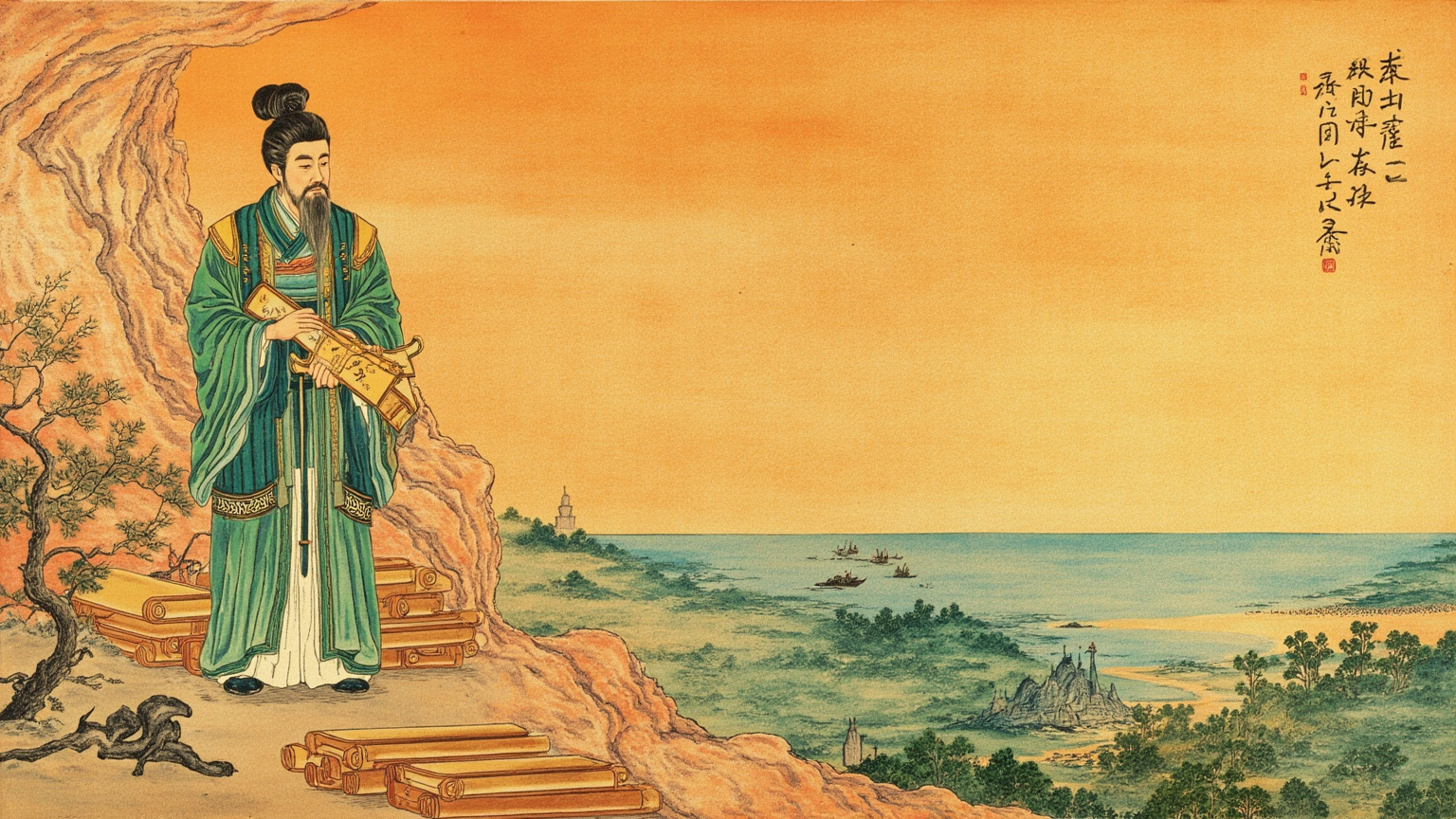
Eight hundred years later, hands from a distant shore knocked upon the sealed wall—and the silence within answered.
八百余年之后,远方来的手叩响了那堵封死的墙——墙内的沉默,给出了回答。
金句 · 尾声 · 藏经洞重现
Theme and Craft
What Tun-huang is really answering is the question sitting at the back of every tourist's mind at Mogao: who sealed these scrolls away, and why? Inoue never turns this mystery into a curiosity. He turns it into the choice of one small, unremarkable man. A scholar who missed his exam. A scrap of Hsi-hsia writing he could not read. A marriage that yielded to duty. A cave holding tens of thousands of manuscripts passed down through generations. Stack these four things on top of each other, and you have the entire reason for that night the cave was sealed.
Underneath that, Inoue is writing about script as power. Yüan-hao wants to invent his own writing system, the Guiyi Army wants to hold on to its old registers, and the monks of Sha-chou want to keep copying their sutras. In this corner of the eleventh-century Hexi Corridor, script is another kind of weapon, running alongside the actual fighting. Inoue places Hsing-te between all three: he invents nothing, destroys nothing. He copies, guards, and hides. This is Inoue at his most restrained and his cleverest — he takes the one thing a scholar knows how to do, work with words, and makes it the only thing left for him to do in an age this large.
As a stylist, Inoue almost never describes what is going on inside a character's head. He does not write "he was torn"; he writes "he folded the scrap and tucked it into his sleeve." He does not write "the fighting was brutal"; he writes "the Hsi-hsia banners crept closer every day." The gold-brown of the desert and the blue-green and cinnabar of the cave paintings carry the visual weight of the whole novel, and the people end up as silhouettes against that light. No wonder someone once said that when Inoue writes about the Western Regions, he reads less like a novelist than like a man holding a pen in one hand and an archaeologist's brush in the other.
Whose hands, on what night, sealed fifty thousand scrolls behind that wall of mud? Inoue stakes the whole of Tun-huang on answering that one question.
Why Read the Novel Itself
What you have just read is a map. The novel itself is the sand. Do not skip the night the cave is sealed — Inoue never calls the scrolls "precious" or "priceless"; he writes posture instead. A monk turns sideways to pass a scroll into the side cave, one arm cradling it, the other hand shielding the hemp paper at its edge from scraping against the rock. When Hsing-te takes the next scroll, his fingers meet sand before they meet paper — sand, and the soot from pine-ash ink left by a copyist centuries dead. That kind of detail only reaches you on the page itself. There is also the moment on the street when Hsing-te first picks up the torn scrap — Inoue does not let him look twice or think it over, just fold it and tuck it away. Read that far and you will see: the whole book turns on that one small gesture.
Art Direction4 plates
Before the guide was written, this book got a visual foundation — every illustration you just read grew out of it.