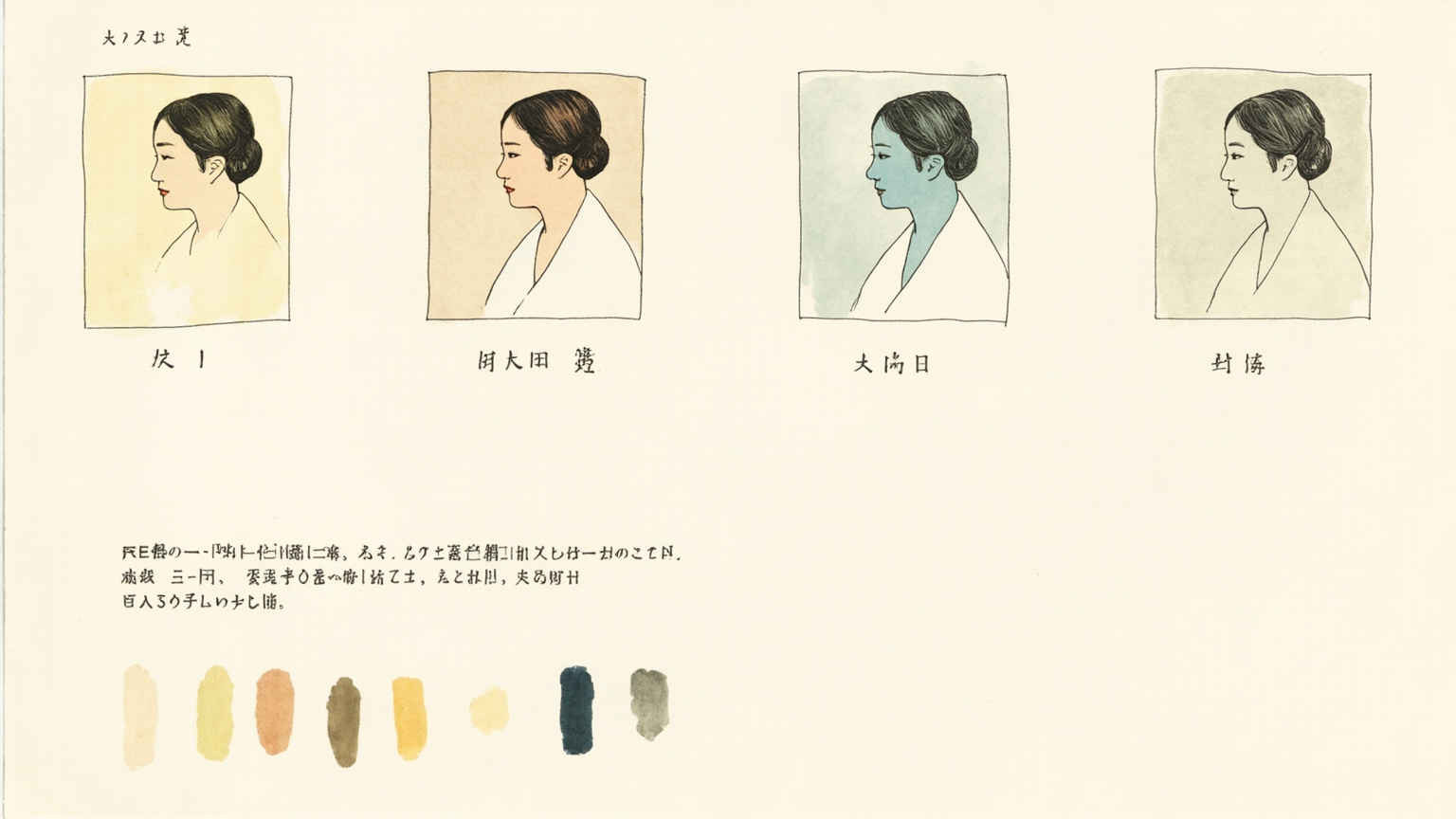
Twelve children, twenty-four eyes, and a roll book that thins out year by year
Text and illustrations produced by the pipeline

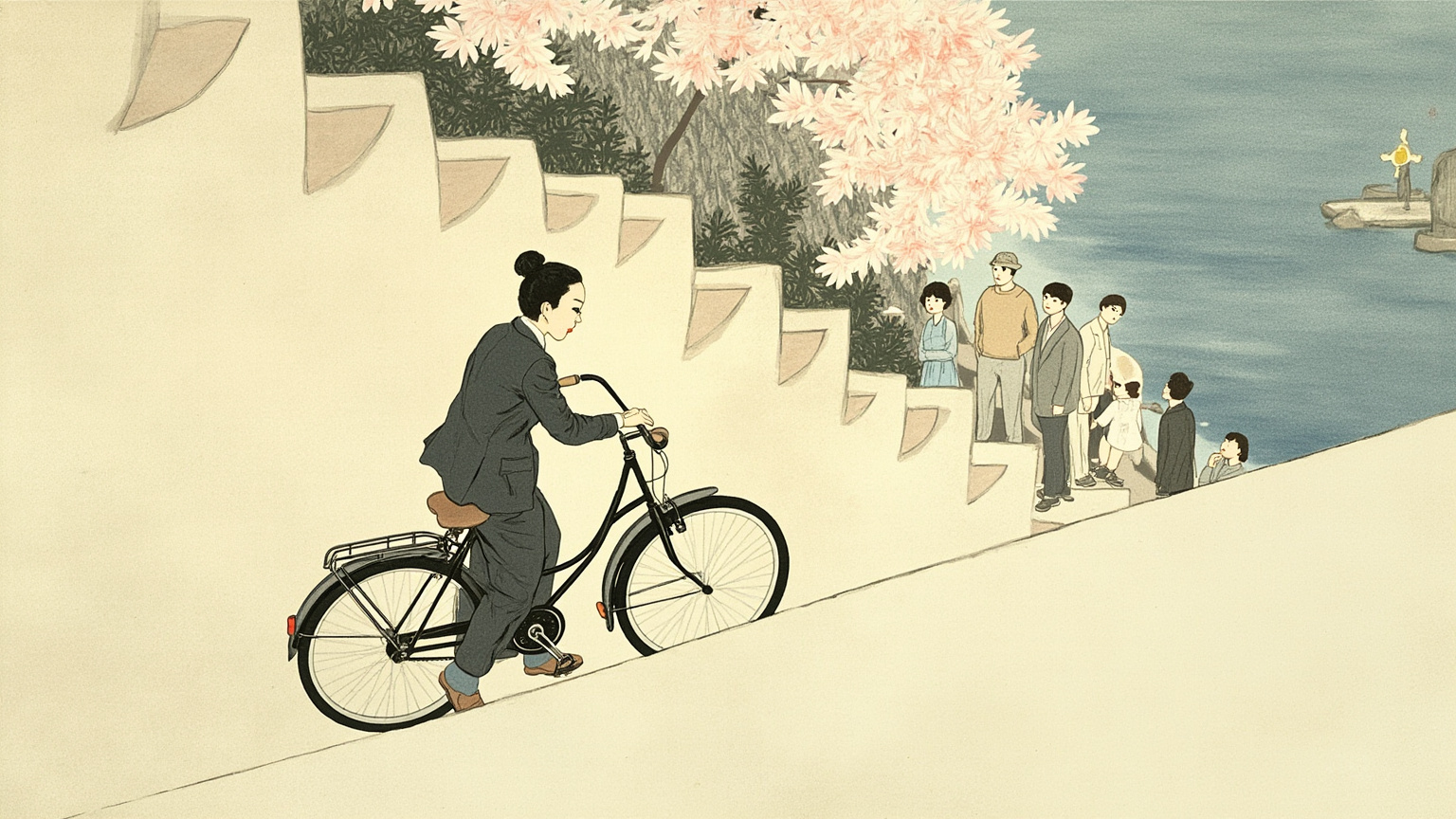
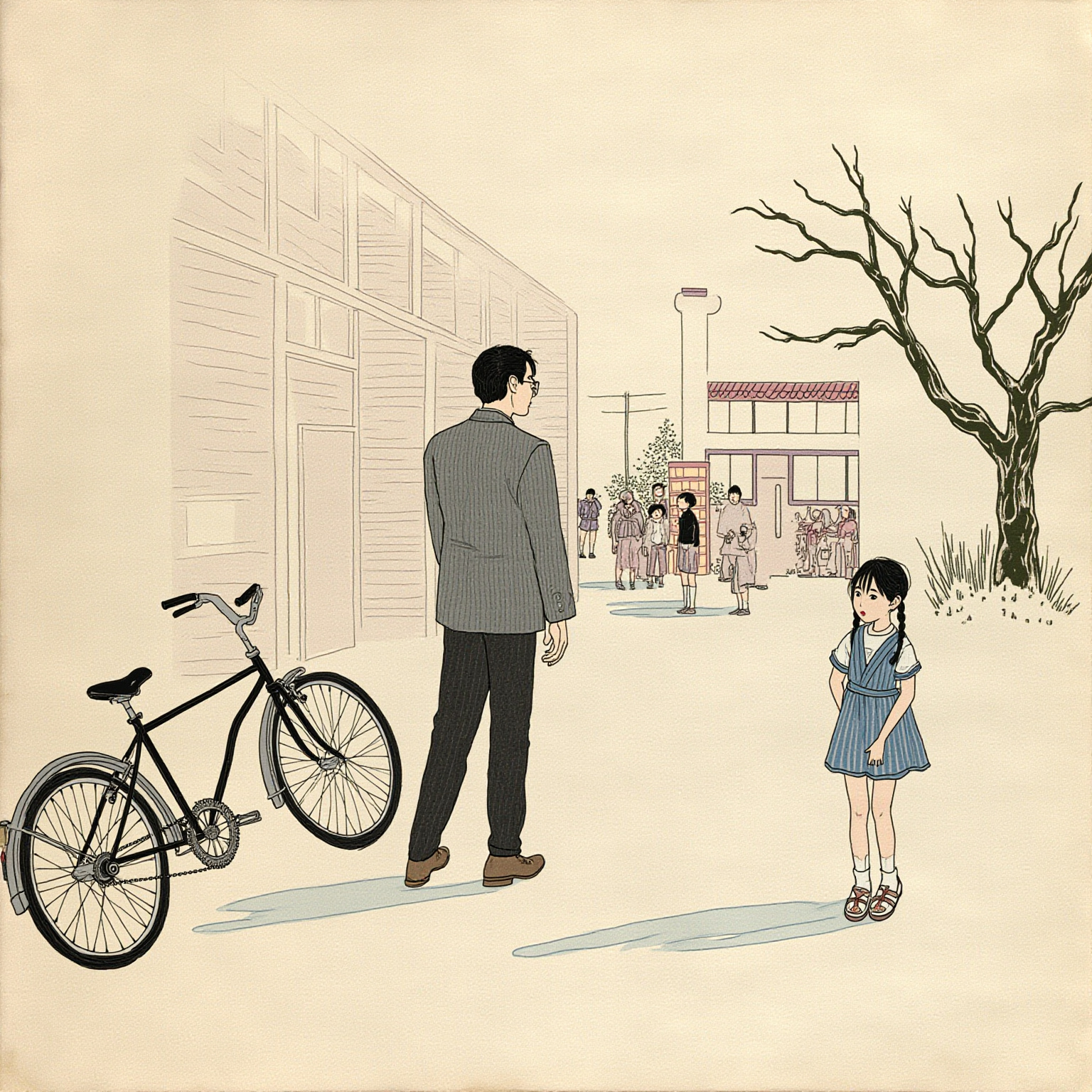
A bicycle comes down the pine-lined path along the shore, and the young woman riding it wears a Western-style suit. When she reaches the branch school on Shodoshima's coast, the fishermen gather to look, unable to believe this stranger is the new teacher.
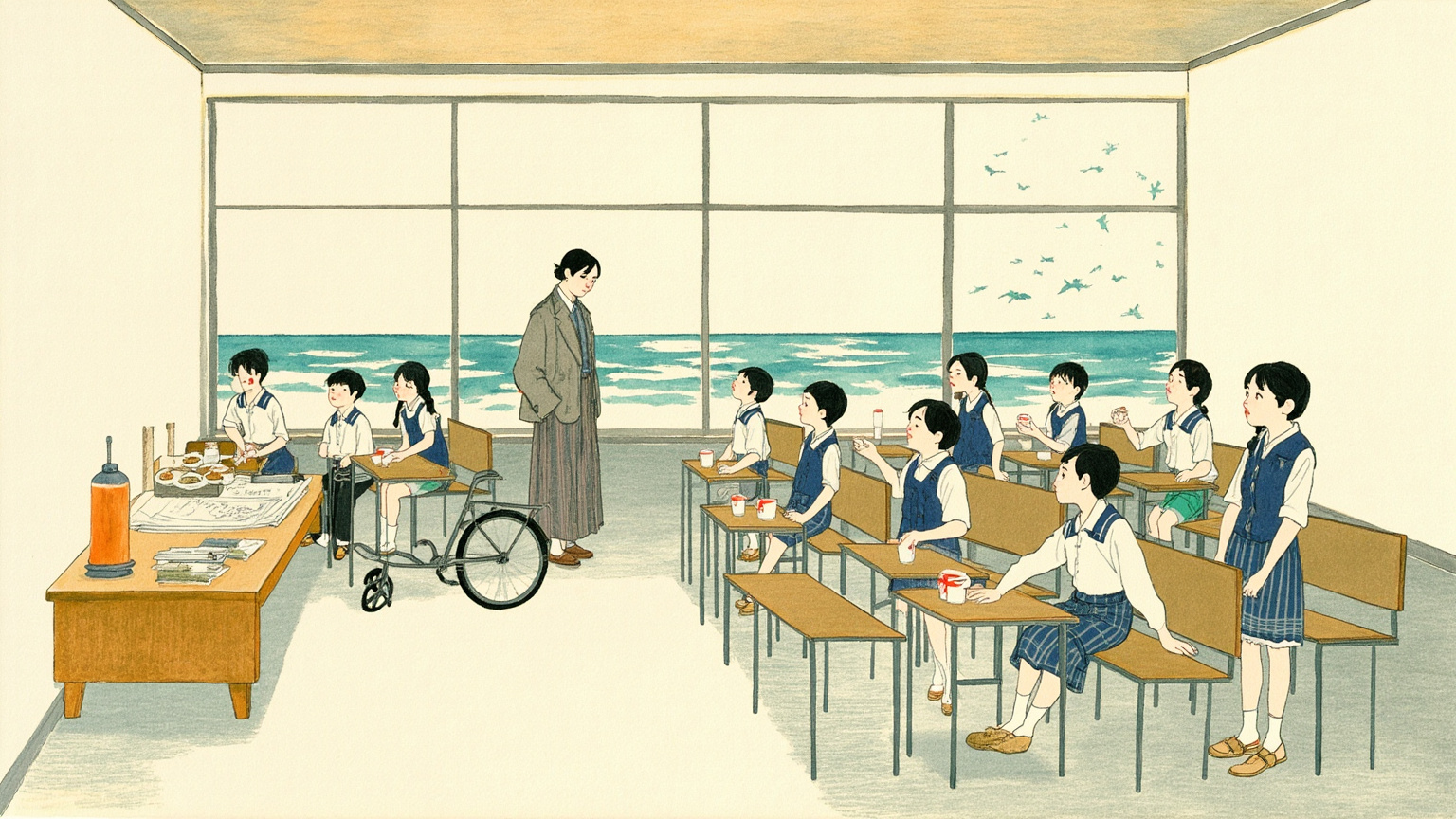
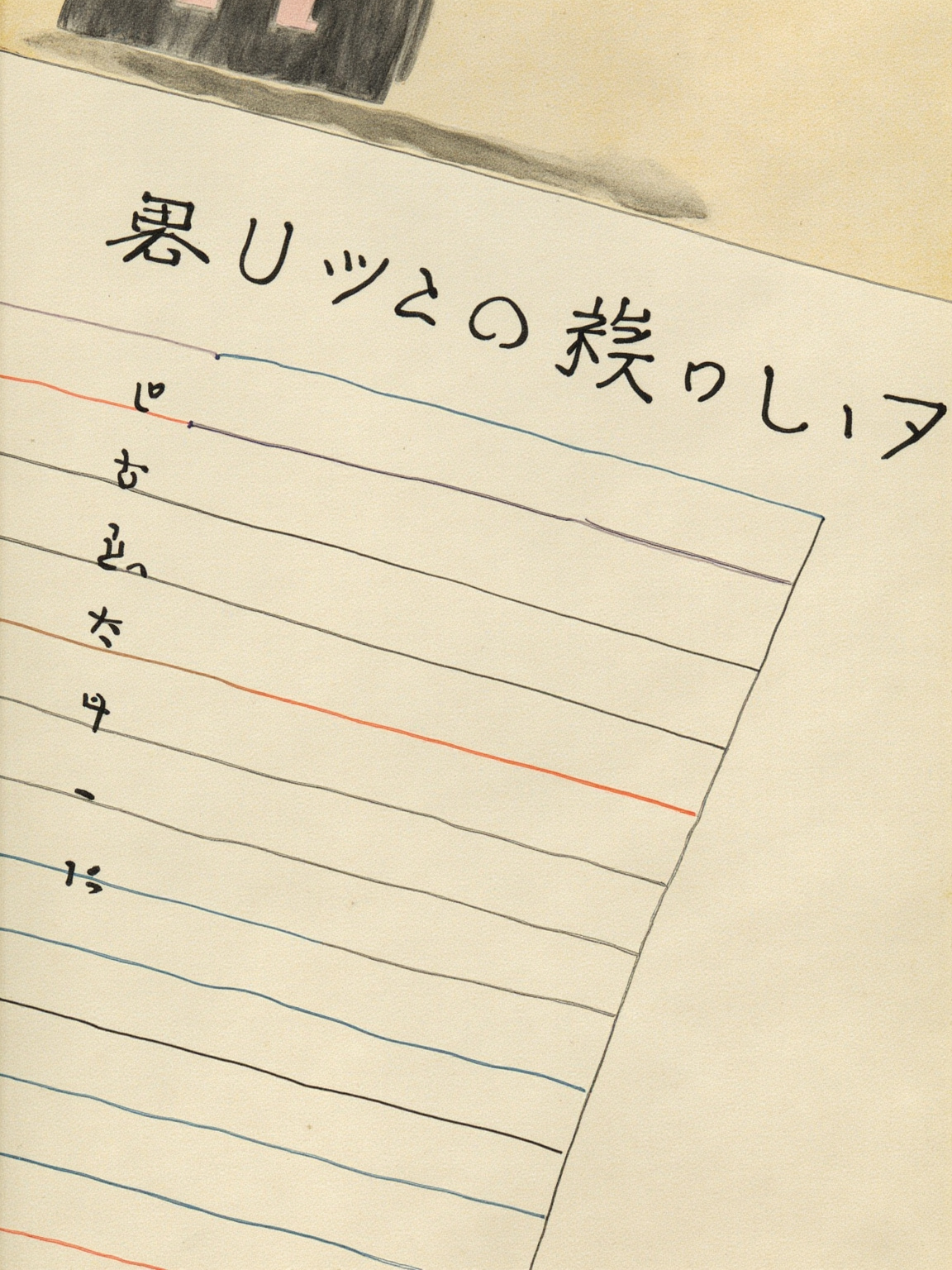
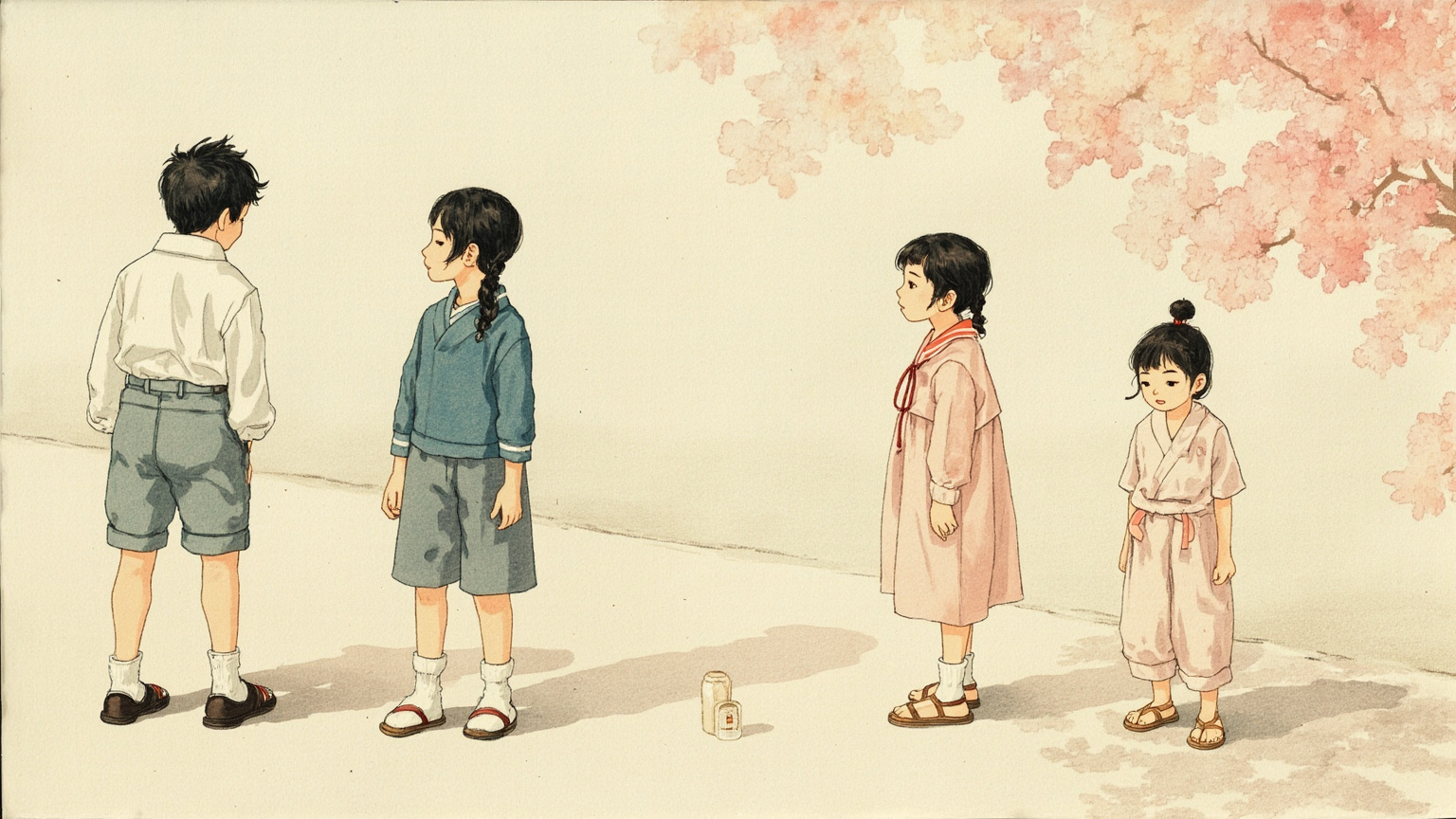
Hisako Oishi has just become a teacher when she is posted to this one-room school. The fishing village has twelve first-graders, twenty-four eyes exactly. She opens the blank roll book and reads down the names, one through twelve, and the children lift their eyes to her one pair at a time. She looks back at them, and teacher and pupils meet in a single gaze: twenty-four eyes again. The title of the book is hiding in that first roll call.
She calls the names. The reader sees faces the times are already taking away.
Twenty-Four Eyes is a coming-of-age novel Sakae Tsuboi wrote at the middle of the twentieth century, and it is an antiwar book as well. The story opens at a branch school on the coast of Shodoshima and runs across roughly twenty years. Tsuboi never pushes the larger history straight at the reader; instead she lets one classroom, one roll book, and twelve children growing up carry the mark of the whole era. Keisuke Kinoshita later adapted the novel into a film, and in postwar Japan the book itself became something close to a national classic.


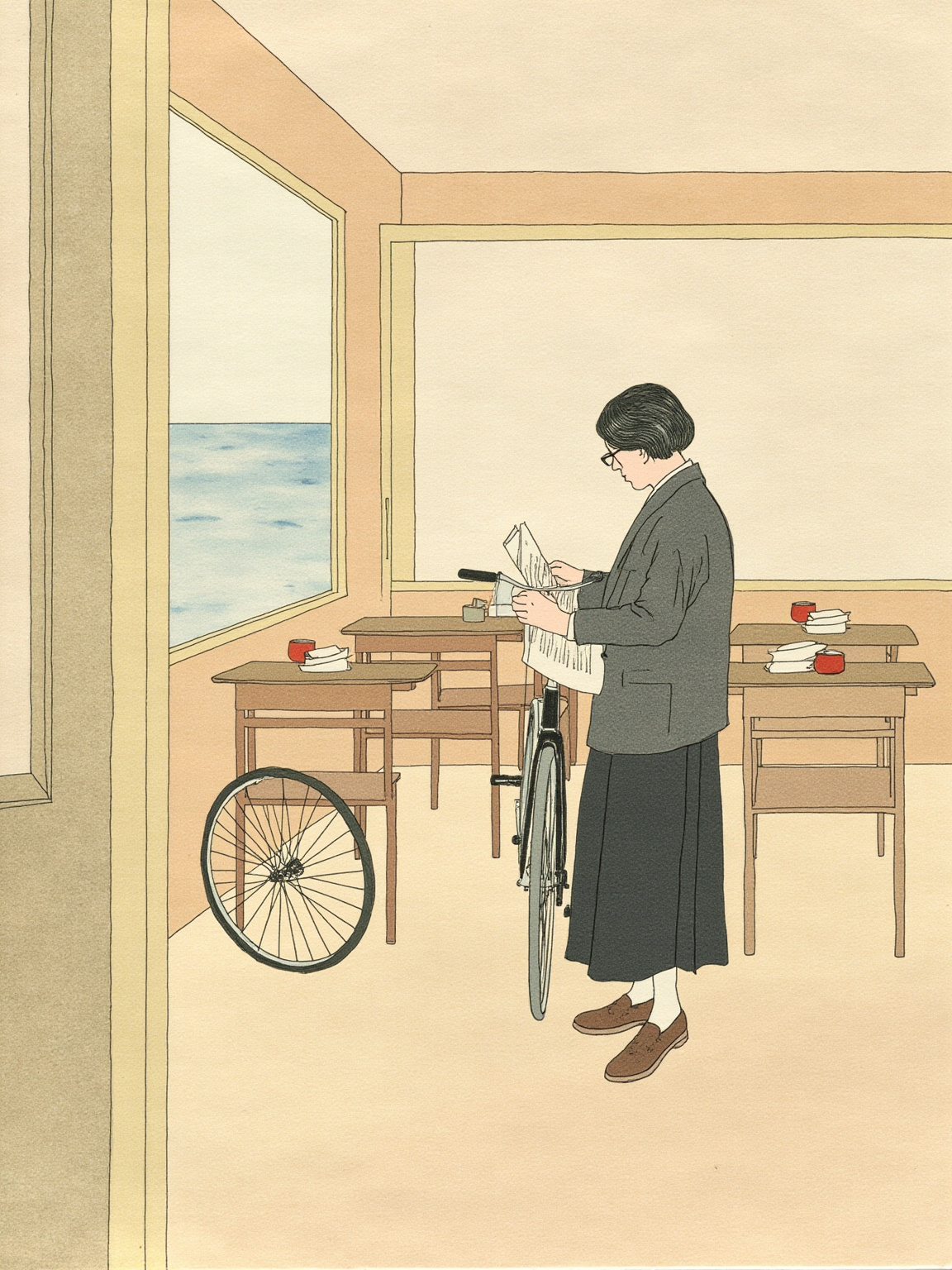
It argues against war without ever raising a slogan. Tsuboi folds twenty years of the children's lives into the teacher's daily motions: she rides her bicycle, calls the roll, looks up at the seats, then writes down in her book who has not come back. The children's twenty-four eyes are both the light of life and windows that poverty, illness, and war close one at a time. Take one away, and the reader sees it right there on the page.
The novel is close to a household name in Japan precisely because it lets a reader understand twenty years of events far beyond the island through one branch school on Shodoshima. Keisuke Kinoshita's film of the same title stayed near the top of the list of Japan's most beloved films for years afterward, though the children on screen come out a little tidier and prettier than the novel describes them. Reading the novel, keep your eyes on the ink of the roll book, line by line.
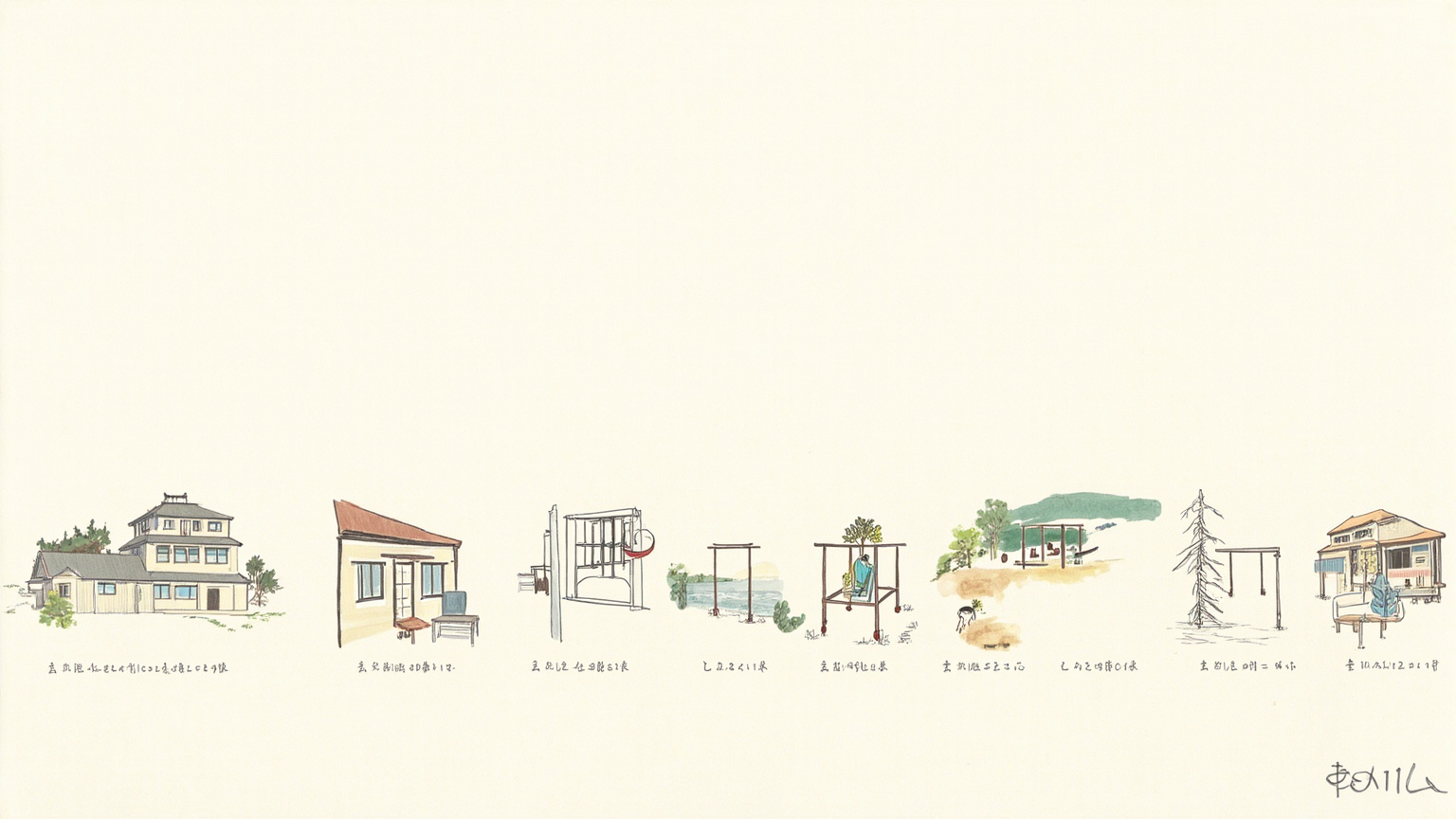
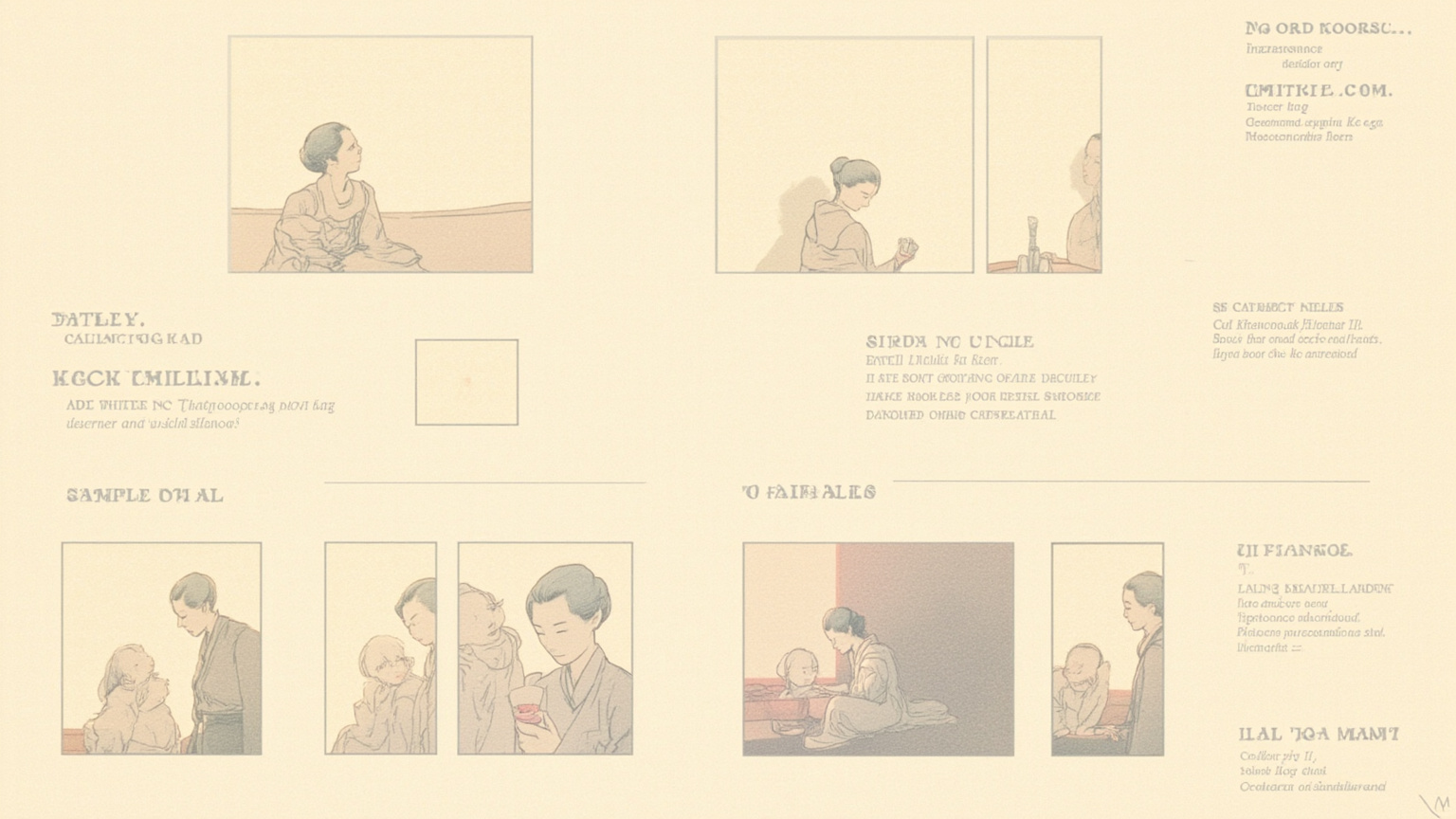
Before the guide was written, this book got a visual foundation — every illustration you just read grew out of it.
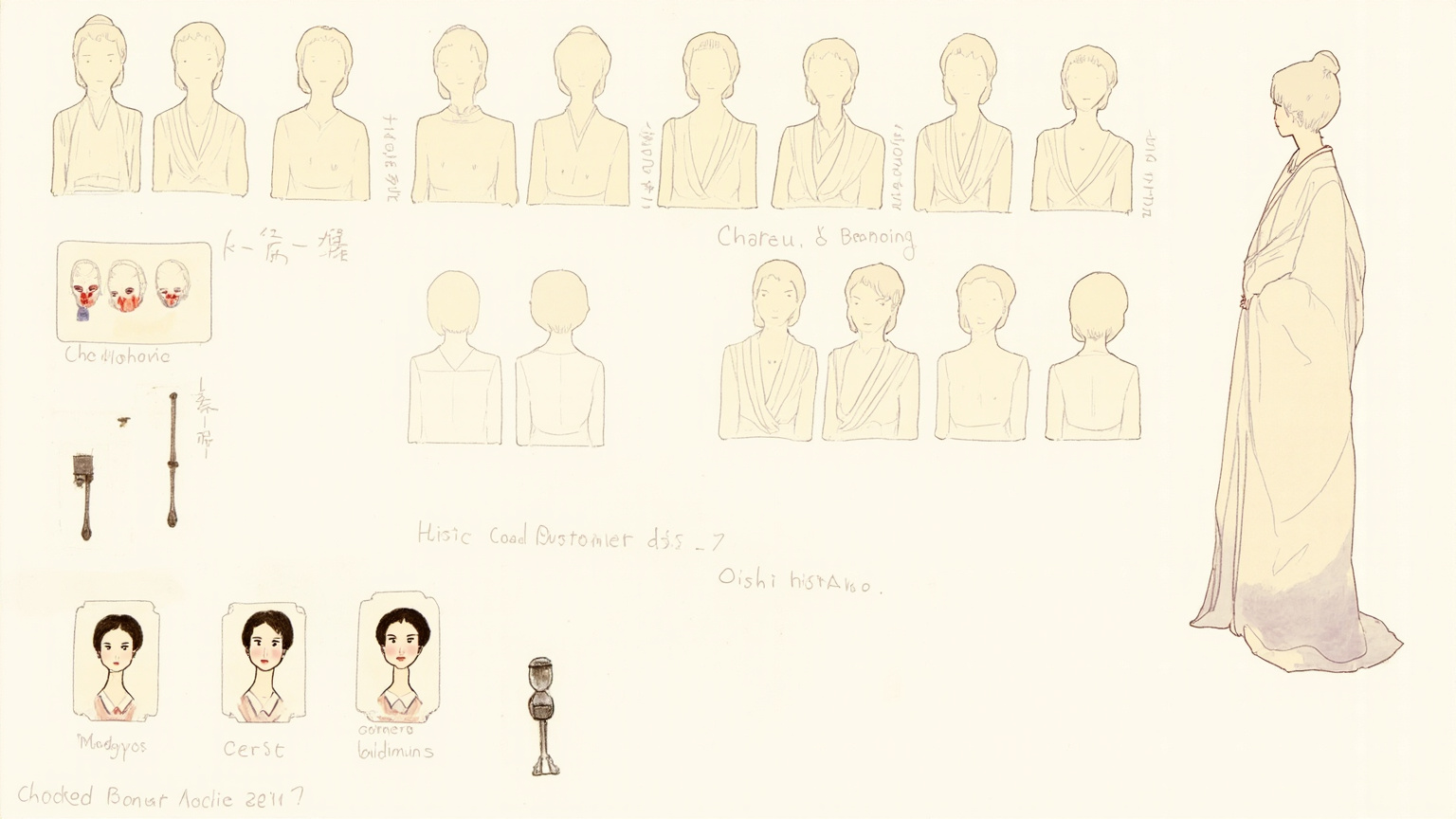
Hisako Oishi is the protagonist, the young teacher at the branch school who rides her bicycle to class and keeps watch over the same white-walled room and the same set of names. She has no grand mission; she only wants to see her pupils grown. Isokichi is the first name crossed off the roll among the twelve children. Kayo, Takeichi, Koiso, Kichiji, Matsui, Kawamoto, and Oda line up after him in the roll book, each waiting for fate to knock.
The book's power hides in a set of very small numbers: twelve children, twenty-four eyes, twelve desks, one roll book. Tsuboi brings these numbers back again and again across twenty years. Roll call comes to twelve; add the teacher and it is twenty-four. Take one eye out of the twenty-four and the reader sees an empty space right there on the page. Because the numbers are so small, every absence is concrete.
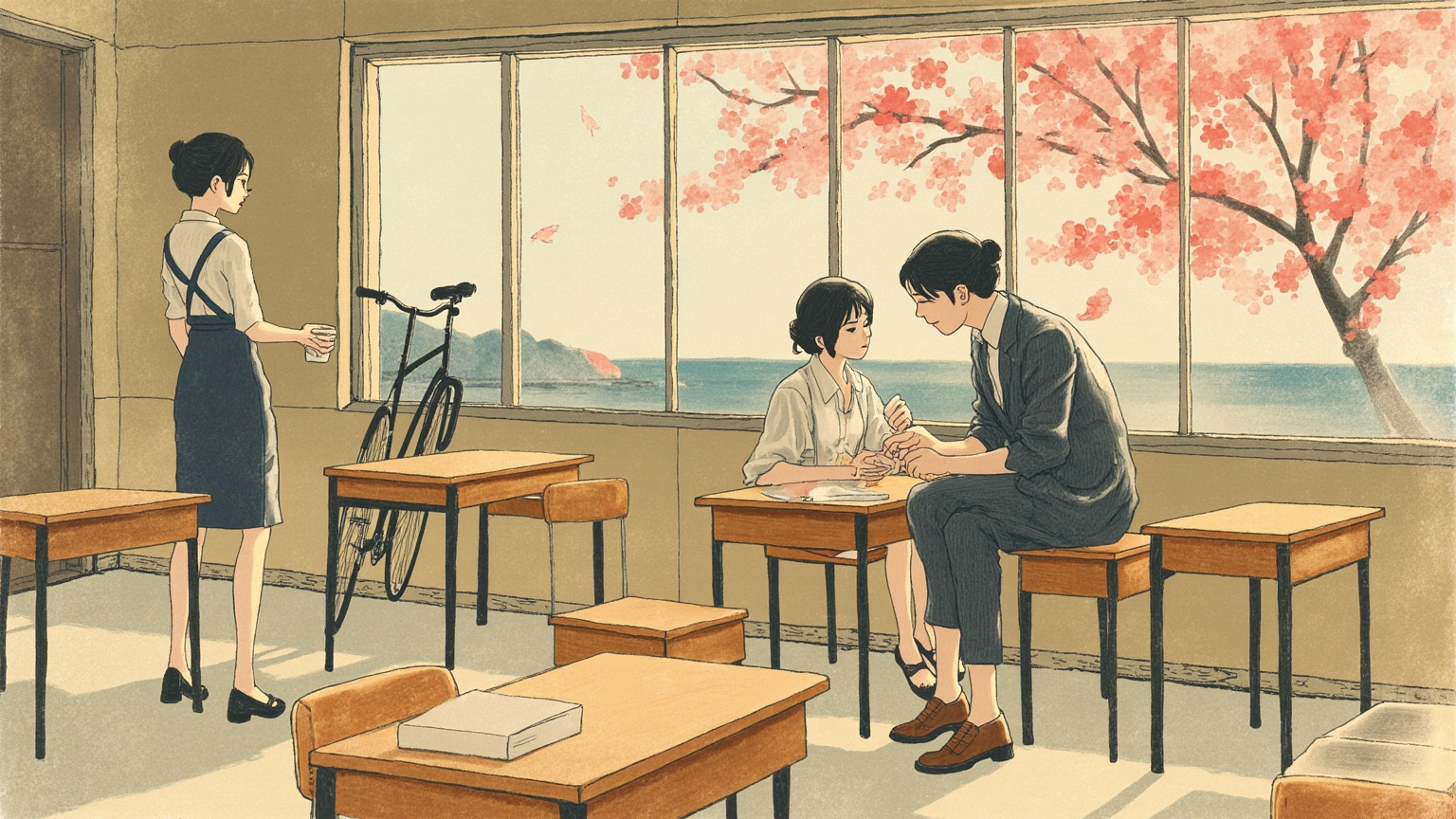
The first roll is neat and complete. The twelve children move up from first grade toward the higher years, and who sits in front, who talks too much, whose family lives by the water, all of it is packed into one classroom. When a household on the island puts out to sea, the classroom loses one familiar voice; when a child falls ill, the teacher has to face the desk left empty. The days move forward through roll call, lessons, and the walk home, while the scenery keeps returning to the same Seto Inland Sea.
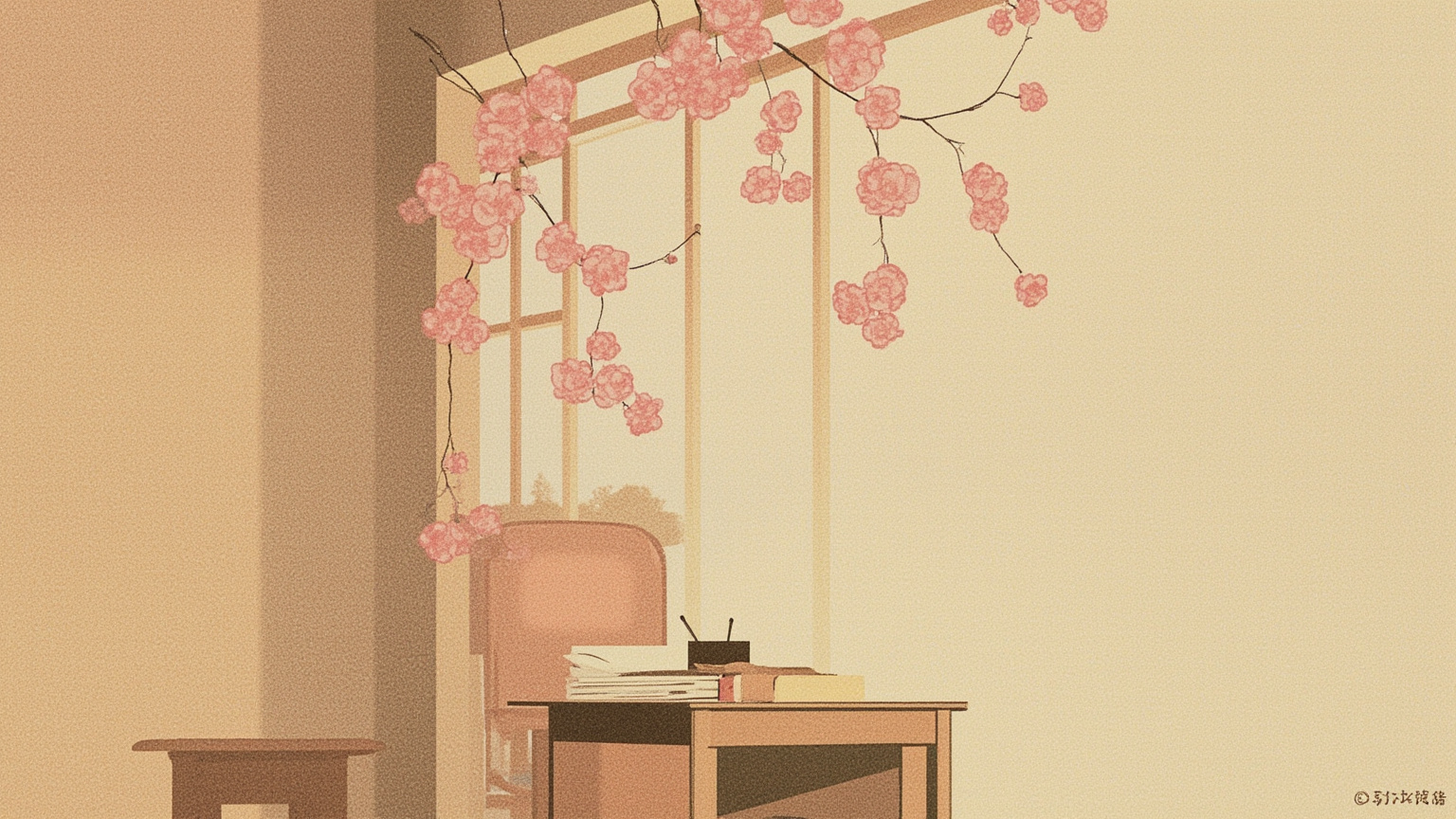
A few years on, Isokichi's name is the first to vanish from the roll book. The boy walked with a slight limp from the start, and poverty and lung disease take him early; the classroom is short one chair from then on. Tsuboi never lets his death settle into a line of mourning. Her pen lands only on the moment his name is struck out, and from that instant the empty seat stops being a mere absence and starts being counted, one by one. The desk in the corner of the room is a place the light seems to avoid ever after.
Once Isokichi is gone, his sister Koiso's name is still there on the line above his. Her brother's name stays crossed out; she herself later becomes one more name recorded, page by page, in that same book. Tsuboi says nothing about it directly — she simply sets the two names, brother and sister, a few pages apart and lets the reader do the comparing. What she is writing down is whether a name is there or not, not whether the sickness or the poverty is there or not.
Over these twenty years, the children slowly reach the age when they leave the island. Kichiji, Matsui, and the other boys put on uniforms; send-off banners go up in the school corridor, and people at the edge of the village wave them off. However loud the slogans on those banners get, Tsuboi never takes the reader to the battlefield. She writes only of Miss Oishi coming back to the classroom, counting the seats again, finding one more empty chair each year. Miss Oishi's hand stops still on the roll book, and outside the window the sea goes on catching the light as always. By writing the absence itself, the antiwar argument lands in the most ordinary place there is.
It is not only the boys' seats that go empty. In Kayo's house, once the men are taken by the war, she is left too young to carry the weight adults are supposed to carry; Takeichi grows to the age when he is sent away, and no one calls his childhood name down the pine path along the shore anymore. Tsuboi writes no farewell scene — only the moment each name gets skipped in the roll book. One skipped line is enough to say a household's sky has fallen in.
I first understood the power of this book through the way it turns war into an empty seat in a classroom. The reader never has to see gunfire to feel that once someone has been taken away, a patch of sunlight is missing from the desk.
The war ends, but fewer and fewer of the island's men come home. The sea is still the same sea, the pine path to school still runs the same way; only the faces in the classroom have changed. Miss Oishi keeps the branch school alone, opens the roll book worn thin by time, and reads down the names from the first one again. Some answer; some stay silent. The book itself has not gotten any thinner. What has thinned is the life behind each name.
Among the twelve names, several go unanswered when they are called. Poverty, illness, war, and blindness take the twenty-four eyes away one by one. The quietest moment in the book, and the hardest to sit still through, comes when Miss Oishi takes the hand of the one surviving girl who can no longer see the classroom, and lets her know she has not been forgotten in that book. Tsuboi stops right there and does not take a single step further.
Twenty-Four Eyes keeps returning to the same sea, the stone steps, the fishing nets, the pine path, and the schoolyard by the water on Shodoshima. Time seems to circle in the sea wind, while the people keep aging forward regardless. The same view comes back year after year, like a series of return visits, and it seems to keep asking the same question: where did the child who sat here yesterday go today? The repetition makes nature look constant and loyal, and makes every human disappearance stand out all the more.
The sea can come back to the same place year after year. A person's eyes cannot.
A summary can tell you whose name will vanish from the roll book, but it cannot give you the physical sense of twelve children sitting together in that seaside classroom. The pleasure of the novel itself is hiding in the pine path that keeps recurring, the ring of the bicycle bell, the spacing between the desks, the pause before a name is called; it is hiding, too, in the way Tsuboi lets one empty seat slowly press down on the whole room. If you want to see how an antiwar novel can skip the battlefield and write only how life gets taken away, every roll call in the book is worth showing up for yourself.