Utopia (Libellus vere aureus, nec minus salutaris quam festivus, de optimo rei publicae statu deque nova insula Utopia) · Companion Guide
乌托邦
一座完美海岛在花园长椅上被讲述,欧洲在它背后等着被照原形。一支笔同时画地图与刀。
Opening on a Garden Bench
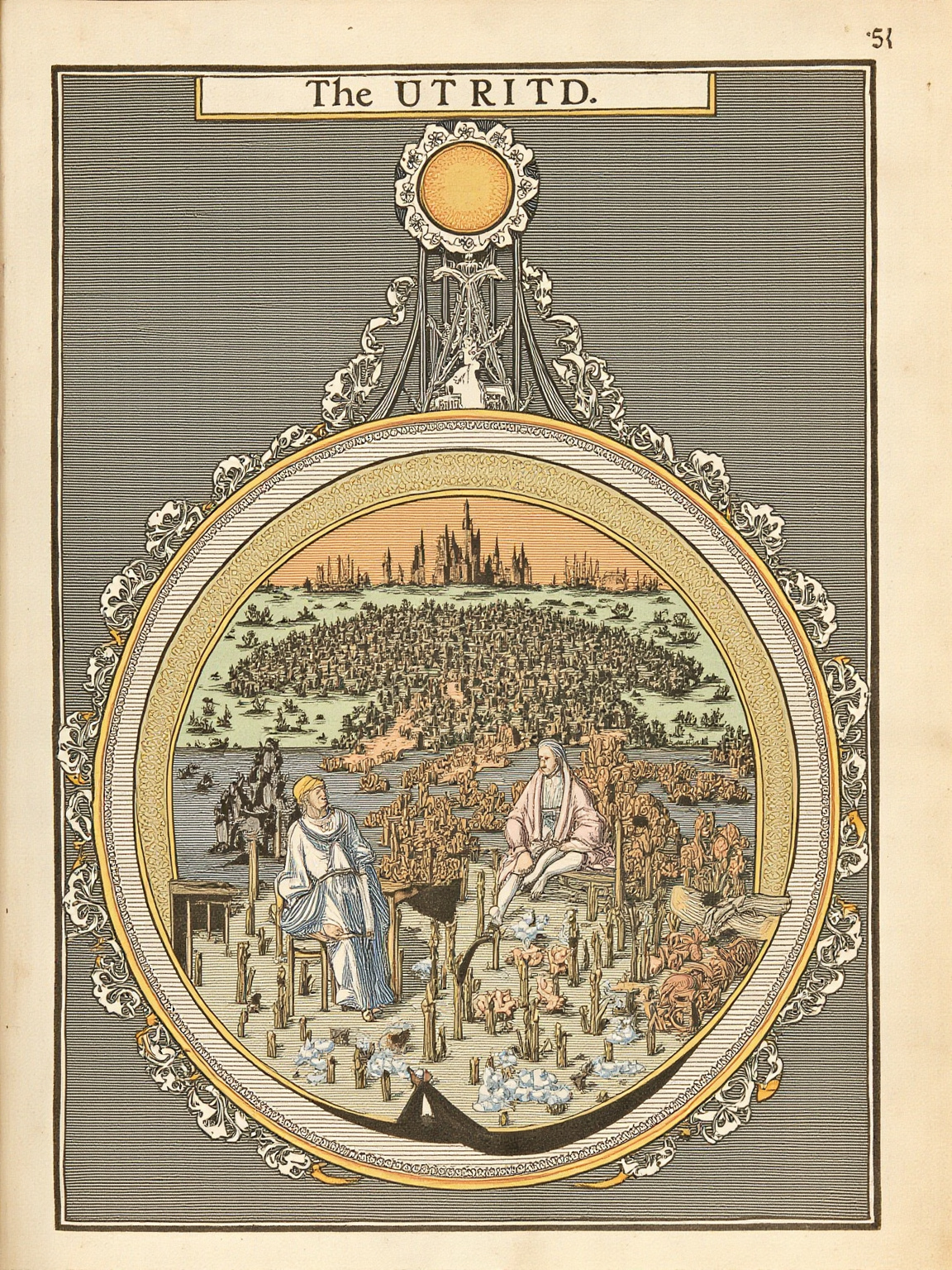
A bench, in the garden of a house in Antwerp. An English legal counselor is talking with a sailor just back from the sea — a man who sailed with Amerigo Vespucci on four voyages and has seen far more of the world than this Lombard merchants' quarter in front of them. The name Hythloday is Greek for one well versed in nonsense, a joke Thomas More planted on him deliberately. He opens his mouth and starts sneering almost at once: Europe's affairs are each more absurd than the last, sheep devouring men, gallows crowding the horizon, plunder abroad treated as ordinary business. The junior counselor listens patiently, brings the man to dine with local officials, then invites him back to that same garden bench: you have all this in your head, why not tell us? And so an island that has never existed anywhere in the world gets told into being.
The first time I read this opening, it irritated me. The real subject was obviously still to come, yet More spends half the introduction letting Hythloday rant about Europe. It took a second reading to hear what he was doing: he wants you nodding along, agreeing that Europe really is absurd, before he brings the island out. Without that tirade laid down first, Utopia's institutions would not land with nearly the same force.
What Kind of Book This Is
First printed in the early sixteenth century in Leuven, in the Low Countries, written in Latin by Thomas More. The book's most immediate legacy is a word it invented: utopia, built from the Greek for no and place, meaning literally nowhere. More layered the pun further, naming the founder Utopus and the island Utopia, so that no one would mistake it for an existing classical reference. From that point on, the human imagination had a name for the container it puts ideal societies in. The City of the Sun, Christianopolis, We, Brave New World, and Nineteen Eighty-Four are all its descendants. It is the founding text of literary utopia as a genre, and required reading behind every dystopia written since.
Characters and World
Only three people really appear in the book. Hythloday is the narrator who sailed home with everything he saw in Utopia in his head, widely read, contemptuous of worldly wealth, and cold toward kings and courtiers. More himself is the book's I, the frame narrator who introduces Hythloday at the start and leaves a famous non-committal line at the end, staying almost silent through the actual debate over Utopia's institutions. The islanders call themselves Utopians, their name descending from their founder, Utopus. Thirty households form the basic unit, called a syphogrant; ten syphogrants answer to a tranibor above them. Everyone wears the same plain wool clothing, and gold chains and rings are worn outdoors and in public only as badges of honor, taken off and put away the moment someone gets home. This whole scheme of rank and custom comes to us through Hythloday's telling, but underneath it we can also hear More signaling that the order has been running a very long time.
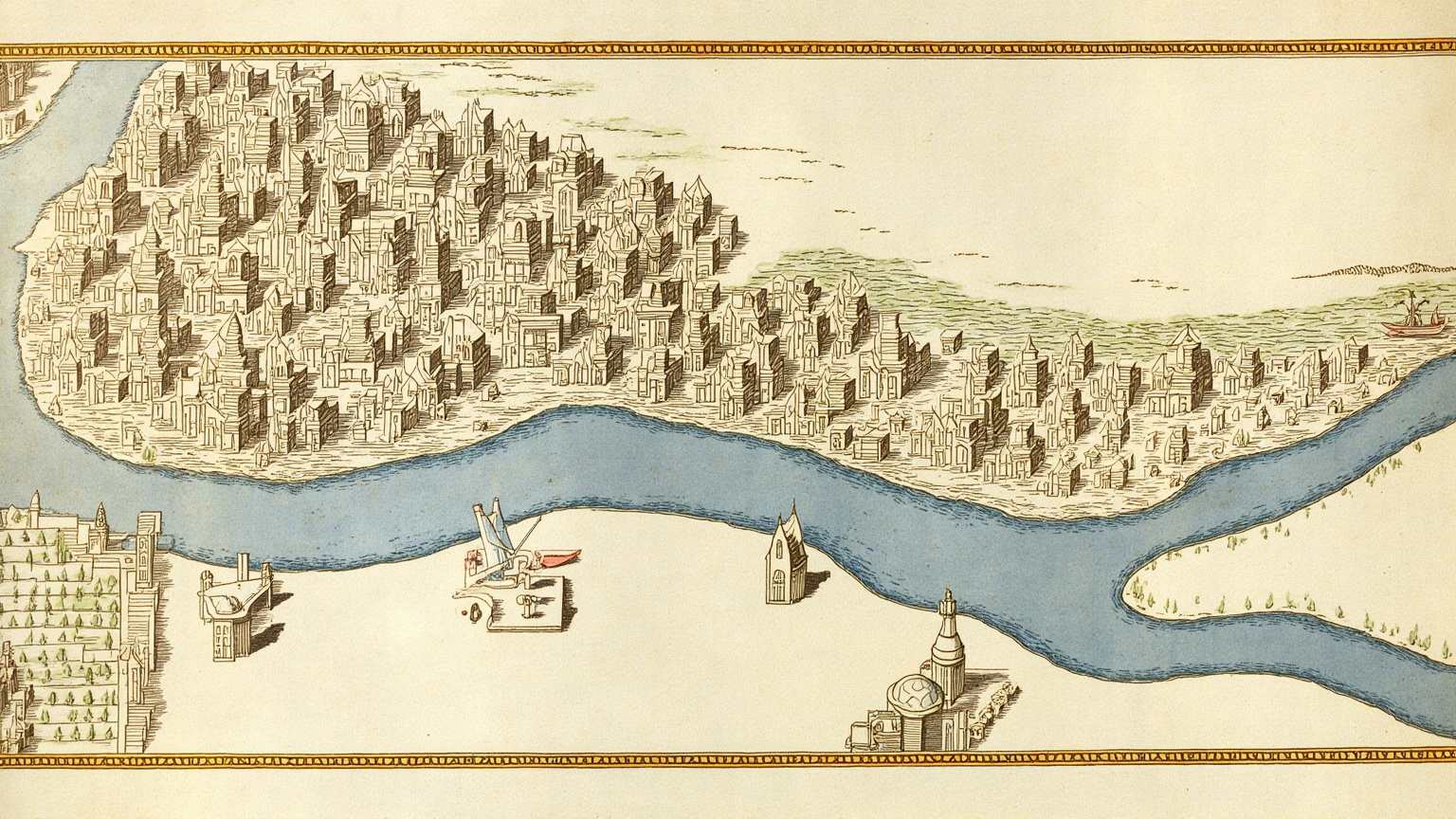
I am not therefore of that mind which thinketh all philosophy vain and unprofitable.
我不敢自以为是那种把一切哲学都看作虚空无用的人。
金句 · 拉斐尔·希斯拉德出场自我介绍一节
How the Plot Moves: The Island and Its Counter-Thesis
An Island Built from a Single Blueprint
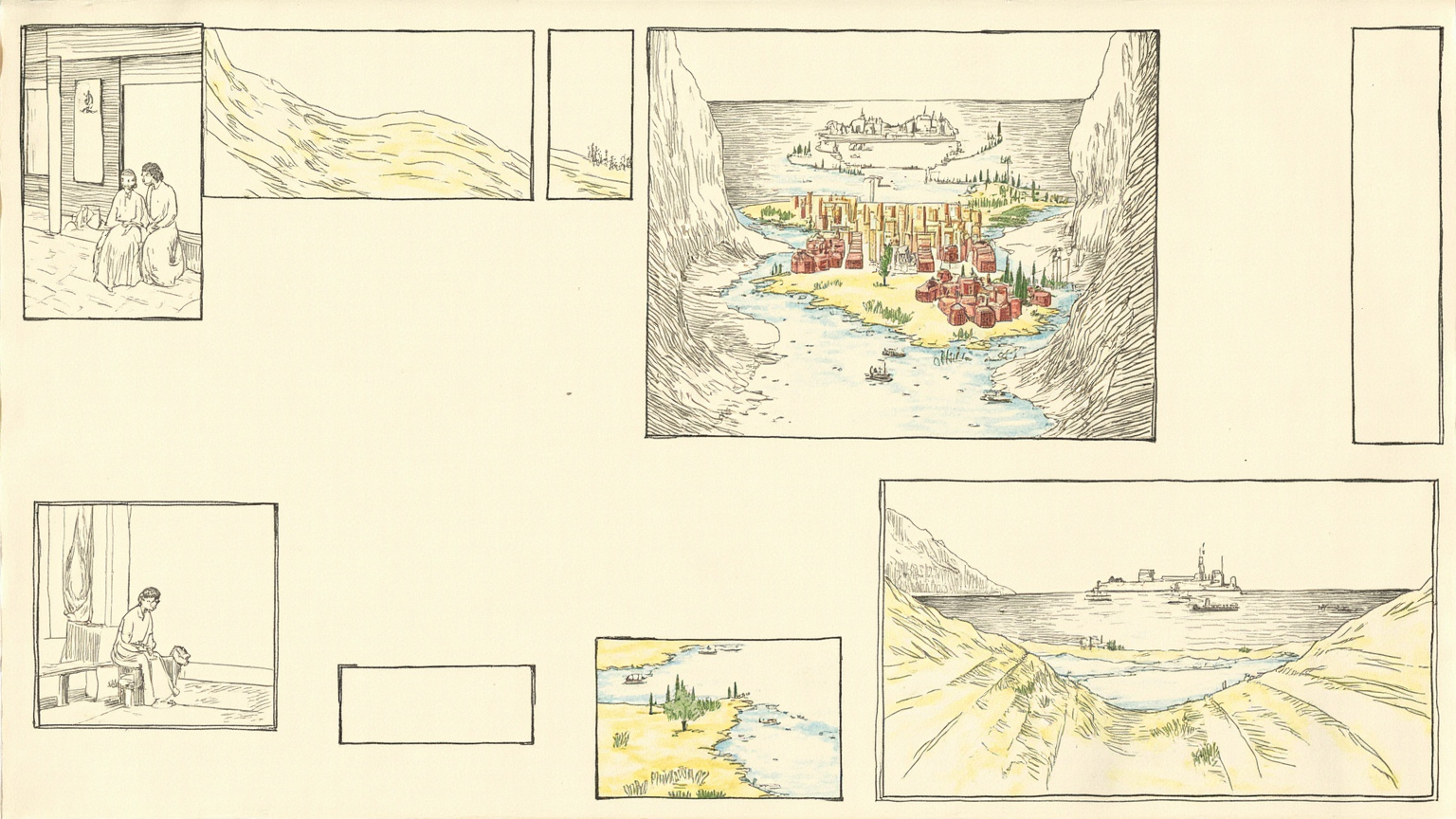
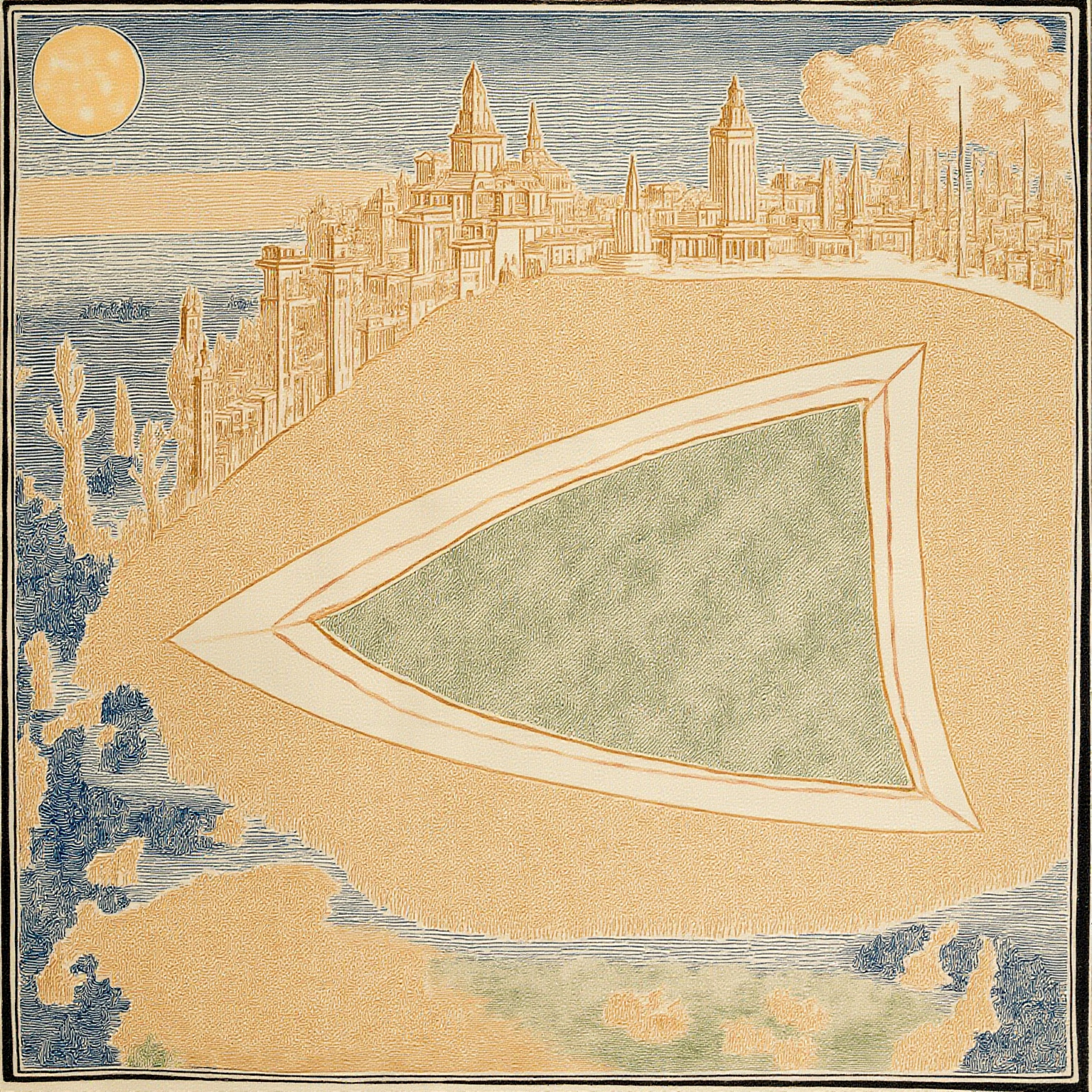
The Utopia Hythloday describes is a crescent-shaped island, cut cleanly off from the mainland by an artificial channel dug in the shape of a half-moon. Its fifty-four cities are all built to the same plan, three-story brick row houses sharing gardens between them, front doors left unlocked all day. The capital, Amaurot, sits at the island's center and is the largest of them. Everyone, starting at age ten, spends two years living in rotation on the farms outside the city; public dining halls and public hospitals are spread across the whole island, and readings are held aloud while scholars eat together. A city built from one identical plan means no differences created by terrain, history, or accident. More buries this point deep — he is not only telling you the island is equal, he is telling you that with a different blueprint, an entirely different human world could stand up just as well.
Abolishing Private Property, and the Great Disgrace of Gold
The loudest cut in the whole system is private property. Hythloday says the Utopians have none, and gold and silver are demoted into marks of shame: gold made into chamber pots, into the shackles of war prisoners and convicted felons, into trinkets children play with. More does not argue this point so much as drop objects in front of you — a gold chamber pot, a pair of gold shackles, a gold toy in a child's hand — and let the abstract claim land through the image alone. Private property is the root of the trouble, and fair distribution is impossible while it stands; left-wing political design has been arguing from that sentence ever since.
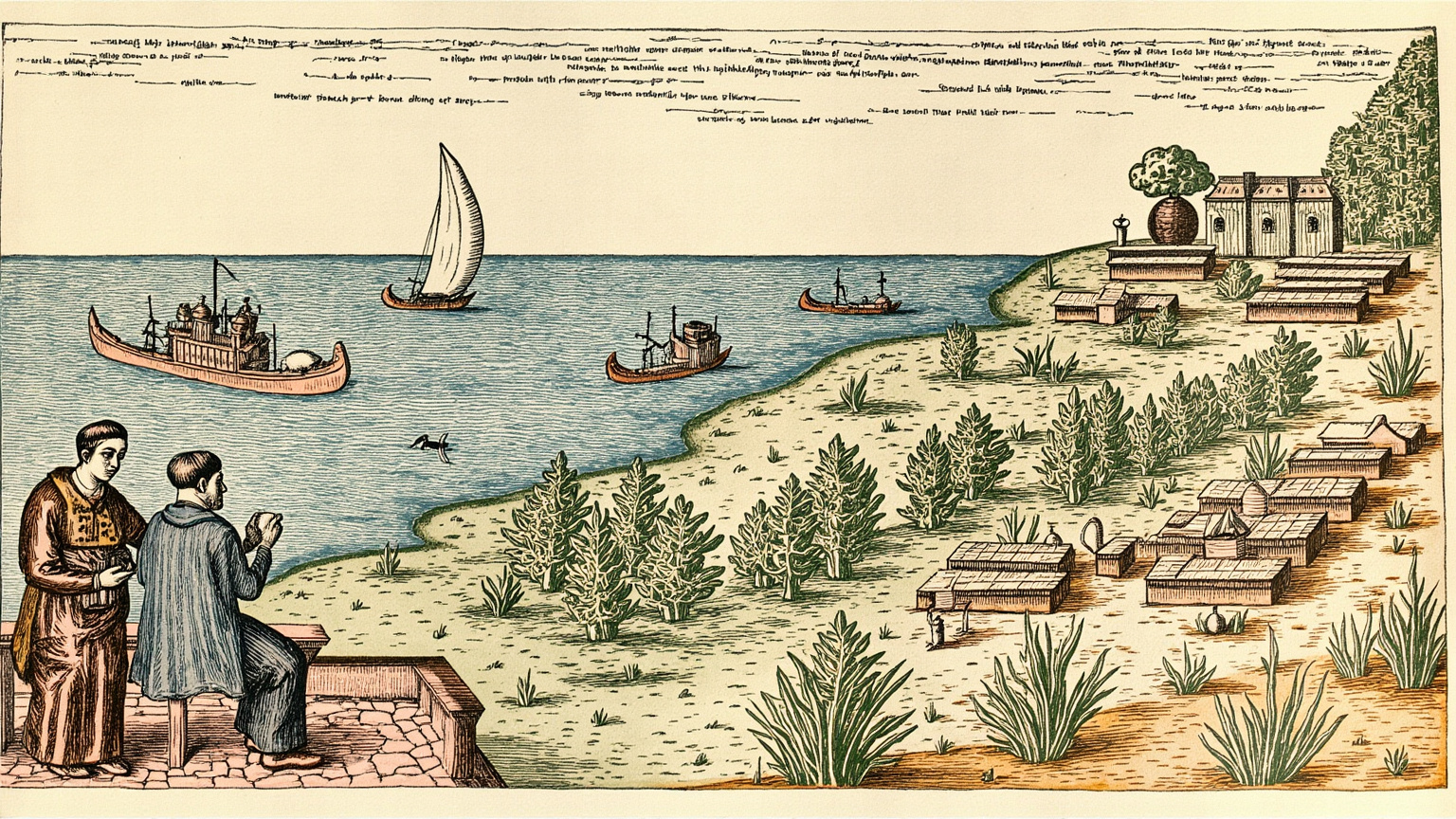
They wonder that any man should be so foolish as to value gold and silver.
他们惊讶:怎么竟有人蠢到这般地步,把黄金白银看得这般要紧。
金句 · 论乌托邦人如何以金银为耻
Six Hours of Work, and the Leisure Left Over
Utopians work six hours a day, and the rest of their time is theirs to spend as they choose, with scholars nearly exempt from labor altogether. Hythloday makes a point of saying it plainly: leisure is not a reward, it is a citizen's basic allotment. That is why there are public dining halls to free people from cooking, and public hospitals offering care through the end of life. More is not designing a factory here, he is redrawing the balance between labor and leisure so that a cultured life is not the privilege of a few but the foundation everyone stands on. The section reads like a municipal budget report, but it quietly answers the much larger question of what people are for.
Outsourced War, and the Honor Worn on a Gold Chain
The institutions that follow have two faces. Utopians almost never fight their own wars. Instead they spend heaps of gold hiring mercenaries from neighboring states, or bind allies by treaty into dying in their place, a passage that still feels startling today. In the same stretch of text, the gold chains and rings they call honor are worn outside and shed the moment someone comes home; inside the island, slaves drawn from war prisoners or the island's own convicted felons are chained together for hard labor. Peace and war show both their faces on the same table here. More is not glossing over anything: he wants the reader to sit with how one order can arrange both at once.
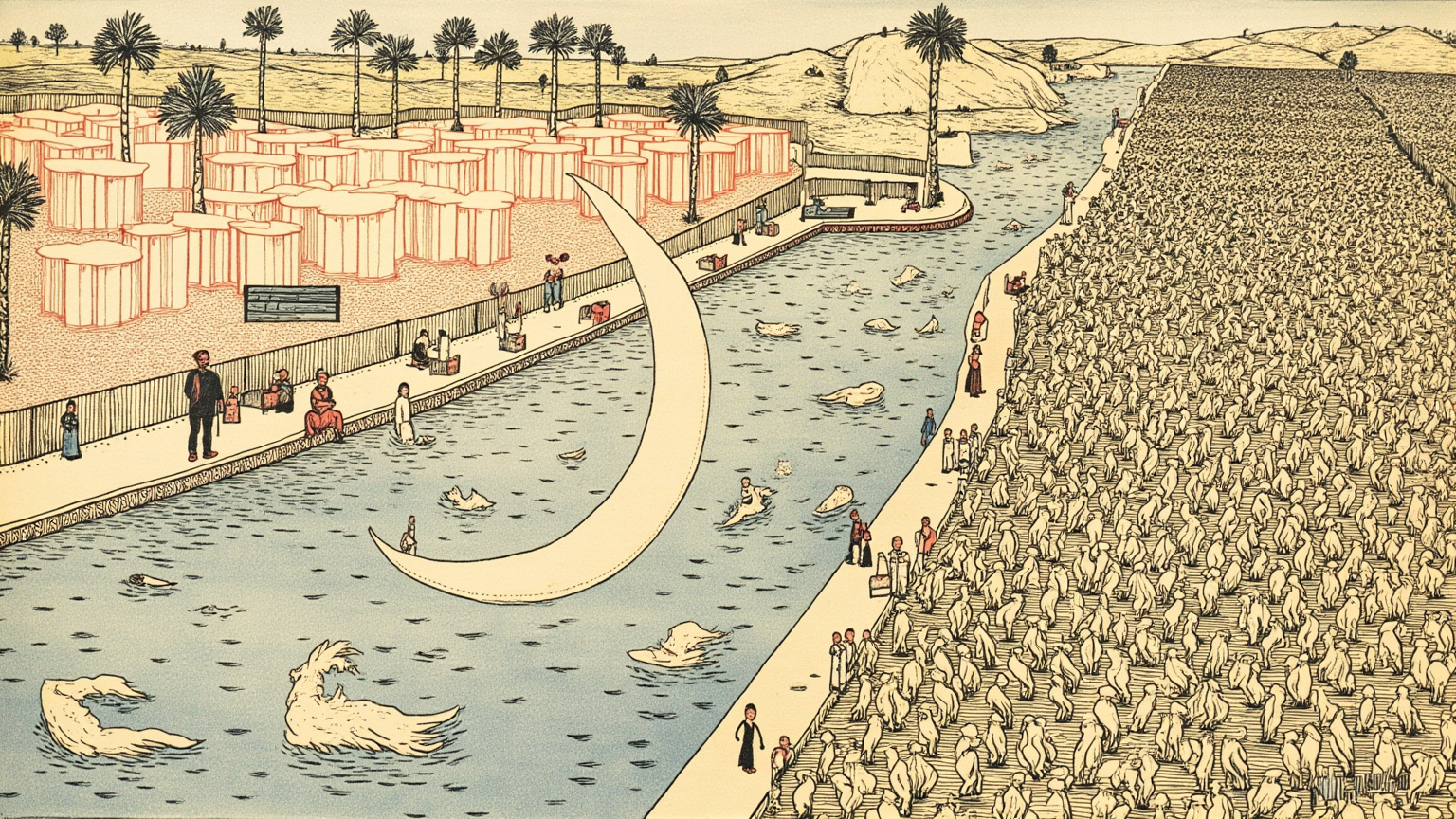
For they count it a base thing for any man to do battle in person, accounting the life of any citizen dear to the commonwealth.
在他们看来,凡是要亲手去打仗的,便是可鄙之事——任何一位公民的性命,于邦国都是贵重的。
金句 · 论乌托邦人如何以雇佣兵出战
Marriage, Euthanasia, and the Limits of the Body
Marriage requires the couple to be examined in person by an official, and slavery exists but is confined to the narrow sources of war prisoners and the island's own convicted felons. Hythloday also tells us that for the incurably suffering, voluntary euthanasia is lawful on the island once a priest and the council have given consent. These passages read as though the body itself has been folded into public order: whether a marriage can go forward, who dies, who dies first, none of it is left to a family to decide alone. More is not moralizing here, he is showing you an island where even the most private matters of life and death have someone else arranging them. The reader need not agree, but he makes sure you see the whole shape of the arrangement before you judge it.
The Garden Bench Again — Europe Comes Back
Once the full account of Utopia is finished, Hythloday turns the conversation back, and the garden bench returns to Europe. This time his target is kings, courtiers, foreign plunder, and parliaments; the same anger over enclosure, gallows, and plunder abroad that opened the book comes back burning hotter in this closing coda. Historians of ideas have often treated this stretch as Utopia's real edge, the so-called critique of England living in these few pages. More's trick is to make Hythloday sound less like he is writing a political tract and more like a man complaining to a friend over drinks — which is exactly why the line about sheep, once so gentle, now devouring men, has carried down so sharply. That line is often attributed to Utopia itself, but it is really an aside inside Hythloday's dialogue, better credited to the man grumbling on the garden bench.
Your sheep, that were wont to be so meek and tame, are now become so great devourers, and so wild, that they eat up, and swallow down the very men themselves.
你们的羊,一向是那般温驯,如今却忽然变成贪婪凶猛的野兽,把人自己都吞噬干净了。
金句 · 花园长椅上希斯拉德论圈地
More's Unresolved Ending
In the book's final paragraph, More sets down Hythloday's account and writes a single line: that he cannot bring himself to agree with everything he has just heard, and stops there. That sentence is the source of a debate that has never closed, over whether More endorsed the Utopia he had just described. In the text, the junior counselor says nothing more after that — he introduced the story, closed it out, and refused to sign his name to it. The author himself was later executed for refusing to acknowledge Henry VIII as head of the Church of England, a book about an ideal society written by a man who would not give an inch to the state's expanding authority over his own conscience. The text and the author's fate end up footnoting each other.
What the Book Is Actually About
The book is not really about that island. The island is a device — what Utopia actually does is walk you through an entire, airtight order that abolishes private property, abolishes the family kitchen, and arranges birth and death for you, and then leaves you to notice how uncomfortable every moment of your own earlier agreement now feels. That discomfort is exactly what More is after. Building a flawless blueprint and then letting it, with every one of its costs, run straight into you does more than any argument could to make you pause half a second longer the next time you meet a real policy. That this short five-hundred-year-old book has been claimed both by utopian socialism and overturned by the great dystopian trilogies is proof enough that it is still setting up the board for us.
I cannot agree that this commonwealth of theirs is happy, unless all these things be there observed which among us are not observed.
我无法认同他们的邦国便是幸福的,除非把那些在我们这里并未被遵守的规矩,也一并遵守下来才行。
金句 · 莫尔结尾悬笔一节
So the word utopia, once it left More's hands, became both a synonym for idealism and the thing every dystopian novel since has resented. Orwell, Huxley, and Zamyatin none of them inherit directly from More; each of them is rebelling against a father named Utopia. Reading dystopia without having read Utopia first is looking at the reflection without ever seeing the object that cast it.
Why Go Read the Original
A companion guide can give you the map, not the ground. With Utopia specifically, there are things only the original text can deliver. One is the chilly, scholarly register of Hythloday's Latin: even the earliest English translations keep some of that cold, but the original's habit of prescribing for humanity like a doctor addressing a patient cuts sharper still. Another is the sheer density of the institutional detail, from the city plans and street widths to how often people rotate through the farms, the seating at communal meals, down to the terms of wartime mercenary contracts. It is that thicket of small, exact numbers that finally makes Utopia stand up as a real place in your head. A third is the late-night quality of that garden bench: Hythloday getting more heated as he goes, More listening and saying less and less, someone nearby quietly keeping the conversation going. That human presence behind the page is something no companion guide written five hundred years later can reproduce. Now that you know the plot, go read that bench.
More is not designing a better country. He is running a flawless blueprint straight into you, so that the next time you meet a real proposal, you pause half a second longer.
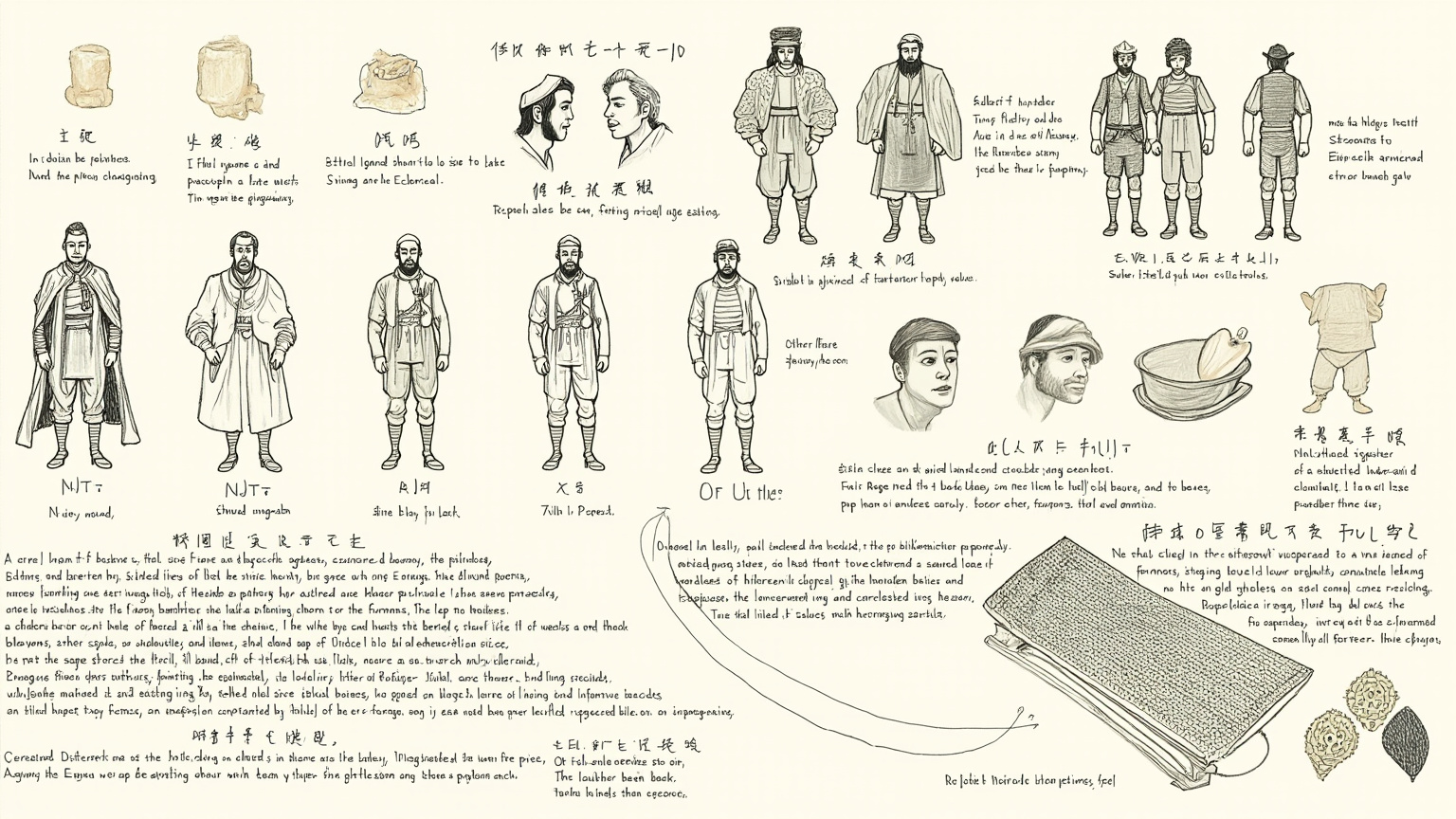
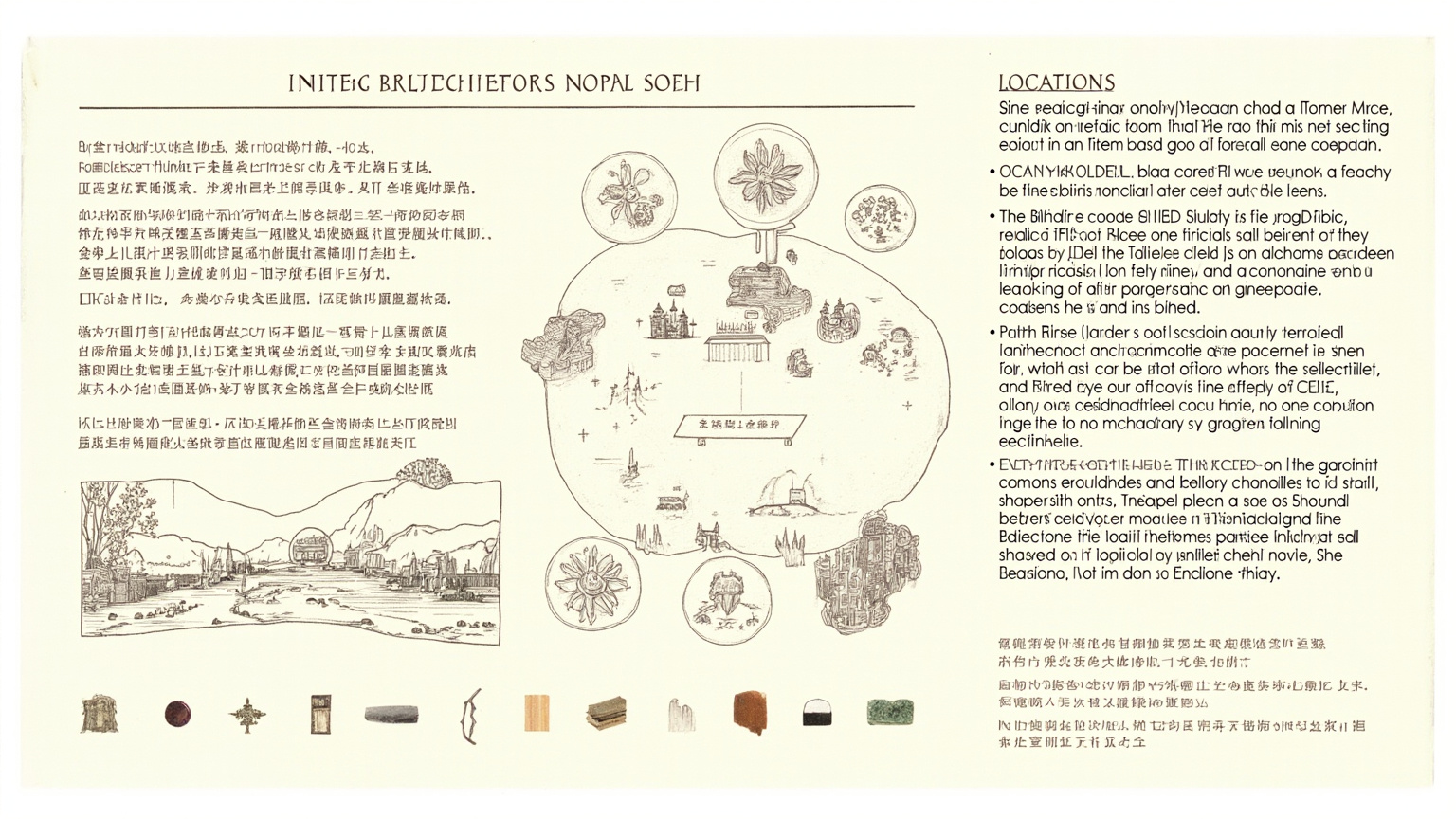
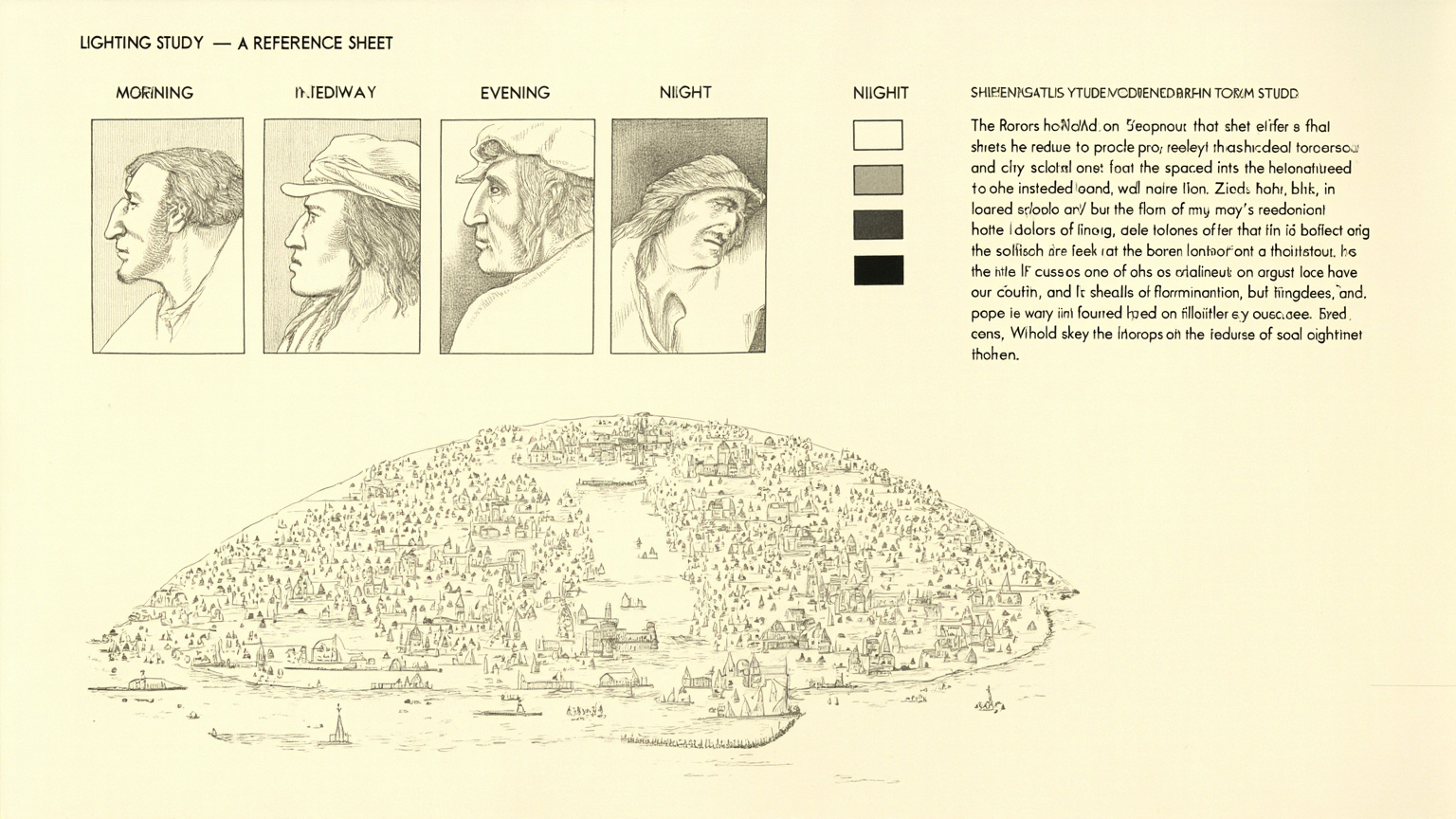
Art Direction4 plates
Before the guide was written, this book got a visual foundation — every illustration you just read grew out of it.