Women in Love · Companion Guide
恋爱中的女人
两个女人与两个男人,在英格兰的煤灰与阿尔卑斯的雪白之间,被各自的意志与血液反复撞击。
Opening: a woman who presses a man's head into plaster
In a studio in Chelsea, London, the aristocratic intellectual Hermione presses a man's head into a slab of wet plaster. He doesn't cry out. He just closes his eyes, as if being buried alive. It is the most chilling scene in D. H. Lawrence's 1920 novel Women in Love, colder than blood without spilling a drop of it.
Plaster is her signature. She fills her rooms with it, and with geometric sculpture, and she possesses a person the same way: fix the shape, seal it shut, file it into her own order. The man she pressed into the plaster is Rupert Birkin, the male lead of one of the book's two love stories.
What kind of book is this
David Herbert Lawrence had already left England and was moving through the Continent when he wrote it. It came out in London in 1920; the American edition was banned the following year, then unbanned. It sits on the shelf of modernist classics, ranked alongside The Rainbow and Lady Chatterley's Lover as Lawrence's three major novels. If Lady Chatterley's Lover is the most explicit about desire and The Rainbow the most dense with family and growing up, Women in Love is the coldest of the three. It treats love as a trial of industrial civilization.
The characters: four knotted threads
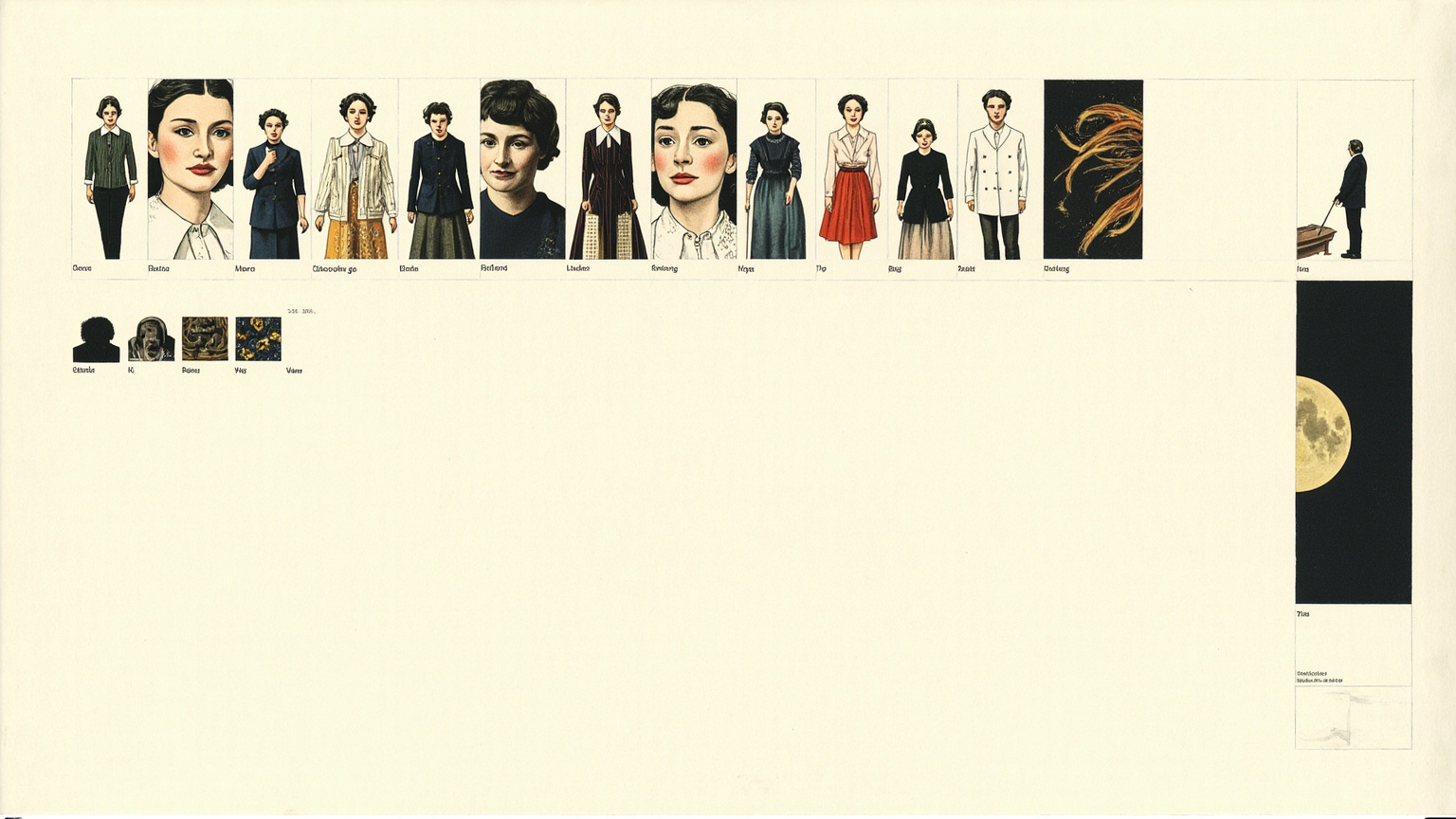
Four knotted threads, tied to Beldover, a fictional coal town in the English Midlands. Rupert Birkin is a schoolmaster, the man in the book who keeps insisting that love should not be possession, and Lawrence's own mouthpiece. His counterpart, Ursula Brangwen, is also a schoolteacher, the elder sister, and more stubborn than he is. Her younger sister, Gudrun Brangwen, is a sculptor who carries small wood and stone carvings around with her, sensuous and self-absorbed. The fourth is Gerald Crich, son of the old colliery owner and heir to the whole mine, just back from London.
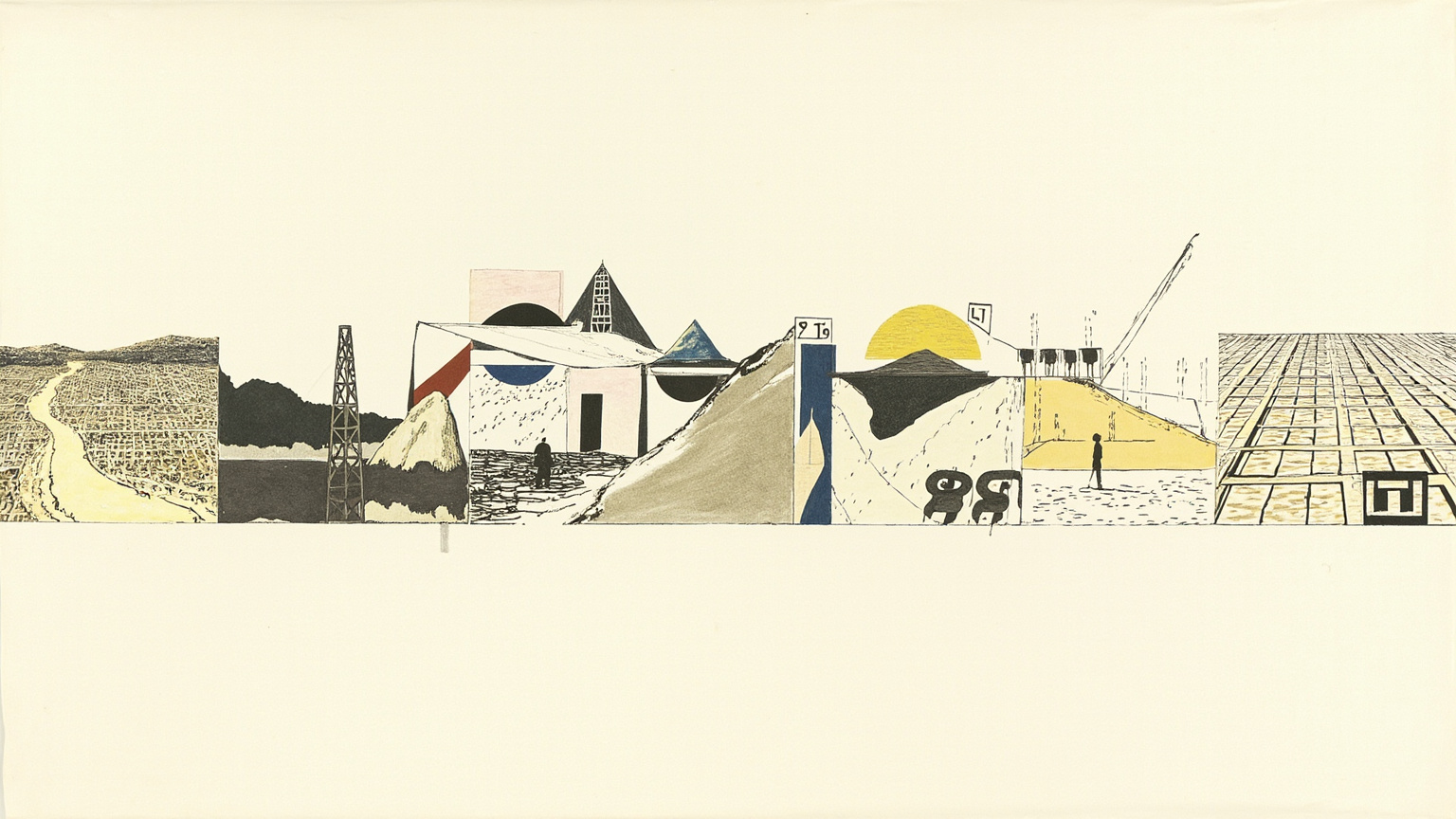
Four people, two couples. Rupert and Ursula pull toward something both independent and joined; Gerald and Gudrun pull the other way, like the two poles of a magnet, drawn together and torn apart at once. The book's world runs on a simple rule: gray-brown slag heaps and pit headstocks on one side, white Alpine snow on the other. The first is everything Lawrence hated about the industrial will; the second is the return to blood and nature he longed for. The whole plot gets stretched between these two poles.
The craft here goes beyond the names. Lawrence rarely gives his characters a full interior monologue. Instead people talk, walk, touch things, pause, answer the wrong question, and all their psychology gets pressed into gesture and object. Reading this book means reading slowly, and listening to the pauses.
Act one: Beldover's industrial horizon
When Gerald comes home from London, old Crich is already confined to a wheelchair. He has just finished remaking the whole colliery in his own image of order: miners on fixed hours, pits run to schedule, even mare breeding entered into a timetable. The old man believes industry and reason can turn people into a tidier species, and his industrial utopia is complete.
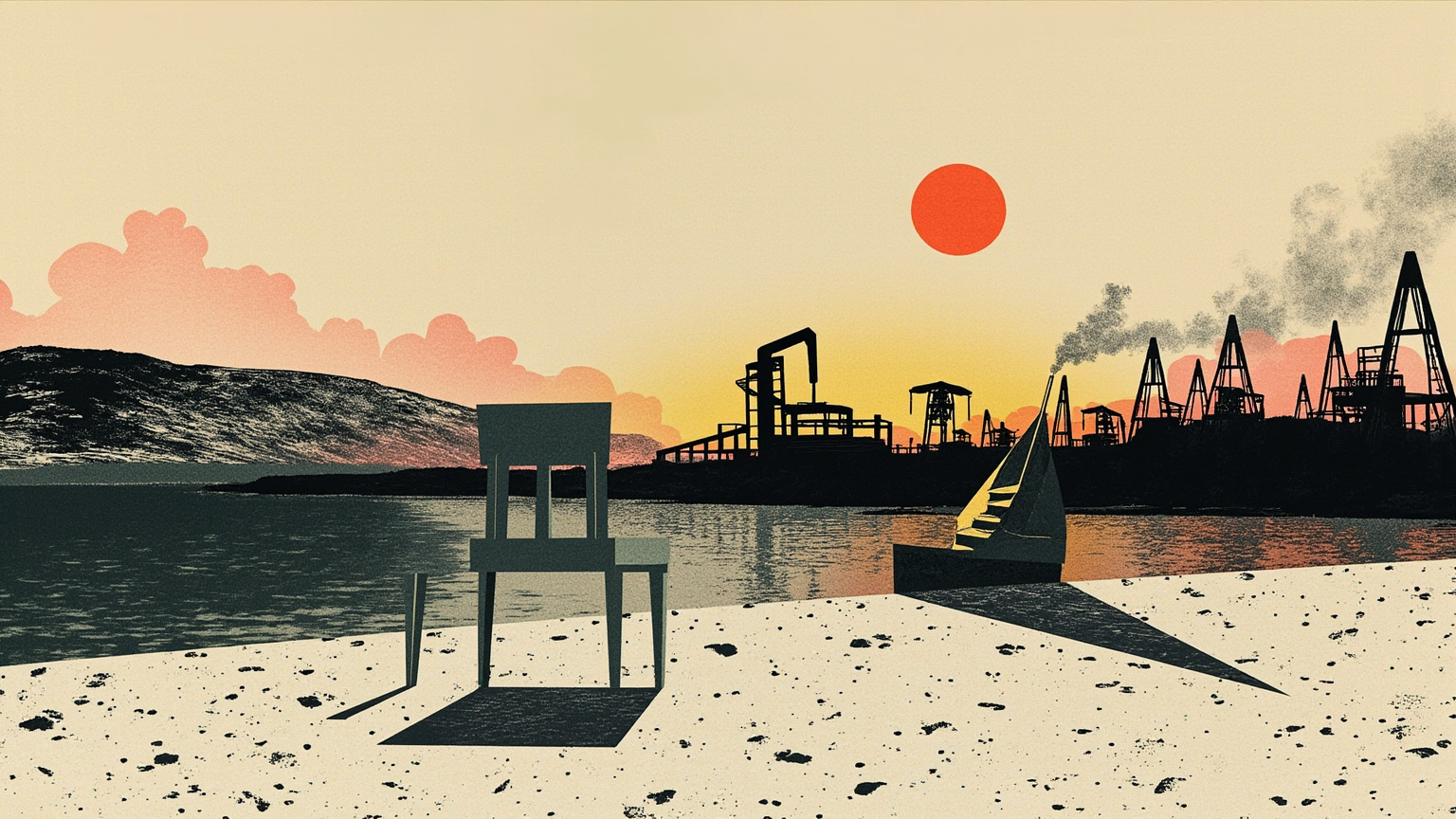
He saw her, and his soul immediately hailed her as his own.
他看见她,他的灵魂立刻把她当作自己的人向她致意。
金句 · 第3章 · 贝多弗的煤渣山
The four of them meet in this gray world. Lawrence writes the meeting against convention: no fluttering pulse, just two pairs sizing each other up. Rupert looks at Gudrun the way he'd look at a work of art. Gudrun looks at Gerald the way she'd look at a machine. That appraisal never once softens into ordinary liking.
Act two: two arguments, two endings foretold
Rupert and Ursula's conversation runs through nearly the whole book. At the dinner table, by the lake, in the sitting room, he keeps circling the same question: does loving someone mean swallowing them whole? Ursula pushes him away again and again, and comes back again and again. This is not an ordinary courtship scene. Lawrence writes it as a running argument about individual freedom. What Rupert wants is two planets orbiting a shared center of gravity, a star equilibrium that neither collides nor drifts apart.
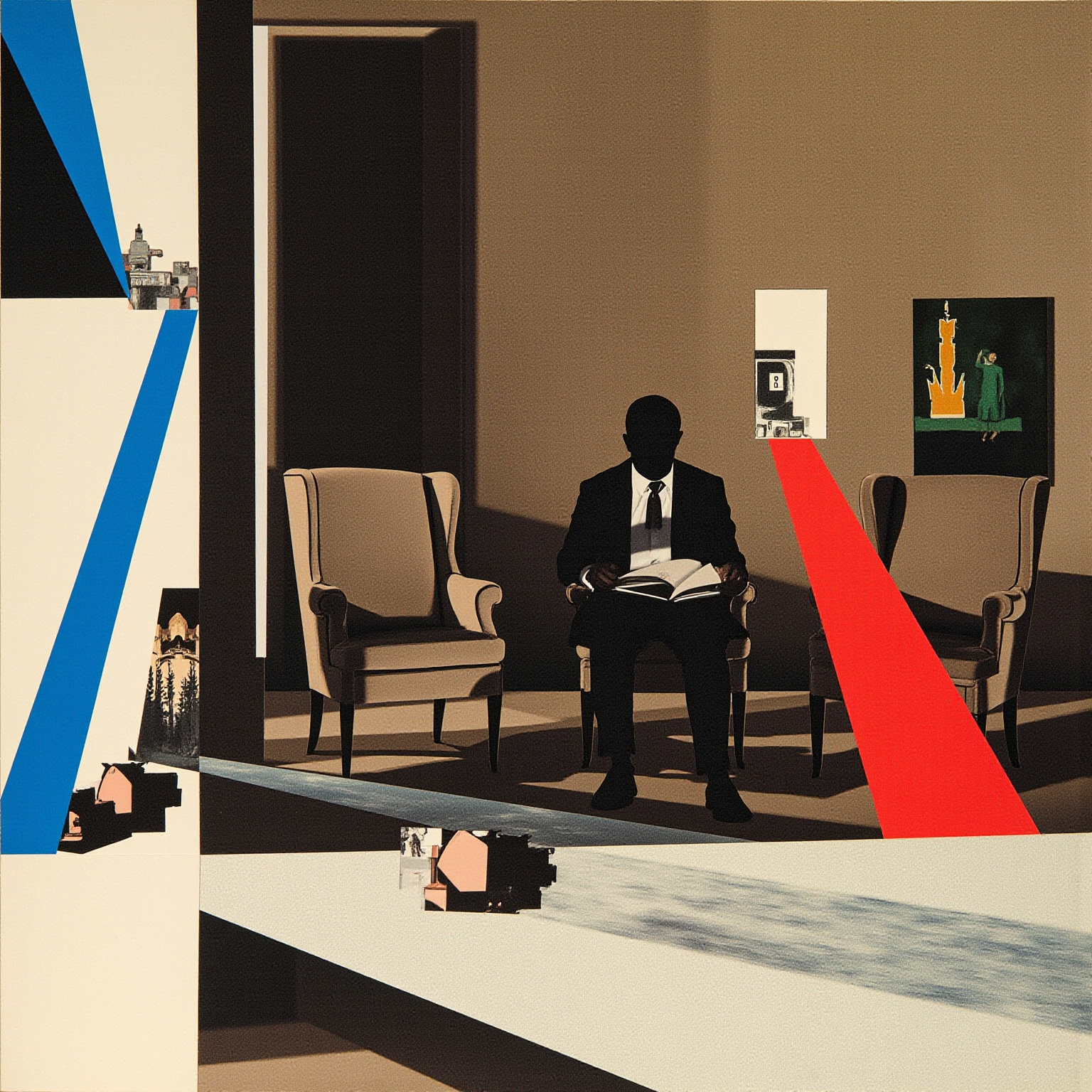
I don't want to be a thing that you can use.
我不想做一件你可以拿来使用的东西。
金句 · 第6章 · 水边与客厅的辩证
The other couple is the opposite. There is no argument between Gerald and Gudrun, only collision. She is drawn to the cold hardness of his will, and frightened by it. He wants to possess her, and nearly crushes her every time he gets close. Lawrence calls this magnetism, two magnets that fight harder the closer they get, and pull closer the harder they fight. It is the most dangerous setup in the book: their ending is already written into this one dynamic.
Act three: the mare and Diana, two cracks in industrial reason
The colliery holds an industrial ceremony. Its high point is a mare led out to be sterilized, in Lawrence's own word for it, a living creature run through industrial procedure and processed like a spare part. Gudrun stands in the crowd, her color going from white to gray, until she turns away and retches. What turns her stomach isn't the horse. It's the whole order she has just watched at work.
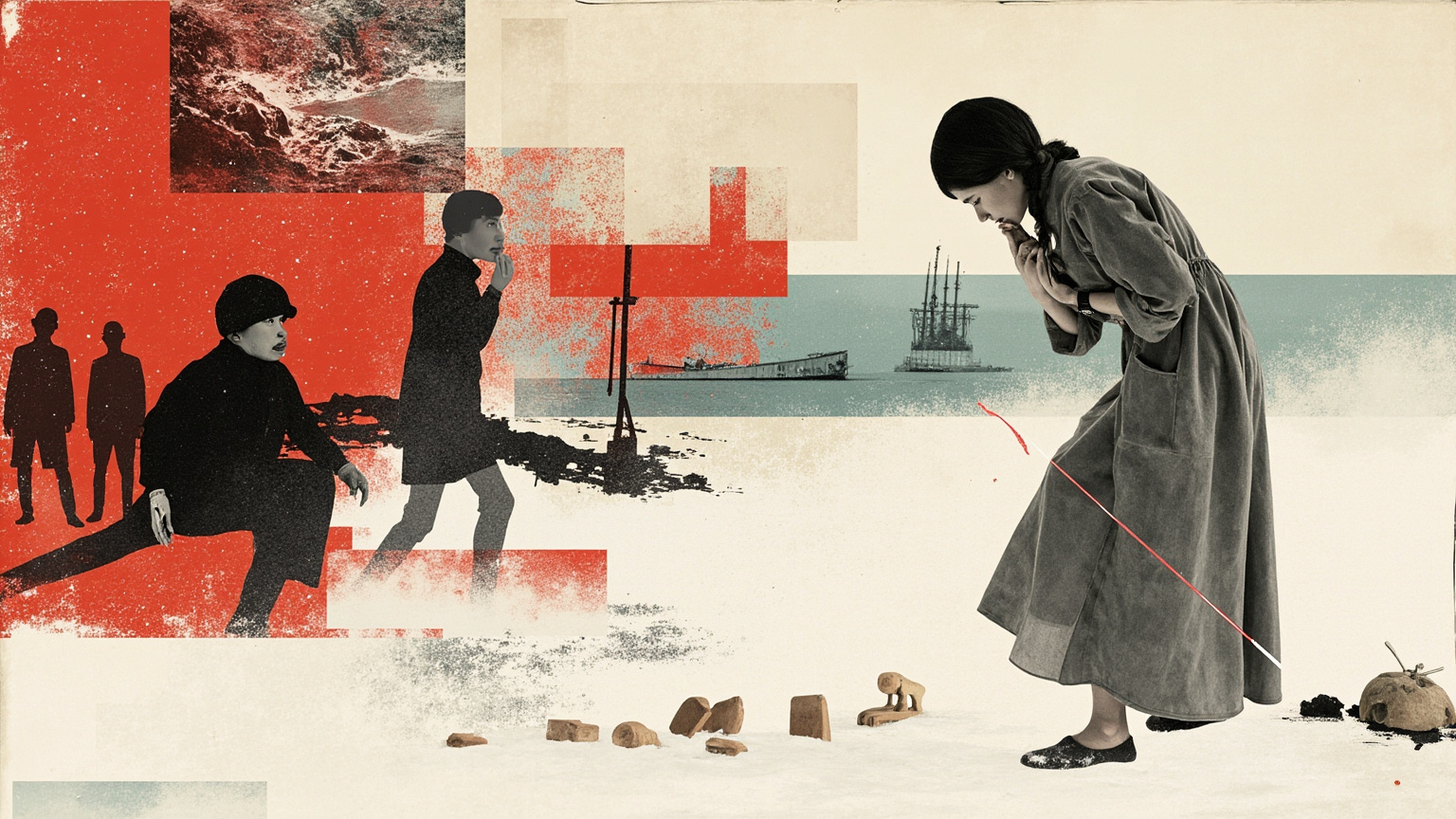
It was the pure, unmitigated negation of life.
那是对生命纯粹的、毫无保留的否定。
金句 · 第14章 · 母马驹的消毒
Almost at the same time, Gerald's sister Diana drowns in the lake at Shortlands, the family estate. Lawrence sets the two events almost on top of each other: a public ceremony and a private drowning, crammed into the same afternoon. Gudrun is sick by the paddock; Diana is going under in the lake. The perfect surface of industrial order cracks twice in a single day. Gerald begins to change, and the utopia his father built starts to turn on its own heir.
Act four: London, the block of plaster and the cramped room
The four leave the colliery for London. Rupert goes to see Hermione, his old lover and intellectual rival, the same woman with the plaster from the opening scene. The two of them face off one last time in her studio. She presses his head into the plaster; he breaks free. That same night, an engagement ring goes onto Ursula's hand. Lawrence stages the scene like an exorcism: the plaster is dead, the ring is alive. The old relationship dies inside the plaster while the new one is set in fire.
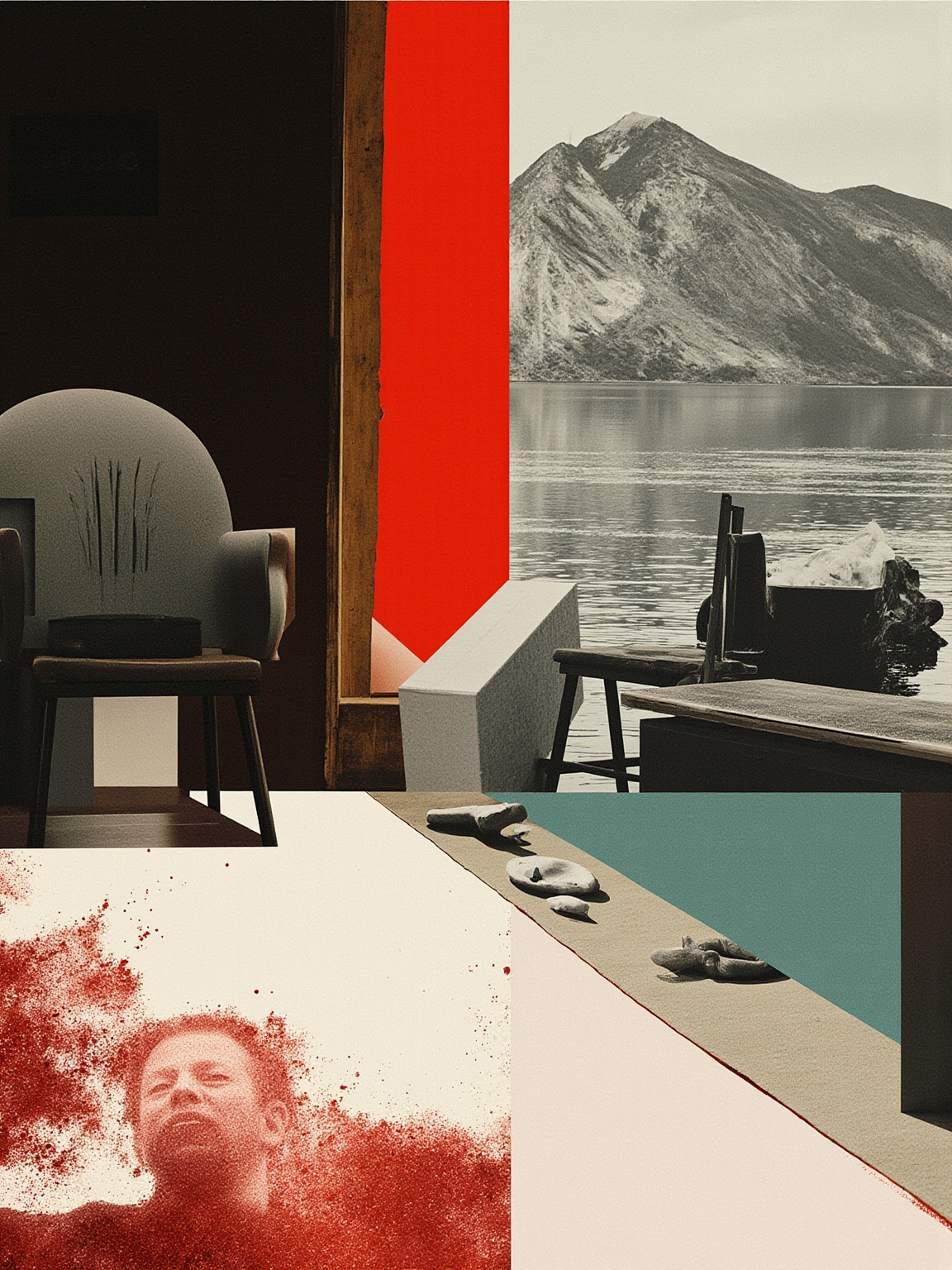
They had come to the point where the soul is blasted.
他们已经到了灵魂被炸裂的那一刻。
金句 · 第21章 · 伦敦画室里的石膏对决
That same night, almost, Gerald and Gudrun push toward a breaking point in another room. Lawrence never writes the details, only that he nearly chokes her to the point of blacking out. It is the first time Gudrun is pulled back from the edge of death, and the first time Gerald sees the true shape of his own inside, hollow, an industrial machine collapsing in on itself. The two don't break up, but a mine has been buried in the relationship. The craft is in the white space: Lawrence hides the whole confrontation inside a few pages of lamplight and silence, and never lets the reader see the struggle itself.
Act five: night at Willey Water, paper lanterns and an empty boat
Near Shortlands, Willey Water hosts a night party out on the lake. Paper lanterns line the shore, their light doubled in the water like a string of burning souls. By the next morning the lake has gone still again, the lanterns are still lit, and the boat is empty. Two young people have drowned in the lake overnight.
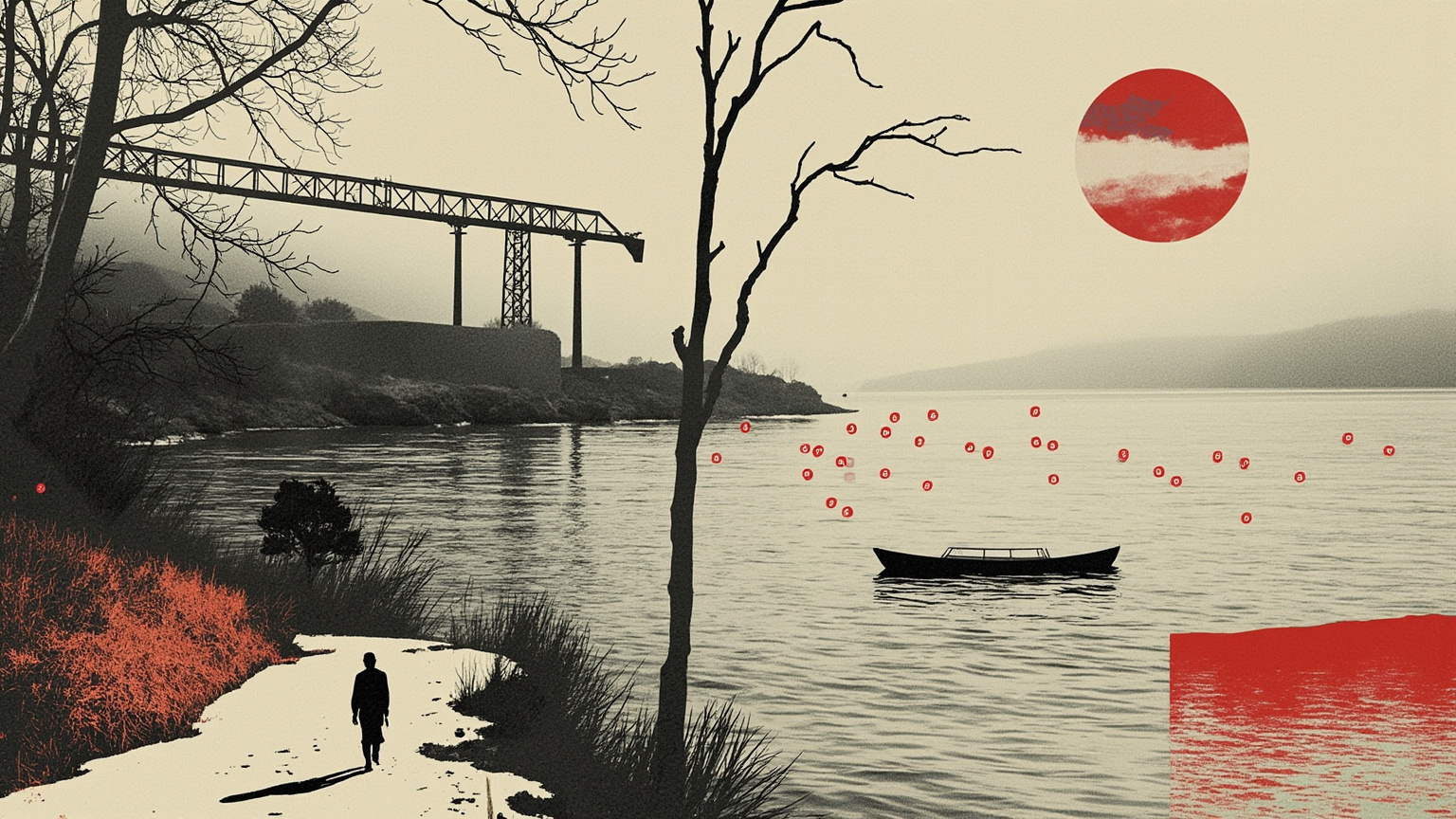
They drifted away, out of the world, like two shadows.
他们漂走了,漂出了这世界,像两道影子。
金句 · 第25章 · 威利农庄的纸灯笼
Lawrence writes the drowning not as an accident but as a return. His images are water, the womb, the place a person came from originally, a sinking that is almost willing. Lawrence rails against the industrial will, but there is something he fears even more: a weariness with life itself, a readiness to be taken back by anything gentle enough to do it. It is the coldest scene in the book, and a preview of Gudrun's own fate. Later she comes close to becoming another soul carried back into the water.
Act six: Tyrol and Shortlands, crosscut
Rupert and Ursula honeymoon on the Continent, in the snowfields and timber lodges of the Tyrol in Austria. There they meet an elder of Indian descent whose presence lets Lawrence lift the whole novel's view from the English coalfields up to something closer to Eastern philosophy. The three of them talk in the mountain lodge about blood, the senses, the stars, and it is only here that Rupert and Ursula's star equilibrium actually comes down to earth.
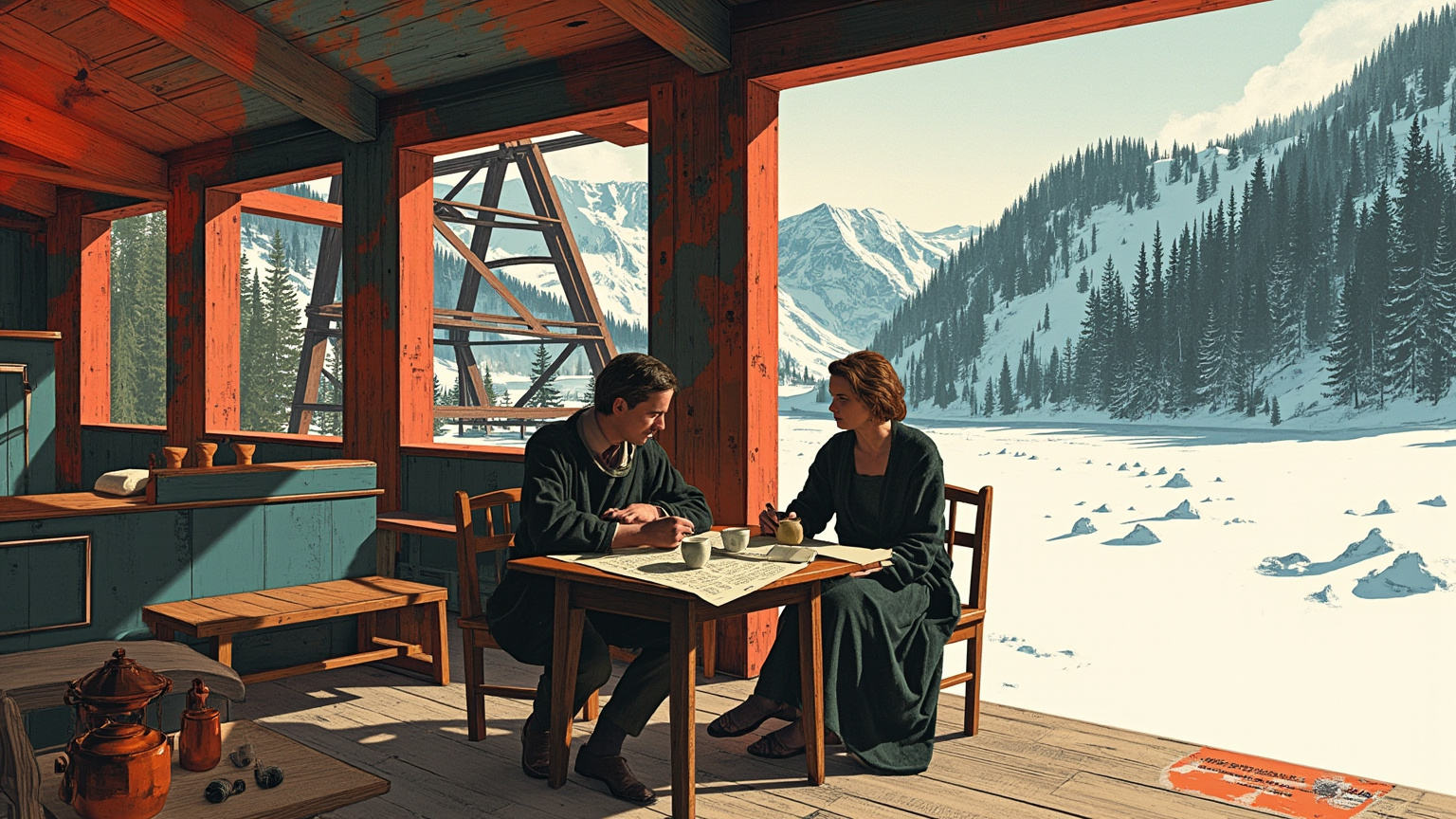
At almost the same time, Gudrun goes back to Shortlands and gets tangled up with Gerald again. This time he very nearly finishes what he started: she blacks out, wakes, leaves. By the time Rupert comes back to check on her, Gudrun has gone almost lifeless. Lawrence's word for it is a cold one. She is still alive, but life has withdrawn from her body. On one side, a honeymoon in the snow; on the other, someone dying by inches in a country house. Lawrence cuts the two threads together on the same page, and the reader barely gets a breath between them.
Act seven: the Alpine snowfield, a line of footprints
Gerald walks out alone. He goes up into the high snowfields of the Tyrol with no guide and no supplies. A line of footprints turns off the mountain path into the snow, growing fainter, buried a little more with every fall of new snow. By the next morning, all the search party finds is that fading line.
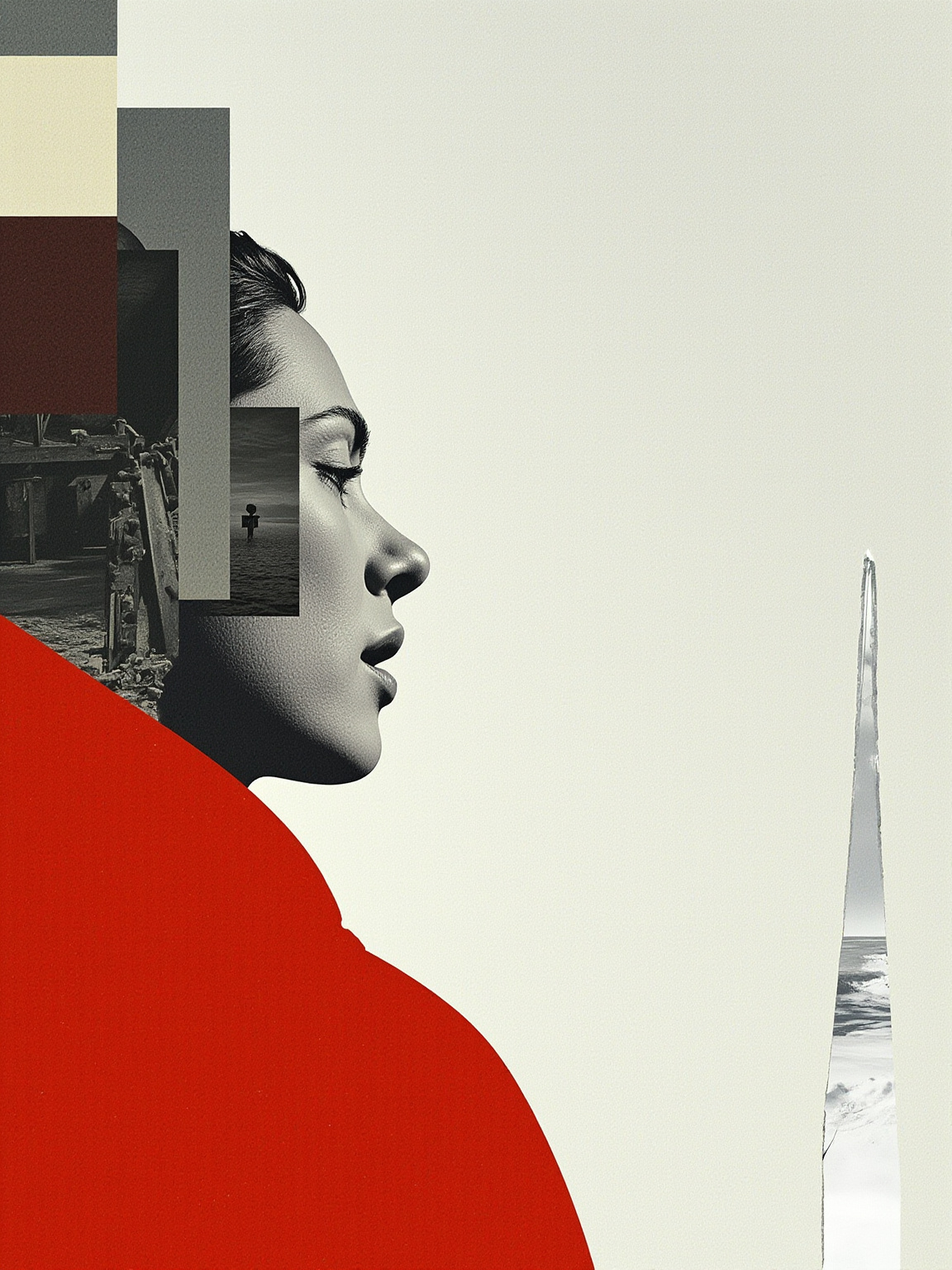
He was alone, a single small mark in the vast white wilderness.
他是孤零零的,在那一片广大无边的白色荒原上,只留下一个小小的印子。
金句 · 第30章 · 雪原上的一行脚印
The novel ends with Rupert and Ursula standing together in the ice and snow. They ask each other: will we end up like them? Can we still hold on to ourselves? There is no answer, but neither of them lets go. Lawrence was in his early thirties in 1920, already years into his exile from England, his lungs already starting to fail him. He closes his coldest piece of writing with a line of footprints buried in the snow and a question he never fully answers.
What this book is really saying
On the surface it's a love story. Underneath, it's an indictment of civilization. Lawrence believed a person's truth lives in the blood, the senses, the body's own instincts, and what he hated was industrial mechanization turning people into parts. Old Crich's model colliery is that order taken to its limit; the cold will Gerald inherits is that order given a human face. The two couples are his controlled experiment: one finds a balance and survives, the other gets crushed by its own magnetism.
Lawrence isn't writing two love stories. He's writing two kinds of people, and the two fates one civilization hands out.
For readers today the book matters even more. When we talk about intimacy, Lawrence is asking a colder question underneath it: once a person has turned their own life into a machine, can they still love anyone? Rupert's star equilibrium hasn't aged a day, neither swallowing the other person nor leaving them alone, and it's still the thing we're all practicing.
Why read it yourself
A guide gives you the map. The book itself is the land. There are three things no map can give you here. First, Lawrence's technique of pressing people into gesture and pause instead of interior monologue, which you can only feel by going into the actual prose. Second, the sensory contrast between the gray-brown of the coalfields and the Alpine blue-white, a texture of smell and temperature built entirely out of language. Third, the sheer length and exhaustion of that argumentative kind of love: Rupert and Ursula fight, make up, fight again, and the whole book runs down that road of trying once more. That endurance is not something a guide can do for you.
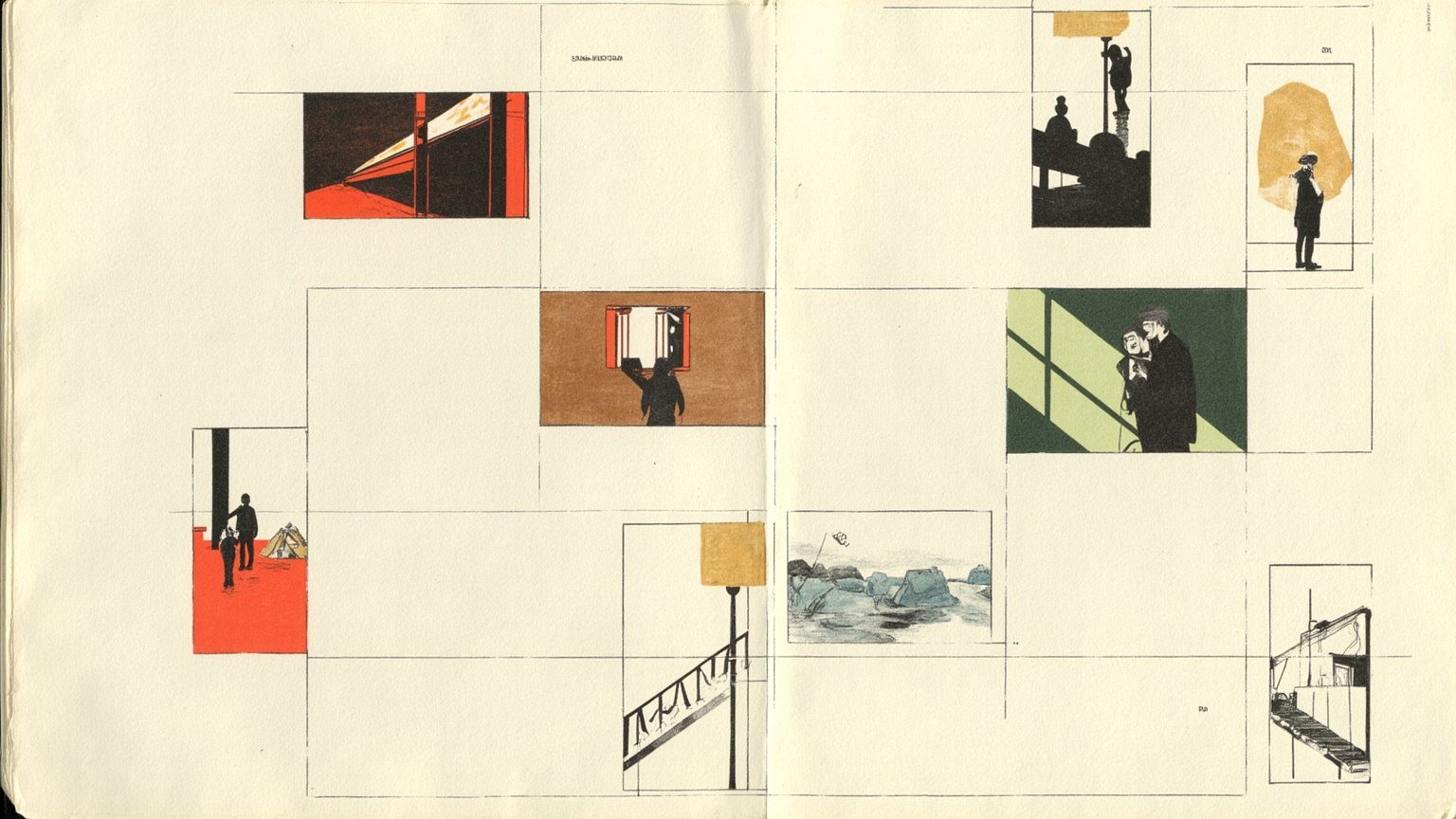
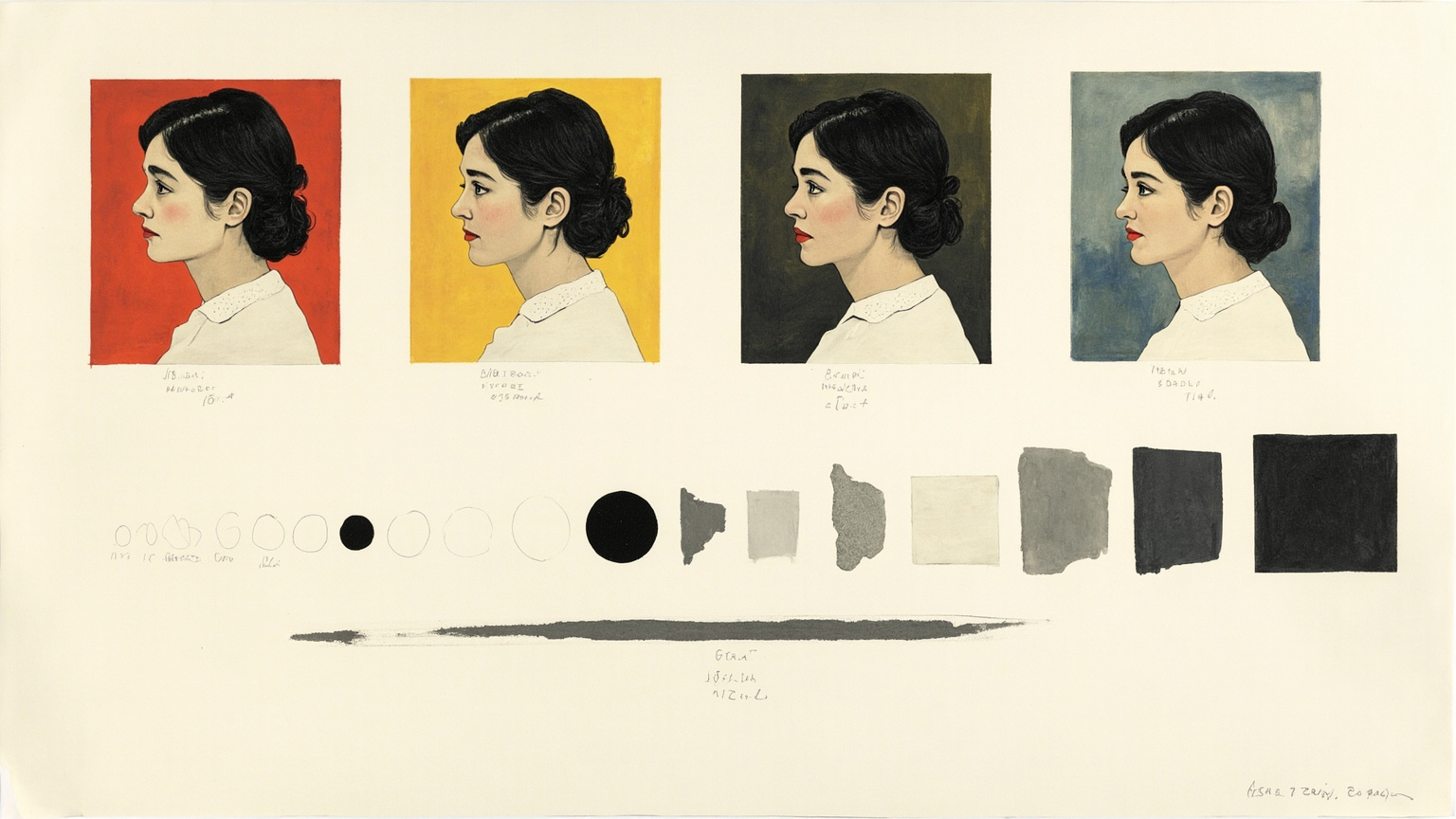
Art Direction4 plates
Before the guide was written, this book got a visual foundation — every illustration you just read grew out of it.