Tōkaidō Yotsuya Kaidan (Ghost Story of Yotsuya on the Tōkaidō) · Companion Guide
东海道四谷怪谈
一个入赘的女婿毒杀了为他毁容的妻子,怨灵却从河面漂回那户普通人家,叩响了木门。
An empty door panel adrift on the river
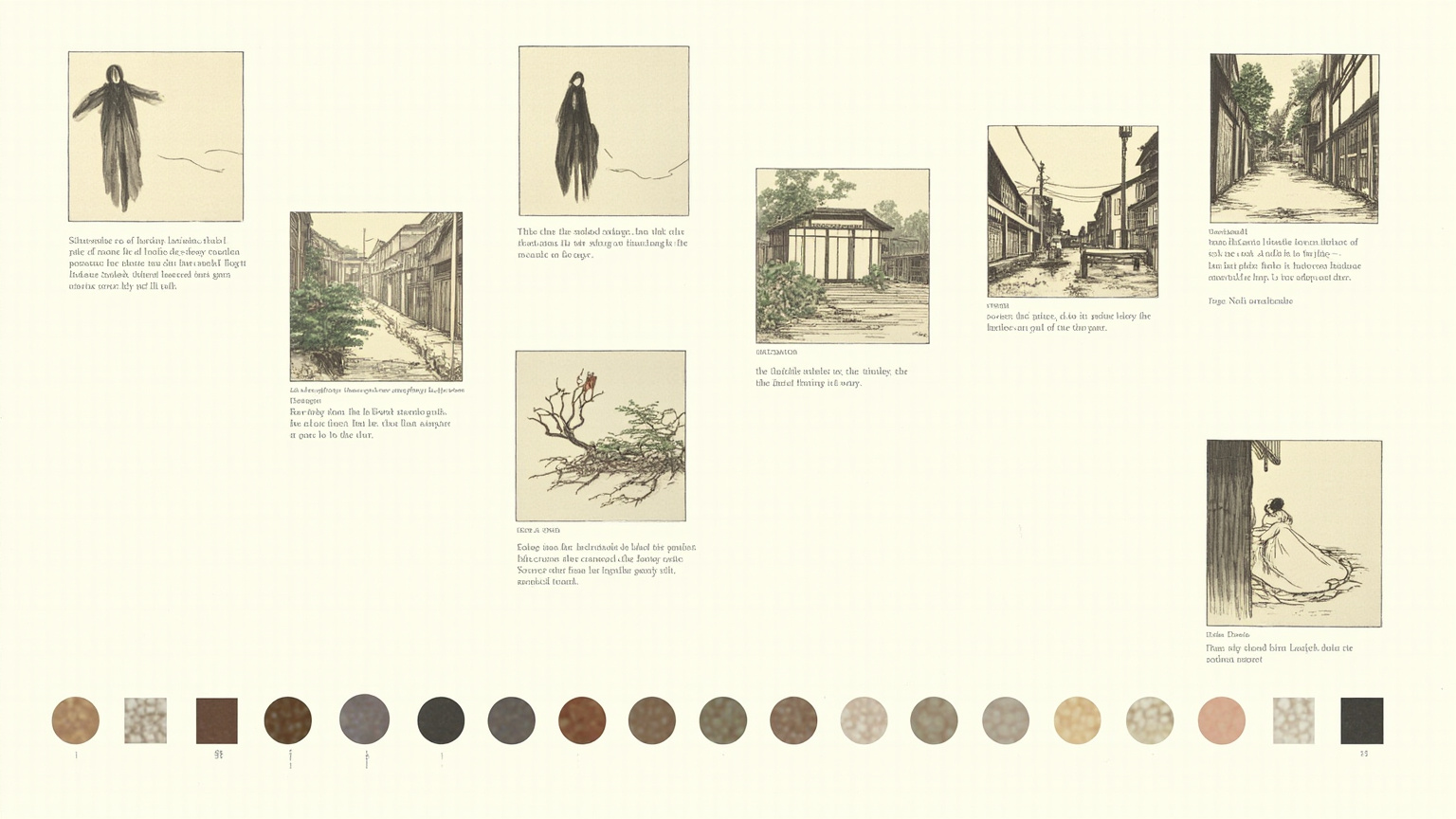
A door panel drifts on the river at night. It comes to rest slowly against the reeds, and there is nothing on it: nothing at all, just a clean plank beaded with damp. A boatman rows toward it. The panel suddenly flips to its other side, then flips back. He freezes. So does the audience. The stage crew has rigged this board to turn on a hidden pivot. A woman's face is nailed to one side, a corpse to the other, and it is drifting toward the very man who killed his own wife. This is the most famous moment in Tōkaidō Yotsuya Kaidan, the trick called toita-gaeshi, the door-panel flip.
What kind of play this is
Tsuruya Nanboku IV's play premiered at the Nakamura-za in Edo, a five-act kabuki drama he wrote in the early nineteenth century. The name Tsuruya Nanboku may mean nothing to you, but his shadow is in every Japanese ghost film you've ever seen. The ukiyo-e masters Utagawa Kuniyoshi and Katsushika Hokusai raced to paint scenes from it, film studios have remade it more than thirty times since, and people still dress as its characters at summer festivals. This isn't the kind of ghost that drifts out of a temple in a courtly legend. It happens inside a low-ranking samurai household in Yotsuya during the Genroku era: a son-in-law who embezzles, a father-in-law who catches him, a wife whose face is destroyed by poison.
What made that first run stranger still was the schedule: across a single day and night, the theater interleaved it, scene by scene, with the other great hit of the season, Kanadehon Chūshingura. One story had loyal retainers avenging their lord. The other had a dead wife turning on her husband. Loyalty and grudge, twisted together on the same stage in the same building, and that pairing alone became a landmark in the history of Edo theater.
The cast: who lives in Yotsuya Samon's house
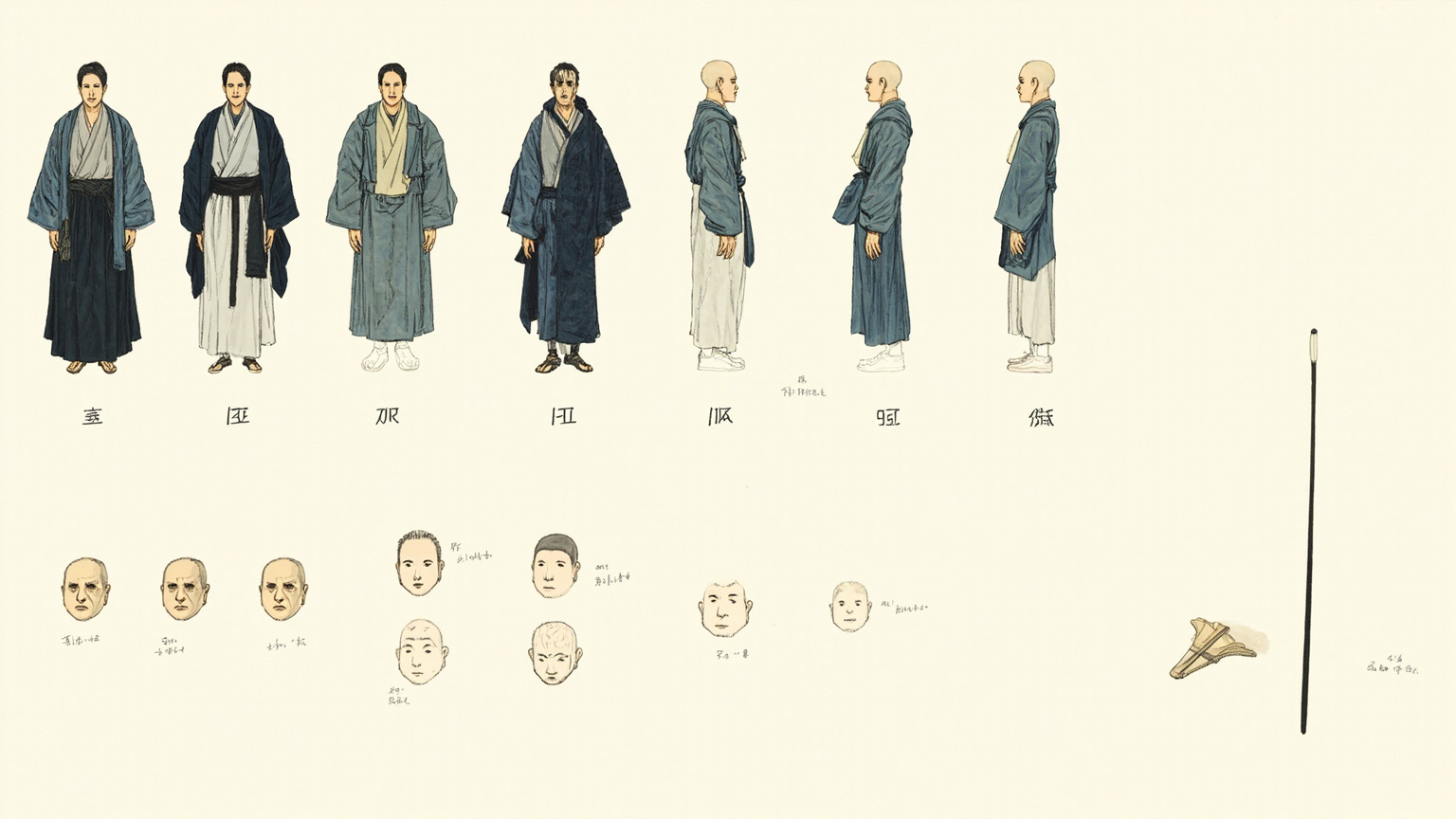
The male lead, Tamiya Iemon, was once a ronin of the Enya house, the same clan wronged in Chūshingura. He married into the Yotsuya family by taking Oiwa, Samon's eldest daughter, as his wife, since Samon wanted him to inherit the household. Iemon was handsome and restless. When his father-in-law caught him embezzling, he murdered the old man in secret. Running alongside this is Naosuke, a medicine peddler who wanted Osode, Oiwa's younger sister, for himself. When she wouldn't have him, he killed her fiancé, Satō Yomoshichi, as well. Two men, two deaths, and a pair of sisters left with no one: that is the whole raw material of the tragedy.
Oiwa is the center of the play. After her father's death, her husband lures her back into the household. She bears Iemon a child and never recovers her strength afterward. Itō Kihei, a retainer of Kō no Moronao, wants his granddaughter Oume married into this house. Oume has always believed she is less beautiful than Oiwa, and grandfather and granddaughter arrange to have poison delivered to Oiwa disguised as medicine. Oiwa, not knowing what it is, rubs it onto her face, and her looks are ruined for good.
The world of the play is the lower rungs of Edo's townspeople society under the Genroku era. Samurai households under the shogunate were falling into decline while merchants were starting to carry real weight on the street. Loyalty, betrayal, and calculation are all crowded into one ordinary house. The vengeful ghost no longer walks out of a temple or a noble's mansion. It breaks into a commoner's home.
The plot: blackened teeth, a comb, and a door panel adrift
The play opens with Samon forcing Oiwa back to her family home. He has discovered his son-in-law's embezzlement and now flatly opposes the marriage, not knowing that Iemon already has him marked for death. That same night, Iemon and Naosuke strike, each on his own. The father-in-law dies outside; the fiancé dies somewhere else. In a single night, both sisters lose the man closest to them. The two killers then turn around and offer, with false grief, to avenge the deaths. The sisters believe them: Oiwa reconciles with her husband, and Naosuke gets his opening with Osode. Oiwa becomes pregnant, gives birth, and her body never recovers.
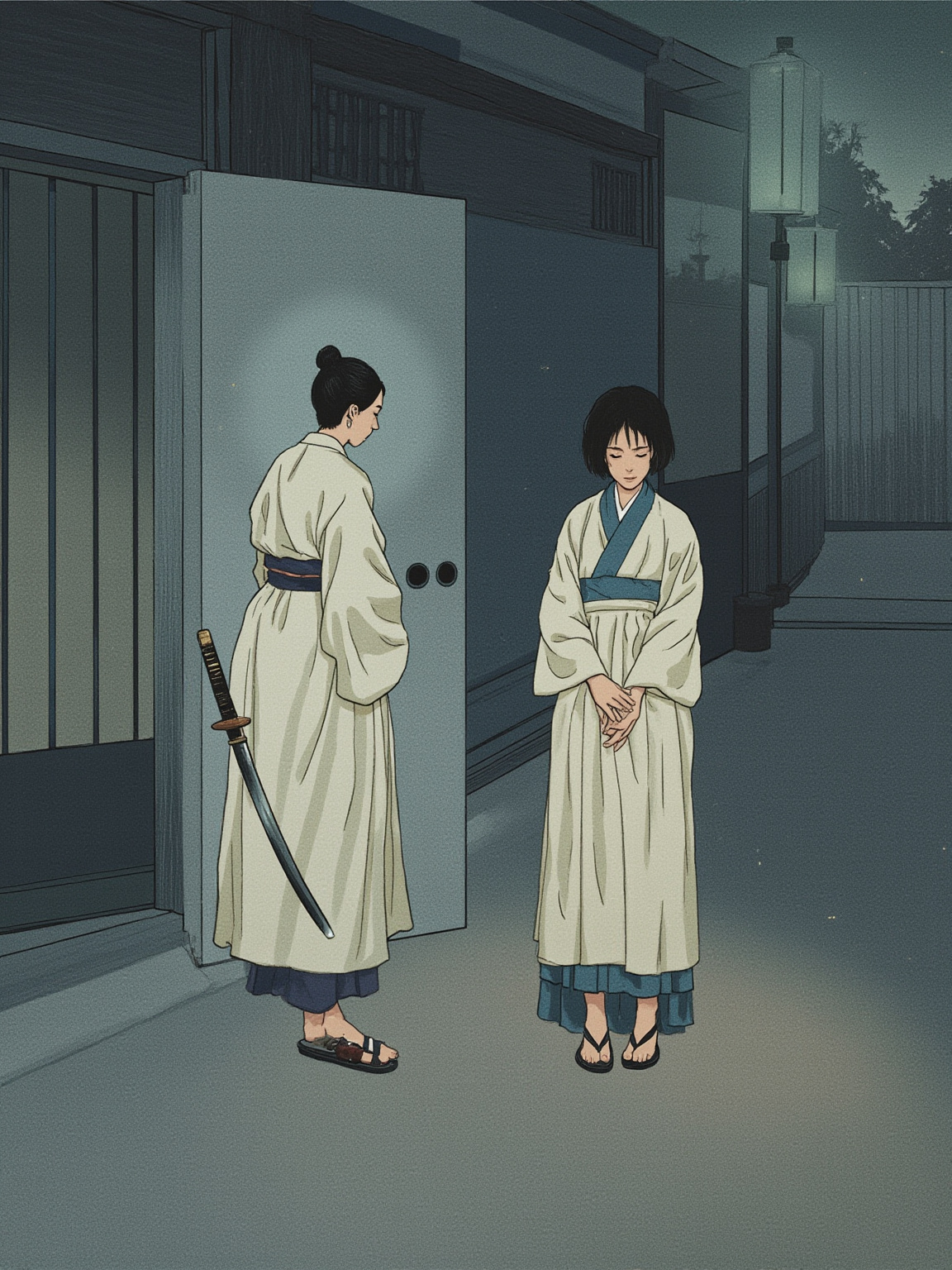
On a summer night of Yotsuya, the reckoning began with a stolen purse and a father's corpse left in the road.
四谷的夏夜,岳父的血滴在门外那条路上,没人看见。
金句 · 序章 · 四谷左门的宅子里
The disfigurement scene carries the most weight in the whole play, staged in what is simply called Iemon's shabby lodgings. Oiwa has no idea the substance on her face is poison. The offstage musicians strike up, and she sits at her mirror stand, working ohaguro tooth-blackening dye onto her teeth bit by bit, then drawing the comb through her hair, lock by lock. Each stroke of the comb lands with a beat from the offstage drum, and each fall of hair drives the grief on stage in a little deeper. Iemon glances in from the doorway and walks away.
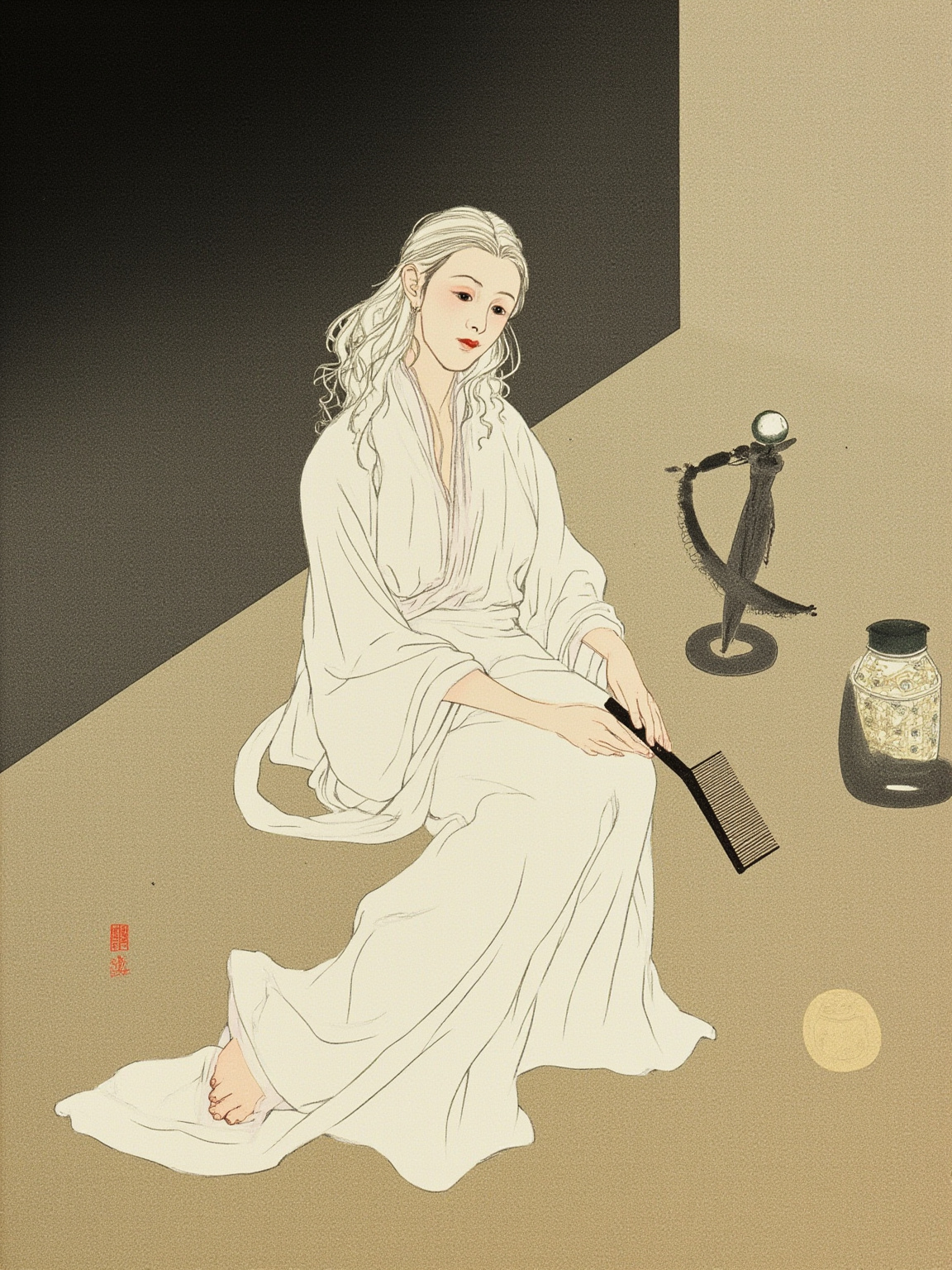
Each stroke of the comb against the hair, and the drum beneath the stage answered with a single hollow beat.
梳子一落,下座的鼓点便从地板下闷闷地应了一声。
金句 · 元伊右卫门浪宅之场 · 铁浆与梳发
Iemon casts her off. That night, Oiwa dies inside her own house. Once word gets out, Itō Kihei and his granddaughter assume the obstacle is gone, and Oume is quickly brought into the household as the new bride. On their wedding night, Iemon's mind is already coming apart. Terrified, he fumbles for the hilt at his waist, draws the blade in a panic, and swings at a shape in the dark. The blade only catches the lantern in front of the household altar and knocks it crooked. What falls in the pool of blood is not a ghost but his own new wife, Oume. He swings again, and the second shadow he hits is Kihei, who has come to see what the noise is. Grandfather and granddaughter die the same night. No one in the audience sees clearly how he does it. They only see that the blade never goes back into its sheath, still moving in the dark.
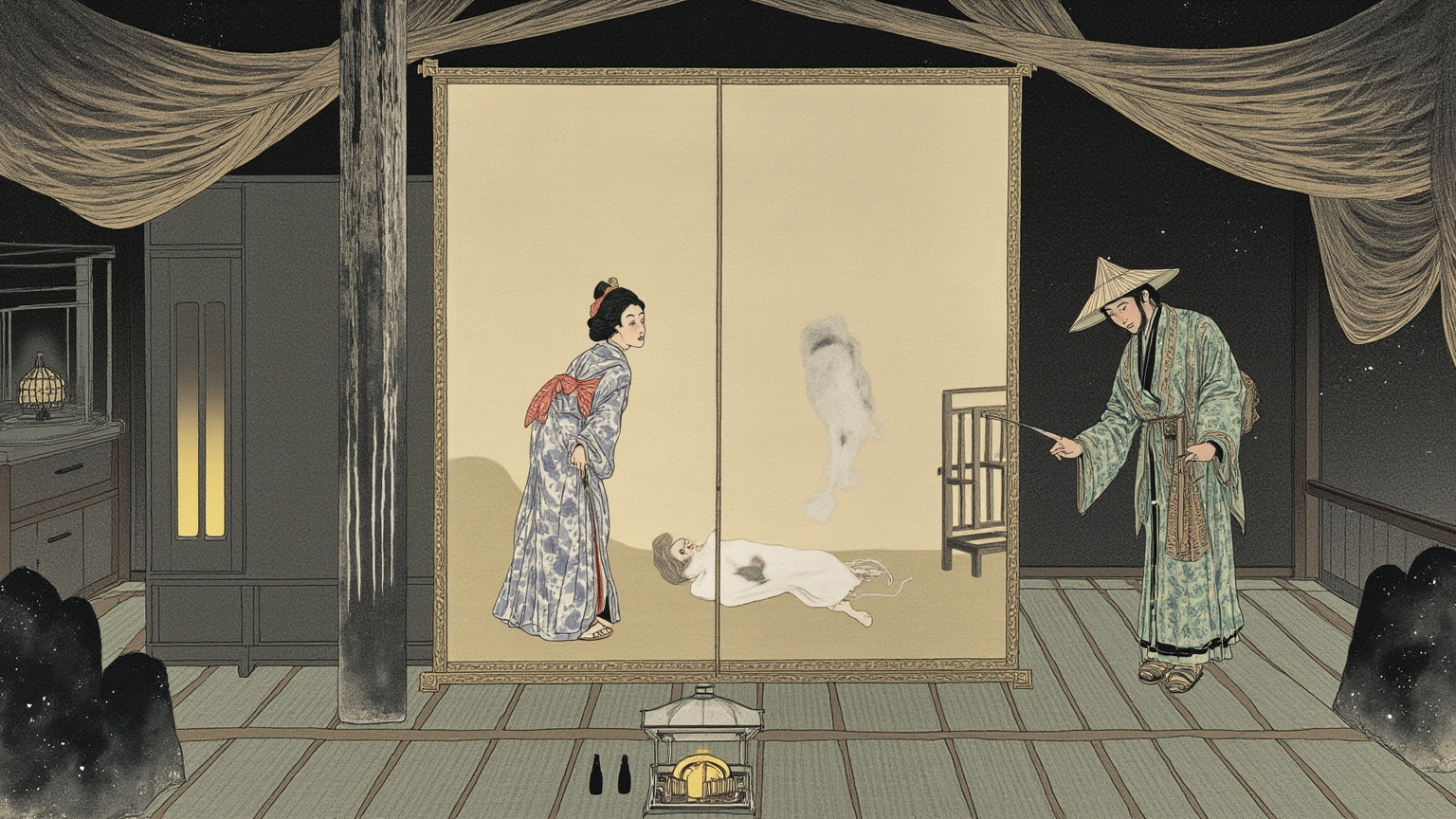
He drew his blade in the darkness and slashed at the shadow that wore his wife's face.
黑暗里他拔刀,朝那张与他亡妻相似的脸挥了下去。
金句 · 第三幕 · 新婚夜之误杀
After death, Oiwa becomes a vengeful spirit. In the scene at Onbōbori canal, she sends that same double-sided door panel drifting toward Iemon's boat, one face on each side: her own, and a corpse's. The audience knows perfectly well that toita-gaeshi, the door-panel trick, is doing the work. It doesn't matter. The man on stage is already scared half out of his wits.
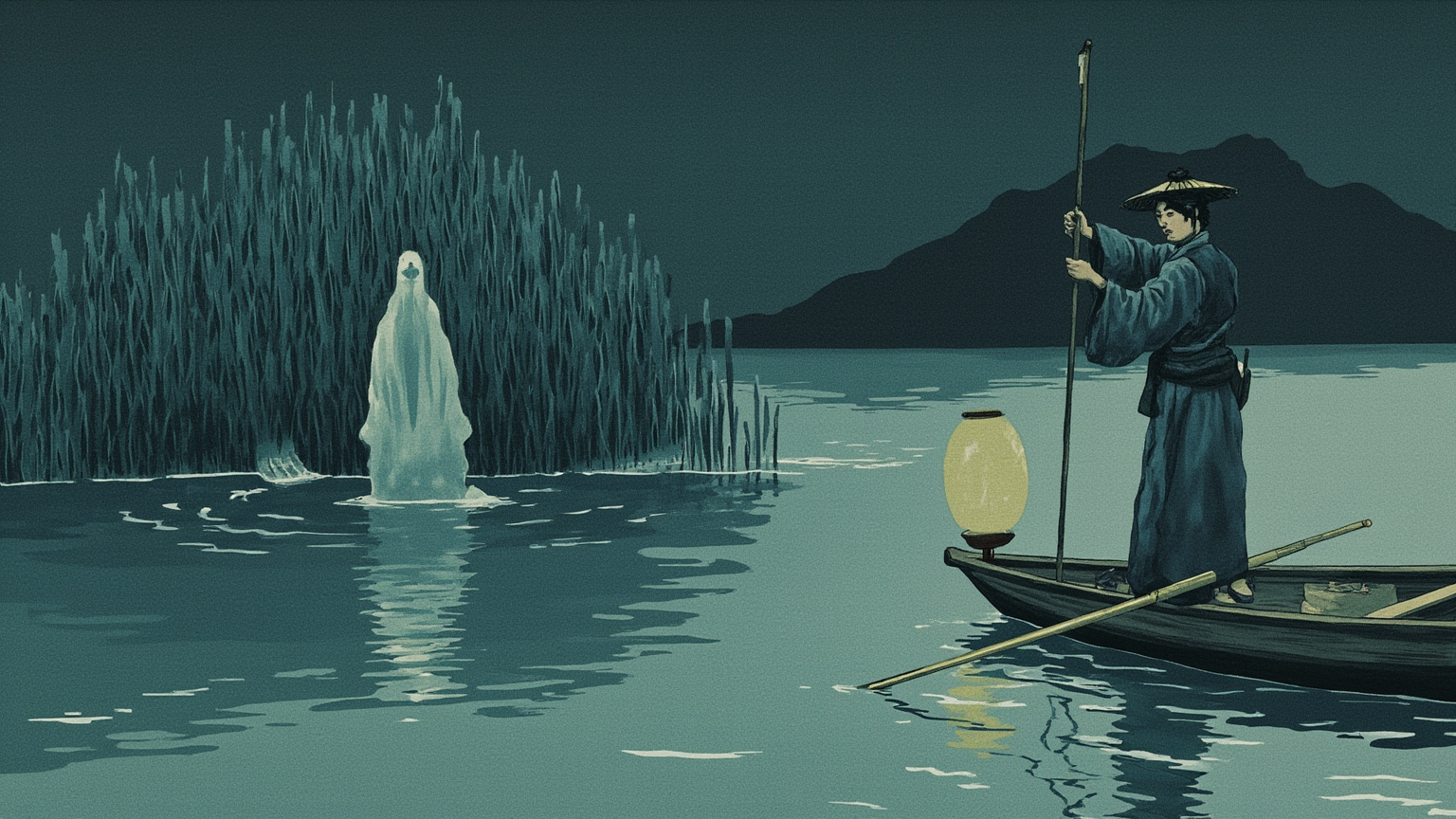
The door-board drifted ashore, turned its face, and the dead woman looked back at him from the river.
门板漂到岸上,翻过一面,死去的妻子从河面回望着他。
金句 · 隐亡堀之场 · 户板返
In the end, at the hermitage on Snake Mountain, the stage tricks corner Iemon completely. Chōchin-nuke and butsudan-gaeshi, the lantern trick and the altar-flip trick, make the invisible ghost visible: pull the lantern apart and the light goes out, flip the altar and another face looks out from inside it. Wherever he runs, he runs into the same dead wife. The one who finally finishes Iemon off is Satō Yomoshichi, the fiancé Naosuke thought he had killed. A stand-in had died in his place, and Yomoshichi has been waiting in the shadows for this moment ever since.
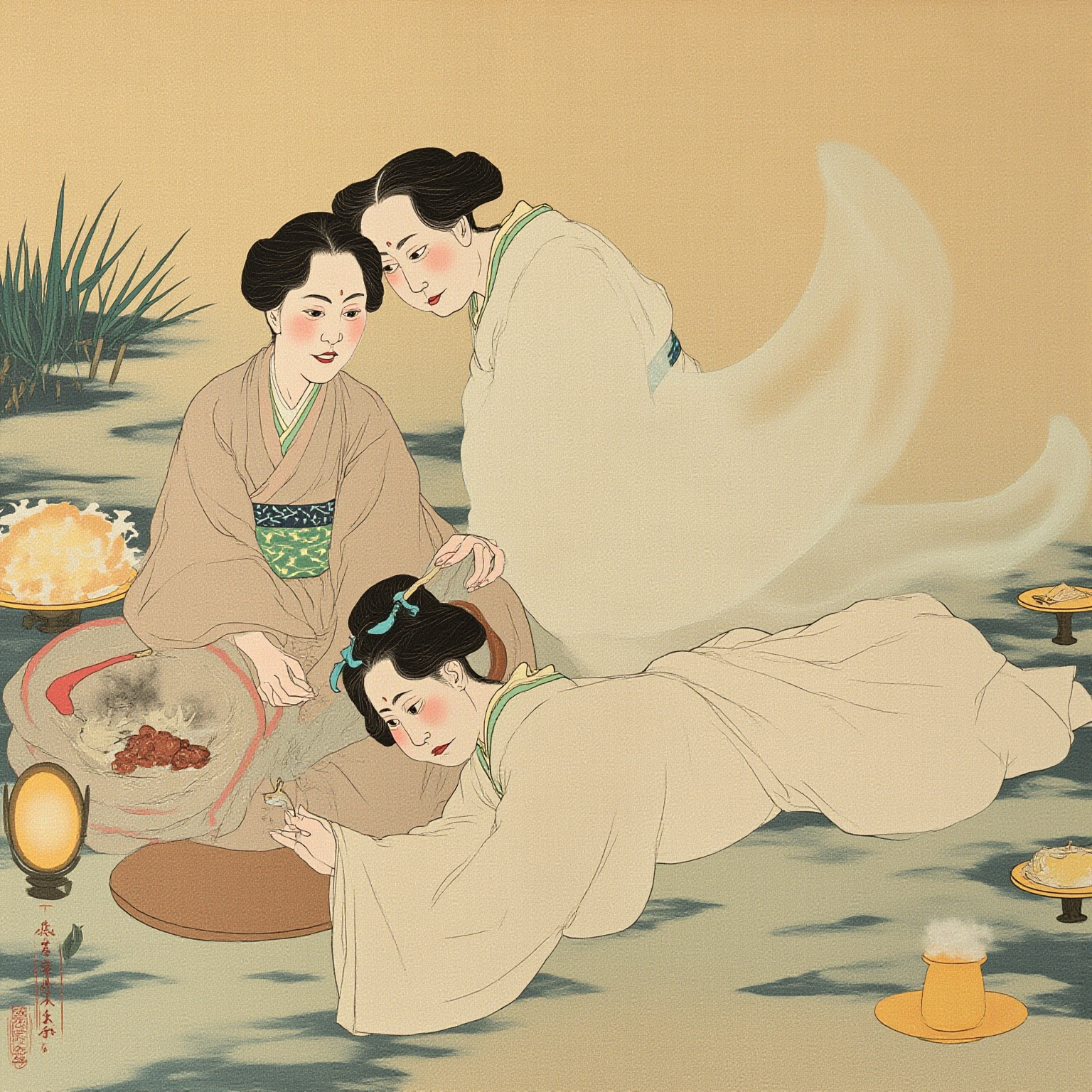
Whichever way he fled, the same dead wife stood before him in the lamplight.
他逃到哪儿,灯下都是同一个已经死去的妻子。
金句 · 蛇山庵室之场 · 提灯拔
How Nanboku wrote it: bringing the ghost into a commoner's house
Ghost plays existed long before this one, but most of them were set in temples or noble households. What Nanboku actually pulled off was dragging the vengeful spirit into an obscure townhouse in Yotsuya: a son-in-law who marries in, a father-in-law who sees through him, a wife whose face is ruined by poison. Once the stage tricks come on, toita-gaeshi, chōchin-nuke, butsudan-gaeshi, a grudge that would otherwise stay formless turns into something you can watch happen in front of you. This is the original template for Japanese ghost imagery. Hokusai's famous print of a disfigured face peering out of a paper lantern through a mosquito net, and every Japanese horror film since, trace back to this stage.
The scene at Iemon's shabby lodgings is the one worth taking apart in detail. The offstage musicians sit hidden at the side of the stage, and the drumbeats aren't random. They follow the rhythm of Oiwa combing her hair. Every stroke of the comb lands with a muffled beat, the sound seeming to seep up through the floorboards. The comb in Oiwa's hand is a modified prop, real cut hair tucked between its teeth, so that every stroke drops another lock onto the white paper spread across her knees, in plain view of the audience. It is a design that pins the grief down through sound and object at once, not through her face or her makeup, but through the understanding between one musician and one comb. This is the earliest template for Japanese ghost imagery: keep the ghost offstage, let the sound leak into the air first, and let the eye assemble the face out of a single falling lock of hair.
The first time I watched the toita-gaeshi moment, it stopped me cold: the panel flips to one face, flips back to another. This is obviously a trick built by the stage crew, nothing but wood and hinges, and yet the man on stage is already slashing at the air in terror. Being afraid of something you know is fake, that is the cruelest thing this play does.
Why it is still staged today
It has been remade into films more than thirty times. People still dress as Oume at summer festivals, the Kabuki-za restages excerpts from it every year, and Tokyo's Yotsuya still has an Oiwa Inari shrine where actors go to pay respects before the show begins. Among ghost-story classics, Ugetsu Monogatari, Botan Dōrō, Kwaidan, and Kōya Hijiri each have their own strengths, but this one is the source: the source of the vengeful ghost as something built, staged, and made three-dimensional in front of you.
It dragged the vengeful ghost out of the temple and shoved it into an ordinary house in Yotsuya, and every Japanese ghost story since has carried the shadow of that house.
You know the plot. Why read the play itself
A guide like this one can give you a map. It cannot give you the theater. The offstage drumbeat that lands with every stroke of the comb during the tooth-blackening scene, the held breath in the house when the door panel flips, the instant the whole stage goes dark as the lantern trick is pulled apart: none of that survives being written down once, let alone summarized a second time. And that's before you get to the strange double rhythm of the night it shared the bill with Chūshingura, loyal retainers dying for their lord on one stage while a vengeful wife turns on her husband on another, the audience placing its attention on loyalty and grudge at the same time. That experience only exists in the theater itself, or in the pages of the actual script.
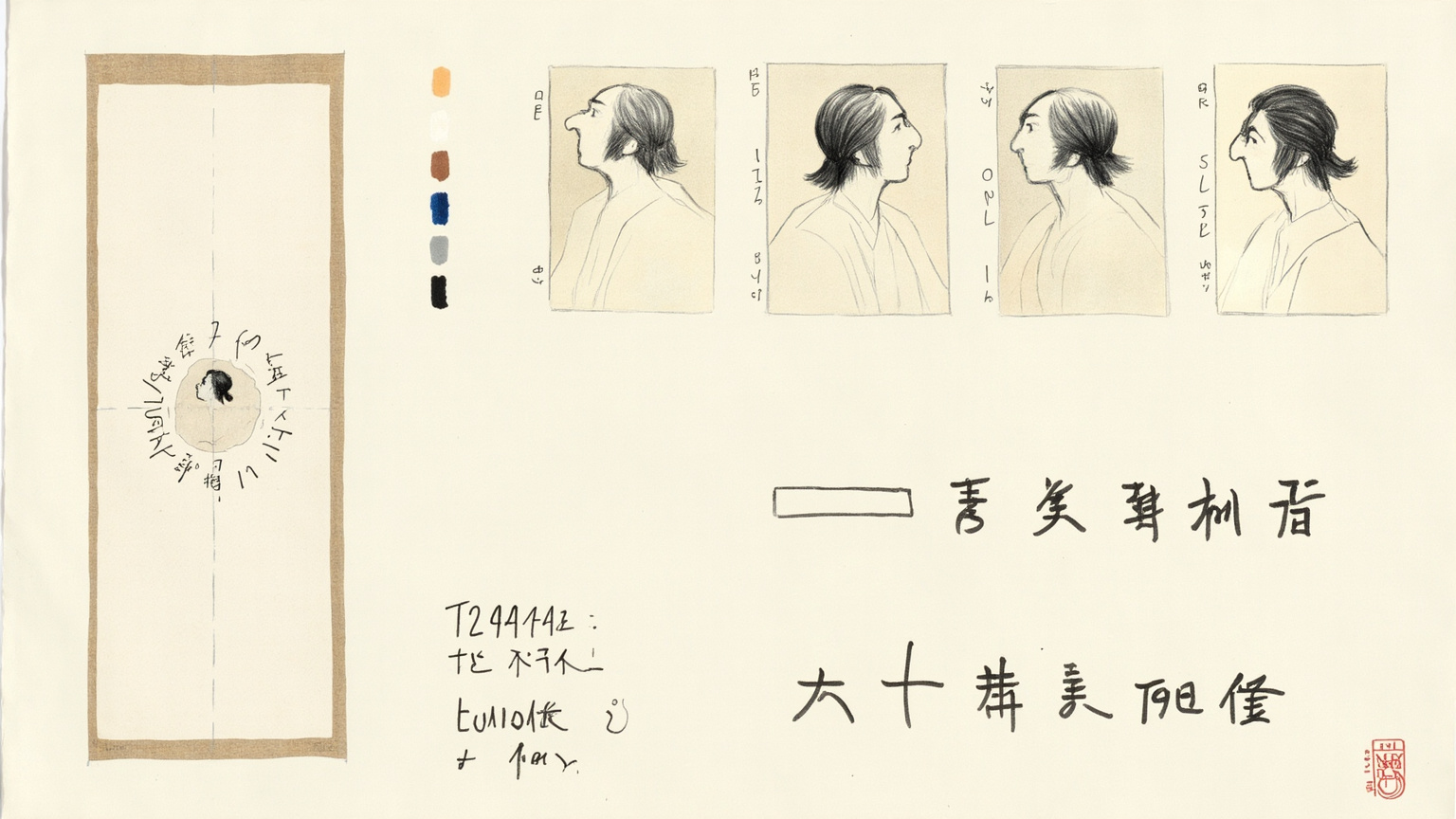
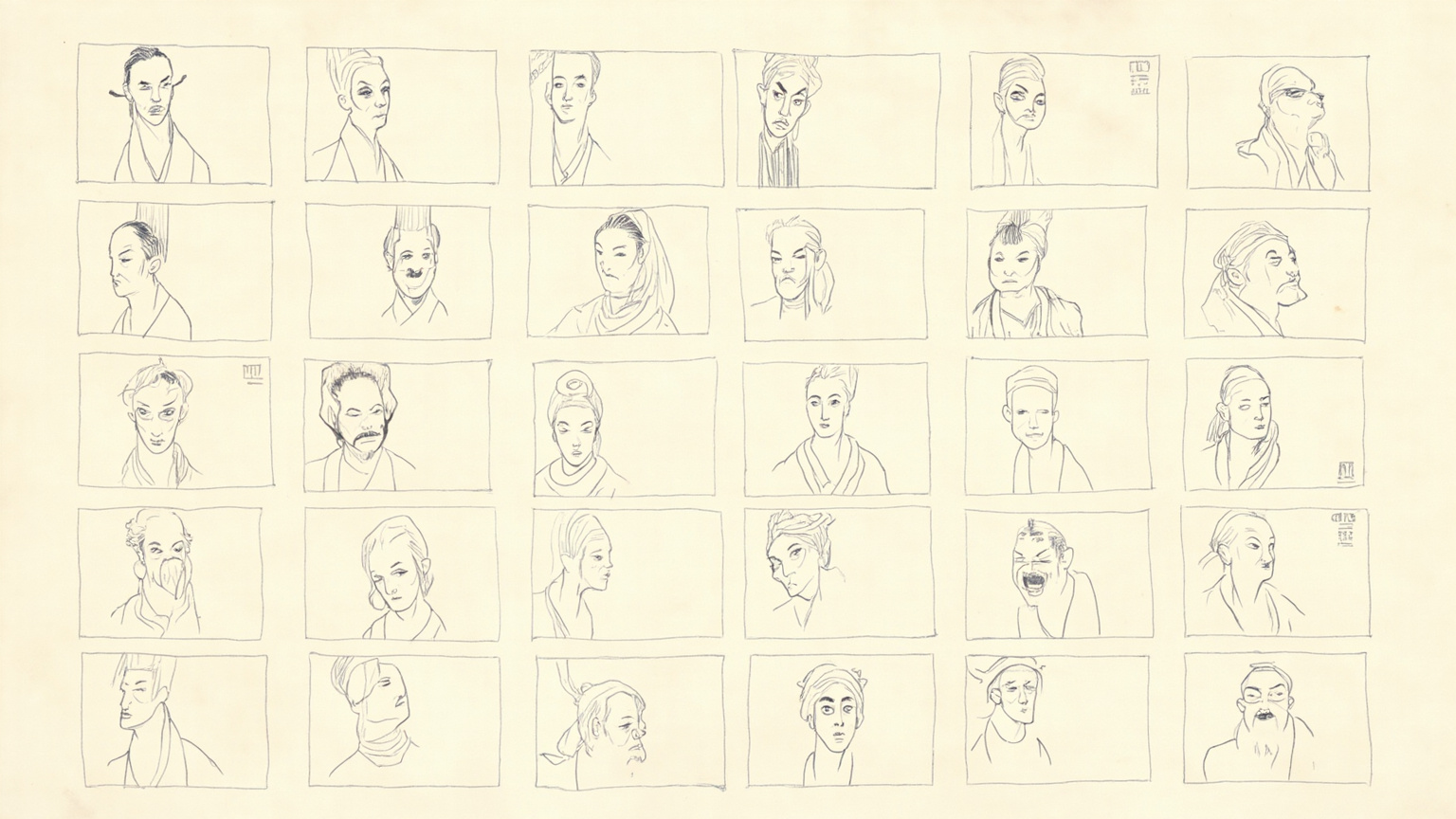
Art Direction4 plates
Before the guide was written, this book got a visual foundation — every illustration you just read grew out of it.