Notes from the Cottage of Close Scrutiny (Yuewei Caotang Biji) · Companion Guide
阅微草堂笔记
一盏残灯下,七十岁的总纂官记录狐影、冤魂与因果——清冷笔锋不动声色,褒贬全在留白。
One Lamp, the Locust Tree's Shade, and a Fox's Shadow
An old locust tree, moonlight filling half the window, a manuscript spread open on the desk. The man writing it is past seventy, a former Minister of Rites, and he writes nothing of his triumphs in office. He sets himself down only as a witness, never a participant, recording old family stories and strange tales he happened to hear. He gave himself the sobriquet Guanyi Daoren, meaning the man who spent his life watching other people play chess. He named his study the Cottage of Close Scrutiny: yue, to examine closely; wei, the hidden and faint. With the name settled, this small room, one that needs a charcoal brazier to stay livable through a northern winter night, becomes the place where the next thousand strange occurrences happen.
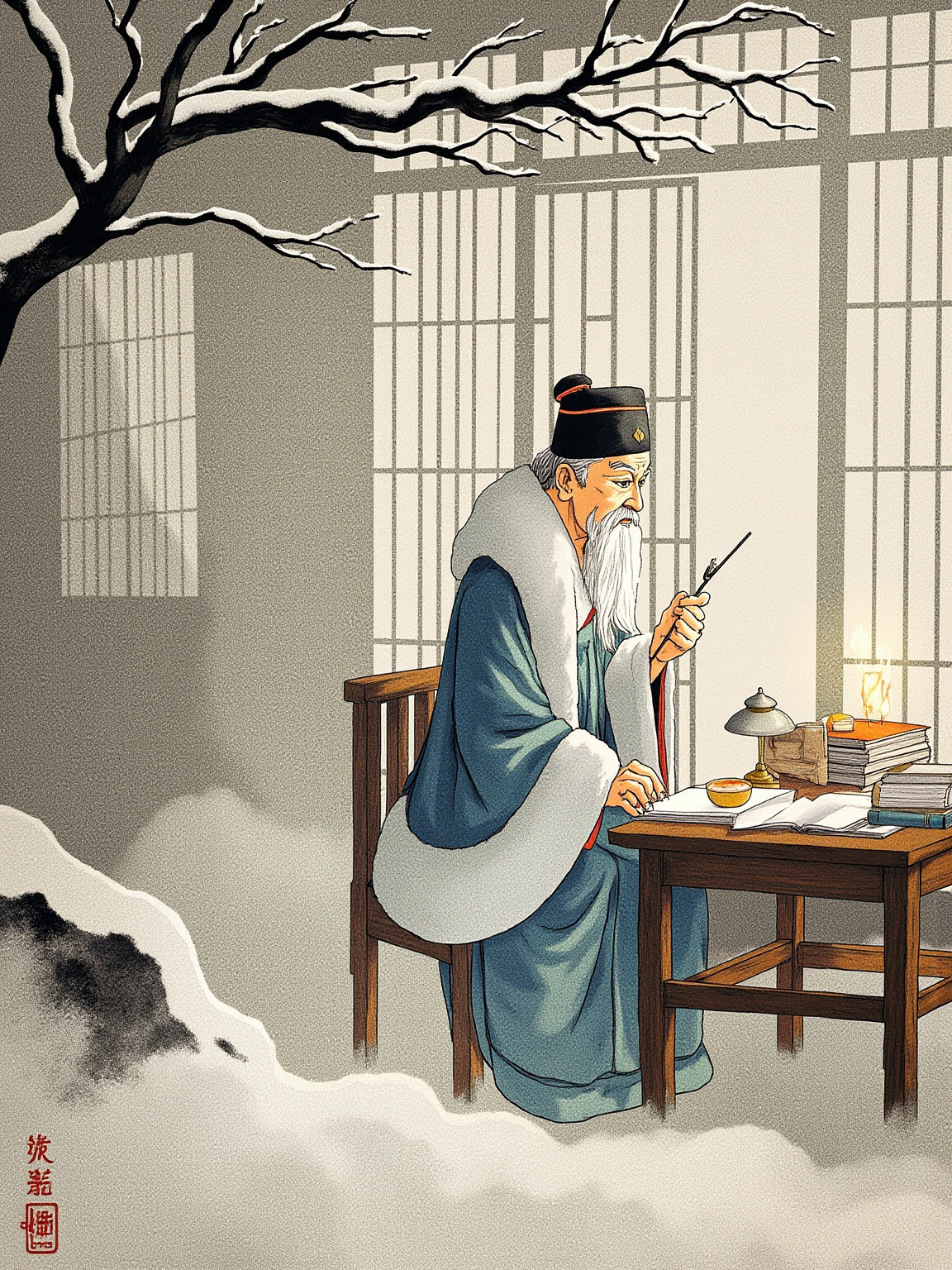
I sit beneath an old scholar-tree at night, lamp in hand, recording only what others have told me.
老槐阴下,灯残人静,但有所闻,辄笔存之。
金句 · 阅微草堂笔记 · 观弈道人自序
What Kind of Book Is This
Notes from the Cottage of Close Scrutiny stands among the high points of Qing-dynasty zhiguai, the genre of brief accounts of the strange. Its author, Ji Yun (courtesy name Xiaolan, sobriquet Shiyun), completed it in the early Jiaqing years, at the turn of the nineteenth century. His grandest official title was chief compiler of the Complete Library of the Four Treasuries, the man who organized the empire's entire body of literature for the throne. That is why the book reads with such odd restraint: a scholar of enormous learning writing about foxes and ghosts, and yet he deliberately holds each entry to three or four lines, like an old editor annotating a manuscript rather than a novelist spinning a story.
It is often paired with Pu Songling's Strange Tales from a Chinese Studio as one of the twin peaks of Qing-dynasty note fiction, though the two run in opposite directions. Strange Tales is lush and yearning, fox spirits falling for young scholars. Notes from the Cottage of Close Scrutiny is cool, sardonic, intent on moral instruction. Both books reach for the same word, fox, but Pu Songling makes your pulse quicken, and Ji Xiaolan sends a chill down your spine, not the chill of a scare, but the chill of seeing human nature too clearly.
The People in the Study, the Visitor at the Window
No single character runs through this book from cover to cover. Ji Yun himself appears only as the narrator, Guanyi Daoren, and he never charges into a story to fight, never falls in love with a fox or a ghost. He does one thing only: sit by the lamp and write down what he has heard. So the real cast is made up of a few recurring types:
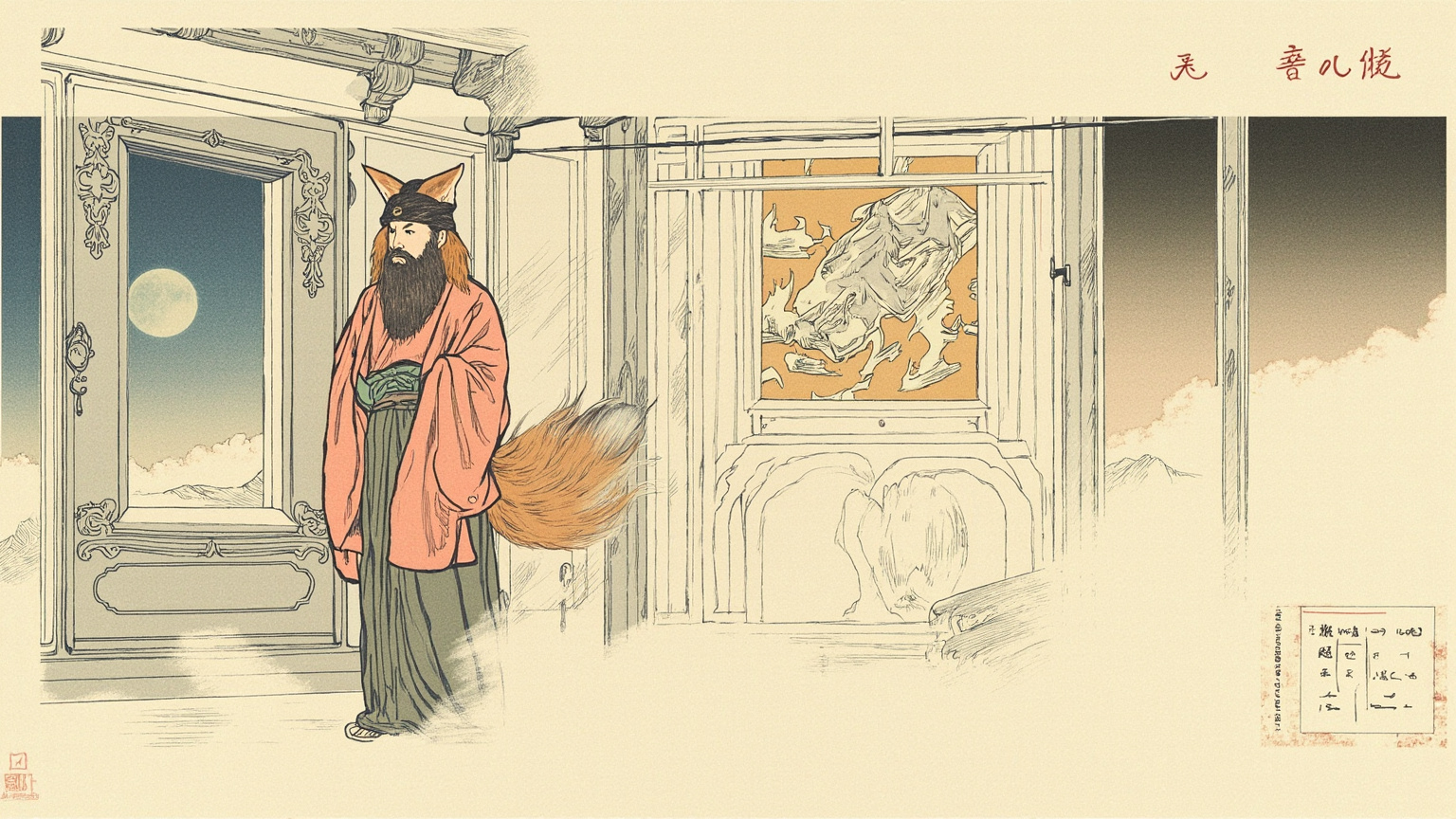
The first type is the old fox scholar. Cultivated for decades, it writes poetry, plays chess, wears a beard and a scholar's cap, and gives itself a name such as Cultivator of Letters. It visits the study by night, sits across from the master over an unfinished game, leaves a poem on the wall, and only the next day does anyone find its den under the withered locust tree in the courtyard. The second type is the wronged ghost, usually a woman who died for her honor or died unjustly in the chaos at the end of the Ming, dignified in bearing, plain in dress, never familiar with the living. She wants one thing only: someone to record her life and carry her grievance forward. The third type is the village schoolteacher, the farmwife, the houseboy, the ordinary people through whose eyes Ji Yun likes to relay a story. Three words, so-and-so said, and the scene comes into focus.
Tales from the Capital Region: The Taste of the Prose
Ji Yun's prose style is the part of this book most worth savoring. Open the first volume, Random Notes at Luanyang to Pass a Summer, and every entry follows the same short form: a line naming who told it, then a hundred or two hundred words of the strange event itself, then a closing phrase, hence I record it. Entry after entry, they read like index cards in an archive.
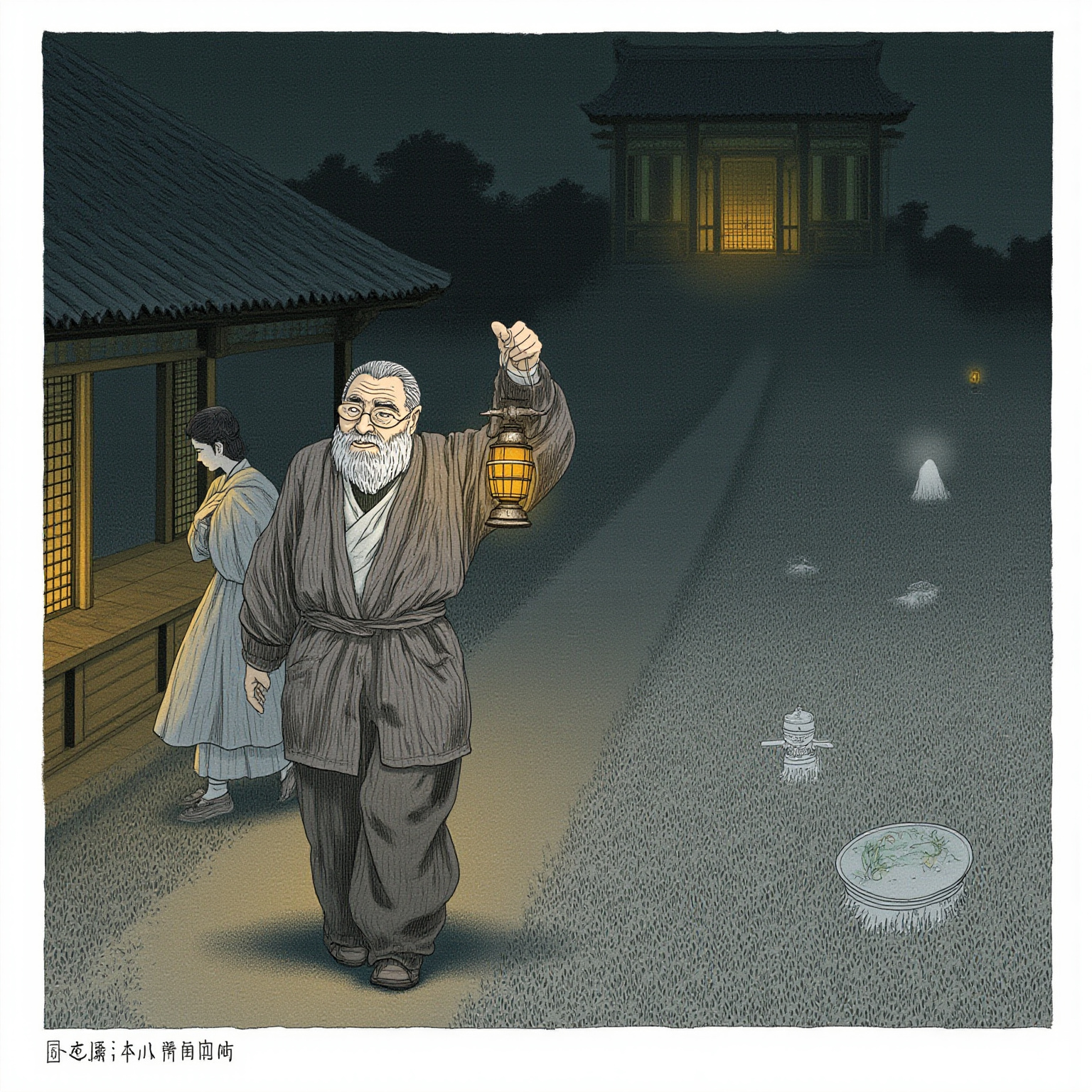
He said; and so I set it down.
某某言……故记之。
金句 · 滦阳消夏录 · 短札笔法
A maidservant in the Hu household sees a fox's shadow at night. A voice speaks up from an old well at the village school. A schoolteacher walking home after dark runs into a woman standing at the edge of a field. None of these stories is complicated on its own: a fox writes poetry, a well makes noise, a widow weeps in the night. What makes Ji Yun formidable is that every entry starts from something concrete, who told it, where, on what night, and never jumps straight to the climax. Read enough of them and you notice he is writing fiction with a historian's method. That instinct came from editing the Complete Library of the Four Treasuries, where every rumor had to carry its source, its credibility, its standpoint, before a quiet judgment was allowed to fall.
A Fox Enters the Study, an Old Scholar Sits Across
The most bookish scene in the whole collection is the night visit of the old fox scholar. Ji Yun tells some version of it more than once: the master is reading by lamplight when someone coughs outside the window. He pushes it open and finds, standing in the moonlight, an old man in a square scholar's cap and a goat's beard, who introduces himself as a failed examination candidate from some district, come to discuss poetry.
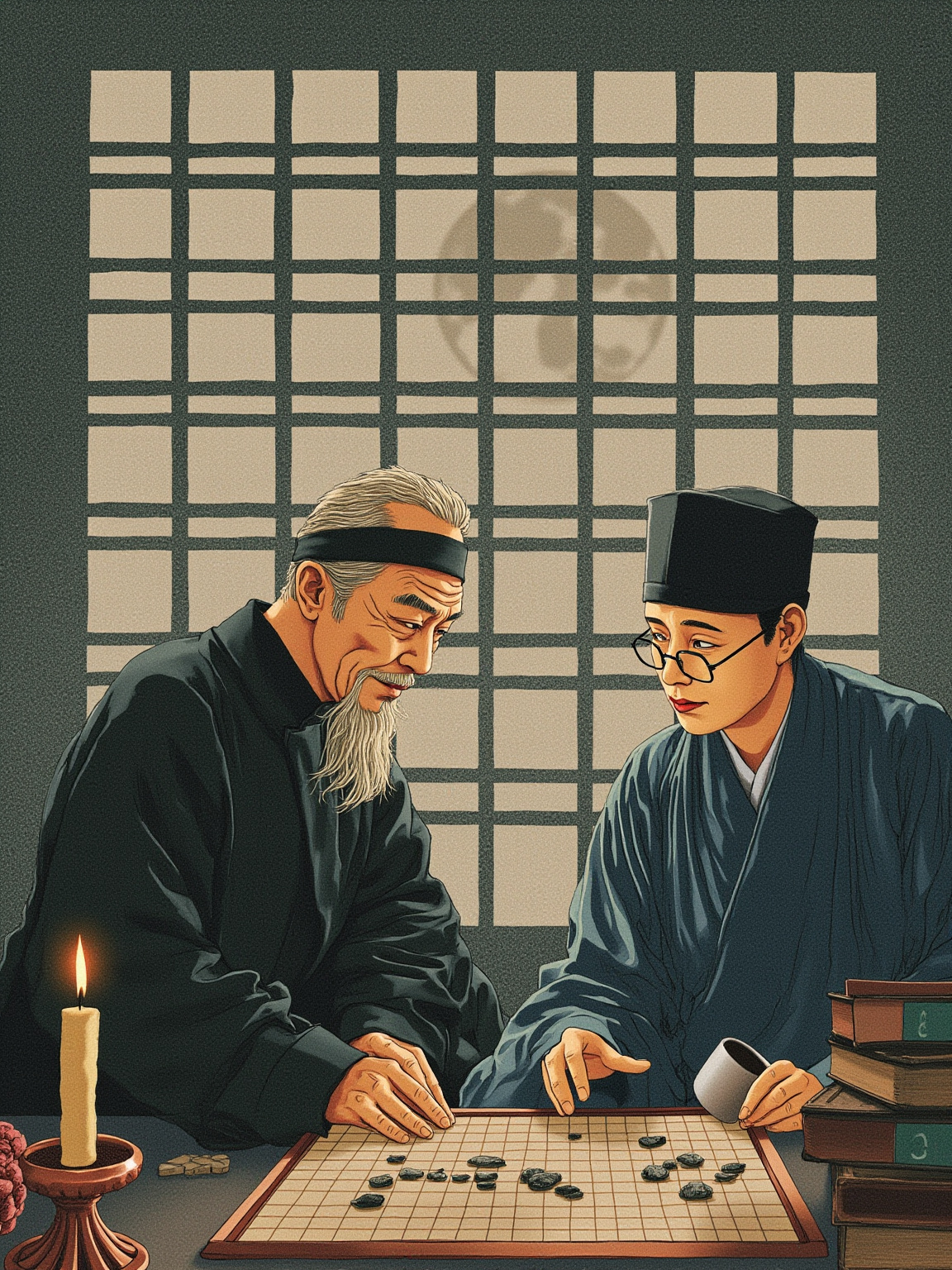
A cough at the window — and there in the moonlight stood an old man in a square cap, who claimed to be a failed scholar come to talk poetry.
窗外忽闻咳声,推窗见一老翁方巾杖履,自称某处落第秀才,来访论诗。
金句 · 如是我闻 · 老狐夜访
They talk across the window and play half a game of chess. The old fox mocks the master for leaning too hard on an allusion in one of his poems, and the master fires back. Before leaving, the fox writes a poem on the wall, and by the time the roosters crow the next morning it is gone. Go looking in the courtyard and you find its den under the roots of the old locust tree. What makes this scene cut deepest is not the fox. It is the way Ji Yun, without raising his voice, gets you asking which one is really the scholar: this fox, or the men who talk of virtue in public and scheme in private.
A Ghost Asks to Be Remembered, a Priest Loses His Nerve
Another thread running under the surface is the ghost who asks for her story to be written down. Women who died for their honor or died wrongly in the fall of the Ming show up at midnight in an old family's abandoned house, dignified, plainly dressed, keeping their distance from the living. She asks for one thing: write my life, carry my grievance out into the world. Once someone does write it, once her short biography actually exists, the ghost never appears again.
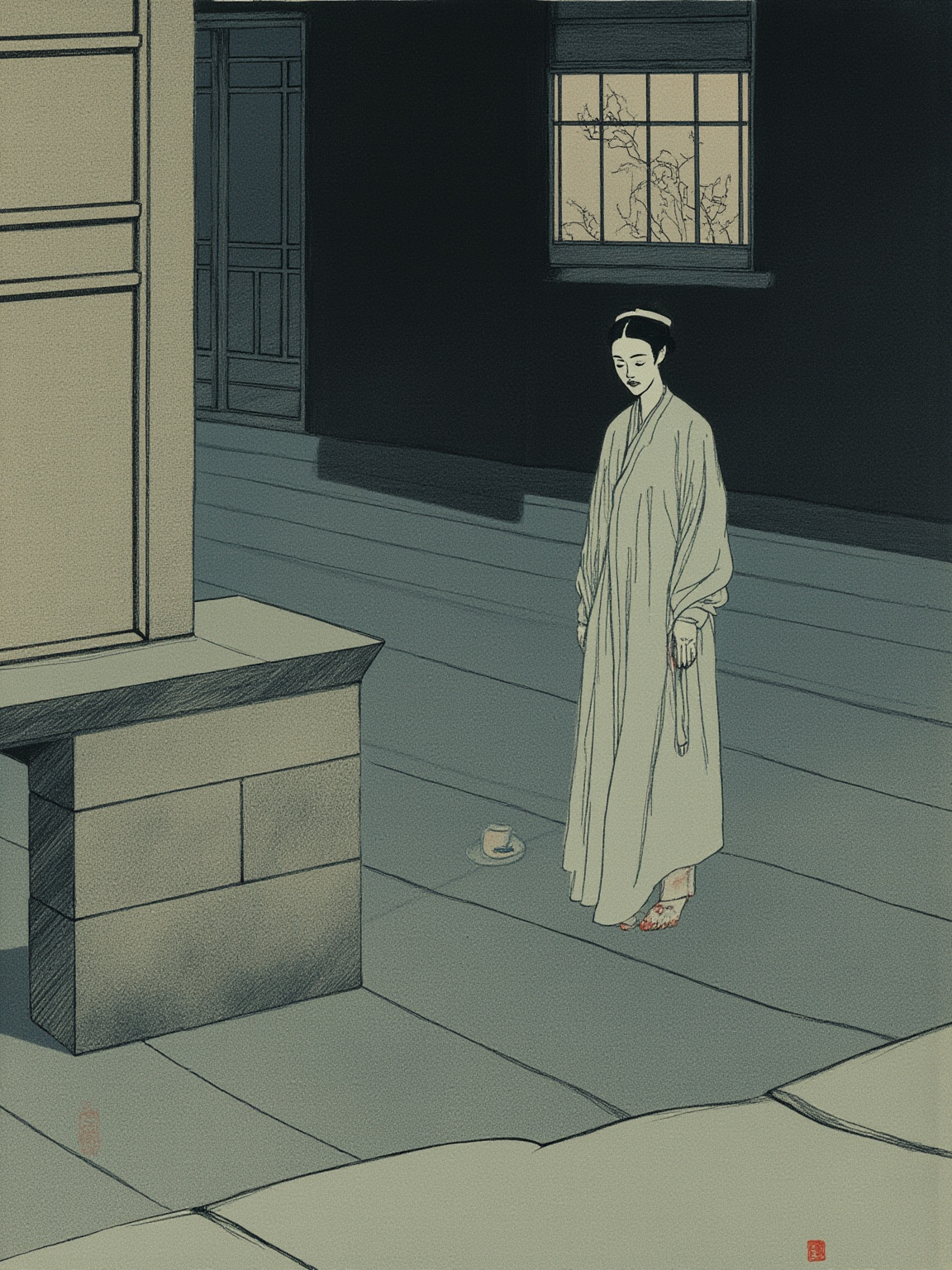
Set against her is a different kind of figure, the wandering priest. In Ji Yun's hands the priest is a portrait of fraud: he claims he can bind ghosts and cut down demons, he raises the altar and performs the rite, and the moment a real strange sound goes off, he bolts for the door. Writing the two side by side, Ji Yun never says a harsh word. All the judgment sits in what he leaves unsaid. That is why later readers call this scholar's fiction: he does not need to criticize the age directly. Putting one real ghost and one fake priest in the same night is enough.
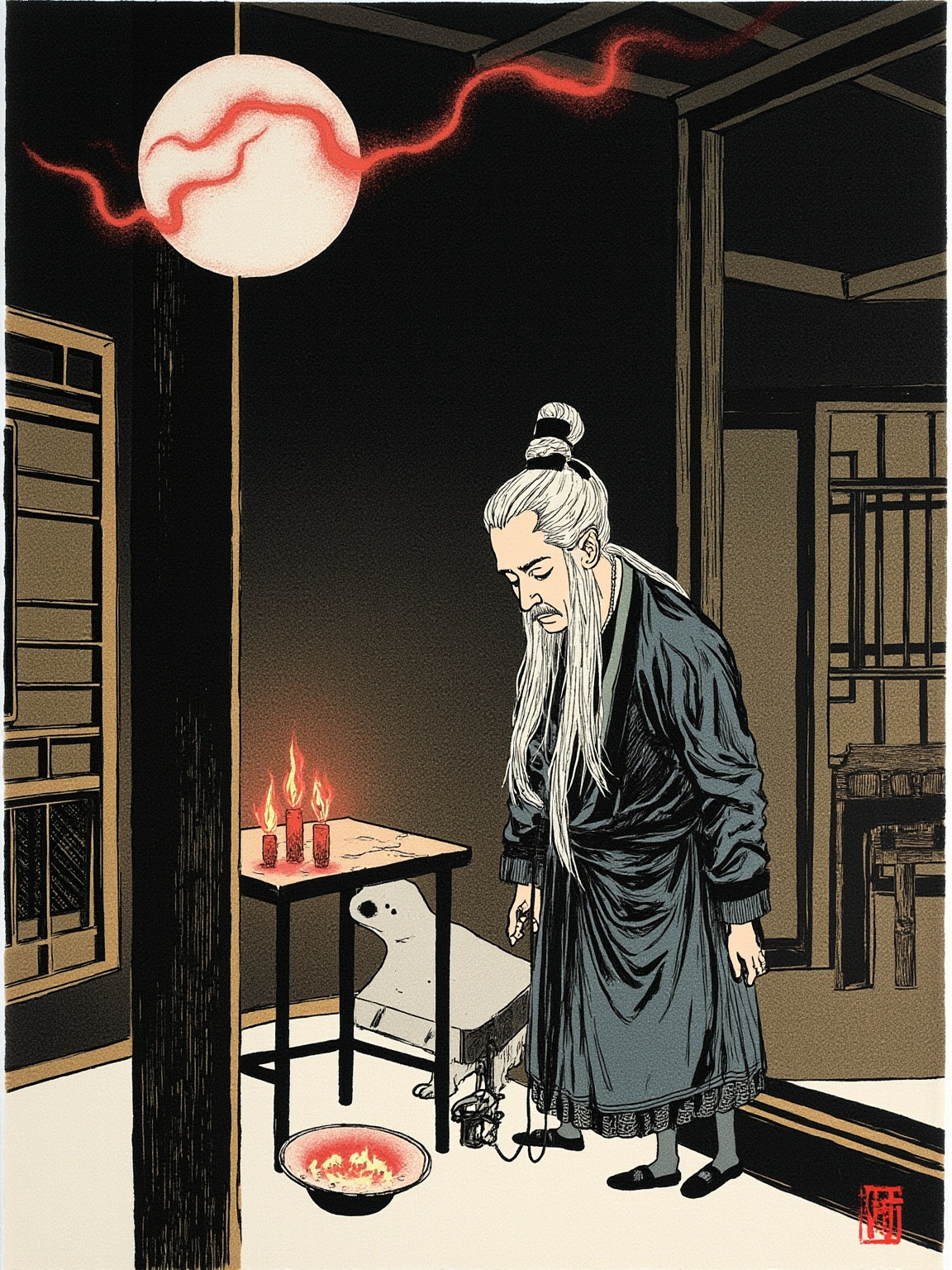
The Daoist had raised his altar, performed his rites — and at the first strange sound, fled out the door.
道士立坛作法,符咒方毕,怪声一作,夺门疾走。
金句 · 槐西杂志 · 道士失态
Retribution Lands in This Life
The part of this book with the most spine is its sense of cause and effect, and every debt comes due in this life. Save someone, and your own life is extended. Abuse someone, and you bring about your own ruin. A family that drowns infant girls sees its line die out within three generations. Someone who betrays love pays for it himself, or his children pay it for him.
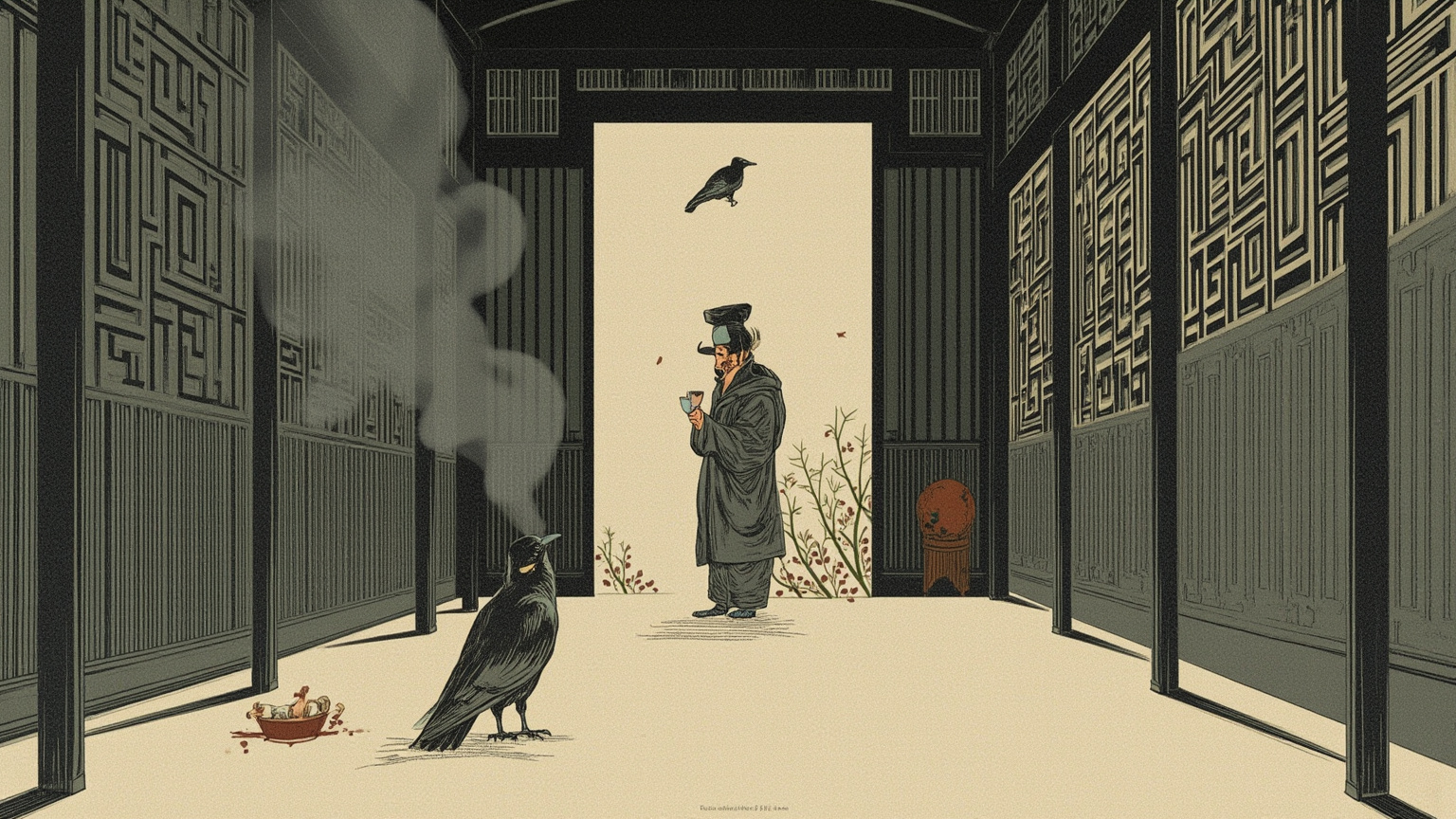
Those who save others shall have their years lengthened; those who cruelly destroy shall perish by their own hand.
救人者得福延年,虐人者自取其祸,天道好还,毫厘不爽。
金句 · 姑妄听之 · 因果现世
Ji Yun's cause and effect has nothing to do with the underworld courts or Yama's judgment. The retribution lands directly on the wrongdoer or the wrongdoer's family. That is what makes it cut so close: you are not hearing about a trial after death, you are watching today's cruelty come due tomorrow, at the dinner table, on the pillow, on a grandchild's face. Mothers-in-law who abuse their daughters-in-law, families who drown baby girls, fortune-tellers who swindle for cash, corrupt officials who twist the law: he turns the whole social fabric of his time inside out, using fox and ghost stories to do it. This is his sharpest instrument, and it is the place where this book looks least like Strange Tales.
Strange Tales quickens the pulse; Notes from the Cottage of Close Scrutiny stops the heart — the same word, fox, carries an entirely different weight in each book.
Ming Loyalists and the Verdict of History
The final volume, a sequel of notes gathered at Luanyang, collects material added in the early Jiaqing years. The entries run longer here, and the mood turns heavier. Ji Yun uses the afterlife stories of Ming loyalist officials and reclusive survivors of the old dynasty to let ghosts and spirits argue about loyalty and how an age changes underneath people. Who really counts as a martyr for the fallen dynasty? Who is a genuine loyalist in exile? What history decides and what the villages remember are often decades apart.
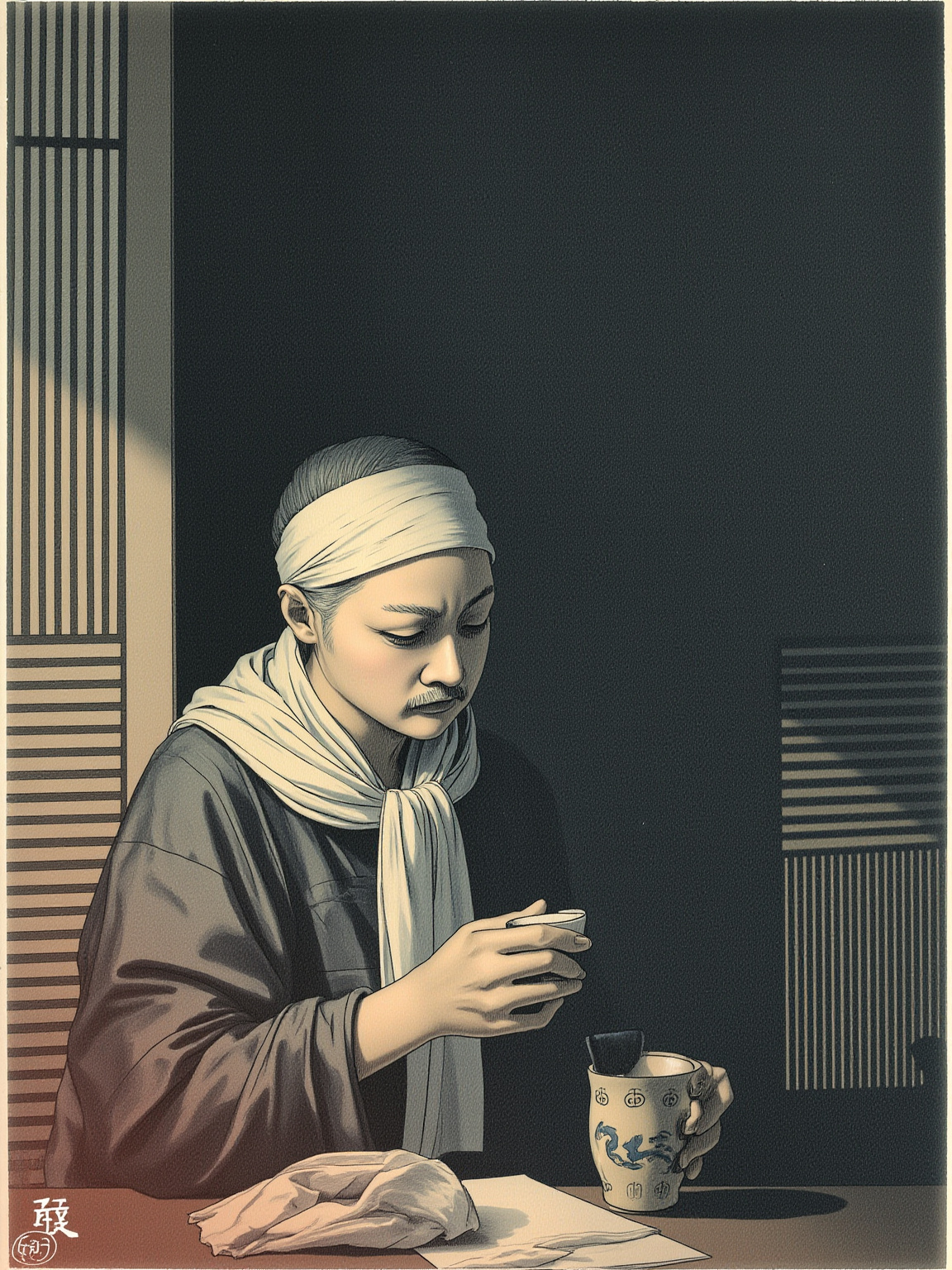
By ghost-light and fox-tongue, the judgments of a vanished age are weighed once more.
借鬼神口吻,重论前朝忠佞;狐鬼之议,即士林之评也。
金句 · 滦阳续录 · 明季遗事
This section is the hardest to write and shows the most skill. Ji Yun was around eighty by then, often ill, working by lamplight from memory. The Ming-era material he sets down is really his grandparents' generation's memory, the stories he heard from elders as a child, argued through again in the mouths of ghosts and spirits. In the end, Notes from the Cottage of Close Scrutiny is more than a collection of fox-and-ghost morality tales. It is a spiritual history of the scholar-official class, written in the form of a note-book.
Why It Is Remembered
Three reasons are enough to explain why later readers keep coming back to it. First, it is a classic no one can skip in the Chinese tradition of tales of the strange. Try to leave out Qing-dynasty note fiction, and you cannot leave out Ji Xiaolan. Second, it offers a model working in the opposite direction from Strange Tales: cool, sardonic, morally instructive, restrained. If you want the template for a short strange tale written in a scholar's hand, this is it. Third, it left everyone who came after with a mine of material to draw on: the northern study, the moonlit ruined house, the rim of an old well, a fox's den under a locust tree's roots, an inn along the post road. Every scene is brief and self-contained, and every one is naturally suited to being drawn.
Why It Is Still Worth Reading Once You Know the Plot
So the ten-minute explainer stops here. For the rest, carry a lamp of your own, sit down under that old locust tree, and open the book.
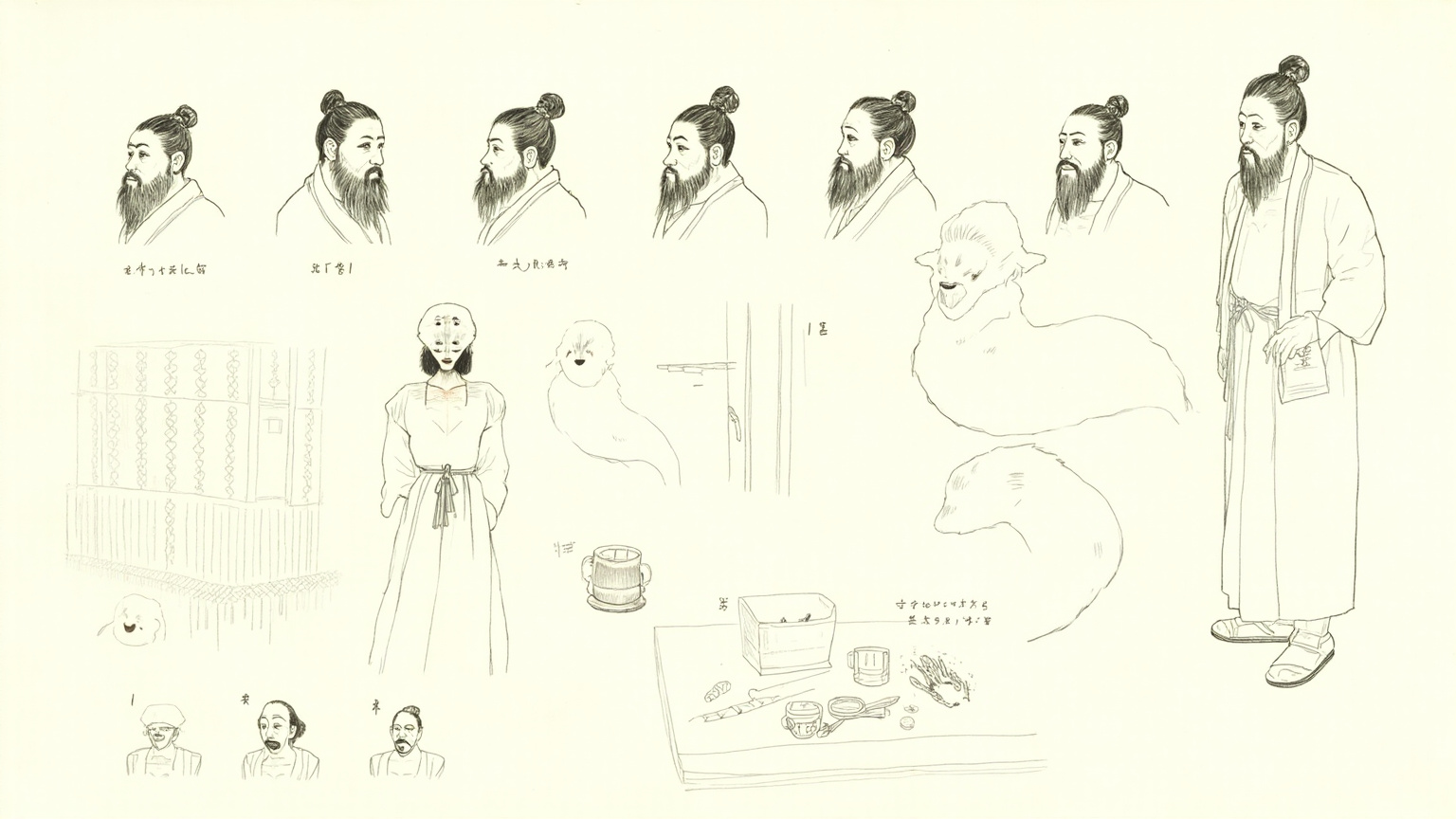
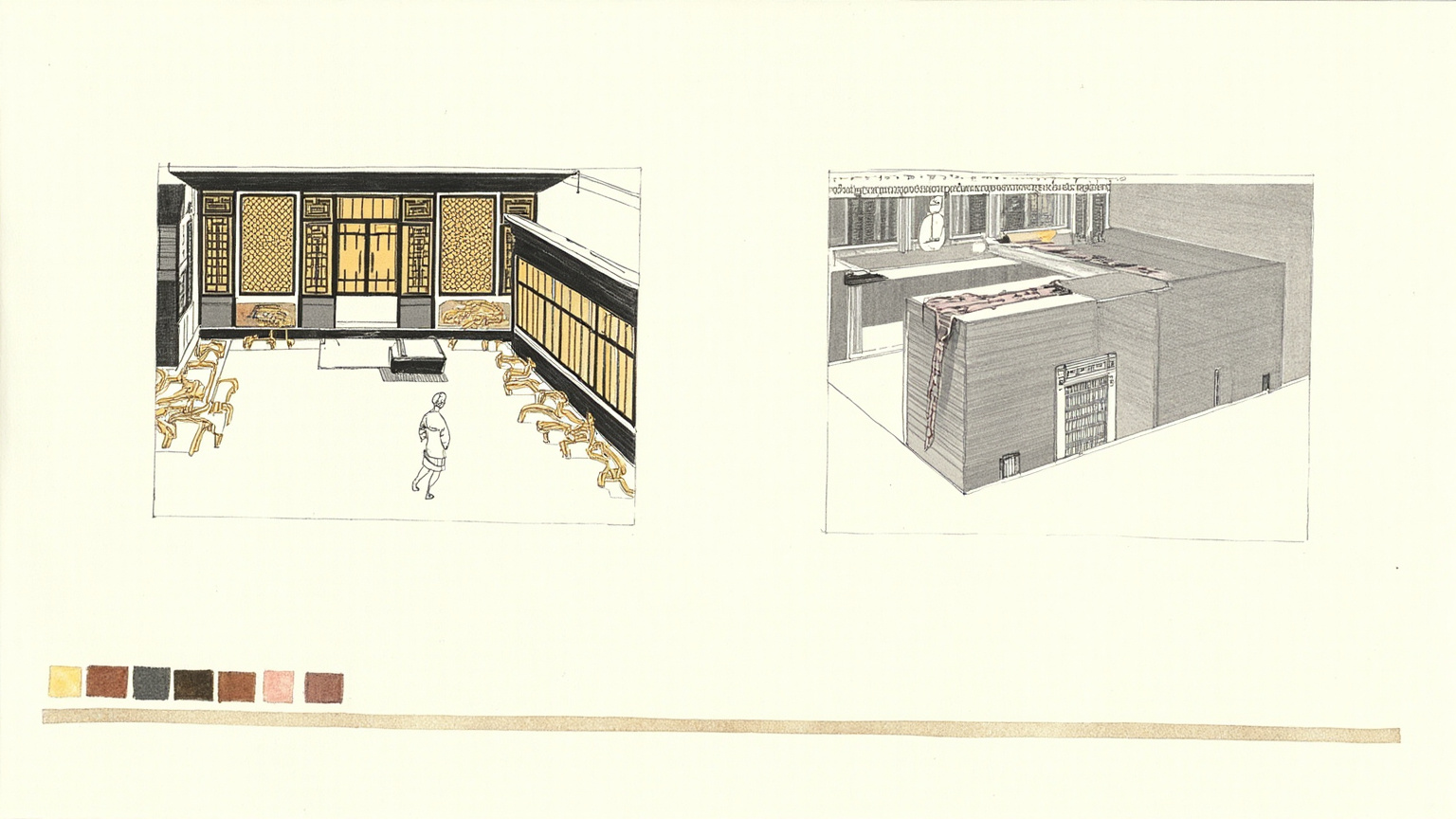
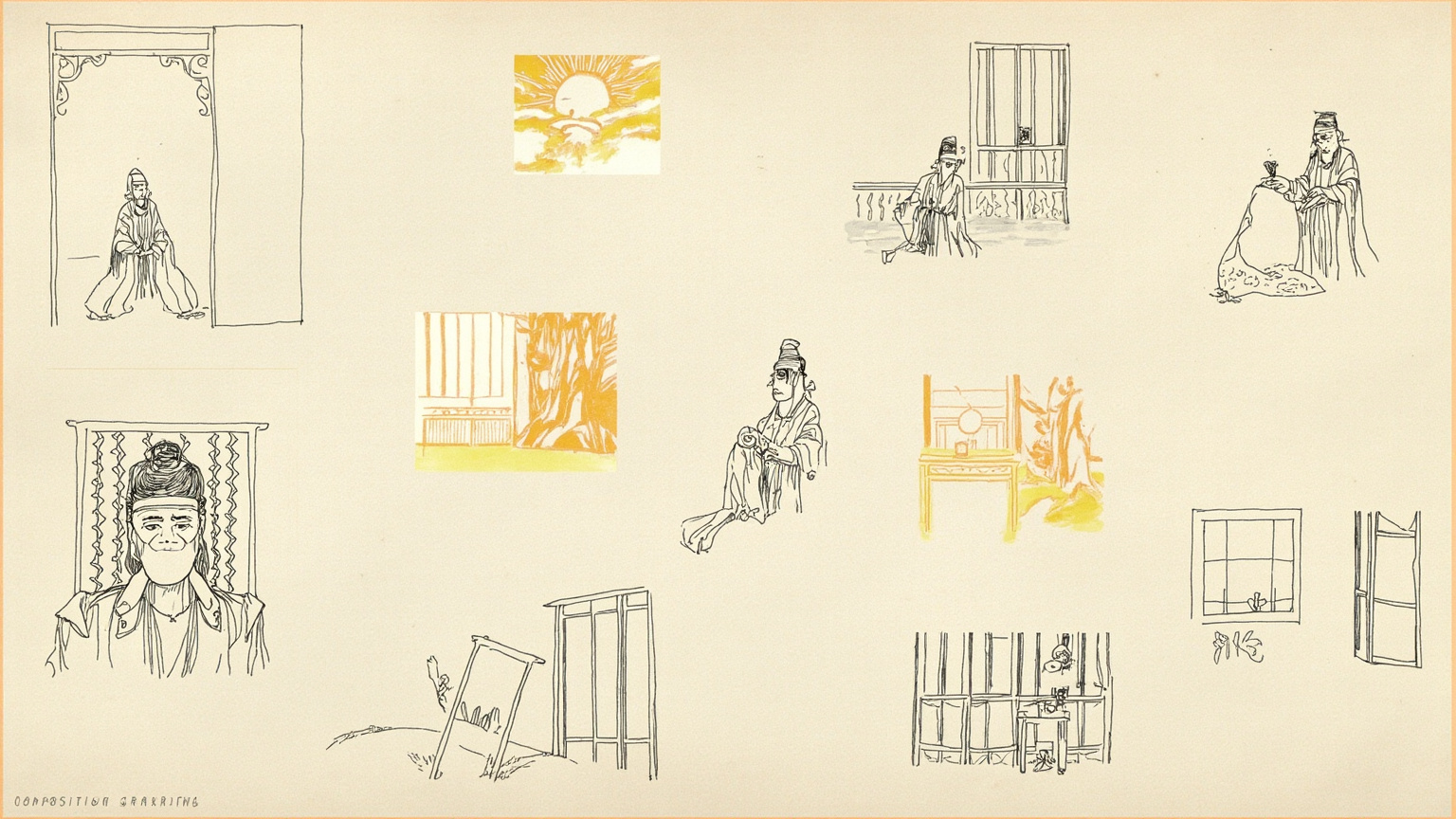
Art Direction4 plates
Before the guide was written, this book got a visual foundation — every illustration you just read grew out of it.