Yusuf and Zulaikha (Yūsuf u Zulaykhā) · Companion Guide
优素福与佐列哈
一位埃及贵妇隔着一道又一道紧闭的宫门,追逐一个从不回头的少年——她以为他在里面,其实她在追那束从他身上漏出来的光。
Opening: A Courtship That Shuts Doors and Cries Itself Blind
In a hall of seven doors, every one of them slams shut the moment she moves closer. For decades she reaches for a back that will not turn — and by the time it finally does, she has wasted to bone and wept herself blind. This is Jami's Zulaikha: an Egyptian minister's wife who turned her love for a servant into a lifetime of penance.
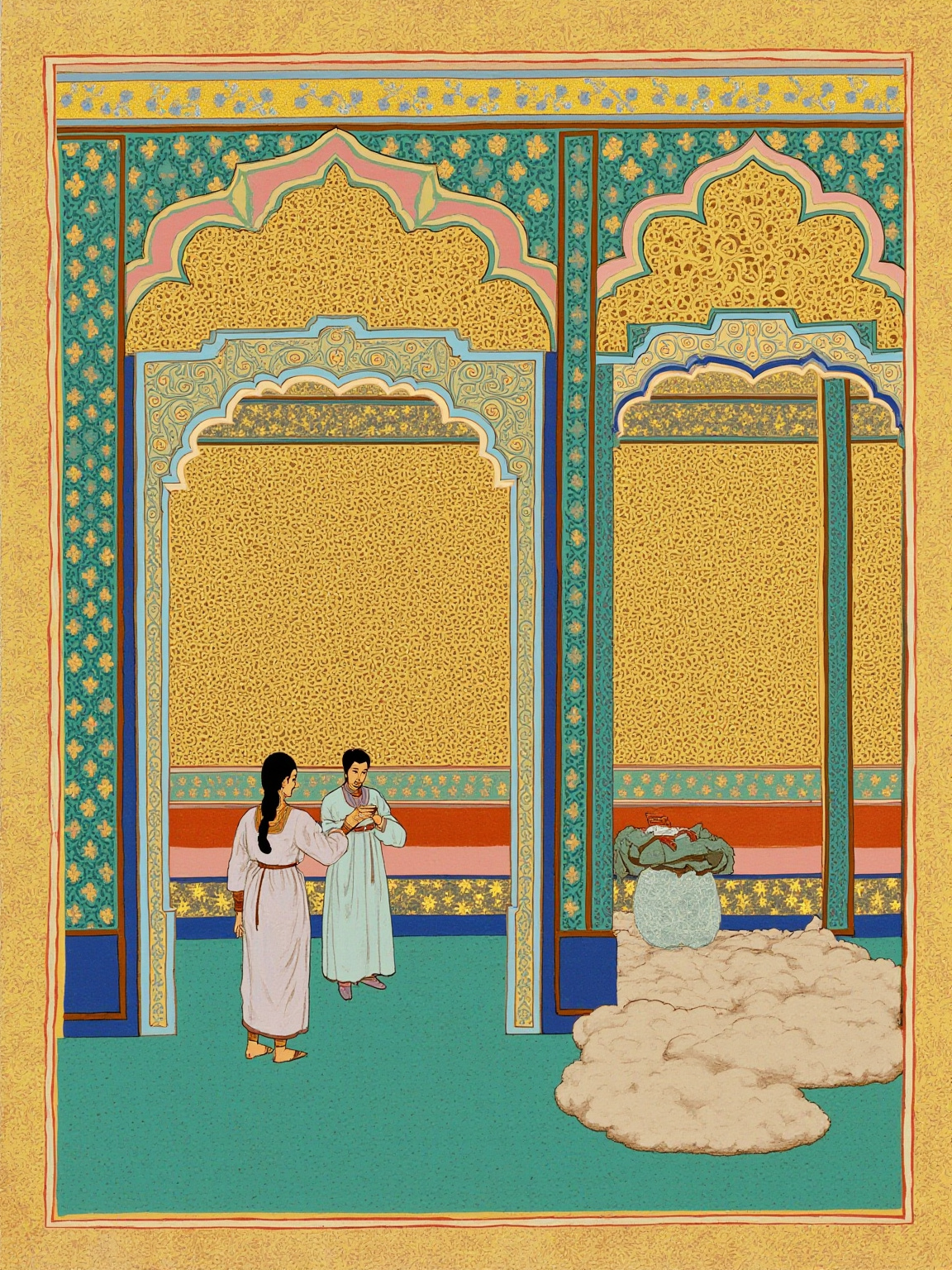
Every door that stood between her and him, she came to know by heart—and every one of them fell shut upon her hands.
她与他之间那一道又一道的门,她终其一生都用手去叩;每一道,都在她指尖下砰然落下。
金句 · 开场 · 七重门厅的求爱
What This Book Is
Jami, a fifteenth-century Sufi poet from Herat, taught disciples across Central and South Asia. In the early 1480s he finished the fifth of the seven narrative poems in his cycle Haft Awrang, The Seven Thrones — the one that closed out the set. Its subject, Yusuf and Zulaikha, is old ground shared by the Quran and the Bible: a young man of unbearable beauty is sold into Egypt by his brothers, and the mistress of the house spends her fortune, her sanity, and her old age wanting him.
What made it endure was never novelty of plot. What Jami actually did was take a story every Persian listener already knew and thread it through a precise Sufi poetics: earthly love stripped down, layer by layer, torn open, raised a rung at a time, until it arrives at divine love. Persian miniature painters kept returning to it for four centuries afterward — Behzad's celebrated Seduction of Yusuf illustrates this very poem.
The Cast and the World
There are only two principals. Yusuf is the favorite son of his father Jacob — also a prophet — and beautiful beyond measure, but Jami's beauty is not about the surface. It is a light that shines straight through whoever looks at it: what floors Zulaikha is, at bottom, divine beauty made visible before her eyes. Wikipedia says it outright — in this poem Yusuf is a flat character. He is a mirror, not a man.
Zulaikha is where the real weight sits. She is the wife of the Egyptian minister al-Aziz (the Quran's name for Potiphar), introduced at the height of her youth and beauty, in a house stacked with gold. The year she buys Yusuf is the summit of her life; every year after goes into chasing a young man who will not turn around — and the chase itself becomes her discipline.
The Opening and the Fall of Sacred Beauty
The poem opens with no story at all, only a hymn of praise to God. Jami's Sufi method sets everything that follows under a divine name before it begins — which means every scene to come has to be read inside that light.
Then Yusuf enters. He is Jacob's favorite, the youngest son, born with a face no one forgets. That face is what draws his brothers' envy, what gets him seized by a caravan, what sets a market full of hands bidding against each other — the moment sacred beauty is recognized by worldly eyes is the same moment the hunt for it begins.
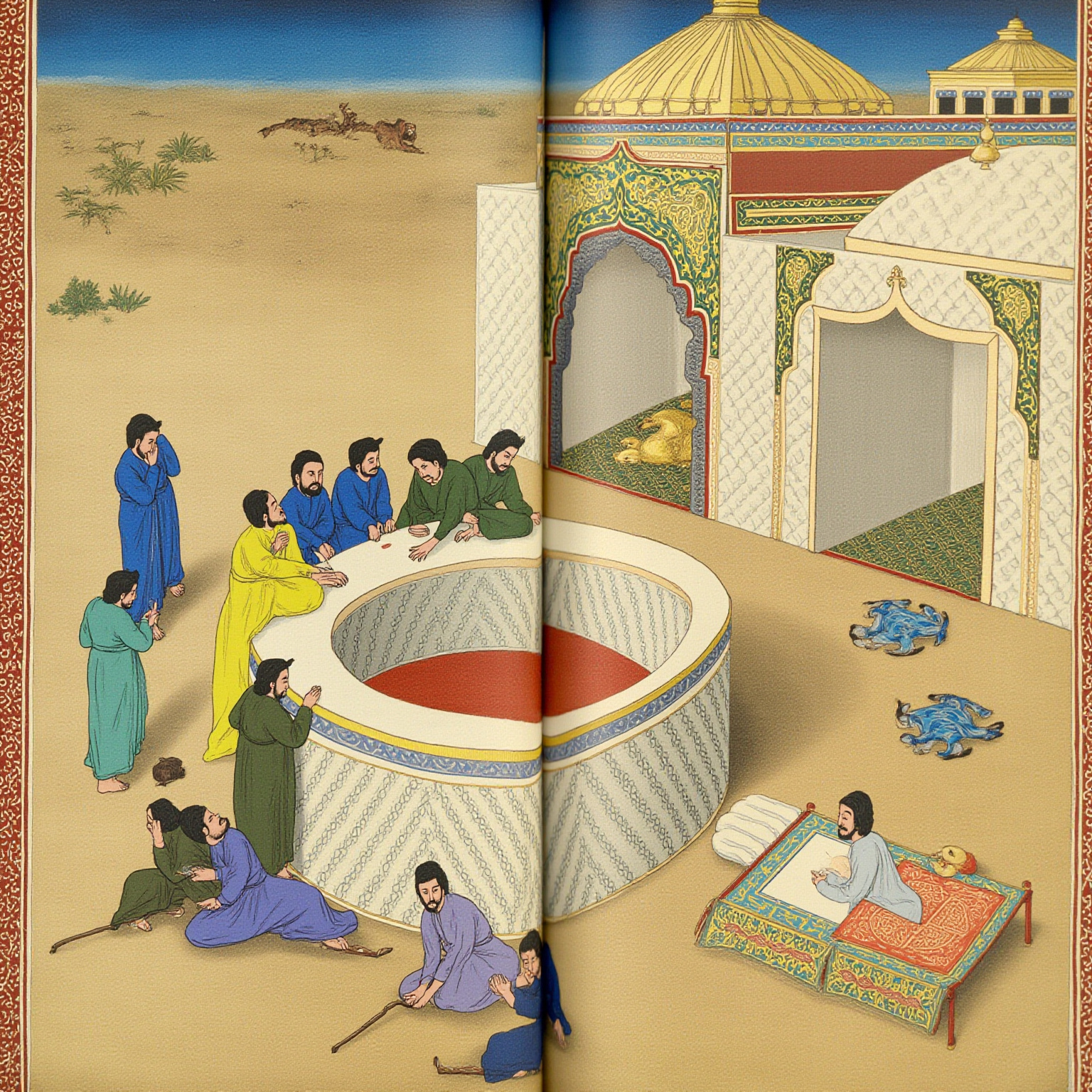
A light walked into the slave market that morning, and no one in the crowd knew what they were bidding for.
那一日清晨走进奴隶市场的,是一束光——举牌争抢的人,没有一个知道自己抬价抬的是什么。
金句 · 圣美的坠落 · 优素福登场
That Glance in the Slave Market
Yusuf is sold in the slave market at Egypt. Zulaikha looks up out of the crowd, sees him, and spends everything she has to buy him on the spot. What makes Jami's telling work is what he leaves out — no bidding, no swoon — he gives us only those few steps after the market empties, when she carries the young man through the palace gate. She thinks she has brought home a servant. What she has actually brought home is a problem she will not solve for the rest of her life.
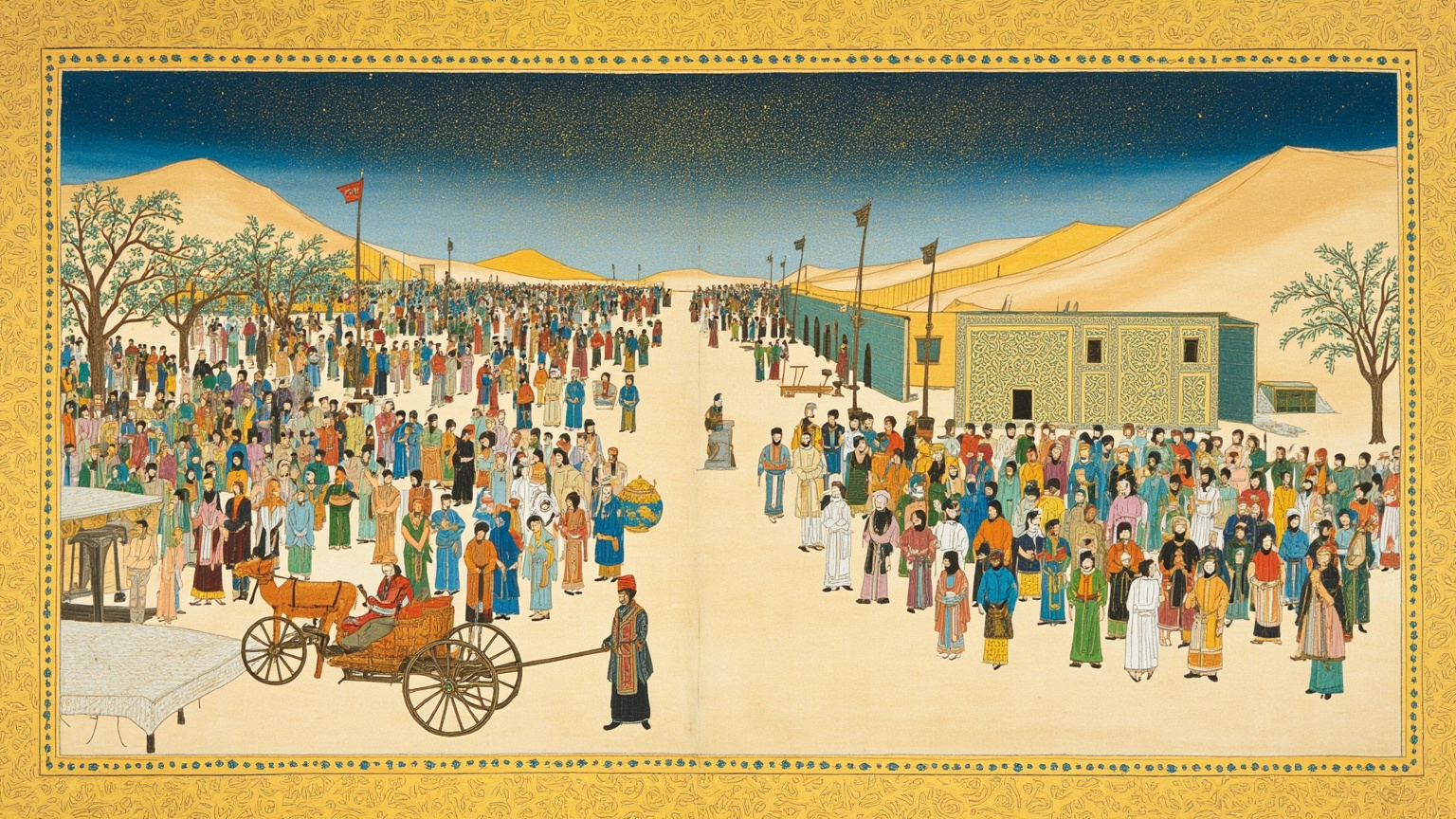
She thought she had bought a servant; what she carried home through the gates was her own undoing.
她以为带回来一个仆人;穿过宫门的那几步,她抱进怀里的是自己的劫数。
金句 · 奴隶市场的那一瞥 · 买归
The Seven-Doored Hall: The Palace of the Heart Made Visible
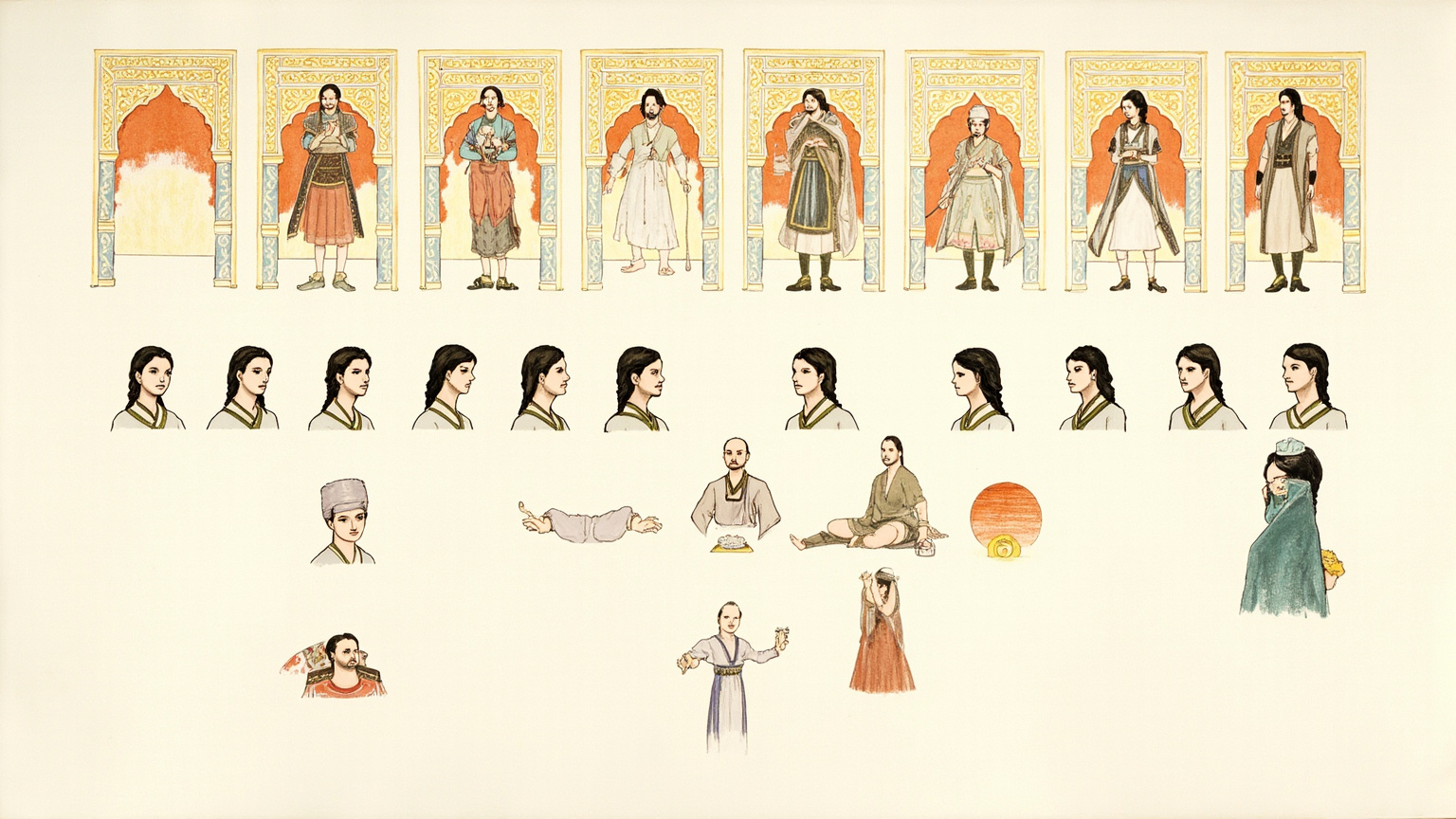
Zulaikha's palace is the central image of the whole poem. Jami builds it as a hall of seven doors, panel after painted panel, carpets of gold and lapis-blue scrollwork. Every door slams shut the moment she moves toward Yusuf — and this is not the usual push-and-pull of courtship. It is the Sufi palace of the heart: each door is a layer of the self being stripped away, and she has to pass through seven of them before she can stand in front of the mirror.
This is the passage Persian miniature painters loved most. They did not paint torn garments, seduction, any of the erotic scenes — they painted shut doors, empty corridors, a figure standing outside with its back turned. Only someone who knows what they are looking at can see that what is locked behind those doors is Zulaikha, stripped down one layer at a time.
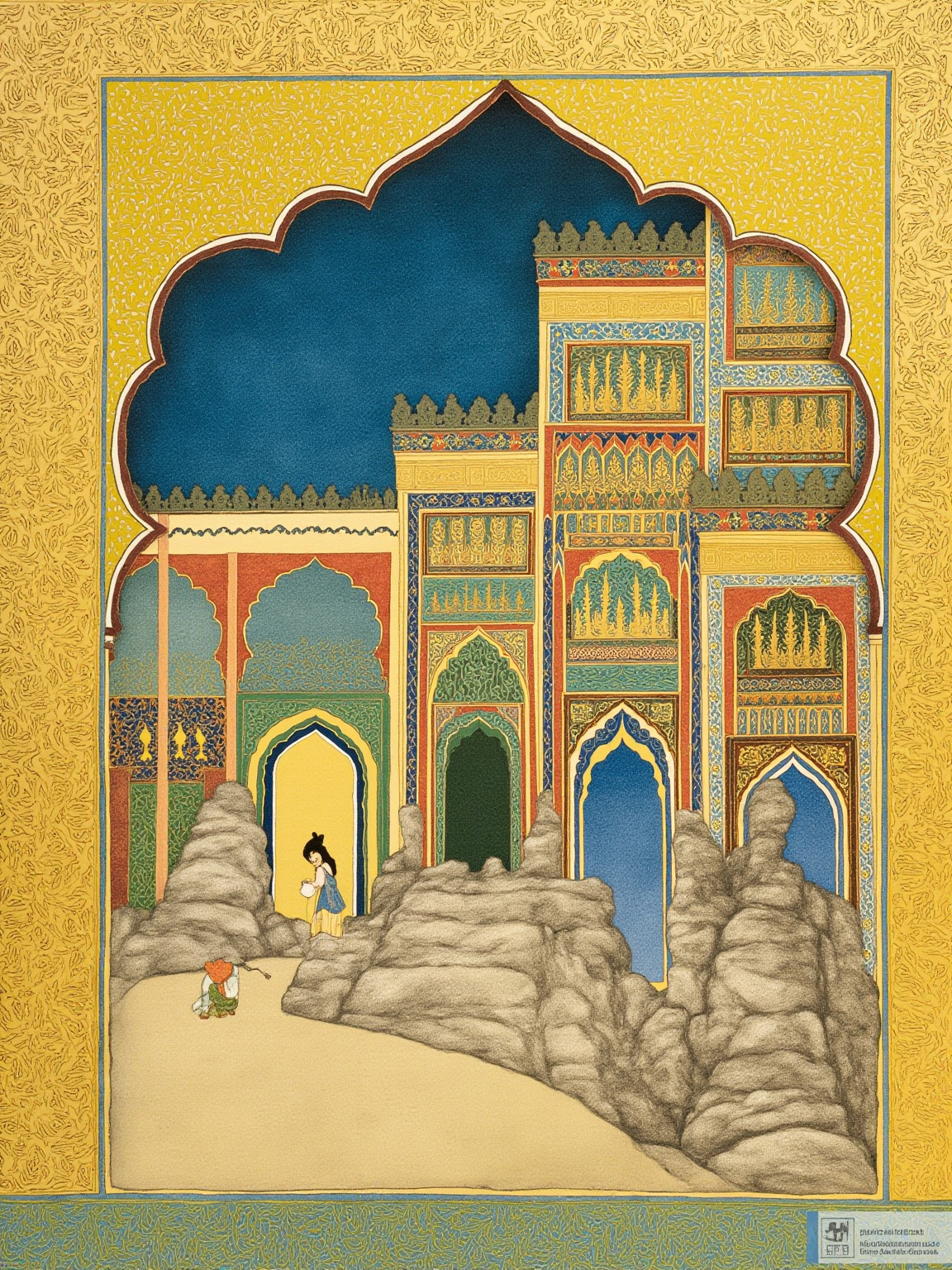
Seven doors, seven painted panels, and the one she chased never once turned his face to her.
七重门厅,七面彩绘镶板——她追了一辈子的那个背影,从未回过一次头。
金句 · 七重门厅 · 心殿的具象
The Temptation, the Prison, and Pharaoh's Dream
Zulaikha finally loses her composure and declares herself to Yusuf. Word gets out, al-Aziz finds out, and Yusuf is thrown into prison. Jami does not write her as a woman who simply failed and fell — she is someone shot through by the very light she has been chasing, and from here on she carries that debt through the palace.
In prison Yusuf interprets Pharaoh's dream and is raised to treasurer, moving into a world she can no longer reach. Zulaikha, widowed after al-Aziz dies, stays behind in the empty palace, waiting year after year while her sight fails year after year. This is the poem's real turn: her pursuit of the young man starts shedding its earthly love, and once she is blind she starts seeing what her eyes never could — divine love slowly taking shape inside that wasted body.
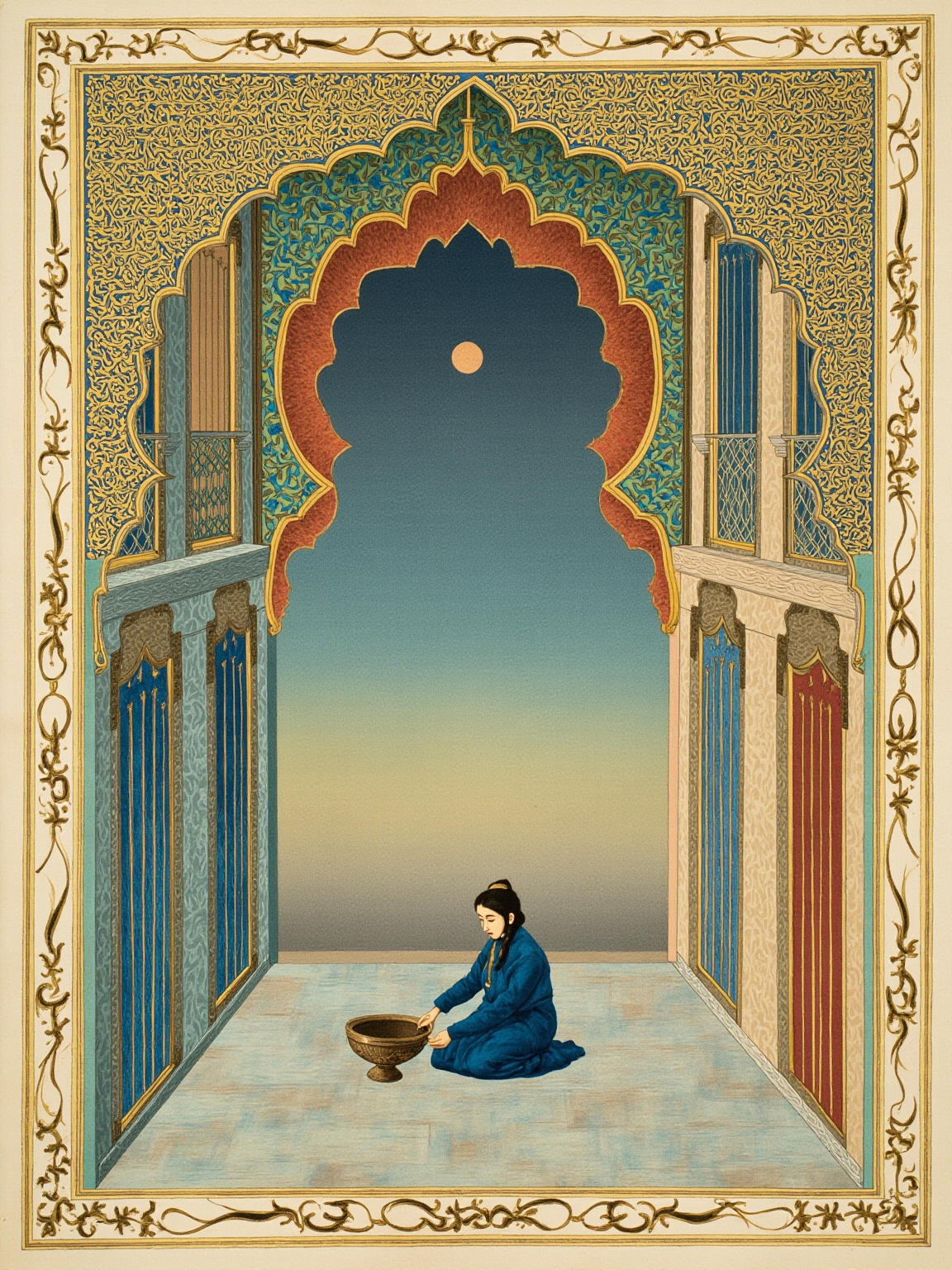
Blind now, and the palace empty, she kept waiting—her eyes had failed before her hope did.
眼已盲,宫已空,她还在等——是希望比眼睛更晚才闭上。
金句 · 诱惑、狱中与守寡 · 关键转折
The Reunion Only Jami Gives Her
When Yusuf comes back to the palace, the woman he finds is not the one who looked up at him in the market — she is wasted to bone, long since blind. He takes her in his arms and prays to God. A blessing comes down, Zulaikha's youth and beauty return, and the two marry and grow old together.
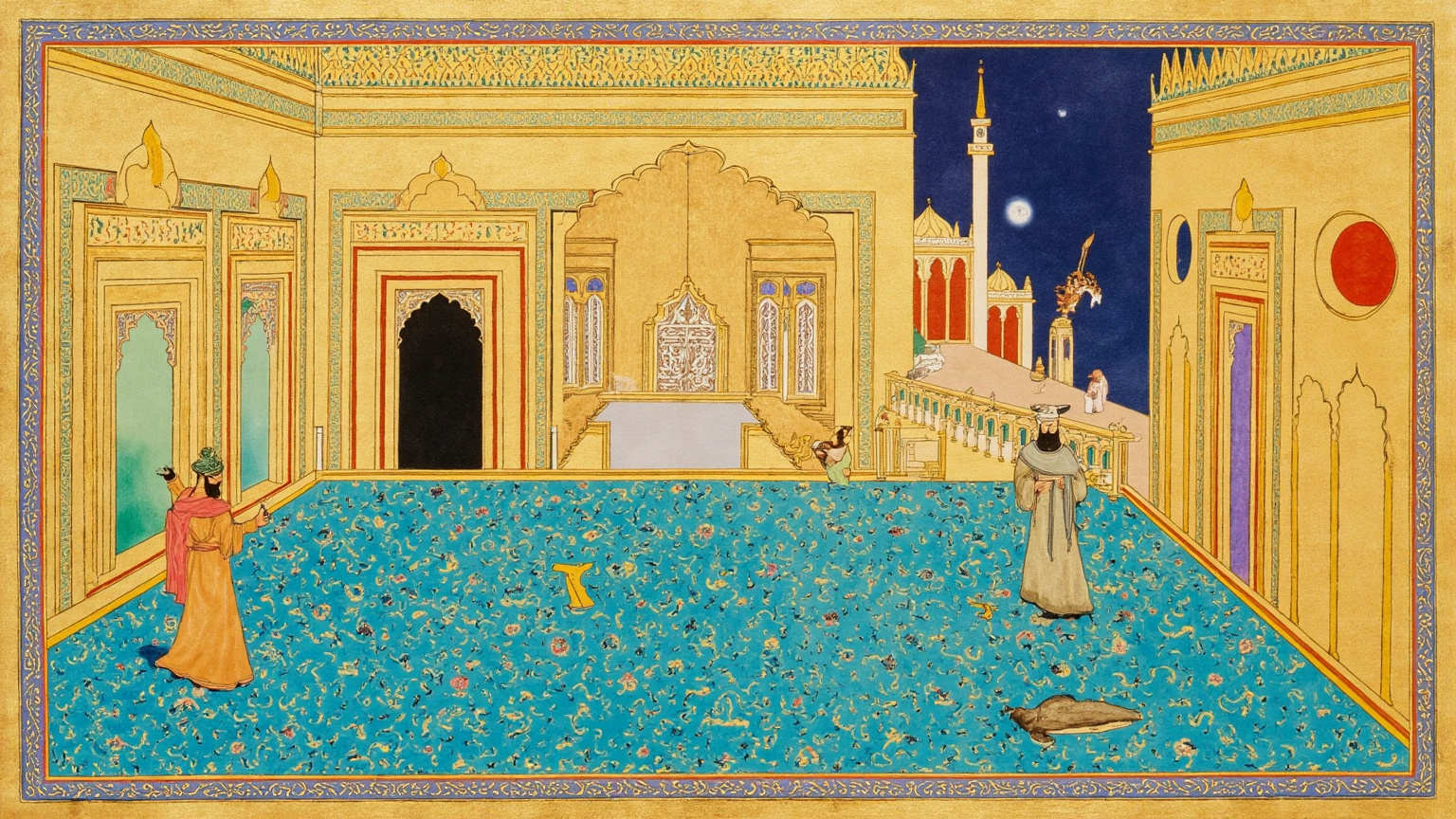
He lifted her into his arms and prayed; heaven answered by giving back the beauty grief had spent.
他把她抱进怀里,举手向真——哀痛耗尽的容颜,竟由天上亲手归还。
金句 · 贾米独有的团圆 · 诗学收束
This scene belongs to Jami alone. Neither the Quran nor the Bible gives Zulaikha this reunion. It is not a happy ending tacked on for comfort — it is where the whole poem's argument resolves: once Zulaikha's earthly love has burned down to nothing, God himself recasts it as another kind of love.
What It Is Actually Saying
On the surface this looks like an old story retold. Underneath, Jami has rewritten a subject shared by the Quran and the Bible into a visible demonstration of Sufi poetics — how love climbs, layer by layer, from the earthly to the divine. What Zulaikha is chasing when she chases Yusuf is, at bottom, divine beauty made visible before her. Wikipedia puts it plainly: Zulaikha's courtship of Yusuf is, in essence, a courtship and pursuit of God.
The young man Zulaikha spent decades chasing was never the young man himself — she was chasing the light that leaked out of him.
Jami's placement of it at the close of Haft Awrang is deliberate: the whole cycle is about love climbing rung by rung, and here it takes the most familiar love story there is and folds the entire argument into one visible marriage. That is exactly why the poem became a favorite subject for Persian miniature painters — what they were painting was never a harem intrigue. It was that light.
You Know the Plot. So Why Read the Poem Itself?
Because a companion guide is only ever a map. It can mark the seven-doored hall, the well, Pharaoh's dream — what it cannot mark is the weight of Jami's thousand-plus couplets landing on your ear, the way a Persian masnavi's rhythm pushes you forward wave after wave, the density of Quranic imagery and Sufi terms twisted together inside a single line, the line every few pages that stops you cold. You have heard Zulaikha's story now. You have not yet heard how Jami makes her weep herself blind — and that is the part this poem actually wants you to receive.
Art Direction4 plates
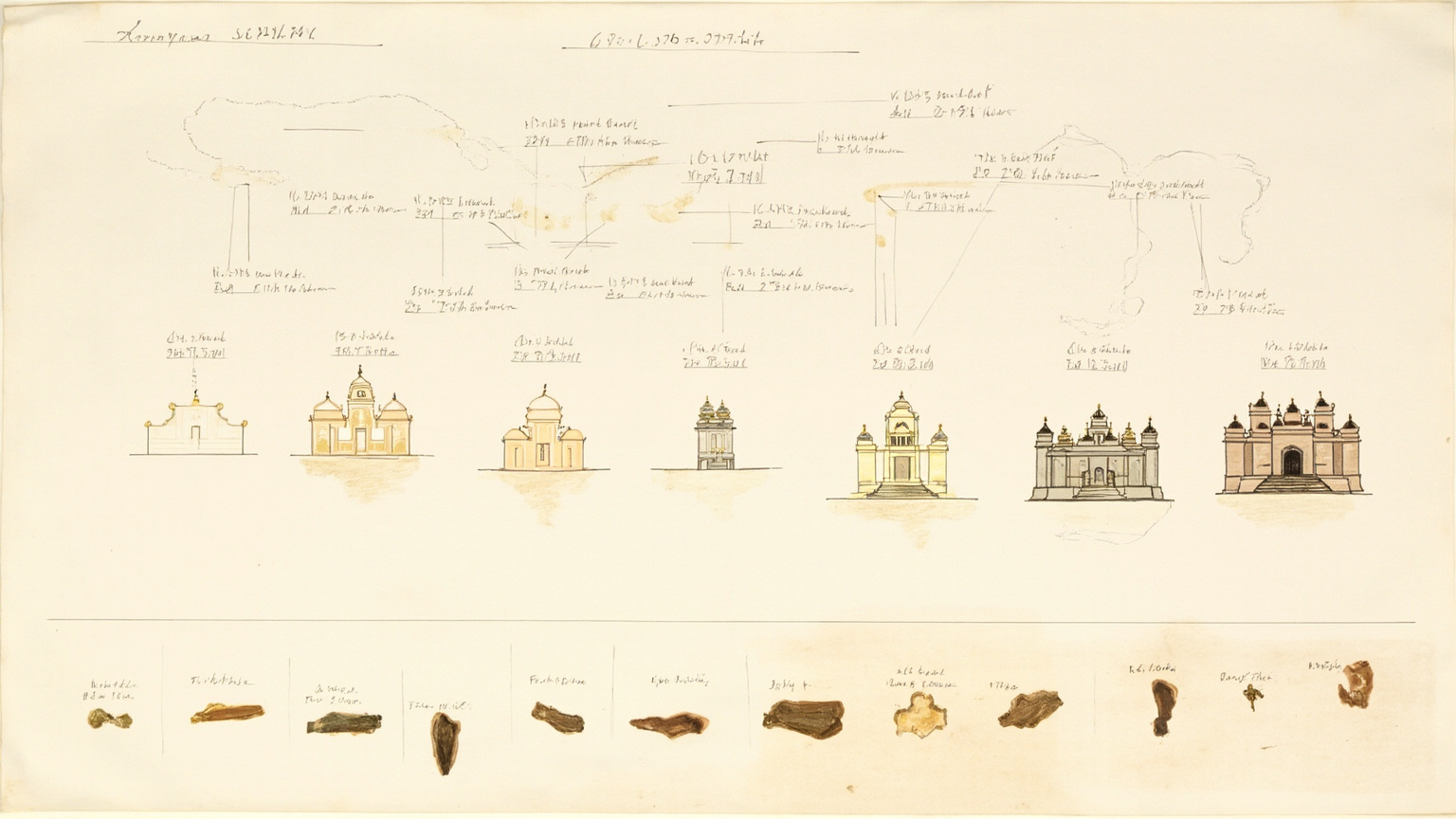
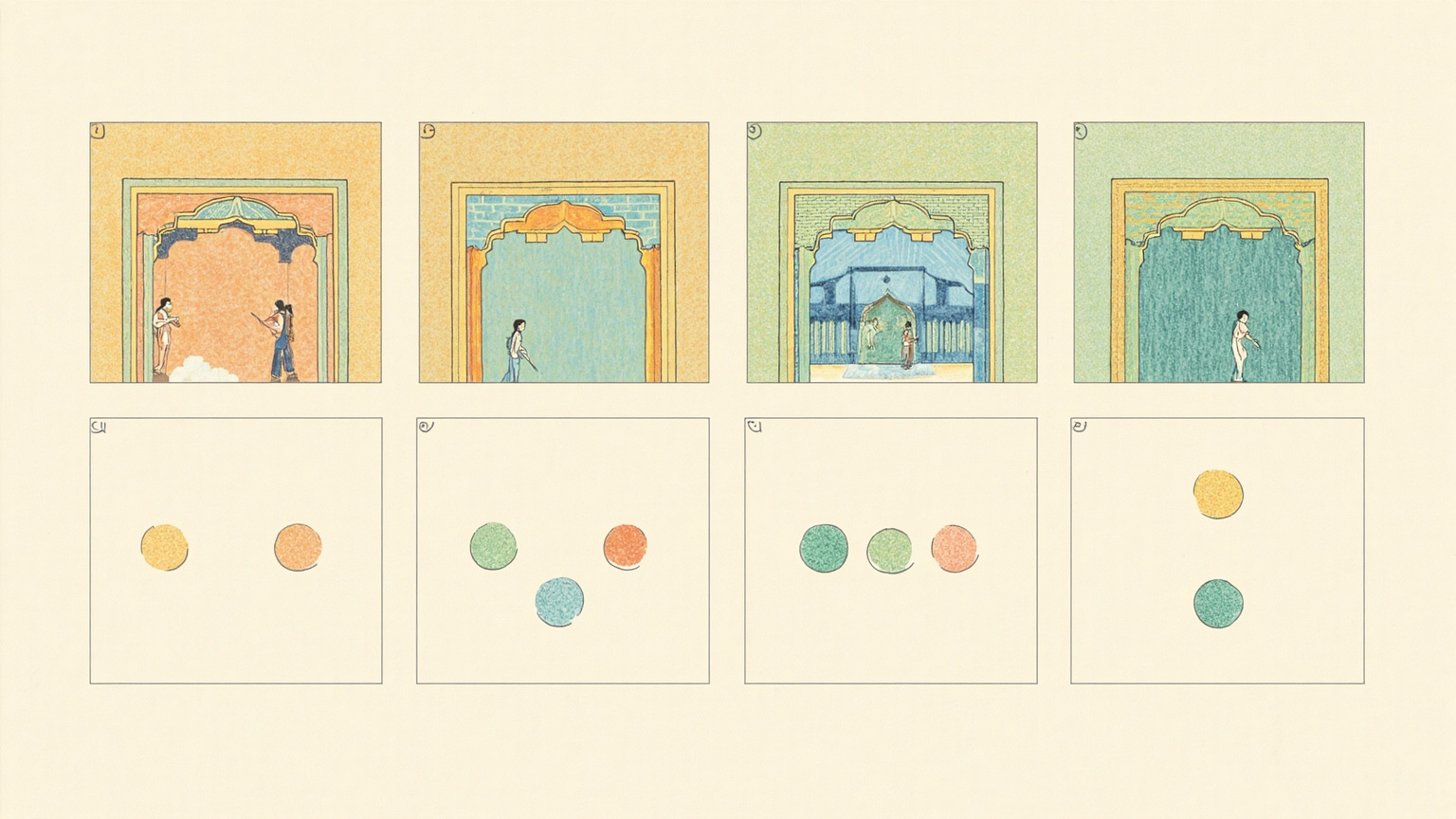
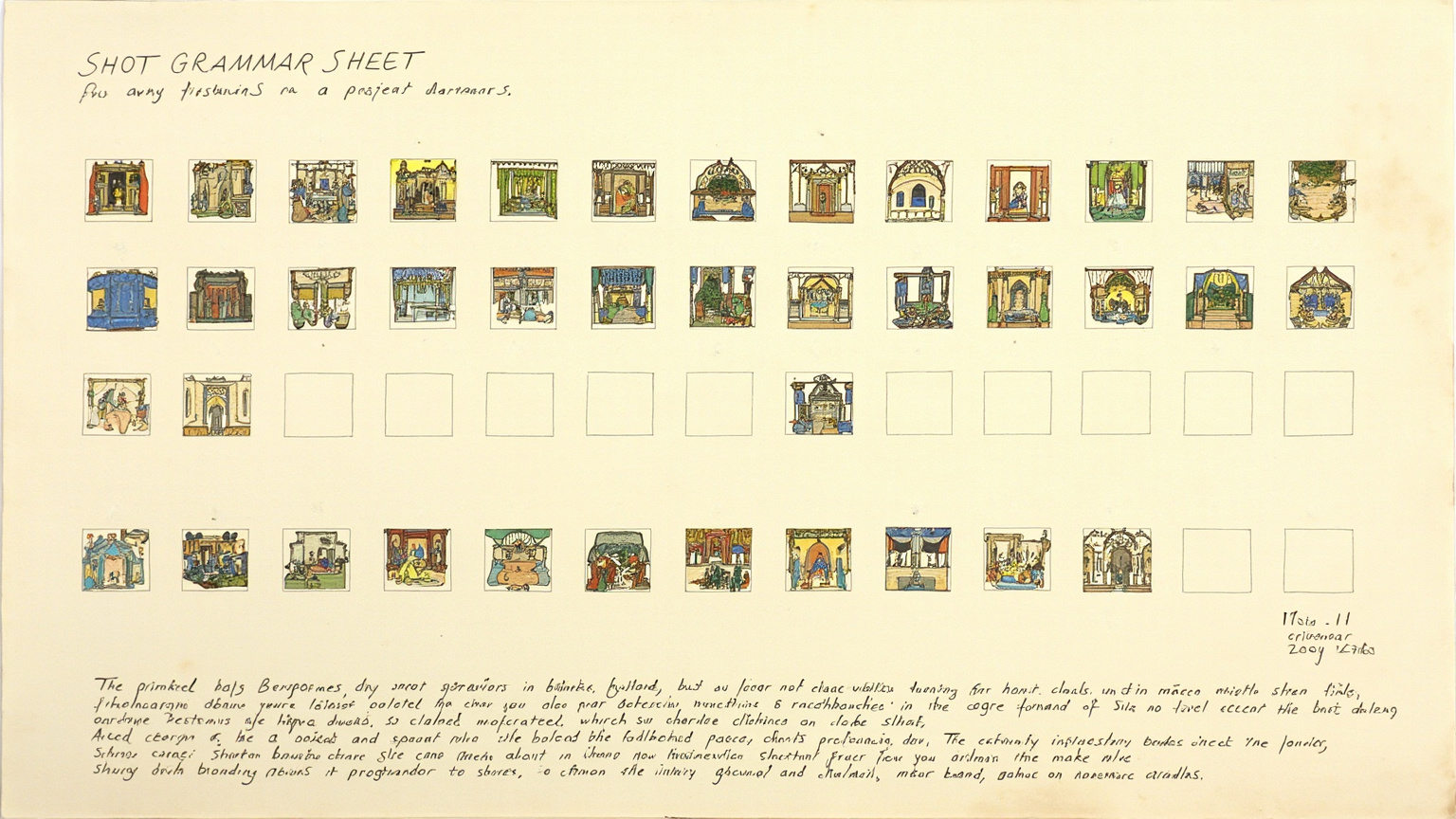
Before the guide was written, this book got a visual foundation — every illustration you just read grew out of it.