Fate in Tears and Laughter · Companion Guide
啼笑因缘
天桥的鼓声起时,谁都以为是一段风月;等她被塞进军阀公馆,才发现整座北平都在替一个男人圆谎。
Opening: A Drum, Two Similar Faces
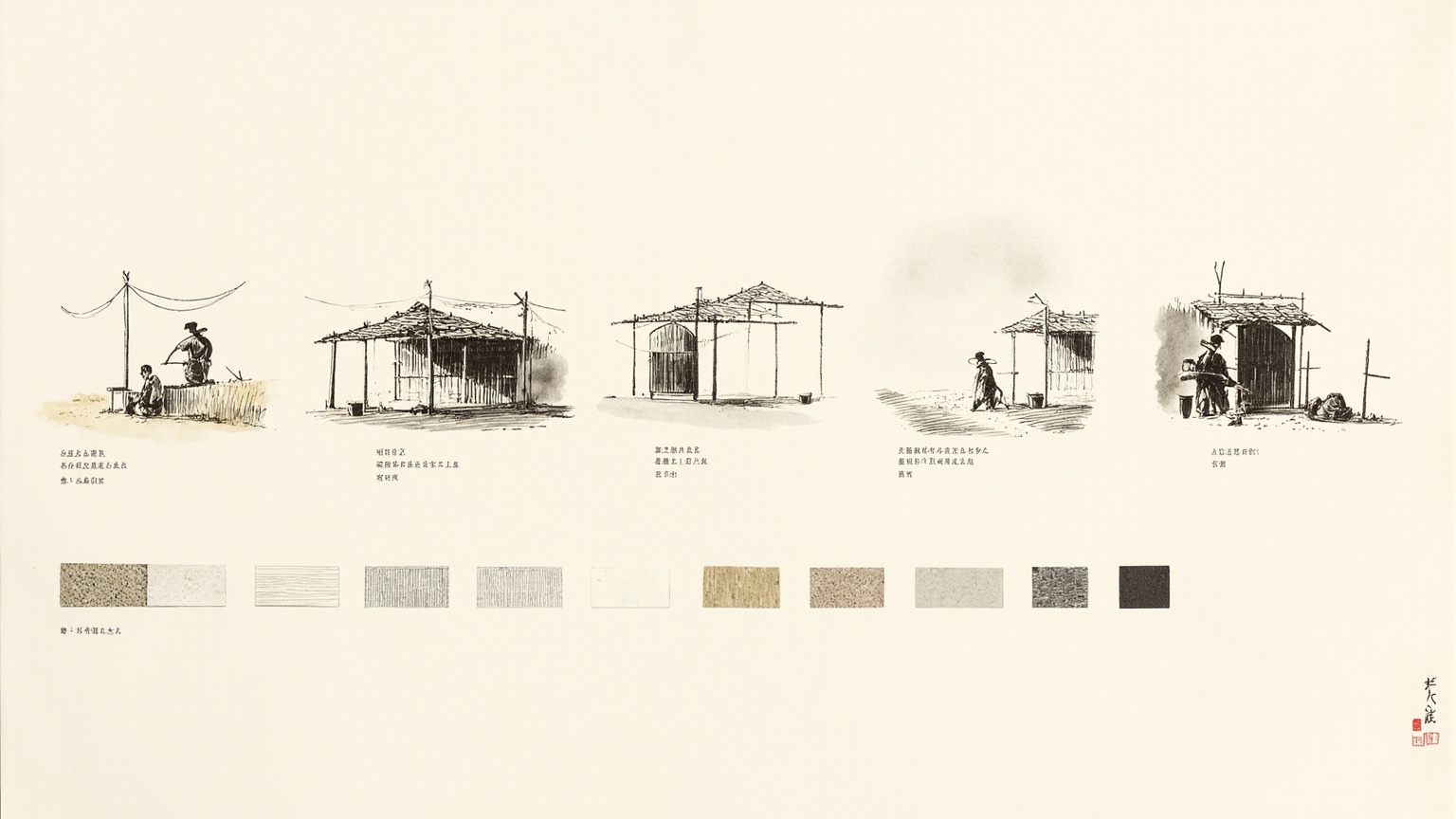
Beiping, beneath the mat sheds at Tianqiao, a girl in a plain qipao strikes a clapper drum. Behind her, her uncle plucks the sanxian, and in the audience sits a young man from Hangzhou who has come to take the university entrance exams. His name is Fan Jiashu. He never imagined that sitting there would saddle him with a debt for life. The drum stops. The girl is Shen Fengxi, her face clean in the autumn light. Fan Jiashu stuffs money into her hand, sends rice and charcoal to her home, thinking nothing more than this: such a fine girl shouldn't be singing for tips beneath a mat shed. But he didn't reckon that in a city without law, such kindness would be taken by another hand—and that taken face would later, in another form, collide with his eyes once more.
What Book Is This
Tears and Laughter, written by Zhang Henshui in 1930, was first serialized day by day in the supplement Kuaihuolin of Shanghai's Xinwenbao. A signature work of the Mandarin Duck and Butterfly school, it mixes romance, martial arts, and social critique into one pot, palatable to both refined and popular tastes. It is remembered because it nails a love tragedy to the real streetscape of 1920s Beiping: the mat sheds at Tianqiao, the rickshaws, the threshold stones of hutong gates, the willows of Shichahai, the Western-style parlors of warlord mansions, the red leaves of the Western Hills. These places still exist today, but the novel wrote their temperament into the story.
Characters and World: Three Women, a Drum, a Gun
The male lead Fan Jiashu is a warm-hearted, amorous rich boy who came to Beiping from Hangzhou to study, staying at his cousin Tao Bohe's home. The first person he falls in love with is Shen Fengxi, the drum-song girl at Tianqiao—innocent, poor, never having left Beiping. The second girl who winds around him is Guan Xiugu, daughter of the old martial hero Guan Shoufeng, deft in movement, quiet, hiding feelings for him. The third is He Lina, daughter of the finance minister, permed hair and red lips, listening to the phonograph in a Western-style parlor. Most important: she and Fengxi share the same face—this similarity is not a gimmick, it is the book's most lethal narrative device. Every time Fan Jiashu encounters He Lina later, he sees Fengxi's shadow on her face—illusion, fleeting thought, a trembling heart—all growing from that face, ultimately becoming the reason he can neither recognize the old nor grasp the new. Standing against them is a warlord named Liu Dezhu, and Shen Fengxi's greedy uncle Shen Sanxuan. The world is split in two: one half is the mat sheds at Tianqiao and the threshold stones of the hutongs, the other half is the marble floors and piano in the mansions.
Plot Line: Autumn Meeting, Autumn Collapse
Fan Jiashu first meets Fengxi at the drum-song stage by Shichahai. After listening to a piece, he takes out money, asks her name, learns she has only an uncle who plays the sanxian and a sick mother at home. The easiest mistake a young man makes is thinking money can solve poverty. As a result, when the money is sent, what he gets in return is Fengxi's shy smile, an extra full meal for the family, and a soft promise. The two quickly arrange a secret engagement.
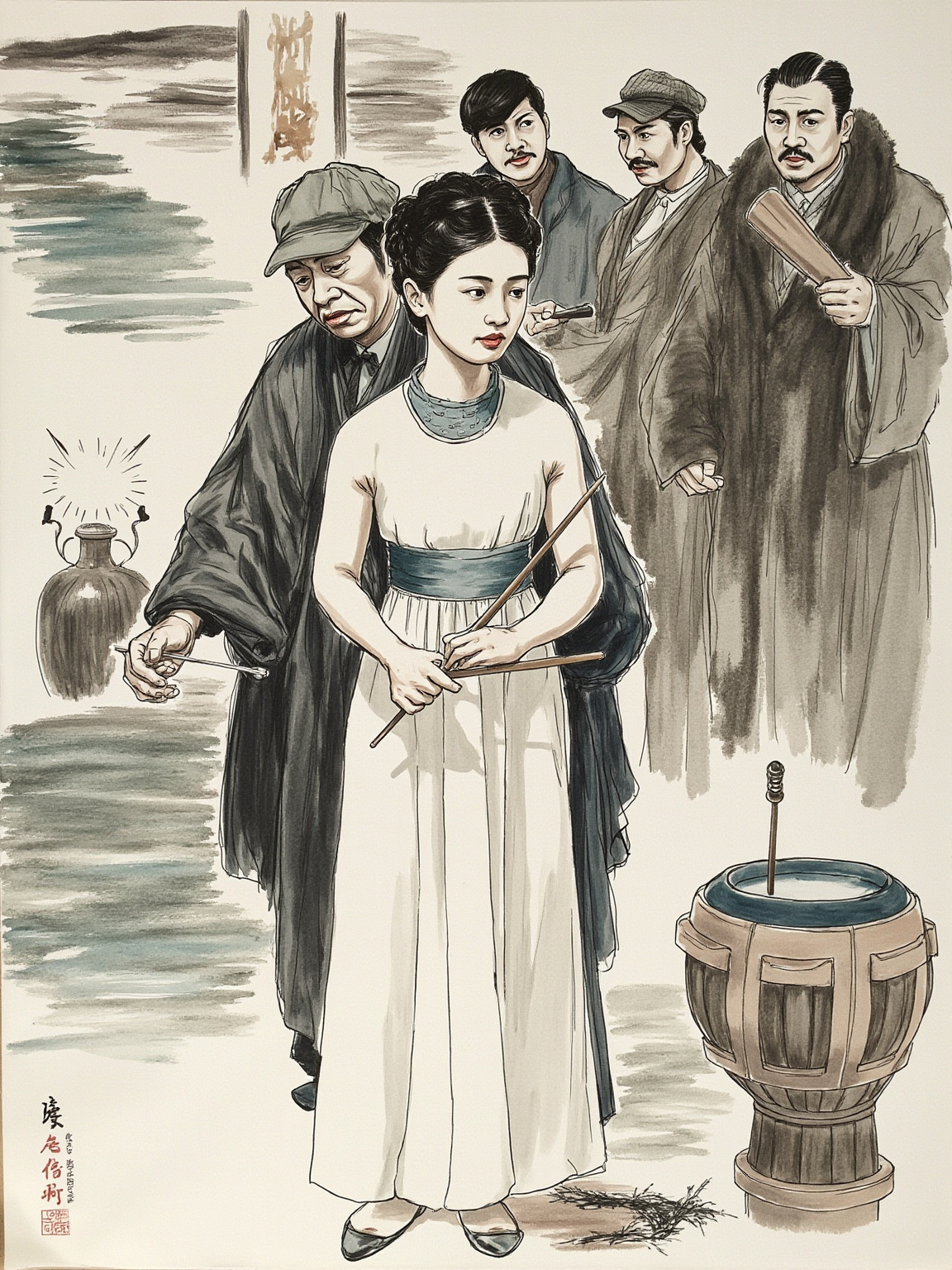
From the day he sat down beneath that awning on Tianqiao, he was already in debt for a lifetime.
从他坐进天桥那座席棚起,他就已经欠下了一辈子的债。
金句 · 第一回 · 天桥席棚
At the best of their time together, a telegram arrived from Hangzhou — Fan Jiashu's mother was seriously ill. He had to go back. He left the money he'd saved for Feng Xi, told her not to go singing at Tianqiao anymore, that he'd be back soon. Beiping's autumn was clean then, the willows at Shichahai just starting to turn yellow. When the two said goodbye at the alley corner, both thought it was temporary — they were young, after all, and young people always feel they have all the time in the world.
During his absence, Feng Xi's uncle Shen Sanxuan got itchy fingers. The warlord Liu Dezhu had his eye on his niece's face; what Shen Sanxuan saw was bright, gleaming silver. The two hit it off immediately: they set a trap, plied her with wine, and Feng Xi, confused and dazed, became a concubine in the Liu family mansion. When Fan Jiashu returned to Beiping months later and pushed open the door of his cousin Tao Bohe's study, what his cousin handed him wasn't a letter from home — it was news that the whole of Beiping had changed: Feng Xi had entered a warlord's household and couldn't get out.
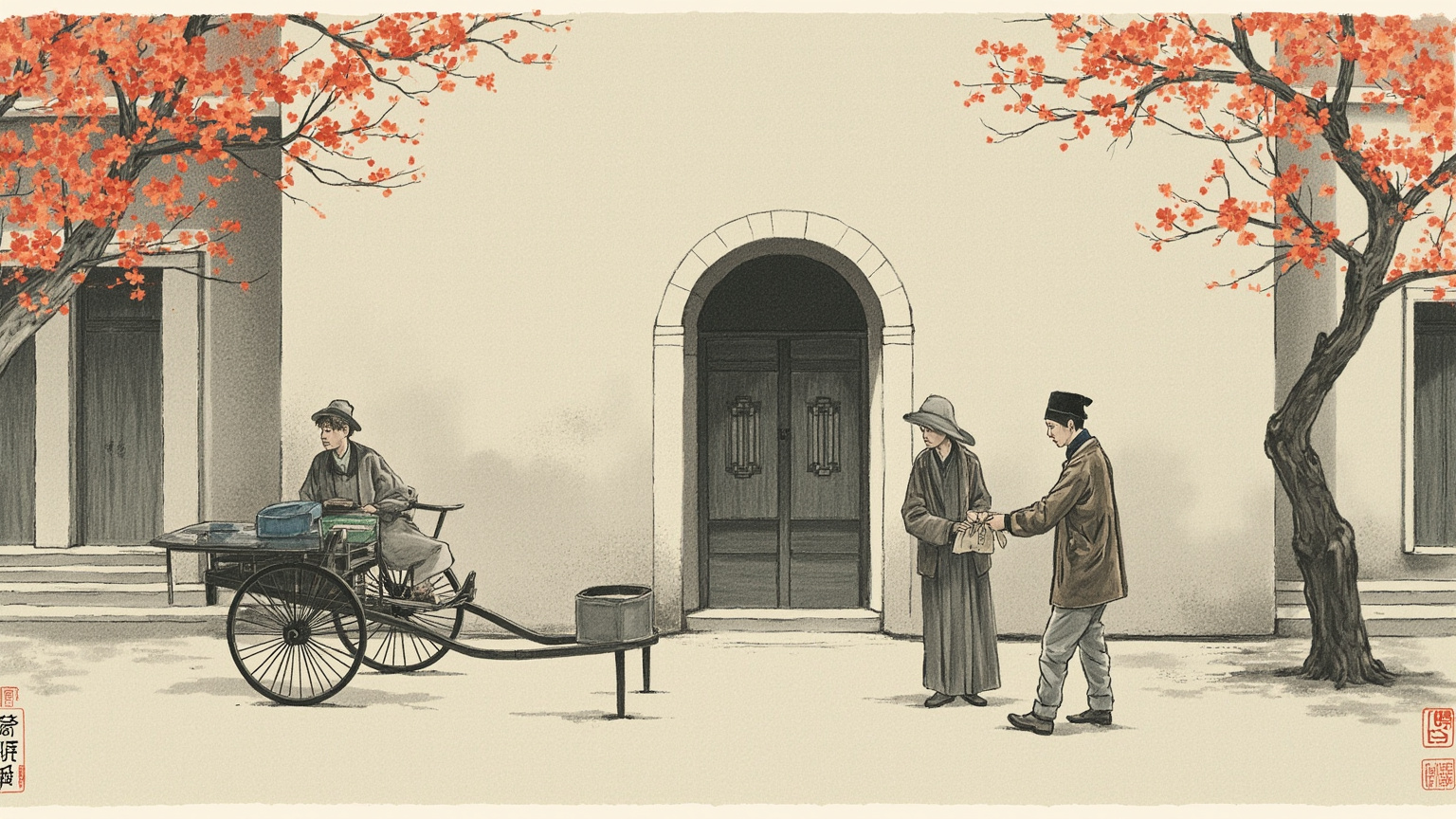
Uncle Shen took the silver; the warlord took the girl. By the time he came back, neither of them could give her back.
叔叔接了白花花的现大洋,军阀接了那张脸。他再回来,谁也还不出那个姑娘。
金句 · 第十二回 · 沈三玄设局
What broke him even more was the second time he saw Feng Xi. She sat in the mansion's western-style parlor, her hair permed, a bracelet on her wrist, but her eyes looked as if her soul had been sucked out. She didn't recognize him — or recognized him but didn't dare to acknowledge it. The warlord's hands had already molded her into a piece of furniture placed in that parlor. He Li'na's first appearance comes in this contrast — the same face, one vivid and bold, the other wooden and sitting motionless. Fan Jiashu stood between those two faces, as if watching the same person die two different deaths.
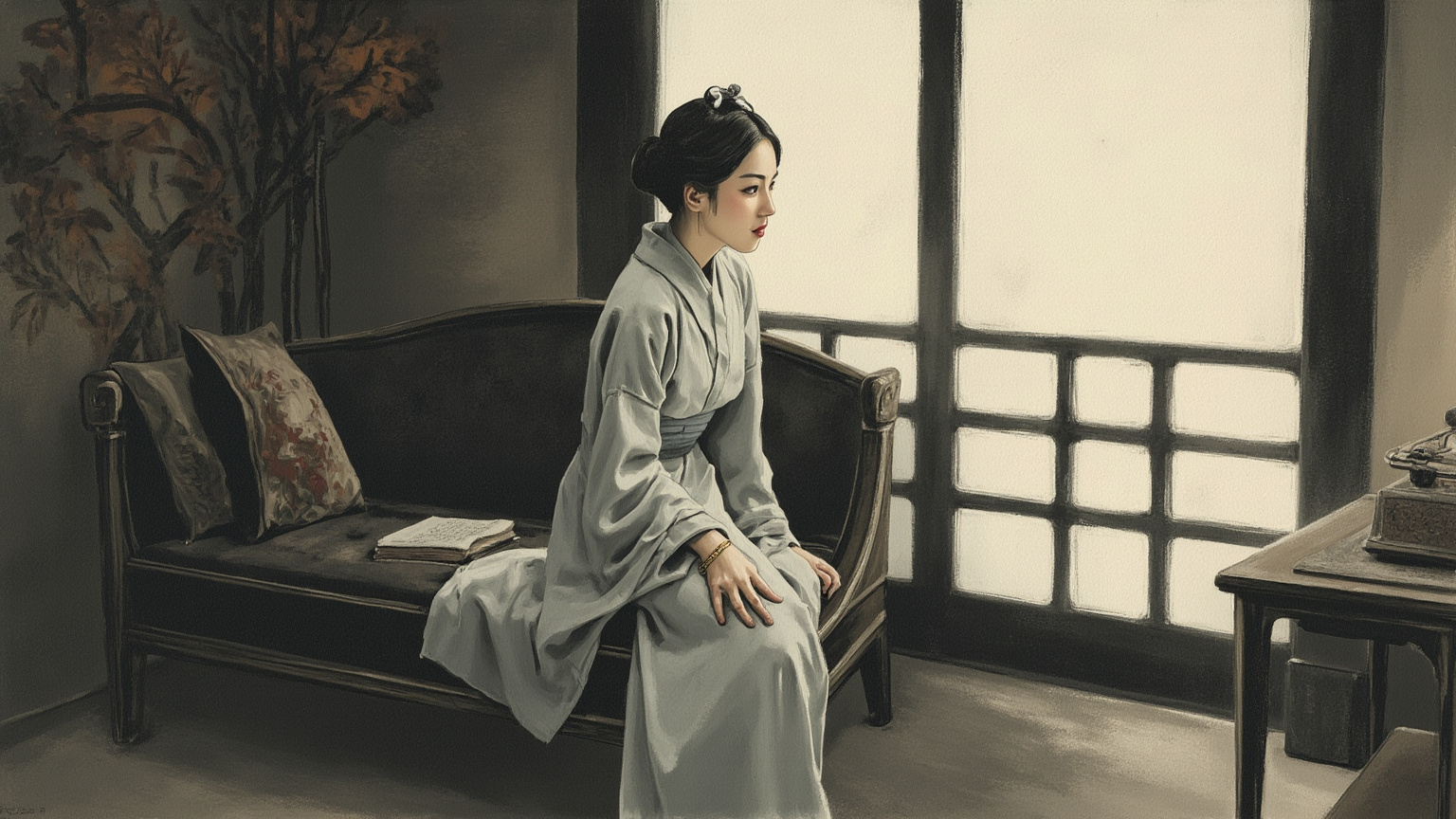
Her hair was curled, her wrist wore a bracelet, but her eyes were empty — she had been made into a piece of furniture in the parlor.
头发烫得起了卷,腕上添了一只镯子,可两只眼睛空空地让人发寒——她已被揉成了一件摆在客厅里的家具。
金句 · 第十三回 · 公馆重逢
The old knight Guan Shoufeng enters the scene. He was a broad-shouldered man from the northeast who sold his talents at Tianqiao, hiding a fine set of martial skills. His daughter Xiugu followed him in simple clothes. When Fan Jiashu and Feng Xi first met, they had once saved Guan Shoufeng's life. Now, upon hearing what had happened to Feng Xi, the old man didn't hesitate. He picked up his old weapons and waited outside Liu Dezhu's mansion. The stab was clean and swift; the warlord fell in his own courtyard. The chivalrous act was accomplished, but Feng Xi had already been driven insane inside that mansion — the Guan father-daughter could kill a person, but they couldn't kill back a person's spirit. After the deed was done, the two packed their bags and quietly left Beiping, leaving behind an empty word of yì.
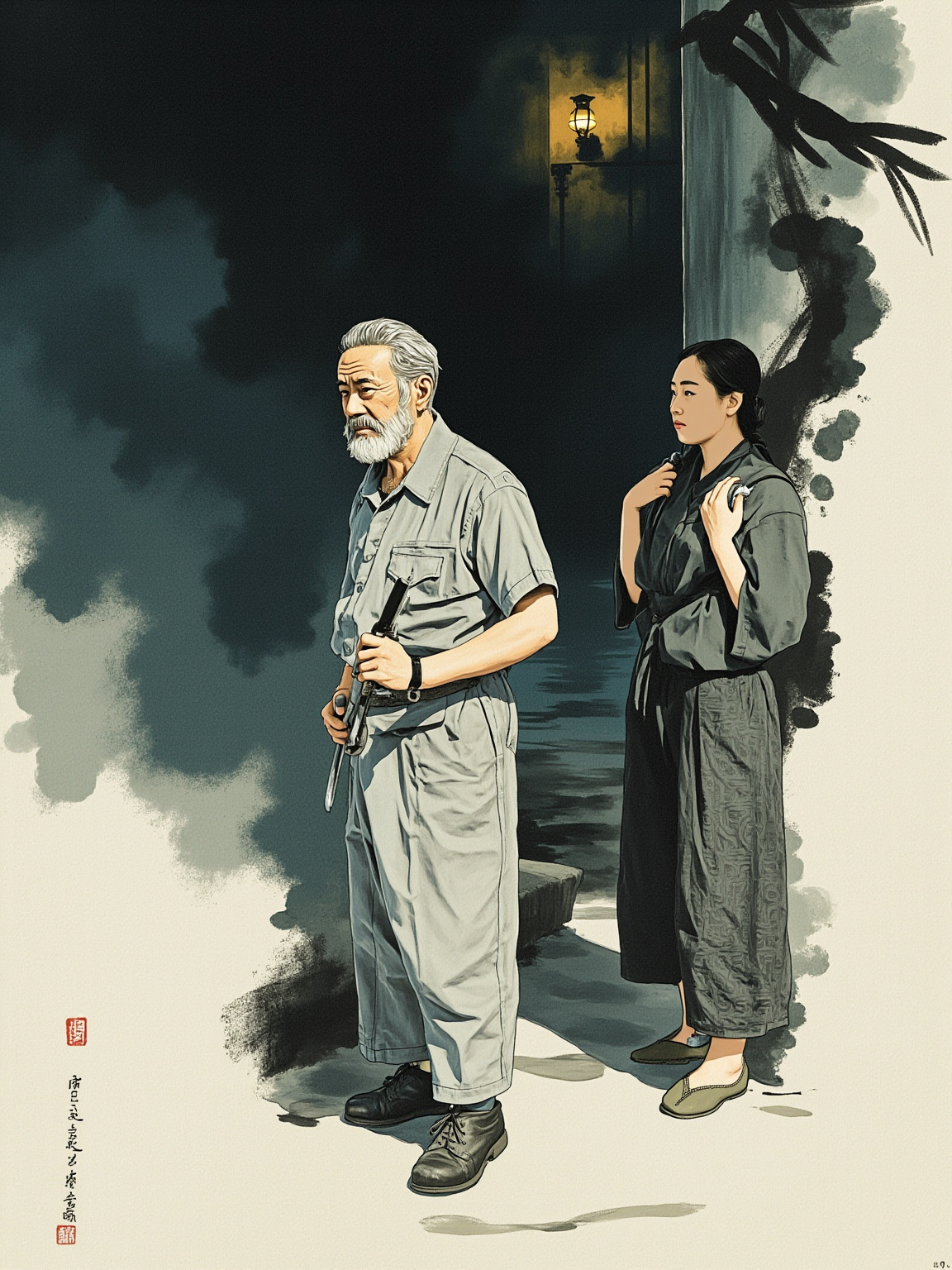
The old man from the northeast asked nothing — he only took up the blade he had set aside for twenty years.
关东大汉没多问一句,只取回了搁下二十年的家伙。
金句 · 第十七回 · 关寿峰仗义
In the end, Feng Xi died in a dilapidated room near Tianqiao. After losing her mind, she would still unconsciously tap out the rhythm of drum songs, but she could never again sing a complete verse. On the day of her burial, Fan Jiashu stood alone at the alley entrance, hearing a strange girl singing in a makeshift shed in the distance. He thought of the first time he saw her, and suddenly understood that the stack of money he had given her back then had already written her ending.
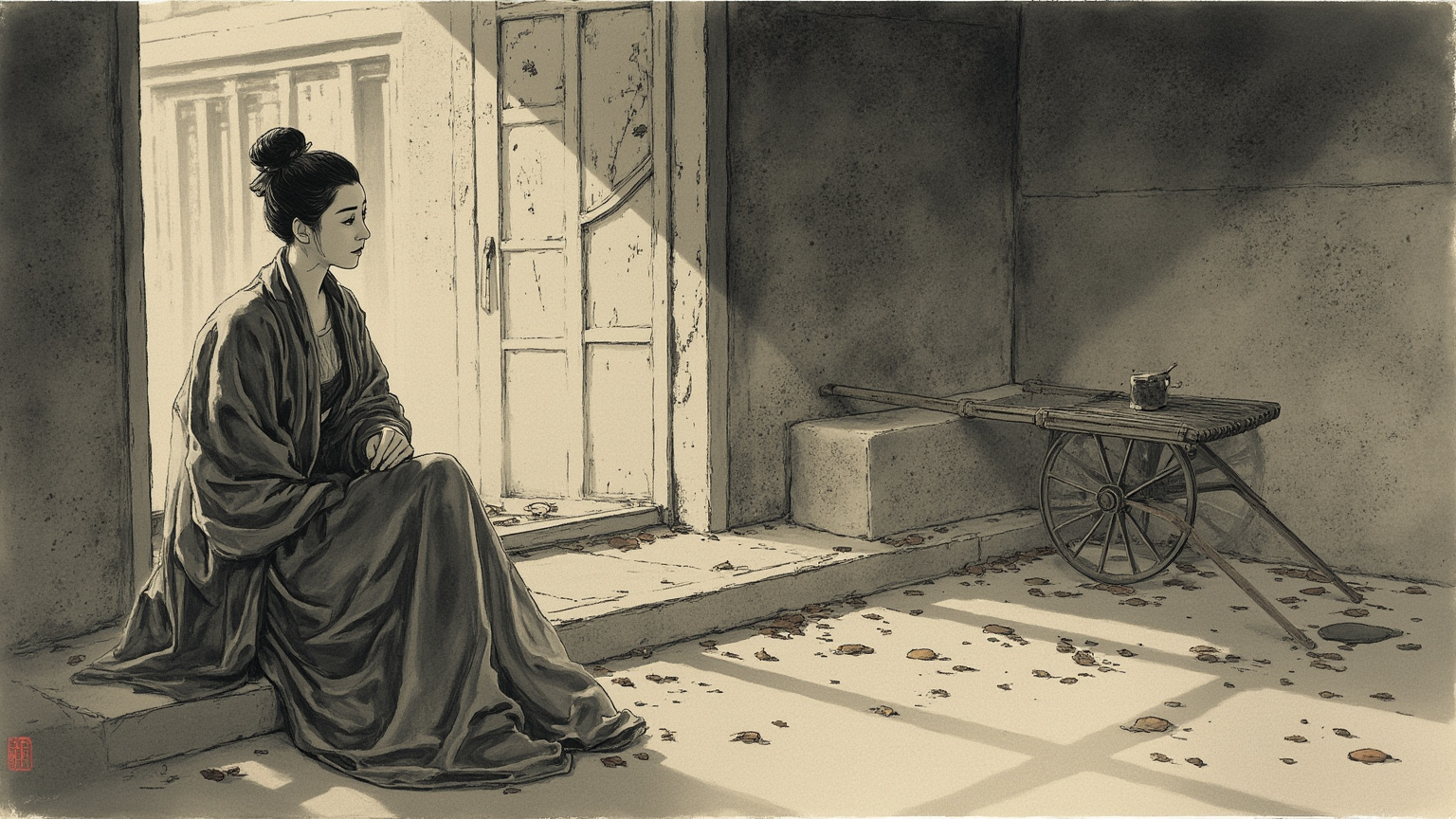
Mad, she could still tap the drum's rhythm with her fingers — only she could no longer sing a single complete line.
疯了的她还会用指尖敲出鼓书的节拍,可再也唱不成一段完整的词。
金句 · 第二十回 · 凤喜之死
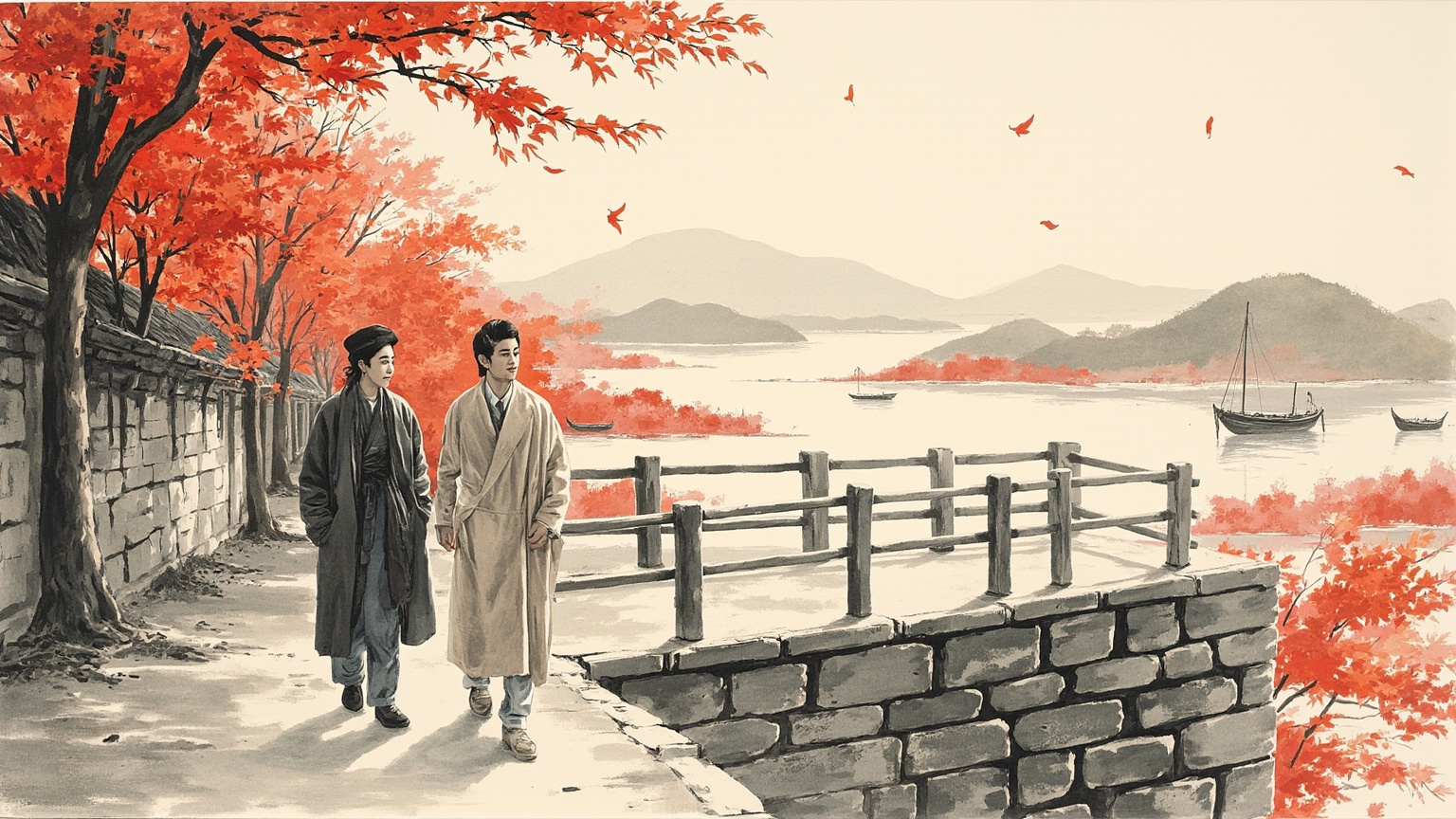
The story's tail lies in the western hills. In late autumn, red leaves covered the mountains when He Li'na found Fan Jiashu. She wore an elegant windbreaker and fashionable curly hair, but as they stood side by side, neither spoke about the matter of those similar faces. She didn't pressure him to marry; he didn't pretend to love her. The novel ends in the mountain wind, leaving a vague, indescribable aftertaste.
Themes and Techniques: Three Women, Three Paths
What this book is truly about is how a weak woman gets crushed step by step in an unreasonable city. Feng Xi represents the streets and poverty — she was sold for money, imprisoned by a warlord in a cage, and her end is death in madness; He Li'na represents wealth and freedom — she can choose people, choose clothes, choose to stay or go, but she cannot choose someone whose heart belongs to another, and in the end she gets only a bitter aftertaste in the red leaves of the western hills; Guan Xiugu represents chivalry — she can draw a blade, scale walls, protect people completely, but her own feelings can only be swallowed back down, and after the deed is done she goes far away. Three faces turned toward the same man, but what it writes is not a love triangle — it's three paths that 1920s Beiping laid out for women, each path bearing its own thorn.
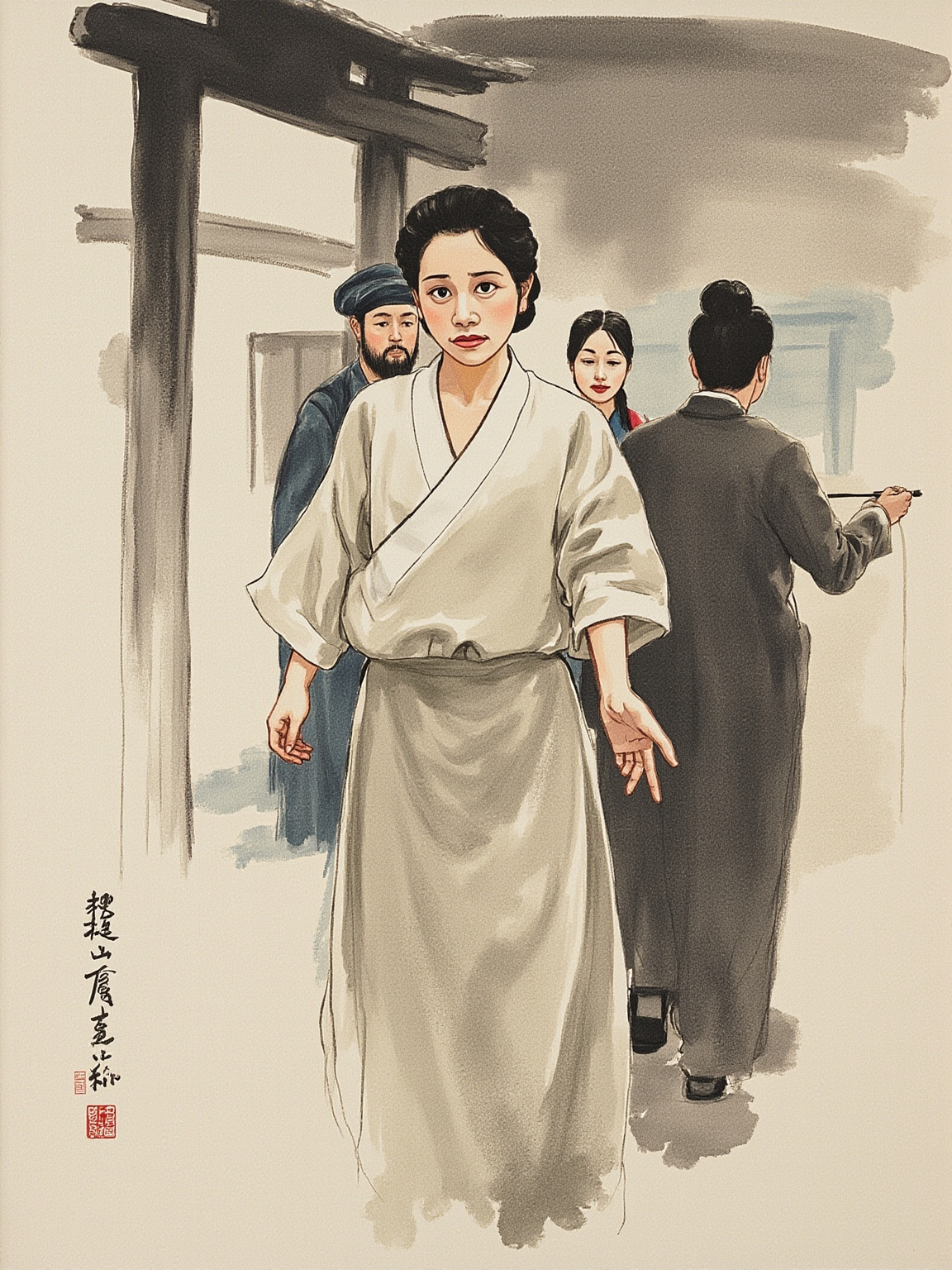
The most brilliant writing trick is making He Lina and Shen Fengxi look exactly alike. On the surface it's a mistaken-identity gag, but underneath it's a mirror—through He Lina's face, the reader is asked to imagine what Fengxi might have become if she hadn't been sold into that mansion. Go further: when Fan Jiashu sees Fengxi's shadow in He Lina, which face is he actually loving? Zhang Henshui gives no answer. He just places the two faces side by side in autumn light and lets the reader squirm. The first time I read He Lina's entrance, I stared for a long time, then turned back a page.
Why It's Still Worth Reading Today
The Mandarin Duck and Butterfly school sounds old-fashioned, but Tears of Love in the Garden is really about the city, desire, class, gender—things still fermenting today. It doesn't paint the warlords as cartoon villains, nor the rich student as a savior. Everyone gets pushed along in their own position. Even rarer is the flavor of old Beijing—the drums at Tianqiao, the willows at Shichahai, the red leaves at Xishan—these images still exist on a map, but no one can replicate the Zhang Henshui who placed mat sheds, rickshaws, mansions, and hutong side by side to tell his story.
Reasons to Read the Text
Commentary can only tell you what happened. The text gives you the taste of autumn wind passing through the hutong. Zhang Henshui's sentences are short, dense, with a touch of old colloquial vigor—not like a novel, more like an old Beijinger recounting what he's seen. The psychology of He Lina's first entrance, the words Guan Xiugu doesn't say when she turns to leave, the unconscious drum rhythm Fengxi taps out after going mad—commentary can only tell you these moments exist. You have to sit with those pages yourself.
The cruelest thing in this city isn't the warlords—it's everyone thinking they can decide for that girl.
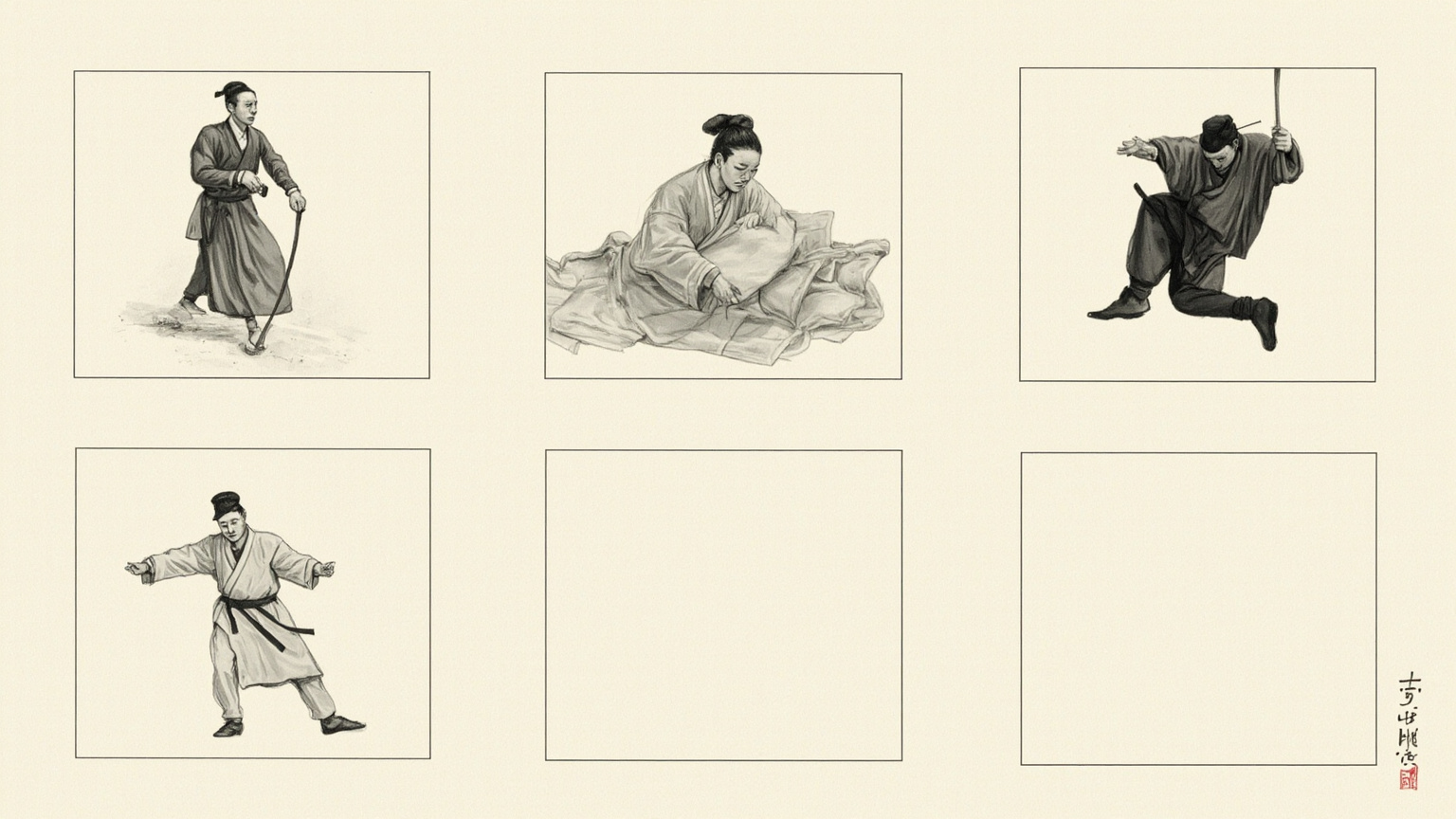
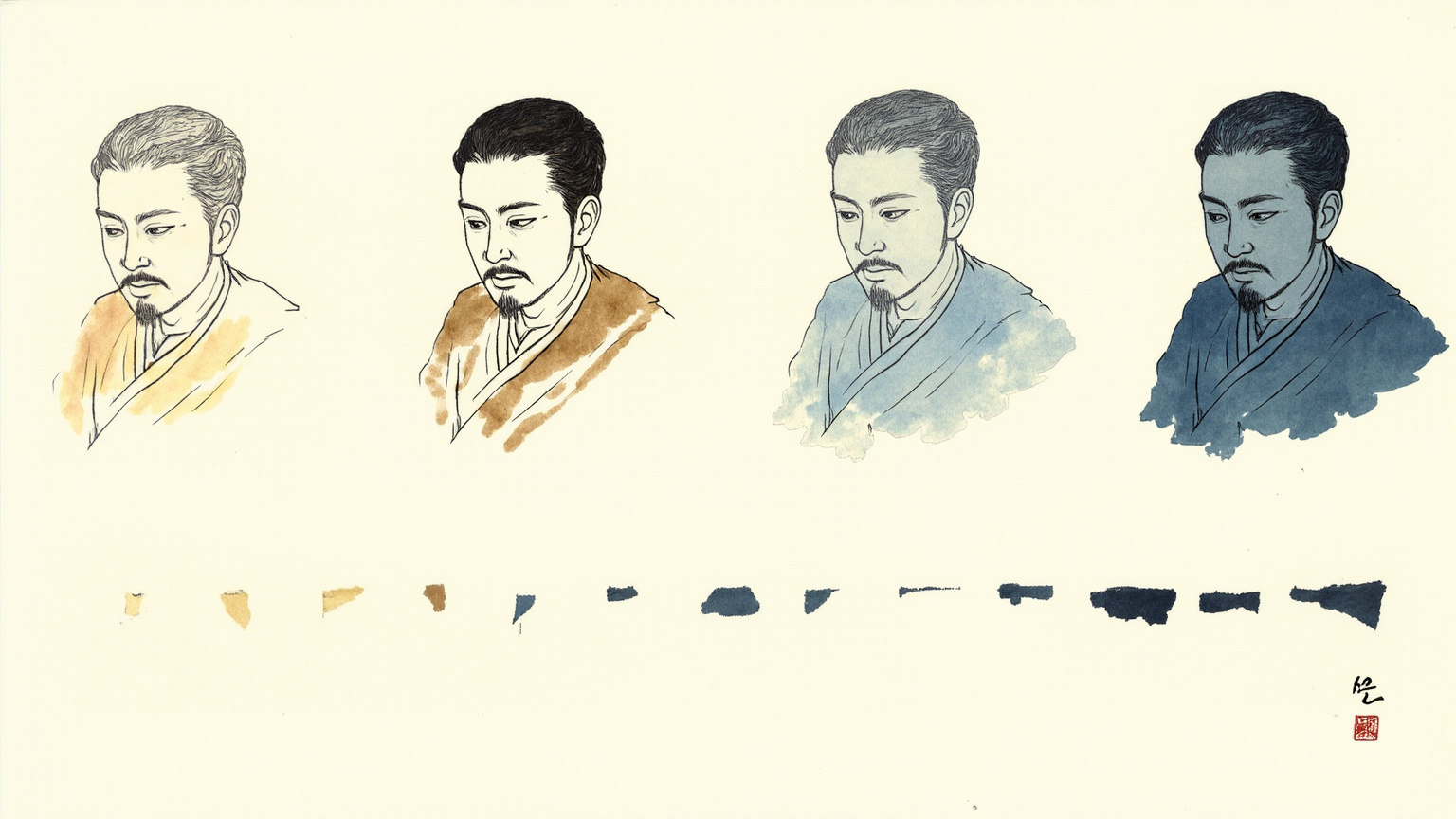
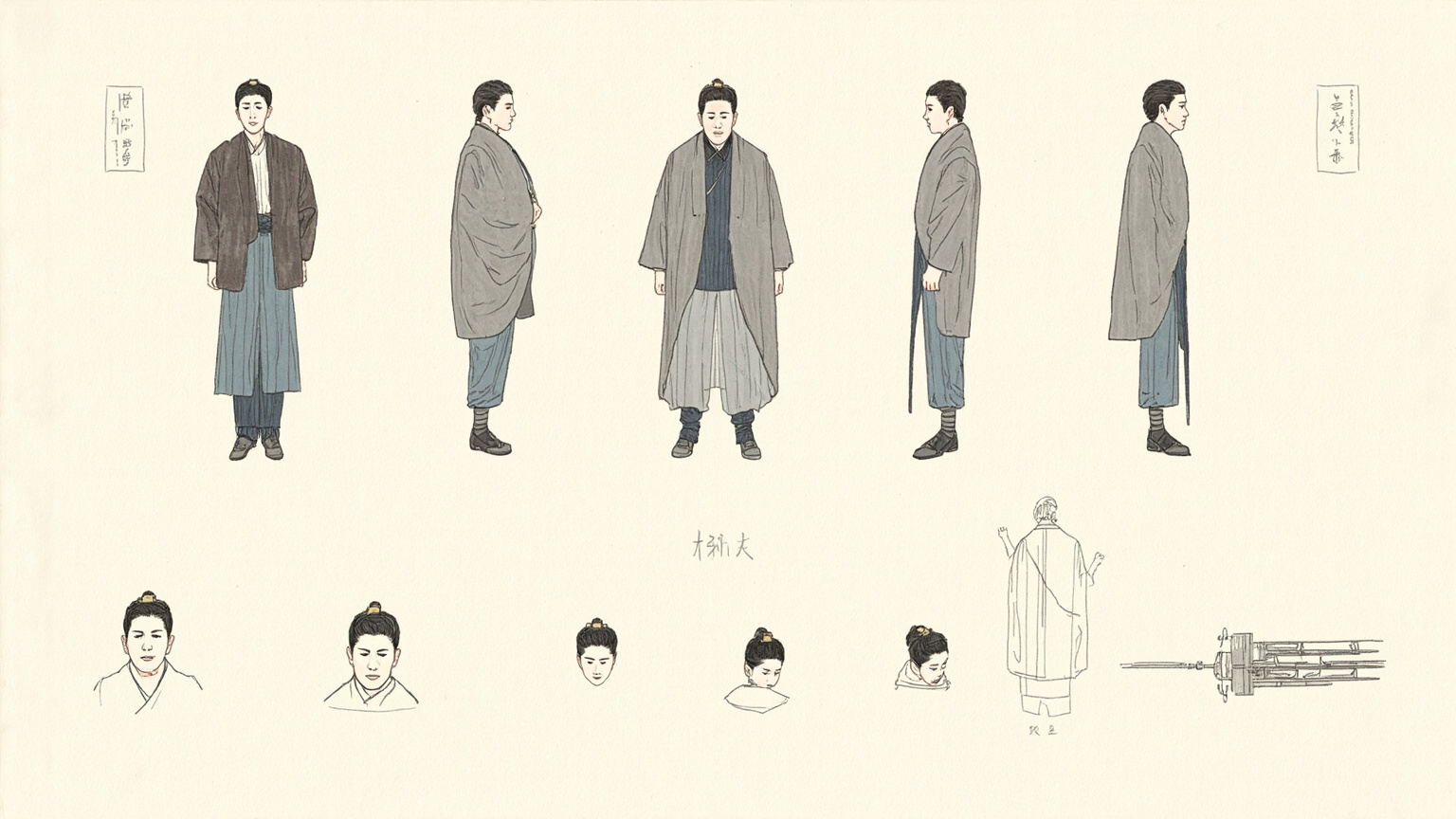
Art Direction4 plates
Before the guide was written, this book got a visual foundation — every illustration you just read grew out of it.