Letters to Young Readers · Companion Guide
寄小读者
二十九封跨洋书信,一个姐姐写给所有离家与想家的孩子——海很宽,月很近,母亲不在身边,你也一天天在长。
Opening
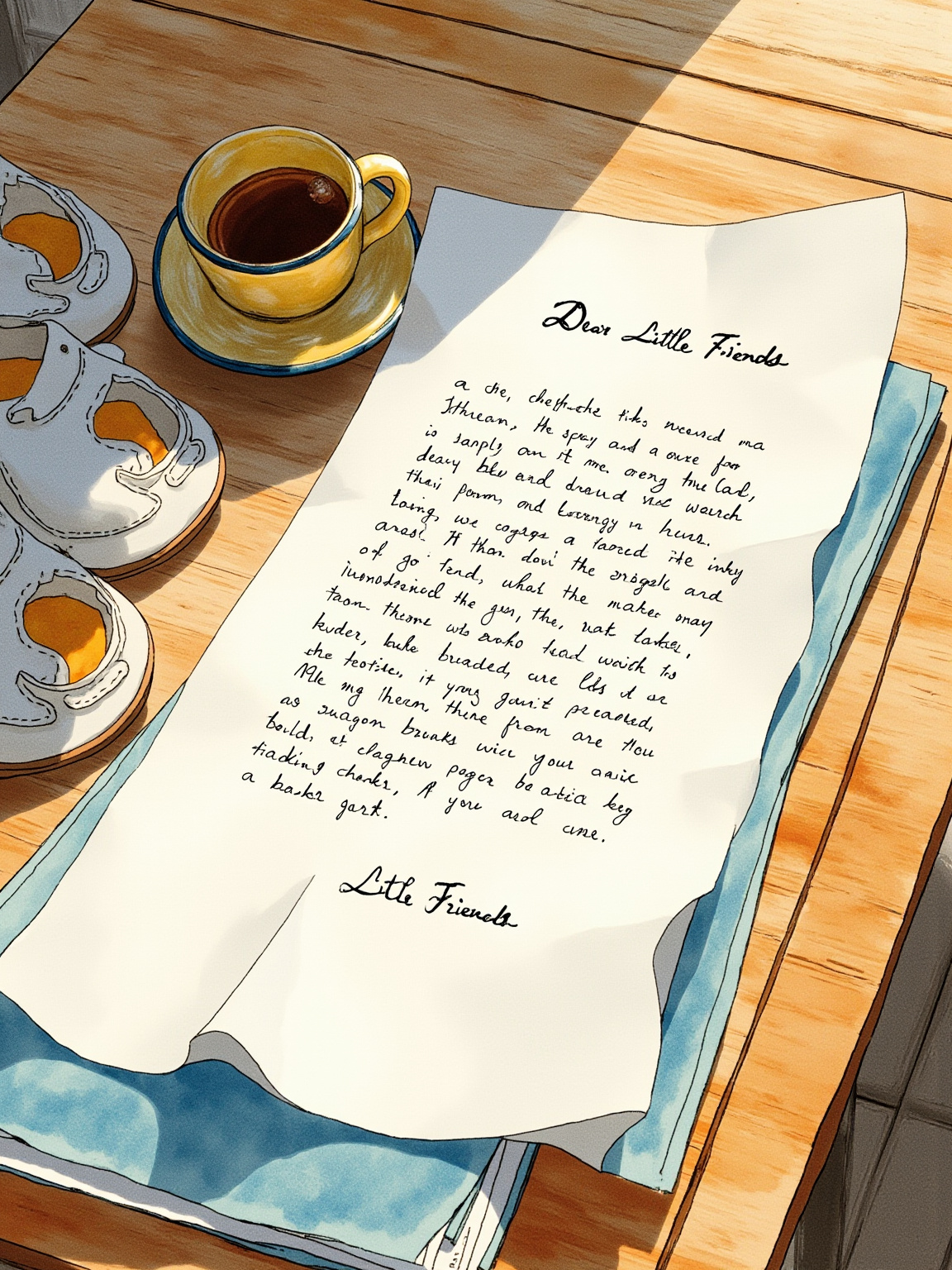
A steamship's horn sounded over the Huangpu River, and on the deck a girl clung to her mother and younger brother, all three of them in tears. She was barely in her twenties, and had just picked up her pen to write to a group of children she had never met. The letter's opening line would become the opening line of modern Chinese children's literature itself: Dear little friends.
The ship was the President Jackson, and that year she was crossing the Pacific to study in America. Three summers later she came home by the same route, except by then the twenty-nine letters she had sent back had already been read aloud in countless elementary school classrooms across the country. This book collects those twenty-nine letters, written over those three years, under the title Letters to Young Readers.
What Kind of Book Is This
Letters to Young Readers was published in 1927 by Beixin Book Company, collecting the correspondence essays Bing Xin wrote during her three years studying in America, from 1923 to 1926. The first piece appeared in the readers' column of the Morning Post Supplement, meant as a reply to her younger brothers back home and to a wider circle of young readers, and she simply kept writing.
The book is remembered in the history of modern Chinese literature for two reasons. First, it is the earliest example of modern vernacular Chinese writing for children — before this, most reading material for children consisted of translated fables and rewritten old tales; Bing Xin wrote in an equal, conversational voice, like an older sister chatting with her siblings, and gave Chinese children an essay form of their own. Second, the twenty-nine letters are themselves an early model of vernacular prose: short sentences, generous white space, no lecturing, a clean spoken style whose tone Chinese children's prose would keep drawing on for decades afterward.
Characters and World
There is only one protagonist in the book: the letter writer, "I" — Bing Xin herself, a woman in her early twenties studying at Wellesley College in Massachusetts. She wrote these letters in the first person, and the "I" on the page is simply her; there is no persona, no character she is playing.
Facing her, so to speak, were two groups of readers. One was her younger brothers back in Beijing, still children themselves; away from home, she often used them as a way back into memories of the courtyard where she grew up and the sea at Yantai, turning the family letters into something closer to memoir. The other was the wider audience she called dear little friends — schoolchildren and young readers across China. She wrote to them as friends, never as a teacher addressing students.
One more figure never appears on the page yet is present throughout: her mother. Far away in Beijing, reachable only through letters, she is the softest and steadiest object of feeling in the whole book. Two other groups pass through more lightly — her classmates at Wellesley and her fellow patients at the Sharon Sanatorium — none named individually; it is enough that they are there. The world of the book is correspondingly small: the Shanghai docks, the Pacific Ocean, Lake Waban, the sanatorium in the hills at Sharon, and, held only in memory, an old courtyard in Beijing.
How the Story Moves
Setting Out from the Shanghai Docks
Letters One and Two record the Shanghai docks on August 3, 1923. The President Jackson's horn was nearly deafening; her mother stood on the pier waving, and her younger brother tugged at her sleeve, crying. She reached for no grand words, only: the sorrow of parting — parting that overflows. Once the ship cleared the river mouth at Wusong, she went back to her cabin alone, spread out her writing paper, and wrote: Dear little friends, I left home today — the first sentence of the whole book, and the first sentence of the genre itself. What is worth noticing in the writing: she breaks one enormous goodbye into a few small actions, the clinging embrace, the tug at her sleeve, the walk back to the cabin to write, with no editorializing. She lets the actions show, and the feeling arrives on its own.
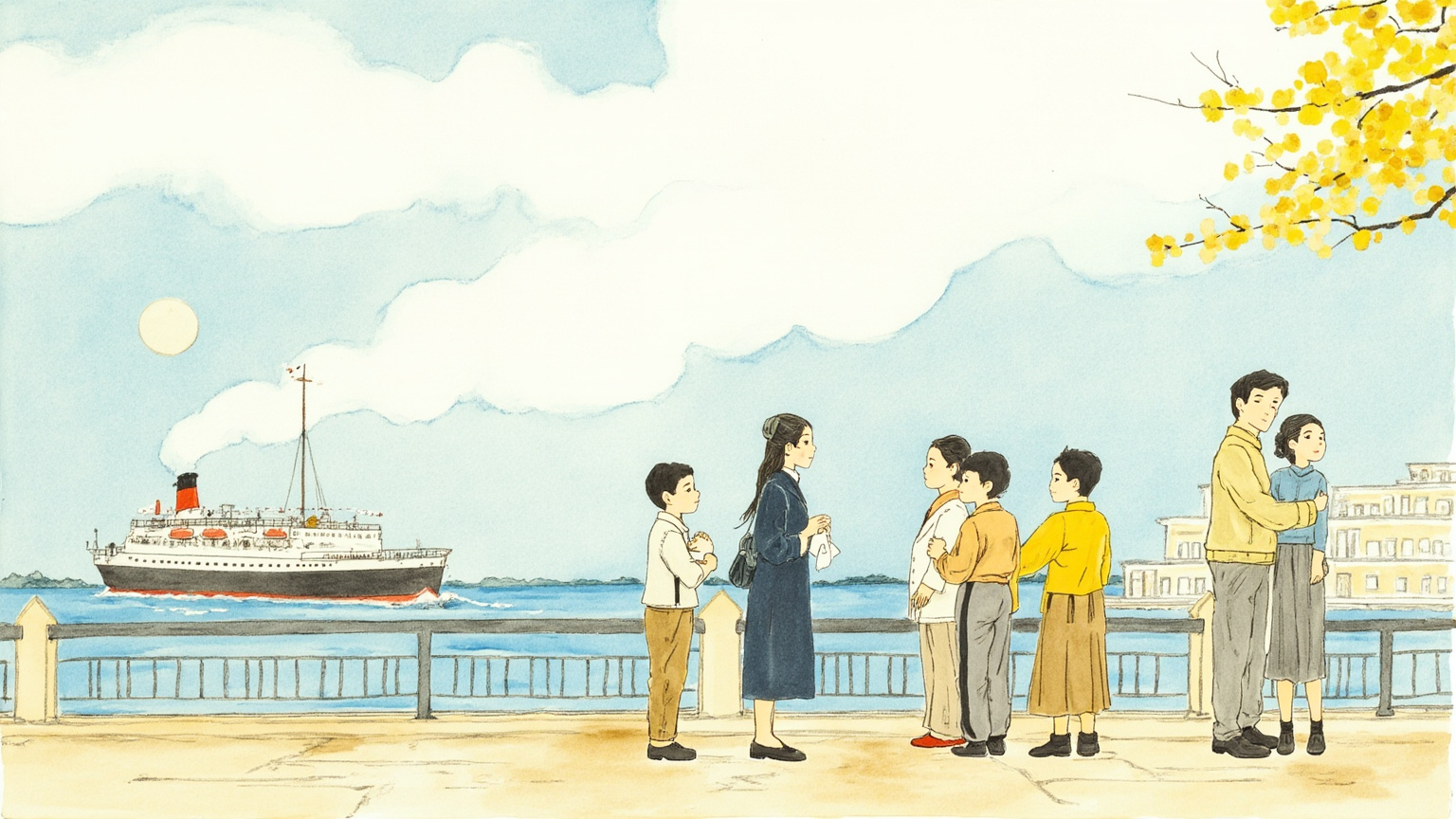
Sorrow — sorrow overflowing, that is all I had to say.
离愁——满溢的离愁,除此之外,我更没有什么可写的了。
金句 · 《通讯二》· 上海码头与约克逊号
Moon and Sea on the Pacific
Letters Three through Seven cover the days at sea. The ship put in briefly at Kobe, Japan, and she caught only a glimpse of the foreign streets before it sailed on. What actually stops the reader is a moonlit night on the Pacific — after more than ten days of rolling seas, one night the water suddenly looked laid over with silver, and she stood on deck watching it for a long time. Here Bing Xin does something restrained: she never writes that she was moved to tears. She writes the shape of the moon, the sound of waves against the hull, a small gull skimming past beside her — she hands the feeling over to concrete things and stays out of the frame herself.
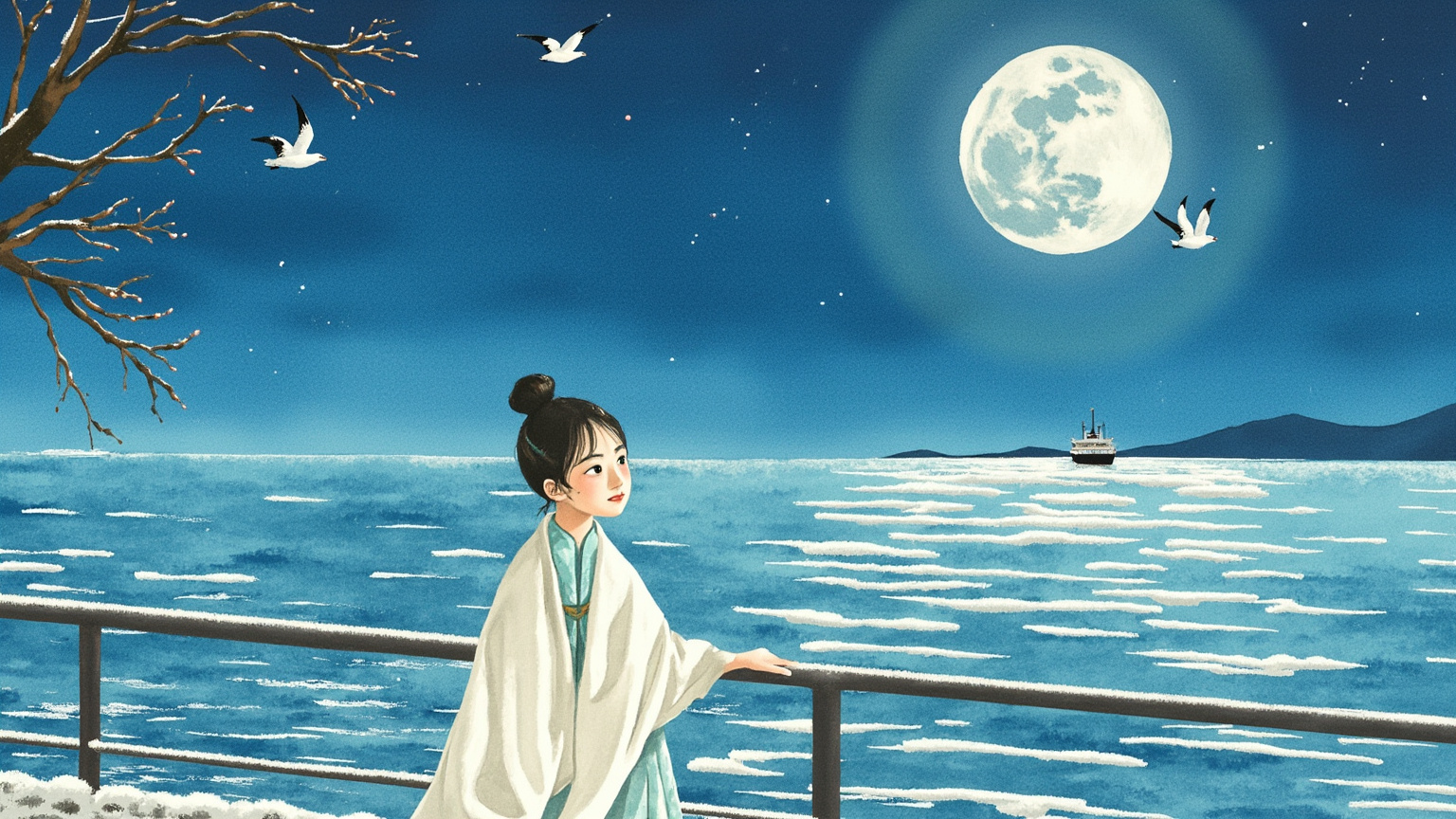
How many times has the moon risen and set over this sea — and tonight it is mine alone to see.
海上的月亮不知升落过多少次,今夜,却只属于我一个人。
金句 · 《通讯四》· 太平洋上的月
Wellesley College and Lake Waban
The ship reached Seattle, and from there she crossed the country by train, past the Rocky Mountains and the great orchards of California, all the way to the East Coast. In this stretch of train-window observation she does something else that shows a practiced hand: no commentary, only inventory. The color of the mountains outside the window, cattle in the pastures, people bent over picking fruit in the orchards — she sets them down piece by piece, like a set of quick sketches.
Only once she is settled at Wellesley does the main thread of the book really begin. Lake Waban sits right on campus, its water in autumn clear enough to see the weeds below. She moved into a small building by the lake, made American classmates, sat in on literature lectures, and grew a little each day. She sent word home often, in small, unremarkable lines: there was fog on the lake today; the professor read us a poem I can't remember, only that the maples outside the window had turned red. What is most worth noting here is how she takes an abstraction like growing up and breaks it into visible, daily pieces — morning fog on the lake, a professor's handwriting on the blackboard, voices calling up from under the dormitory window — letting concrete things speak for her.
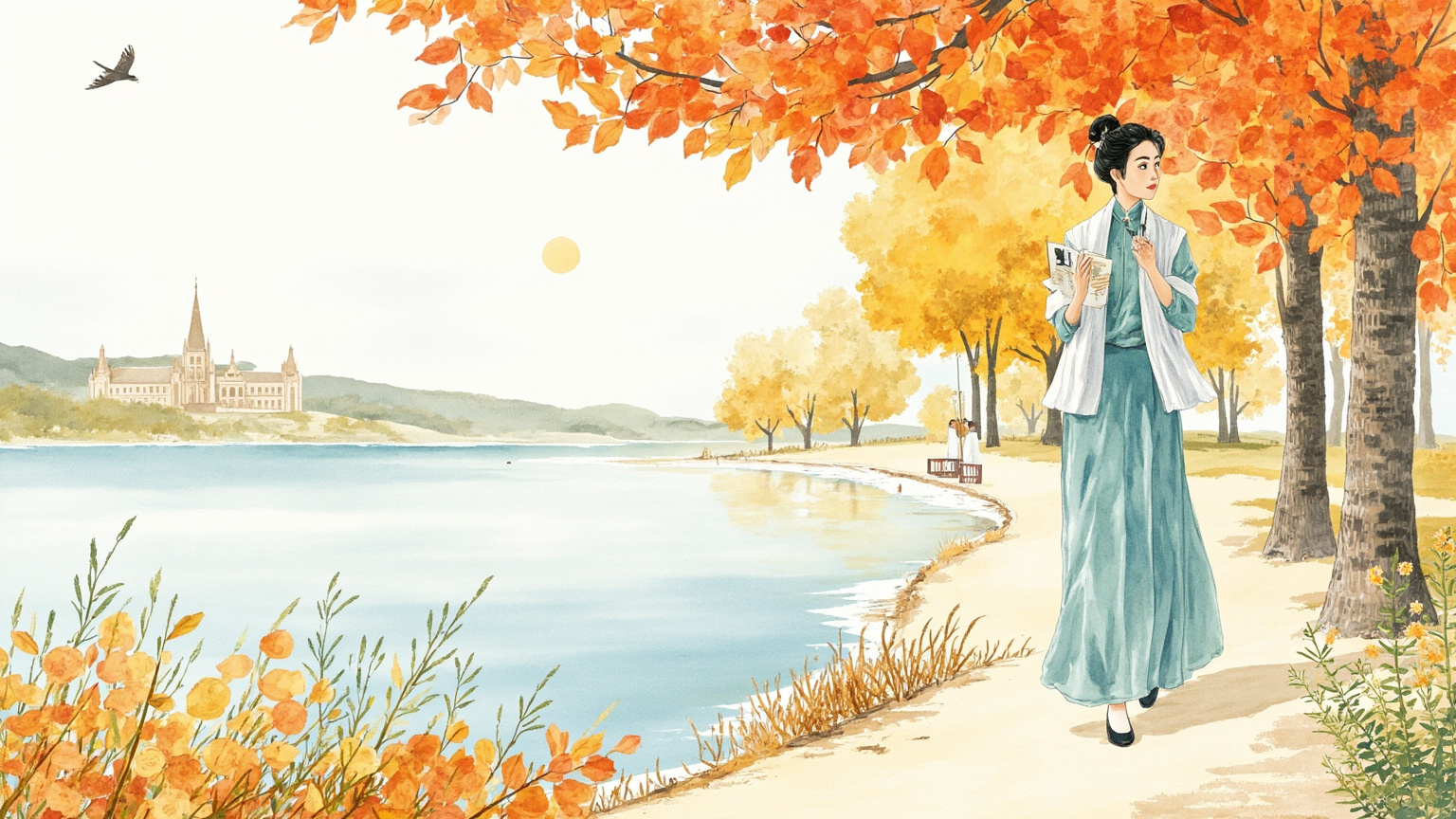
The lake is so clear I can see the weeds at the bottom, and the autumn hills wear their red as if for me alone.
湖水清得能看见水底的水草,秋山的红,也仿佛是专为慰冰湖而穿的。
金句 · 《通讯八》· 慰冰湖秋色
The View from a Sickbed in Sharon
Letters Seventeen through Twenty-One are the heaviest stretch in the book. In the summer of 1924 she fell ill and was confined to bed for a long stretch at the Sharon Sanatorium, in the hills of Massachusetts. It is the lowest point in the book emotionally, and also where Bing Xin writes with the steadiest hand — too weak on a sickbed to dramatize anything, she borrows the window instead. Rather than write that she was suffering, she writes the color of the hills outside, a bird passing the window, a single maple leaf caught on the sill. Rather than write that she was lonely, she writes that the American woman in the next bed coughed all night, and that she herself peeled half an orange before she was too tired to finish.
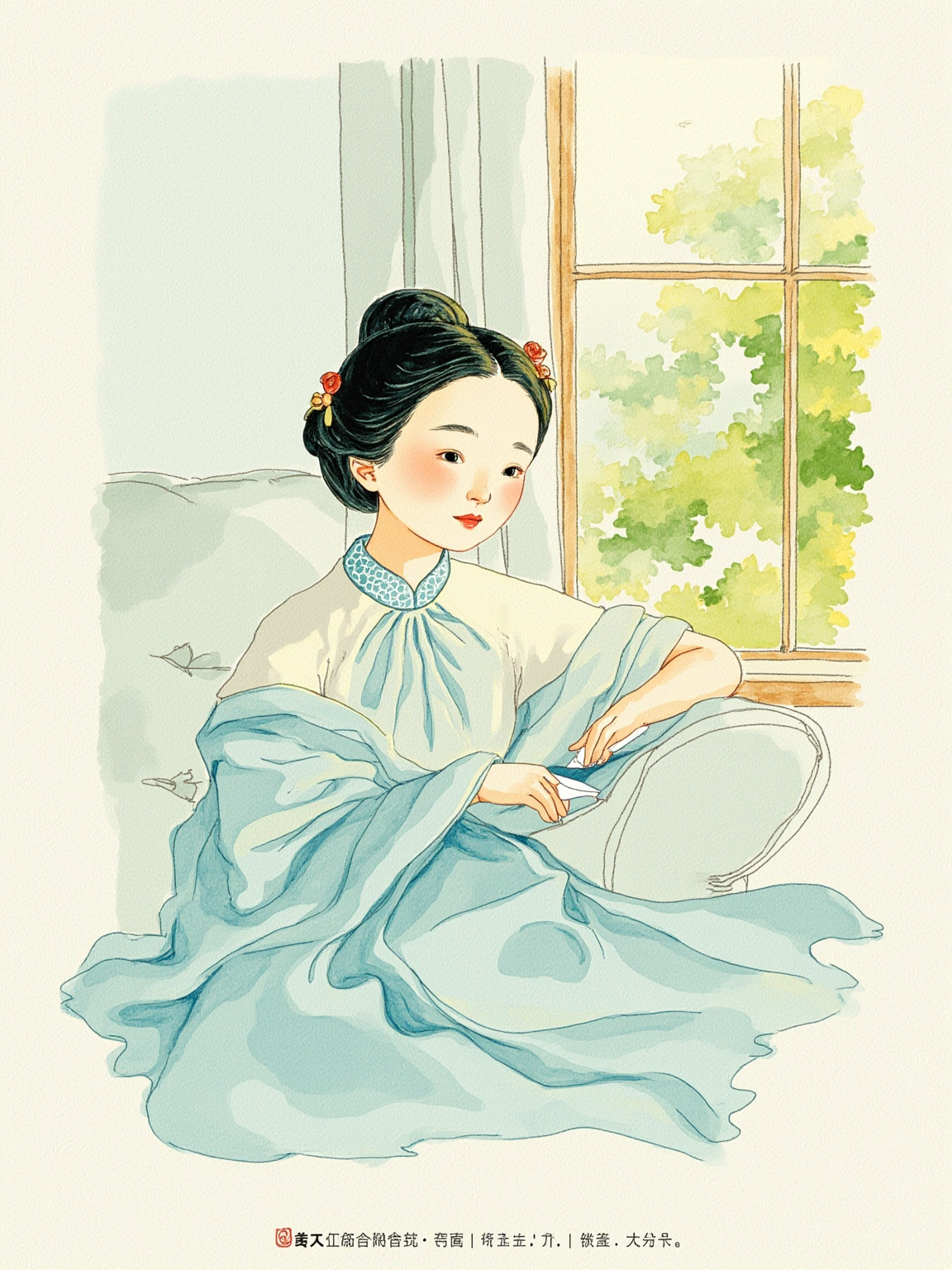
I have no strength to teach or to scold — only these few words, rising of themselves from the pillow.
我也没有力气去教训人,只是枕上浮上来的几个字,就让它浮上来罢了。
金句 · 《通讯十九》· 沙穰病榻谈爱与母亲
In this stretch she starts pulling out words like love, mother, and the innocence of a child's heart to talk about directly with her young readers. But she never lectures — lying there, she barely has the strength to lecture anyone; she is simply a person on a sickbed, saying the words that rise to mind, one at a time.
August Tenth, Fishing for the Moon at Lake Waban
Once she recovered, she returned to Lake Waban. On the night of August 10, 1924, she and several classmates went down to the lake — the most famous scene in the whole book. Rain had just stopped, and the full moon lay reflected on the water. One of the girls proposed: let's go catch the moon! So a few of them hitched up their skirts, waded in waist-deep, and reached down for the piece of moon floating in the water. They never caught it. Their arms only broke it apart, and it slowly gathered itself whole again.
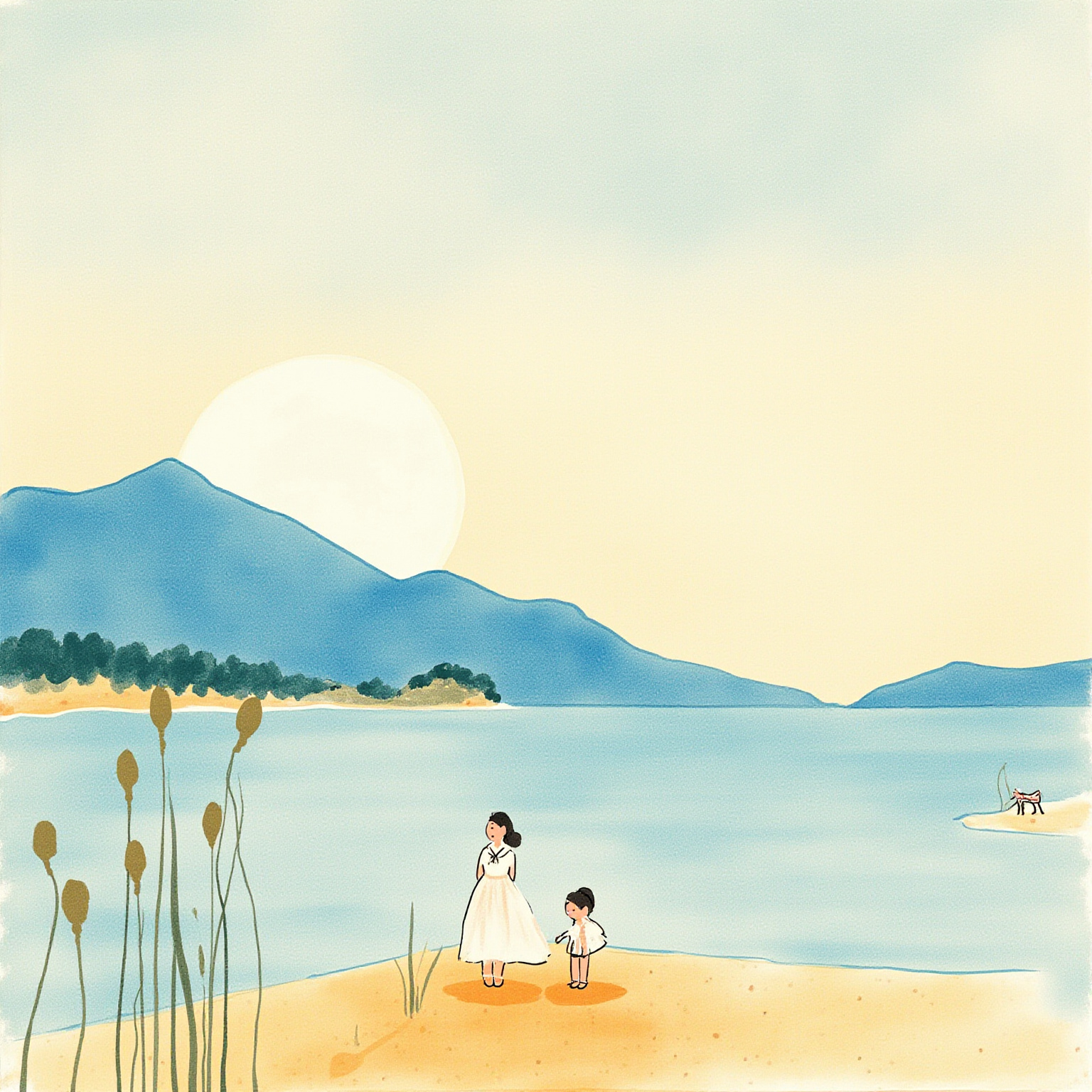
We laughed, we fell, we rose again — and the moon, caught in our dripping hands, was only water after all.
我们笑着,跌倒了,又站起来——捞上来的,哪里是月,只是满手的湖水罢了。
金句 · 《通讯二十六》· 八月十日湖畔捞月
In craft terms, Bing Xin does something only a skilled writer would attempt: she draws no moral from any of it. The whole letter is simply a record of what happened that night — the wind, the water, the moon, the laughter, a stumble, getting back up. The feeling is all there in the account; the reader is left to find it. That single night has gone on to appear in generations of Chinese schoolchildren's textbooks.
The Journey Home and the Close
Letters Twenty-Seven through Twenty-Nine belong to the year she went home. In the summer of 1926 she boarded the ship for China and retraced the three-year crossing in reverse. Passing over the Pacific this time, she no longer stood gazing upward the way she had on the way out; instead she looked back at her own letters from the year before — back then I had just left my mother, and I was crying. By the last few letters she is already home, sitting again with her younger brothers in Beijing, in the same courtyard as before. The letters close here without any solemn farewell, only the promise: dear little friends, I'll write again next time.
When I left, I was a child still crying for her mother; now the years have quietly done their work.
离家的那一年,我还在为母亲哭;如今,岁月已在不知不觉中替我把事做了。
金句 · 《通讯二十八》· 归途回望
What It's Actually Saying
On the surface, this is a young woman's travelogue of seeing the world. Underneath, Bing Xin is using one short letter after another to tell children back home three things: that there is a kind of beauty called a moonlit night on the Pacific; that there is a kind of strength called growing up a little every day even with your mother far away; and that there is a way of speaking that goes, I am a child too, I've simply walked a few steps further down the road than you have. She meets her young readers as an equal, no lecturing, no indoctrinating. That is the real reason Letters to Young Readers has been remembered: it gave Chinese children their first image of a gentle older sister, and it gave written vernacular Chinese a model for how to talk to a child.
Read today, what makes it easy to love is just as clear: it has no ambition. No irony, no metaphor, no word that sends you reaching for a dictionary. Each letter says exactly one thing, and the twenty-nine of them together add up to the shape of a young woman in her twenties growing, a little, over three years. The first time I read it, I thought it was written for children. It was only later that I realized it was written for anyone who has ever left home.
Why It's Worth Reading Even Once You Know What Happens
I've now walked through all six scenes — the docks, the Pacific, Lake Waban, Sharon, fishing for the moon, coming home. But there are three things the text itself can give you that this guide cannot.
The first is the warmth of the actual sentences. Every letter has a few lines of what's known as the Bing Xin style, and you only understand it by reading it aloud yourself — the short sentences, the white space, the refusal to pile up adjectives, a rhythm that sounds like someone talking slowly into your ear.
The second is the sense of geography. The train window past the Rockies, a child bent over in a California orchard, the brief glimpse of the streets at Kobe, a bird outside the sanatorium window in Massachusetts — these details fall scattered through the text like trees flashing past a train window, and you can only really see them by riding that train yourself.
The third is the shape of those three years. A summary can tell you that she left and came back. The text lets you see a young woman in her twenties who cried once leaving and once again coming home, who fell ill once in between, and once reached into a lake for the moon — and the shape of those three years only holds firm once you've turned the pages yourself, one at a time. Knowing the story is still worth reading past, because what the text gives you isn't the plot. It's the felt sense of that distance, walked slowly to its end.
A book written for children turns out to belong to anyone who has ever left home.
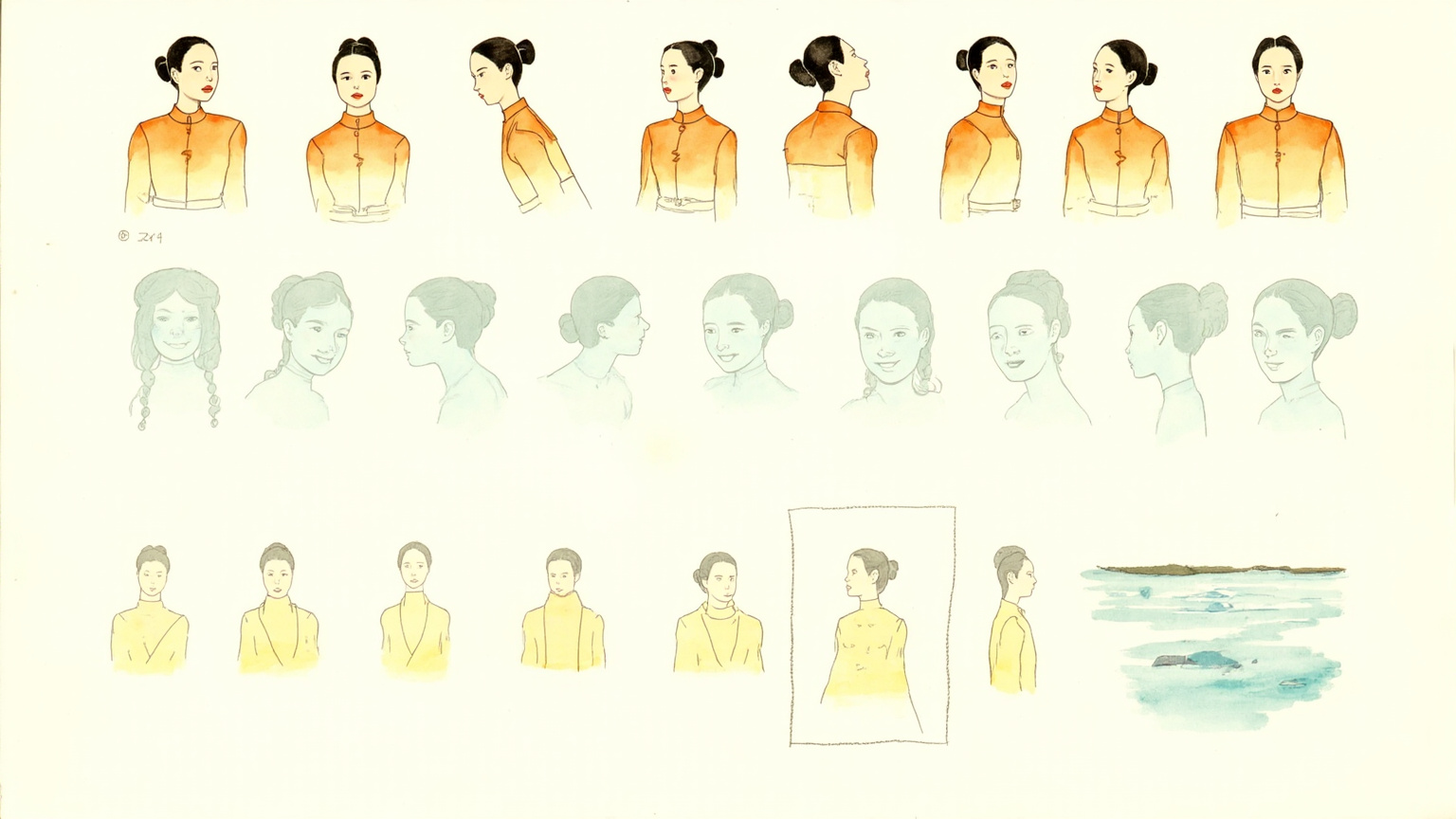
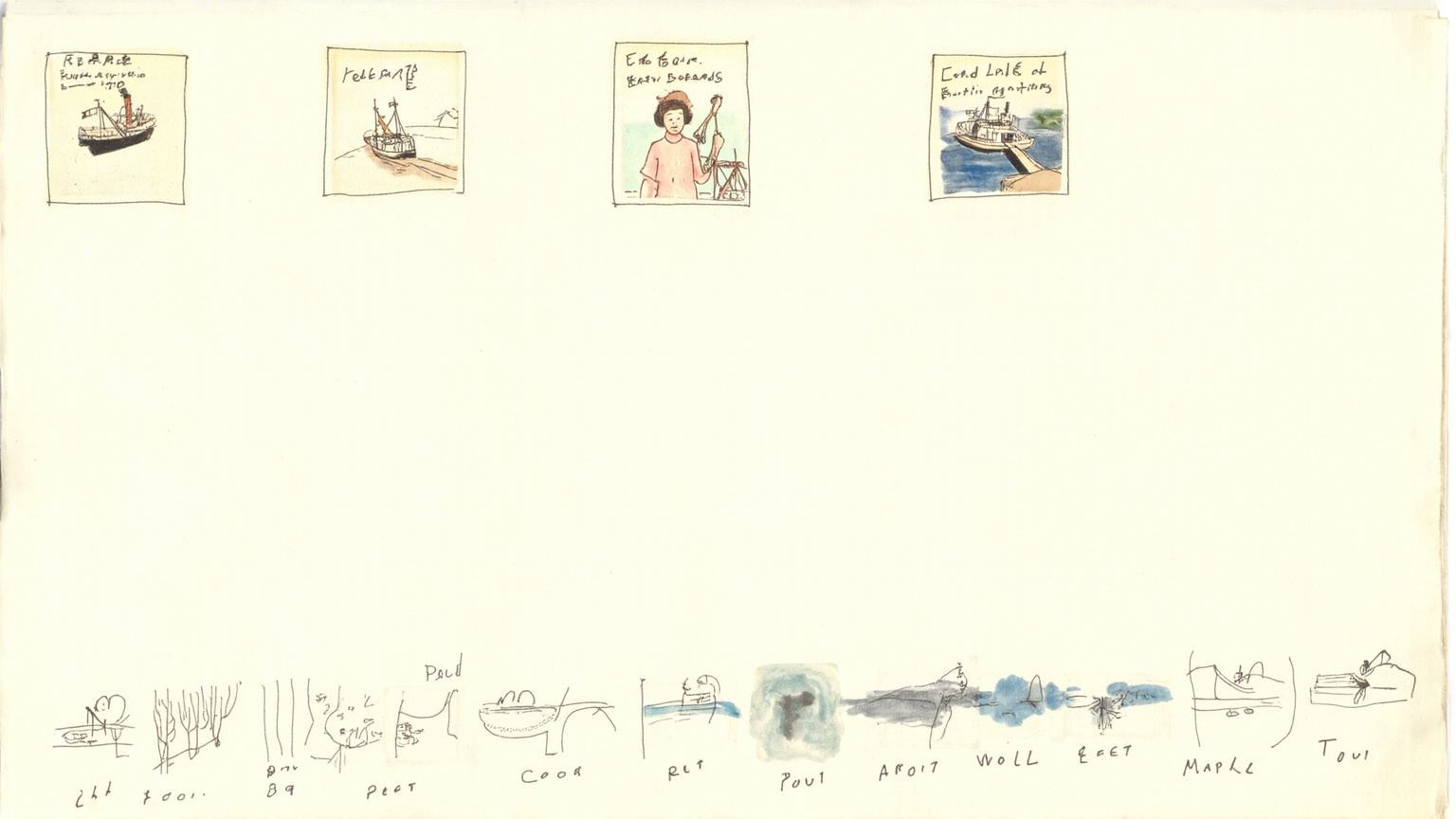
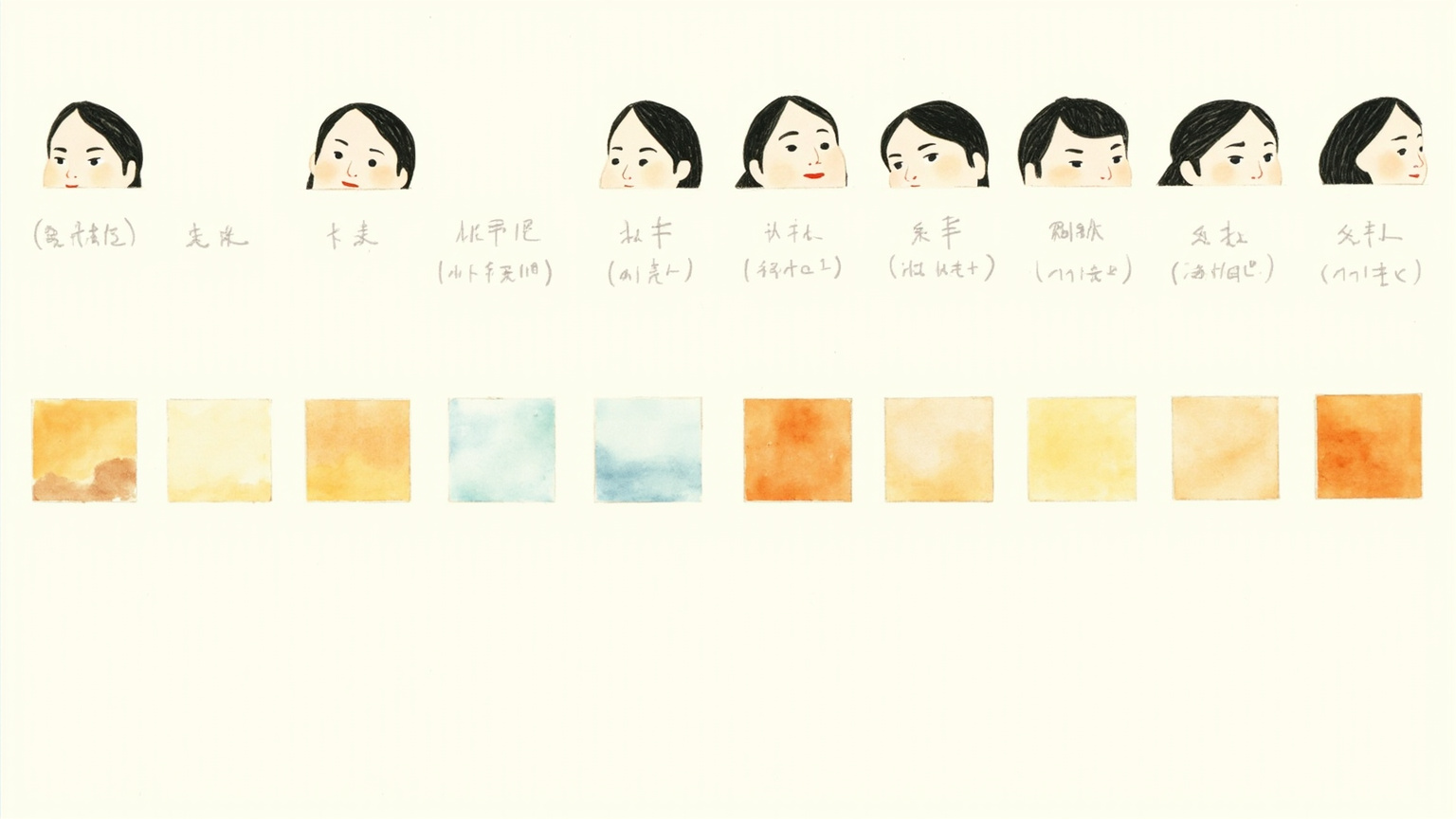
Art Direction4 plates
Before the guide was written, this book got a visual foundation — every illustration you just read grew out of it.