The Bald Soprano (La Cantatrice chauve) · Companion Guide
秃头歌女
伦敦中产客厅里六个体面人,把礼貌寒暄一路聊到语言崩塌,最终齐声高呼「齐!齐!齐!」
Opening: A Newspaper Nobody Ever Finishes
The doorbell rings four times before Mrs. Smith pushes her glasses back up her nose and tells the maid to answer it. It's the neighbors from next door, the Martins, and ten minutes into the visit both couples arrive, awkwardly, at the same conclusion: they have no idea who the other one is. Mr. Smith keeps turning the same page of The Times. Mrs. Smith keeps fussing with the same lace tea set. Nobody is saying anything that matters, and nobody can stop the conversation either. The play starts with a newspaper nobody finishes and a pot of tea that never stops pouring, and it ends the same way every time it's staged: six voices collapsing into the same syllable, shouted over and over, in a living room even more wrecked than the one it opened in.
What This Play Is
The Bald Soprano made the reputation of Eugène Ionesco, the Romanian-born French playwright. It premiered in Paris in 1950, in a theater that seated only a few dozen people, and the opening night was close to a total failure. Seven years later a new director restaged it, and from then on it never left the bill at the Théâtre de la Huchette, decades of continuous performances, more than twenty thousand of them, one of the standing miracles of twentieth-century theater history. It was born the same year as Beckett's Waiting for Godot, and the two are named together as the founding works of the Theatre of the Absurd, though where Beckett puts two tramps on a country road waiting for someone who never comes, Ionesco puts four English bourgeois in front of a fireplace, mistaking one another for strangers.
Characters and World: Six People in One Living Room
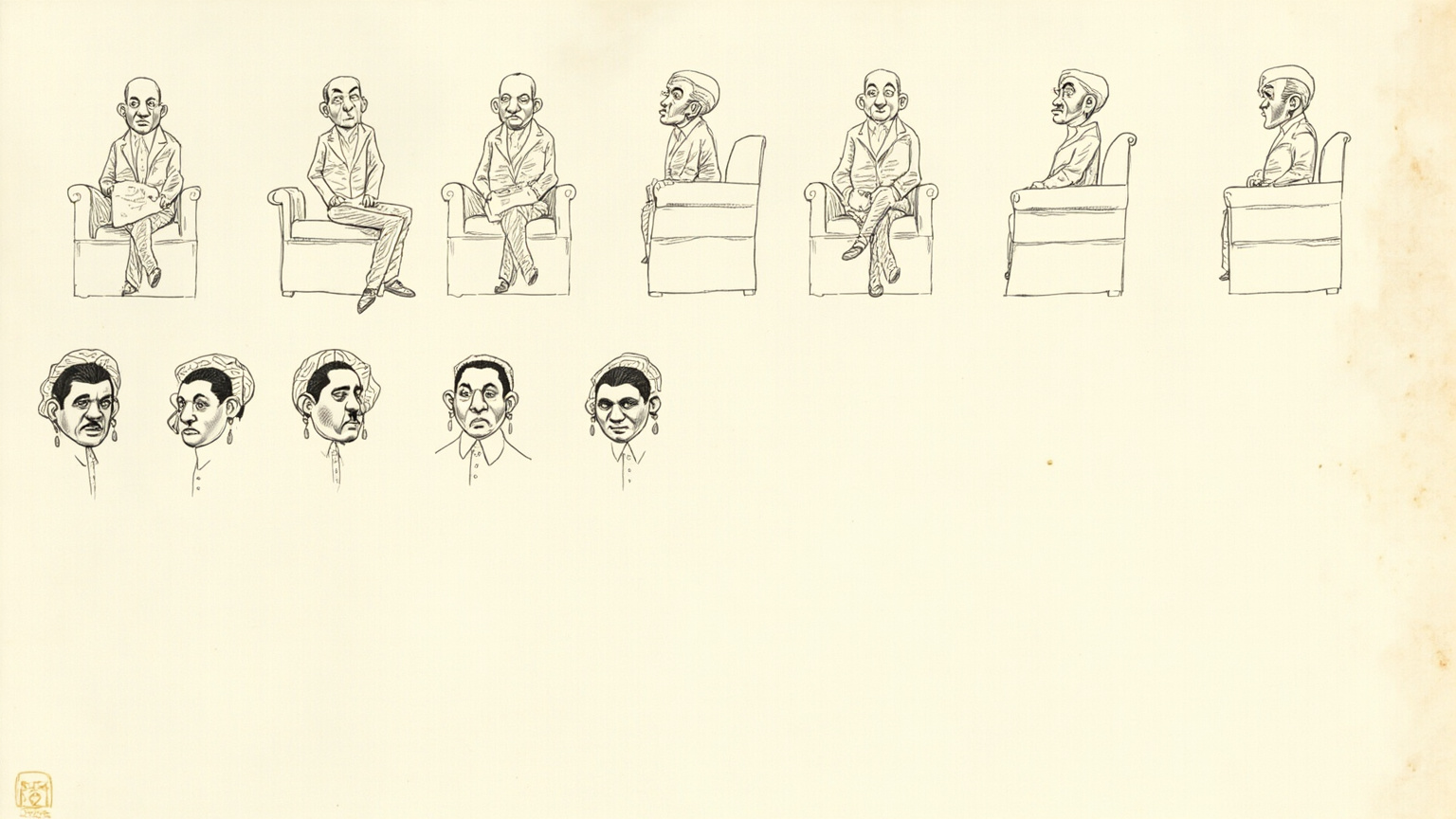
There are six characters in all. The Smiths: a London middle-class household, he a bald gentleman, she a bespectacled housewife. The Martins: neighbors of the same age and class, so respectable in manner and appearance that nothing about them could be more respectable. The Fire Chief: brass helmet, brass uniform, sent to put out a fire in the chimney, and he arrives later than the fire itself. Mary the maid: English, on stage twice, and her second appearance is the single most absurd monologue in the play. The world runs on exactly one rule: every line of dialogue is lifted straight out of an English textbook, the tone the French imagine English middle-class people using when they speak. The more proper, the more polite, the more like a textbook, the more correct it is.
The Plot: How Six People Talk a Living Room to Ruin
The play opens with the Smiths sitting by the fireplace, trading a full set of pleasantries about the weather, dinner, the children, the doctor, the neighbors. She says the weather is lovely today; he answers that a lot of people are out walking. Each line follows logically from the one before it, and together they add up to nothing at all. That's the grammar of the whole play: every sentence polite, every sentence empty. I remember stalling on this passage the first time I read it. So this is the absurd: nothing strange has to happen, you just push the ordinary as far as it will go.
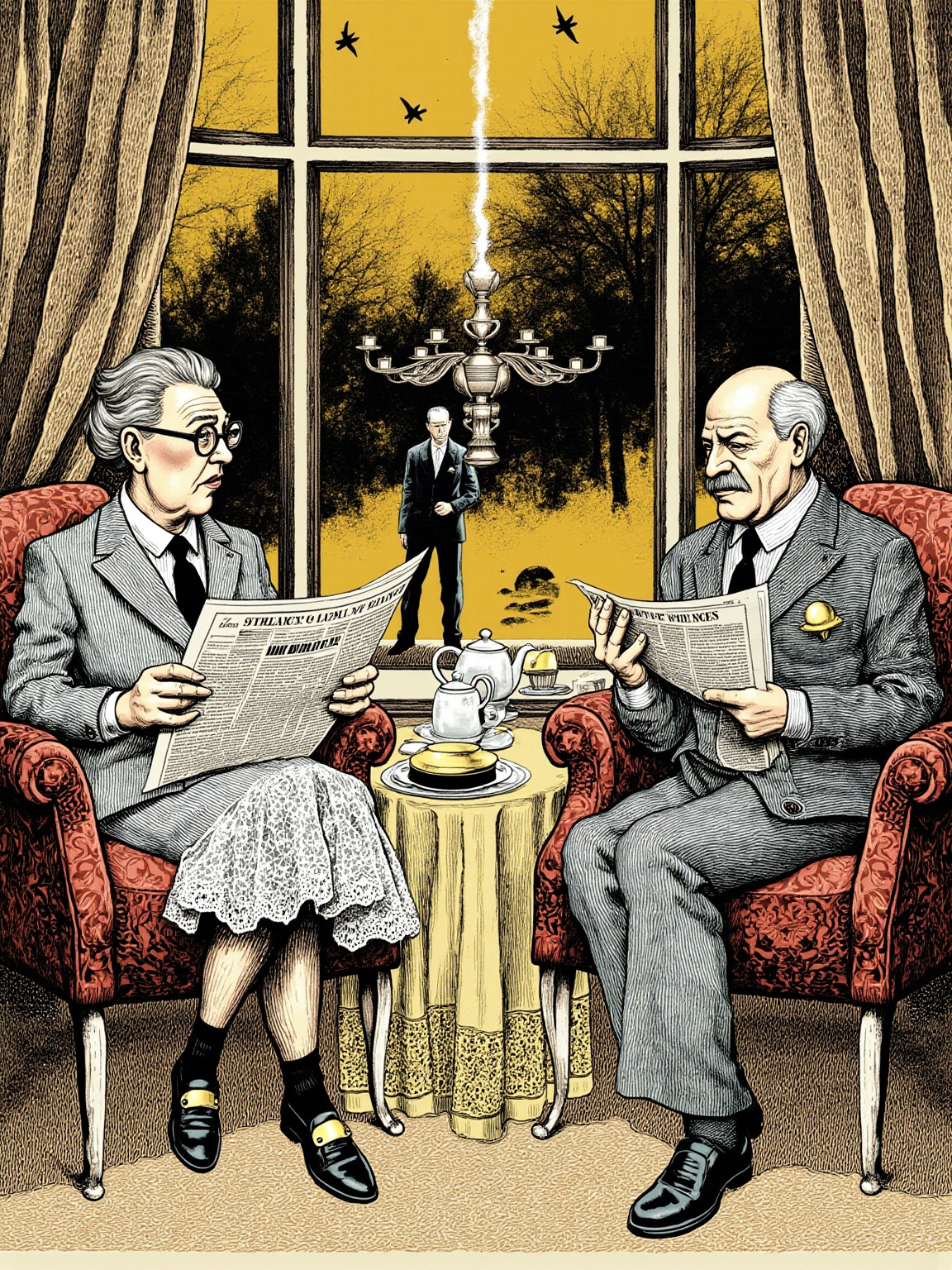
It's a funny thing, Mrs. Smith: the way everyone is in such a hurry to get to the end of the play, when they haven't even begun.
说也奇怪,史密斯太太——人人急着想把这出戏看完,可这出戏压根儿还没开场呢。
金句 · 第2场 · 英语课本里的客套
The doorbell rings four times, and Mary announces the neighbors, the Martins, come to call. This is the standard scene of any English domestic comedy: the hosts welcome the guests, the guests take their seats, small talk follows. But halfway through, the two couples start to seize up. Mr. Martin thinks Mr. Smith has mistaken him for someone else; Mr. Smith thinks the same of Mr. Martin. They check addresses, birthdays, the children they've had, and end up unable to decide whether they've never met at all or have lived under the same roof for a lifetime. The logic of the scene spins in circles, never confirming, never denying, until neither man can say what he actually is to the person across from him.
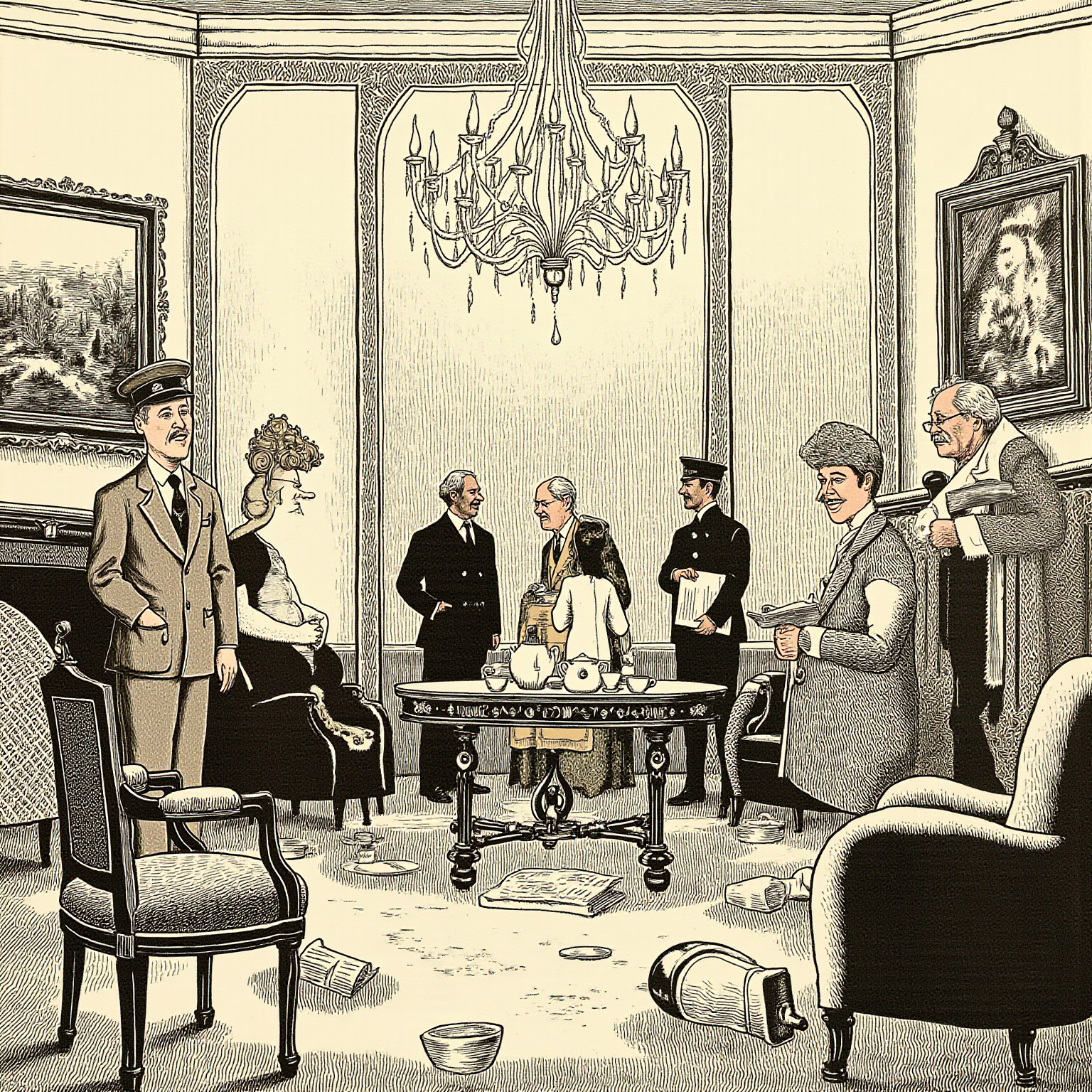
I don't know whether we've met before, or whether we haven't met before.
我说不清咱们究竟见过没有,还是压根儿没见过。
金句 · 第5场 · 马丁夫妇的互认
The doorbell rings again, and the Fire Chief makes his entrance, brass helmet, brass uniform, come to put out the fire in the chimney. Once inside, he never goes near the fire. Instead he sits down by the fireplace with Mrs. Martin for a long conversation, working from three generations of firefighters in his family, through the poor manners of the lower classes, to how unfairly he himself is paid. He's the only character who gets a full monologue, and he delivers it with real conviction, as though every word were certain, grievances no one asked to hear and that he can't quite explain himself. The best part is how he ends it: he takes off the shining brass helmet, and underneath is a bald head identical to Mr. Smith's and Mr. Martin's. Then he announces that there is no such thing as the Bald Soprano.
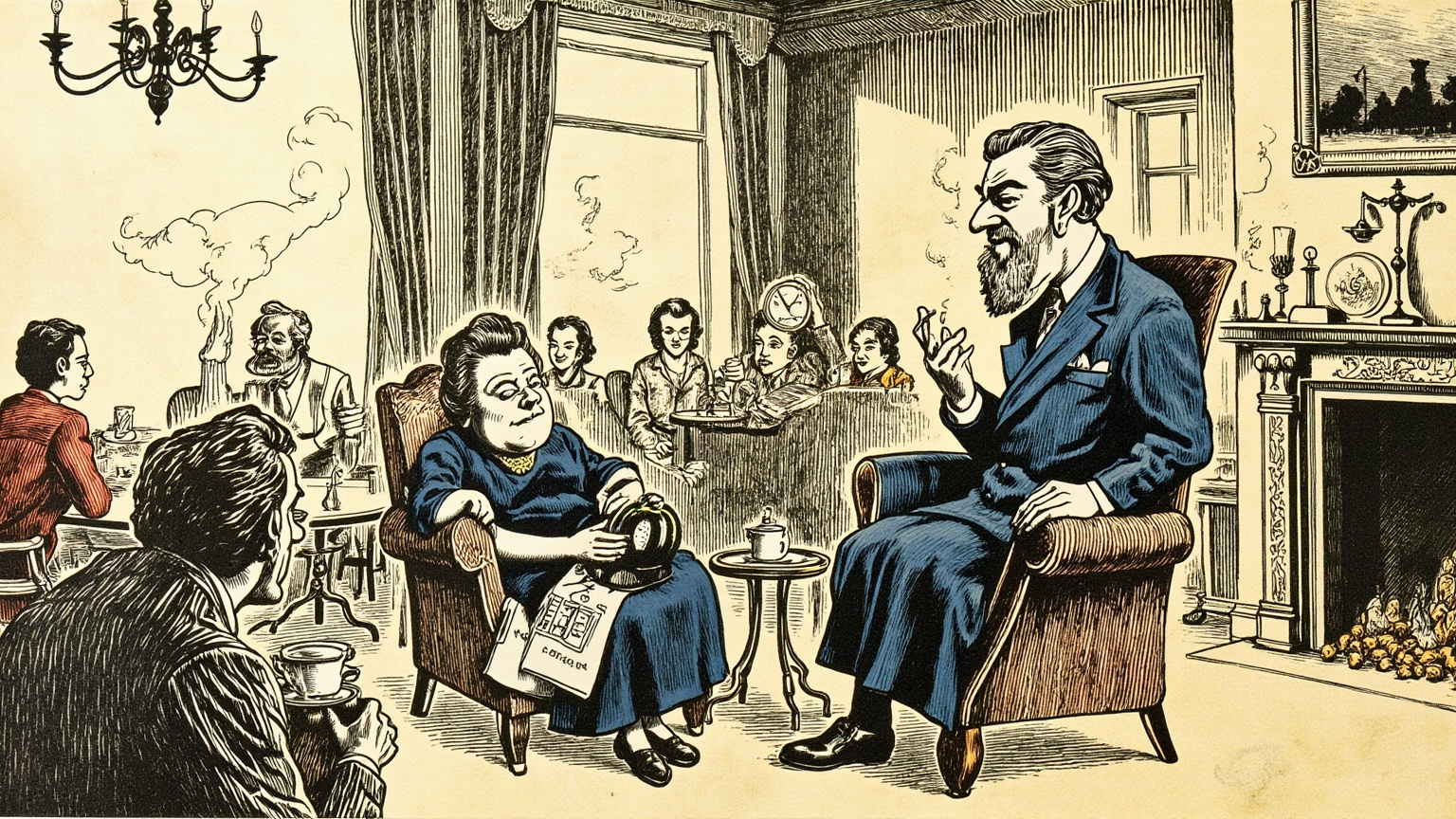
My mother was a fireman, my father was a fireman, my grandfather too — it's hereditary in our family.
我母亲是消防队员,我父亲也是,我祖父更是——消防这行当,是我们家祖传的。
金句 · 第9场 · 消防队长的家史
Once the Fire Chief is shown out, Mary takes the stage a second time, and this monologue is the most bewildering stretch in the whole play. She tells the story of her romance with a man who started out as a banker in Manchester, lost that job and became a newspaper deliveryman, lost that job too and became a scholar, then went back to banking. She and he got engaged, broke it off, got engaged again, broke it off again, an endless loop with no resolution in sight. His career runs in one circle, their engagement in another, and the two circles turn together without ever stopping. When she finishes, the Smiths send her away, and the lights in the room go out.
When the lights come back up, the play restarts exactly where the blackout found it. The Martins' recognition scene runs again, only worse this time. It's no longer just that they can't work out who they are; the instrument of speech itself starts breaking down. They talk with their tongues, talk through their noses, talk in silence. Then the Smiths join in, the Fire Chief reappears, Mary comes back too, and all six of them fall together into a loop of incoherence, each one repeating what he's already said, none of them able to hear anyone else.
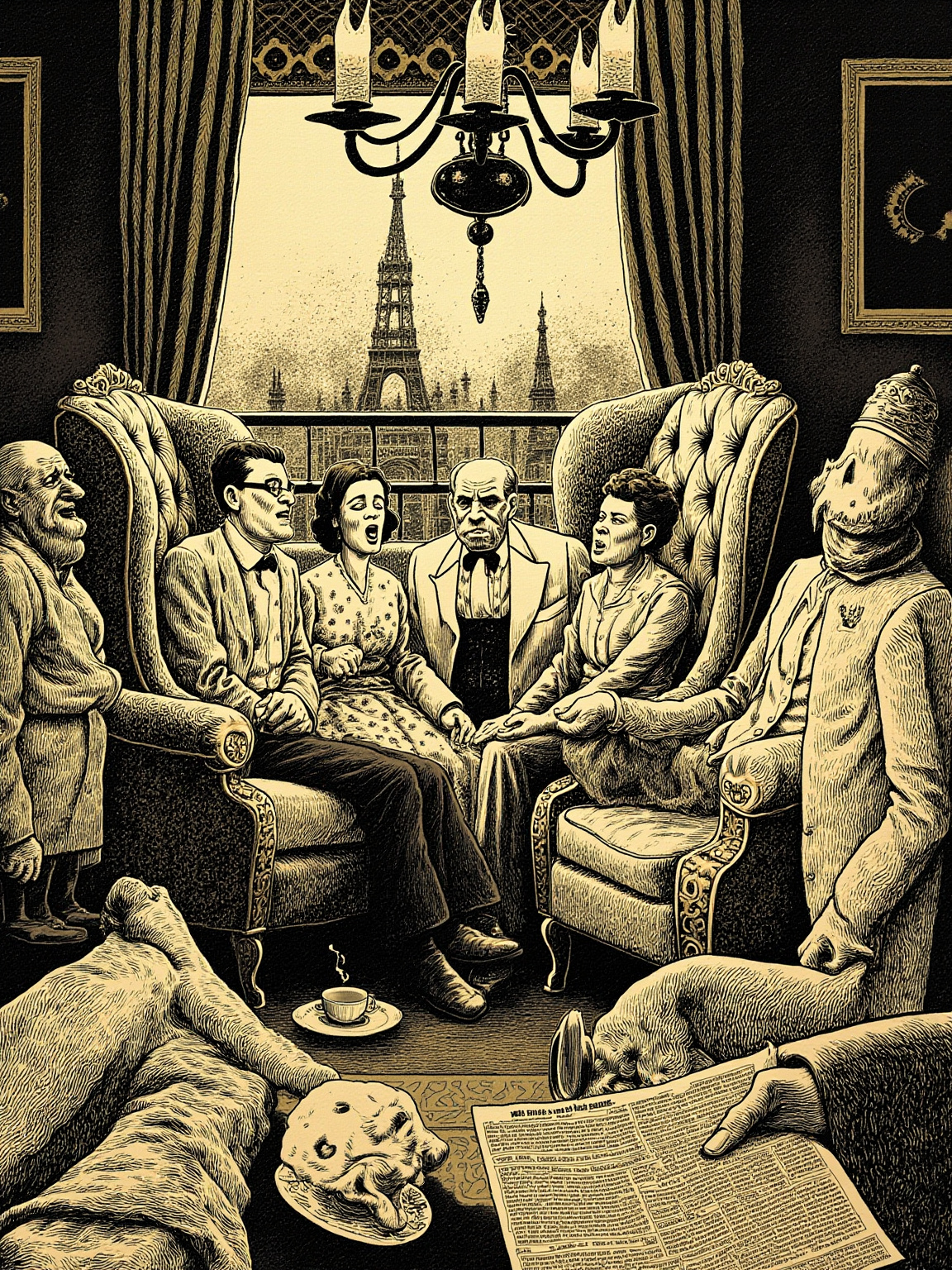
Speak! Speak! But don't say anything! Make an effort! Make an effort! Don't say anything!
说!说呀!可什么也别说!使劲!再使劲!——别真说出什么来!
金句 · 第11场 · 黑场重启之后的舌音鼻音
The play has no ending. The Smiths, the Martins, the Fire Chief, and Mary, all six of them collapse into the same syllable, shouted over and over, voices rising against each other until they drown out every trace of the fireplace's propriety, the tea set, the newspaper. That's the ending: nothing is resolved, nothing is revealed, and what's left is the noise after language has collapsed, yours to listen to.
How the Playwright Turns a Living Room into a Scaffold
What makes this play genuinely ruthless is that nothing of consequence happens in it, start to finish. No murder, no betrayal, no earthquake, only the most ordinary polite chatter of an English middle-class living room. Ionesco's bet was that if you push that chatter far enough, the absurd will surface on its own. You don't need a madman to burst through the door; the ladies and gentlemen already sitting in the room are the absurdity itself. That's what sets it apart from Waiting for Godot. Beckett shows you two tramps waiting. Ionesco shows you four respectable people sitting there waiting for nothing at all, and that nothing is more unsettling than waiting for Godot ever was.
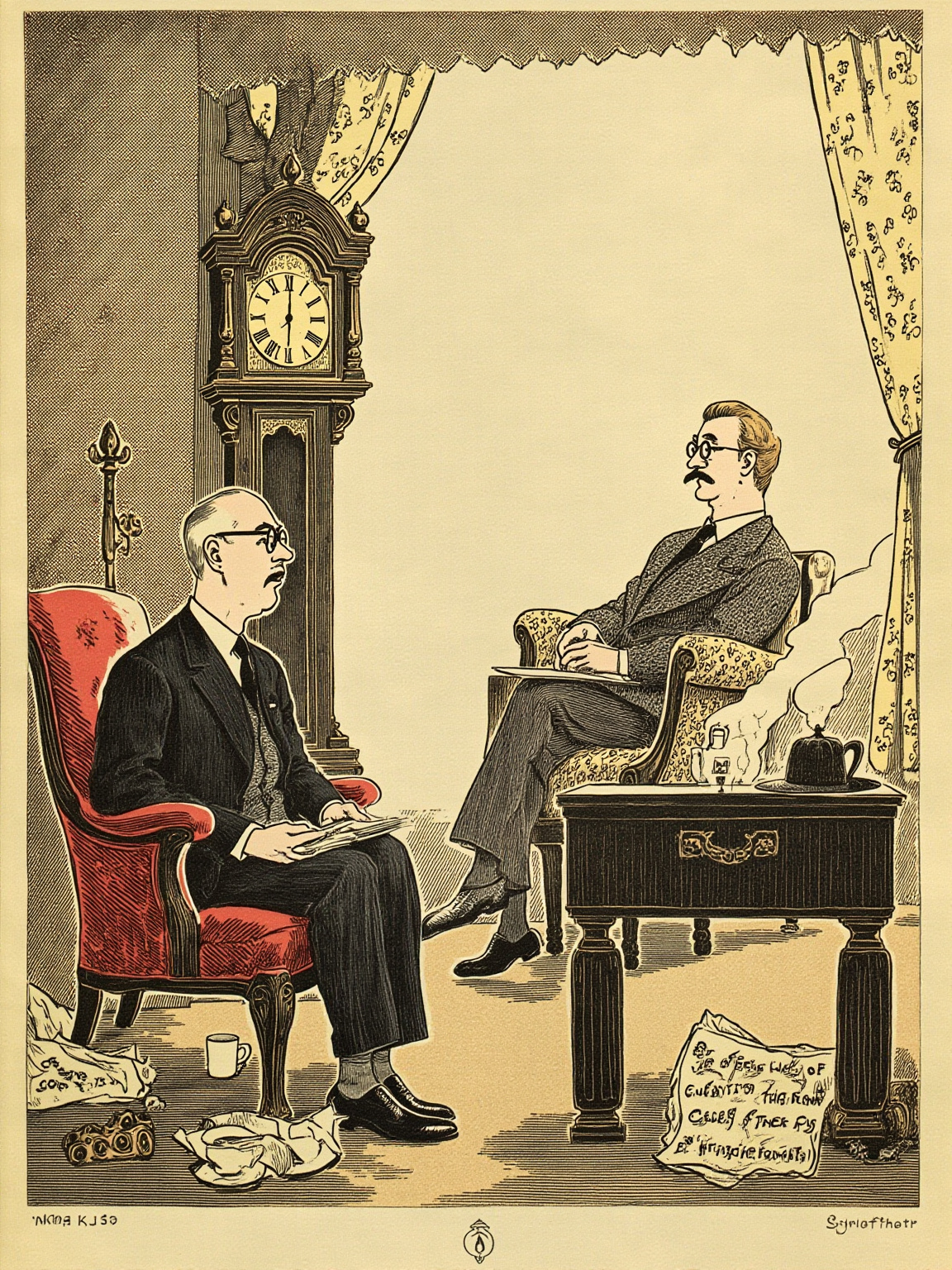
Together, all at once, as in a great choir, in a single voice: Not especially, in the least.
六个人一齐开口,像一支大合唱那样,用同一个声音说:「一点也不特别。」
金句 · 第11场 · 齐声合唱
What Is It Actually Saying
The first layer is language failing. Ionesco wrote the play in French, but he deliberately made his characters sound like they're reciting an English textbook, treating English as a specimen of a foreign tool: the words are still there, the syntax is still there, but the meaning has drained out. A married couple talk themselves into not knowing who the other one is. The Fire Chief complains with total conviction, and nobody responds to a word of it. In the end all six shout the same sound together, and by then it is only noise, the residue left after communication has gone completely bankrupt. The second layer runs colder. The respectability of ordinary bourgeois life is nothing but a wall built out of this same language, idling in neutral. You think you're talking to another person; really you're only talking to your own linguistic habits, and that habit has gone hollow.
Deeper still is the loop. Engagements made and broken, then made and broken again. Careers changed and changed again, until they land back where they started. The recognition scene replays out of the blackout. That final chant repeats itself over and over. None of it goes anywhere, not forward, not backward. The play has no Aristotelian climax, no resolution. What it hands you isn't an answer. It's the loop itself.
Why This Play Is Still Worth Watching Today
In an age of short video and fragmented conversation, this play has an odd new relevance. You've heard that same chatter yourself, polite sentence after polite sentence, adding up to nothing, at some dinner, some group chat, some family gathering. Ionesco just pops the hood on that kind of small talk and shows you there's nothing underneath. The play is a reminder that language isn't only a tool; it's the plaster on the wall of civilization, and only when the plaster starts to flake do you see that the wall behind it is hollow. It failed on opening night in 1950 and came back seven years later to run tens of thousands of performances, proof that sometimes a good thing needs time before anyone can see it.
The absurd doesn't need a madman to burst through the door — four respectable people, sitting together, being polite, is already the absurd itself.
Why It's Still Worth Sitting in the Theater, Even Knowing the Plot
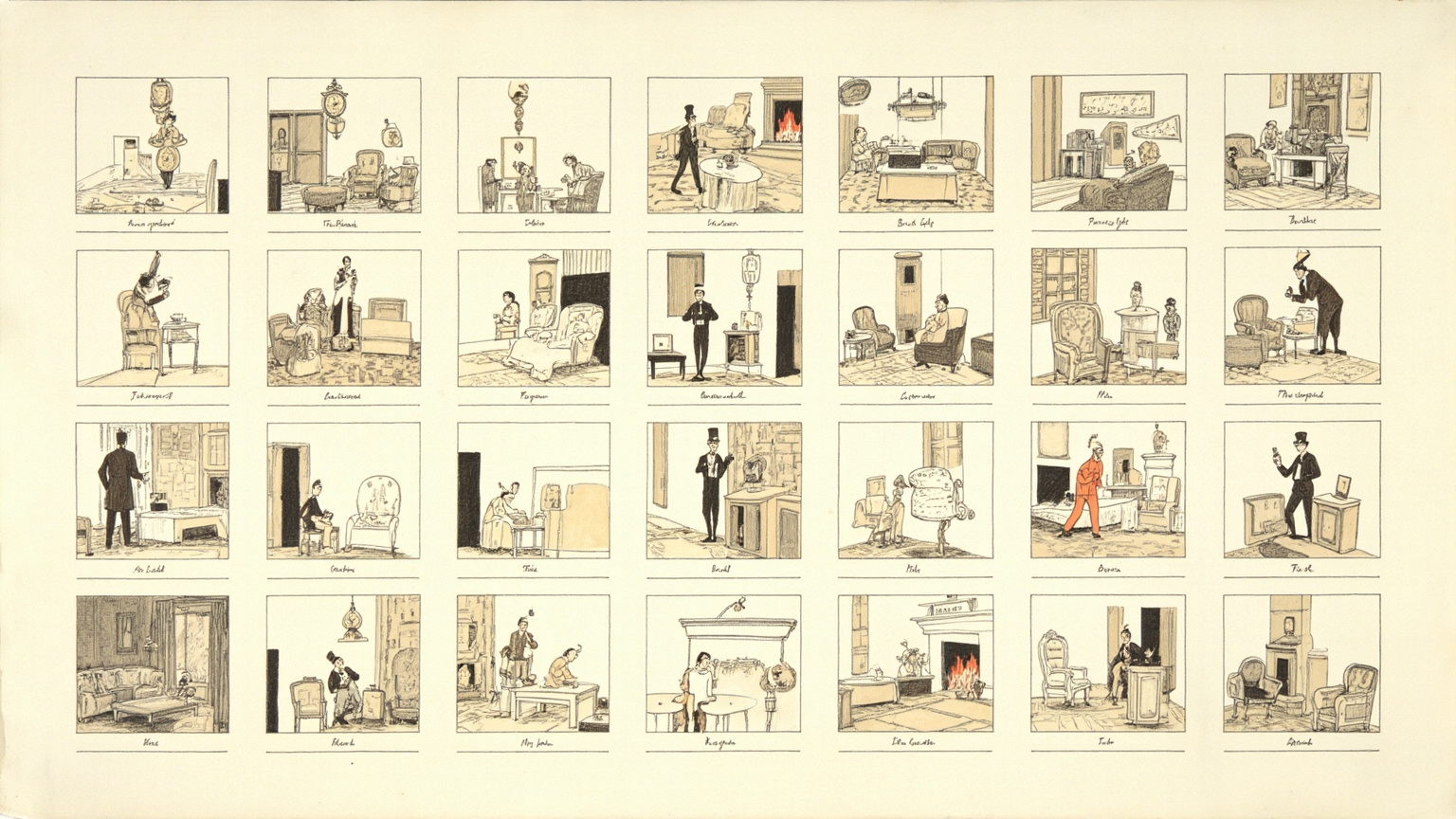
A guide like this one can tell you what happens, but there's one thing it can't give you. Sit in a small house like the Théâtre de la Huchette, with six actors just two or three meters away dismantling language one line at a time, and the sense of suffocation is real — their rhythm pulls you in until you start doubting what you meant by the sentence you just said yourself. Then there's that final chant. On the page it's a line of text; in the theater it's six voices hitting your ears at once, a physical impact no script can convey. None of that reaches you outside the room. And knowing the plot in advance actually lets you watch deeper: you find yourself staring at the clock that never stops striking contradictory times, at the lace tea set, at the firelight in the grate, catching the layer the script never says out loud.
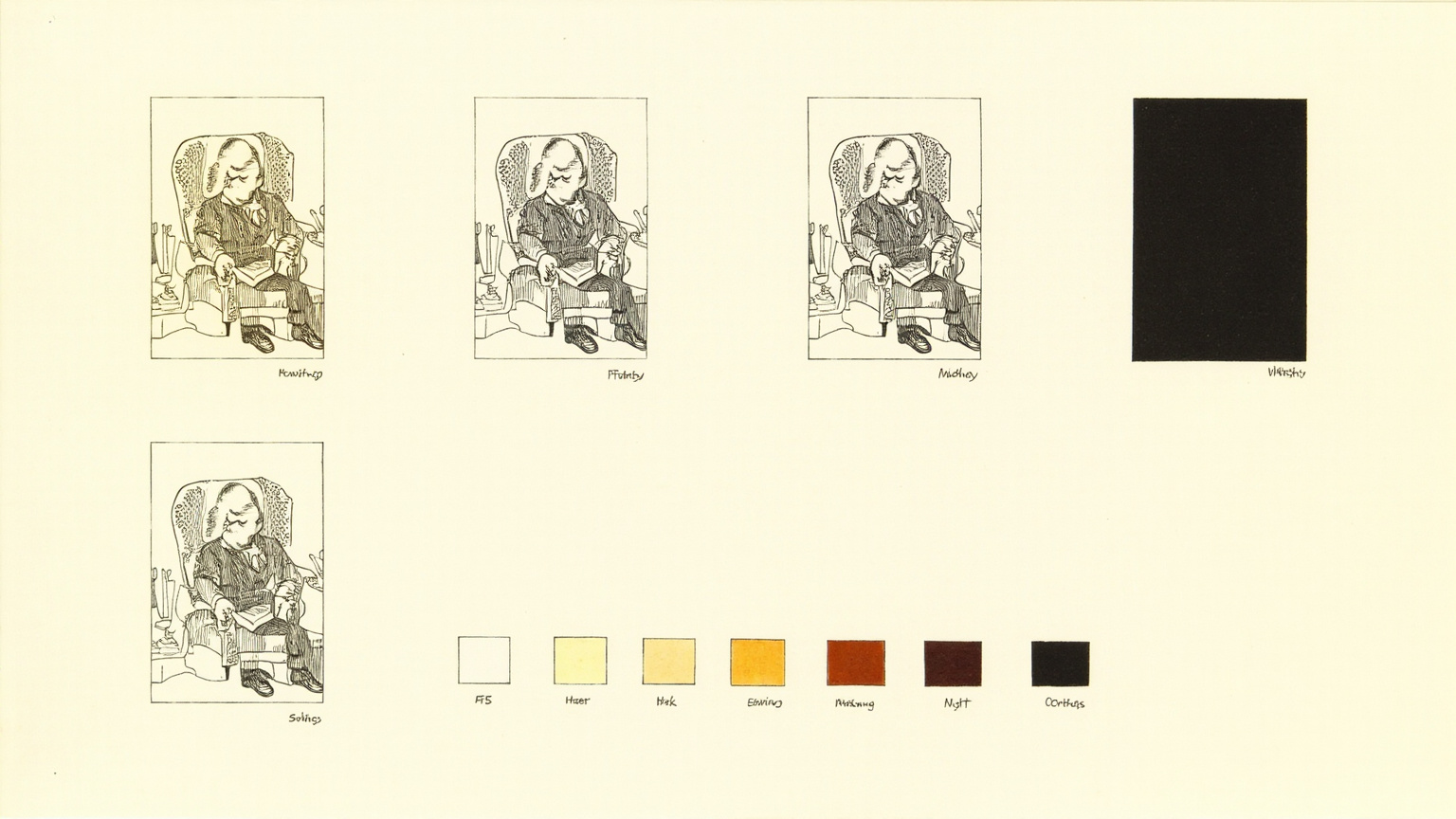
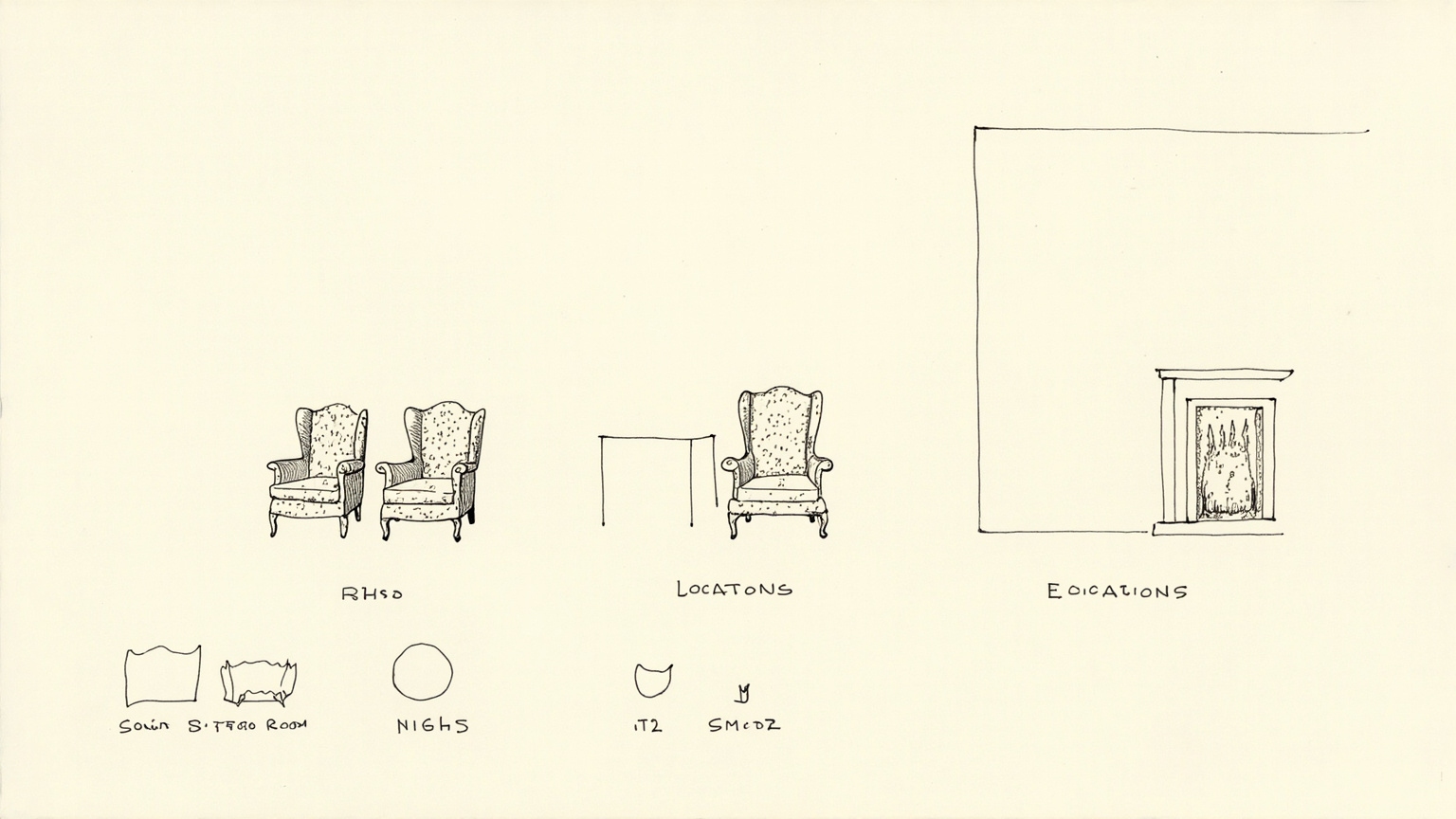
Art Direction4 plates
Before the guide was written, this book got a visual foundation — every illustration you just read grew out of it.