The Blind Owl (Buf-e kur / بوف کور) · Companion Guide
盲枭
一个笔盒匠对着猫头鹰影子忏悔——他一天画十遍同一幅画,柏树下少女递来的牵牛花。
The Opening Hook: A Morning Glory Passed Under a Cypress
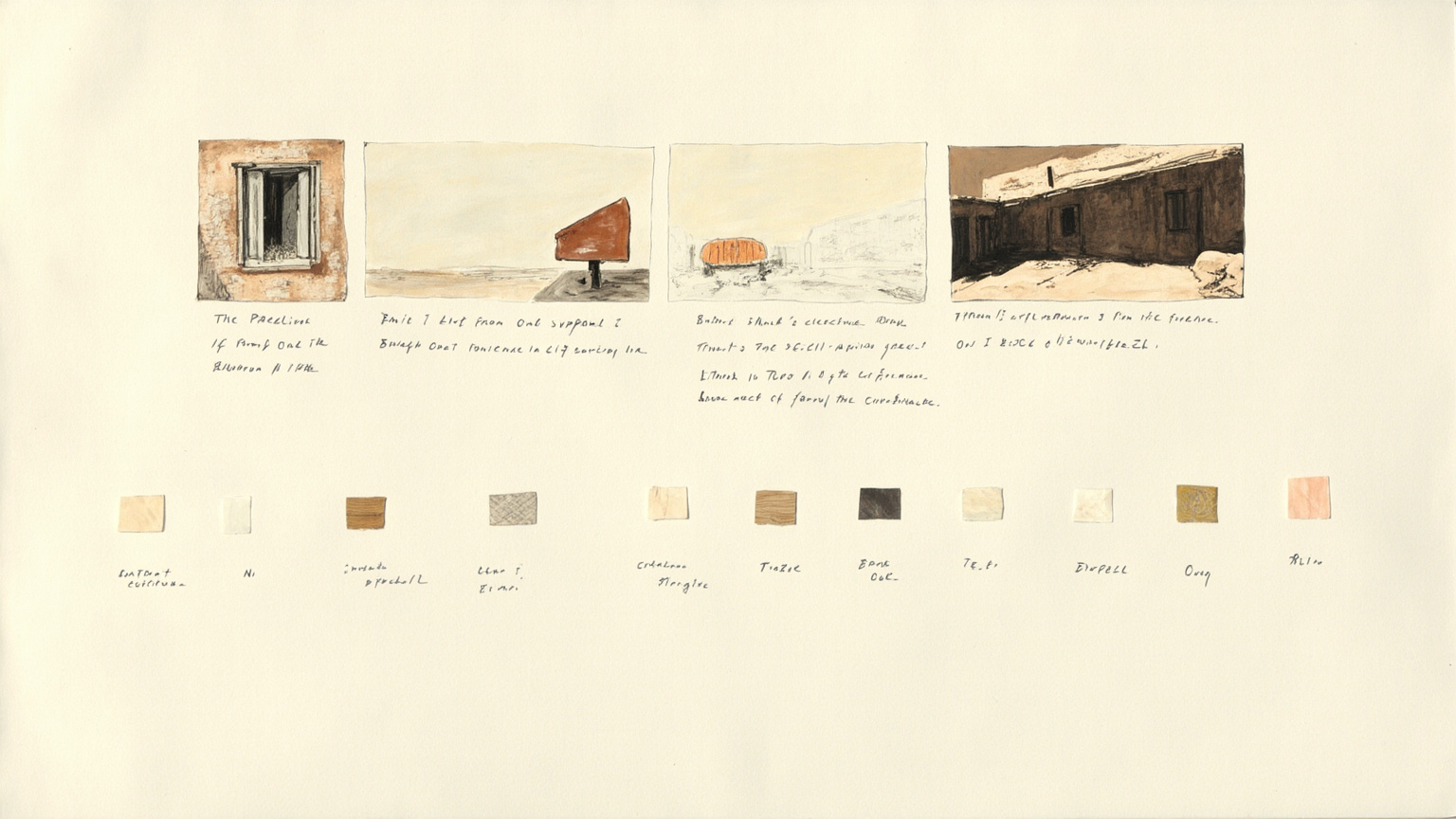
He paints the same picture ten times a day: an old man wrapped in a shawl reaching out under a cypress tree, a girl in black holding out a morning glory to him. He finishes it, wipes it clean, paints it again. That is the image that opens The Blind Owl and sends a chill down your spine — a painter locked inside his own design, fully aware of it, unable to stop his hand. He lives outside Tehran, in the ruins of Ray to the south of the city: an arched room, a cramped cell, one small window with a transom. Beyond the glass is the old city of the 1930s: opium dens, taverns, coffin shops. Inside there is only him, and the shadow on the wall shaped like an owl.
The first edition was printed in Bombay, its title page stamped: "Not for sale or publication in Iran." Reza Shah's Iran had no room for it. Years later it crept back into Tehran, serialized quietly in a newspaper. Sadegh Hedayat wrote it in his early thirties, lived roughly another decade after finishing it, then died in a Paris apartment before he turned fifty. Mention modern Iranian fiction today and this is the first title anyone names. It was the first Persian novel Western readers shelved as gothic nightmare, usually next to Kafka.
What Kind of Book This Is: A Confession Addressed to an Owl's Shadow
Calling it a novel undersells it: it reads more like an addict talking to a wall. Only one voice speaks in the whole book: an unnamed pen-case painter, the kind who decorates the little lacquered lids sold in bazaars. His only listener is the owl-shaped shadow on his wall. Present, memory, opium dream, childhood, old age — all pressed together with no order between them. One moment he is burning opium in a mud-brick room; the next he is standing under a cypress by the Suren, south of the city; the next he is a child again, held in the arms of a fat aunt. Hedayat wants exactly this vertigo, the line between day and night rubbed out.
Characters and World: Four Men and One Woman's Shadow
Keep one thing in mind before you go on: the two women in this book are visions of the same woman — sacred object of desire in one half, filthy wife in the other. Hedayat wants you to love her and hate her at once, because she was never two people. Hold that, and look now at the men who orbit her.
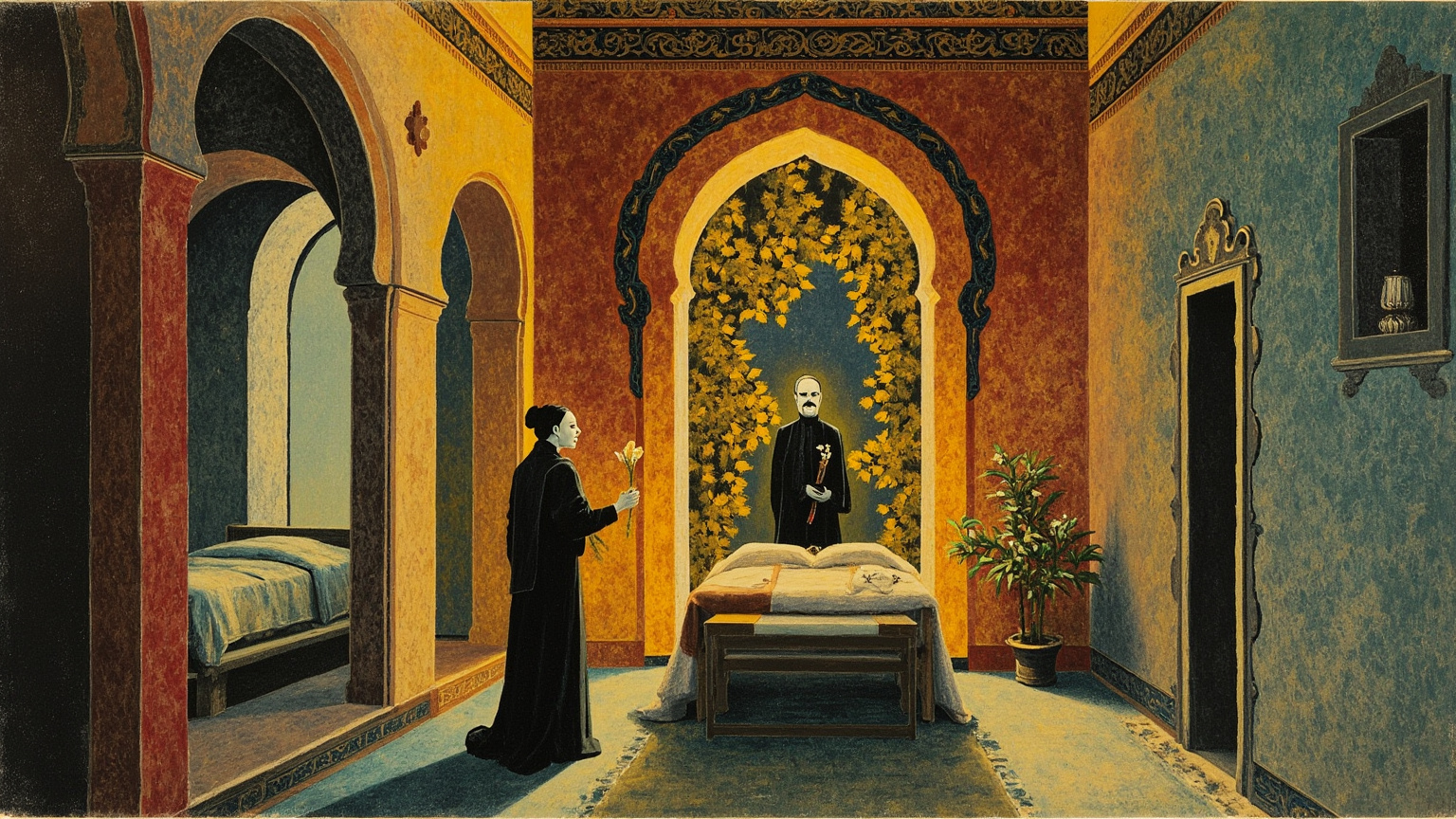
For a long time I have been painting the same scene on the lid of my pen-case.
很久以来,我一直在我的笔盒盖上画着同一幅画。
金句 · 开篇 · 同一幅画的回返
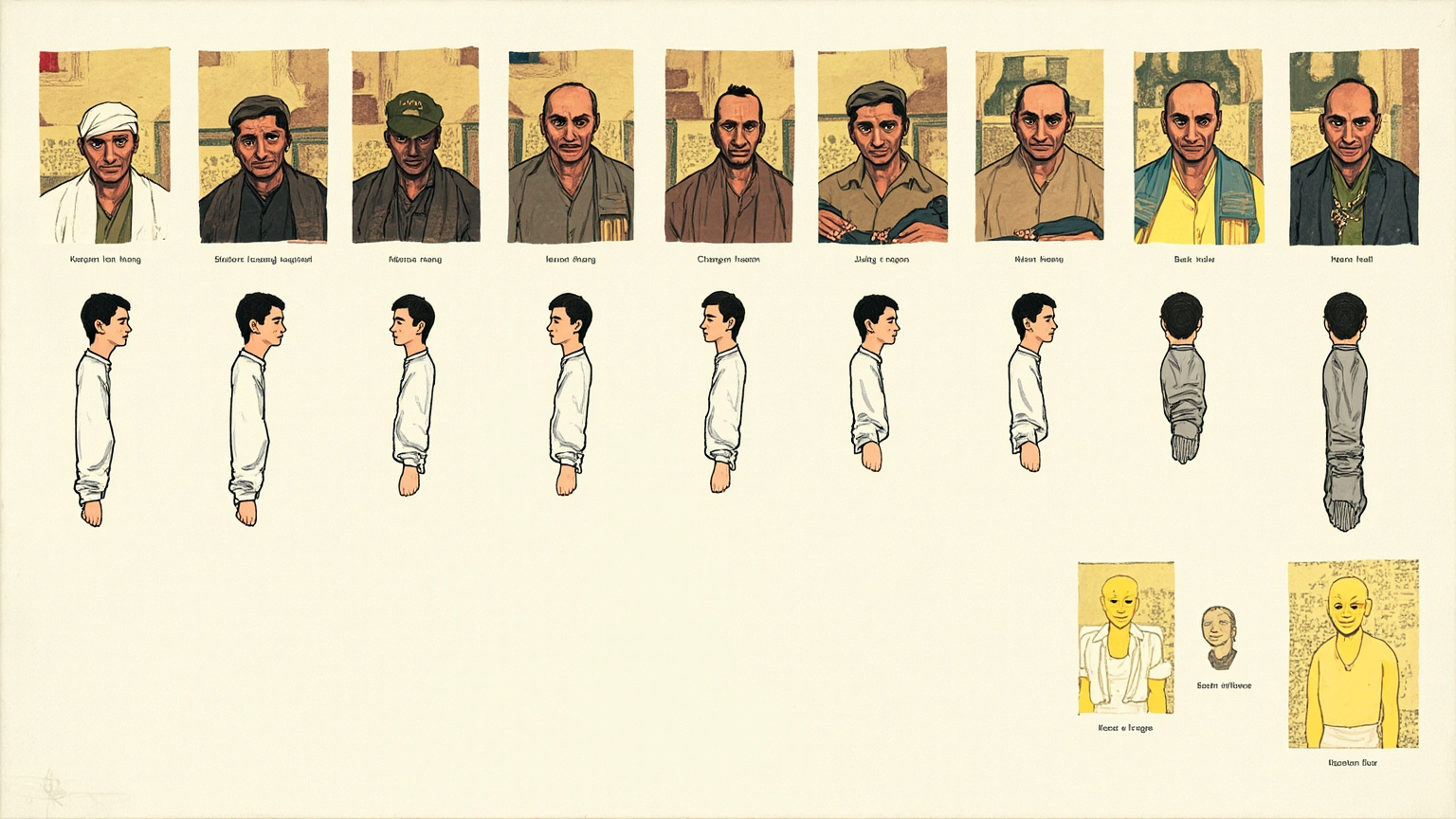
The pen-case painter is the protagonist, the only one who speaks. He believes he carries a cancer of the soul: opium and wine are constants, and the girl in black is someone he craves and loathes in the same breath. Facing him in his paintings is a grinning, turbaned old man, the other pole of his imagination, the figure he calls his brother in this sea of suffering. A butcher works across the alley every day, and the painter treats his tidy, methodical cuts as a rehearsal for a murder he means to commit himself — a detail Hedayat clearly means to chill you. A junk peddler is often seen coupling with his wife outside the window. Last comes the strange hearse driver who, at night, drives two gaunt horses to carry him and a coffin to the cemetery south of the city.
That single shadow of a woman falls across two places. In the first part she is the girl in black outside the transom window: he becomes obsessed with her, searches the whole city for two months and four days, and on a foggy night she appears silently at his door, comes to bed, and dies there. In the second part she is his wife, his cousin from childhood, raised by the same fat aunt, whom he calls "the whore." She refuses to sleep with him and takes lovers without end. Most readings treat the two as the same shadow cast onto different layers of consciousness: the girl at the window is the sacred object of desire, the wife in bed is the filth of marriage — he paints her, searches for her, marries her, kills her, and every time it is the same woman on the other end of his hand. This is the book's central device.
The Transom Seals Shut: A Scene Glimpsed Through Fever
The first real jolt comes through a transom window. Feverish and dosed with opium, the painter glimpses a living picture outside: the girl in black bending toward a grinning, turbaned old man. He spins around — the transom is now solid wall, sealed shut. He runs outside; there is no city, no one there. Hedayat spends only a few pages on this, but the instant of turning and hitting bare wall is more unsettling than any knock from a ghost in gothic fiction.
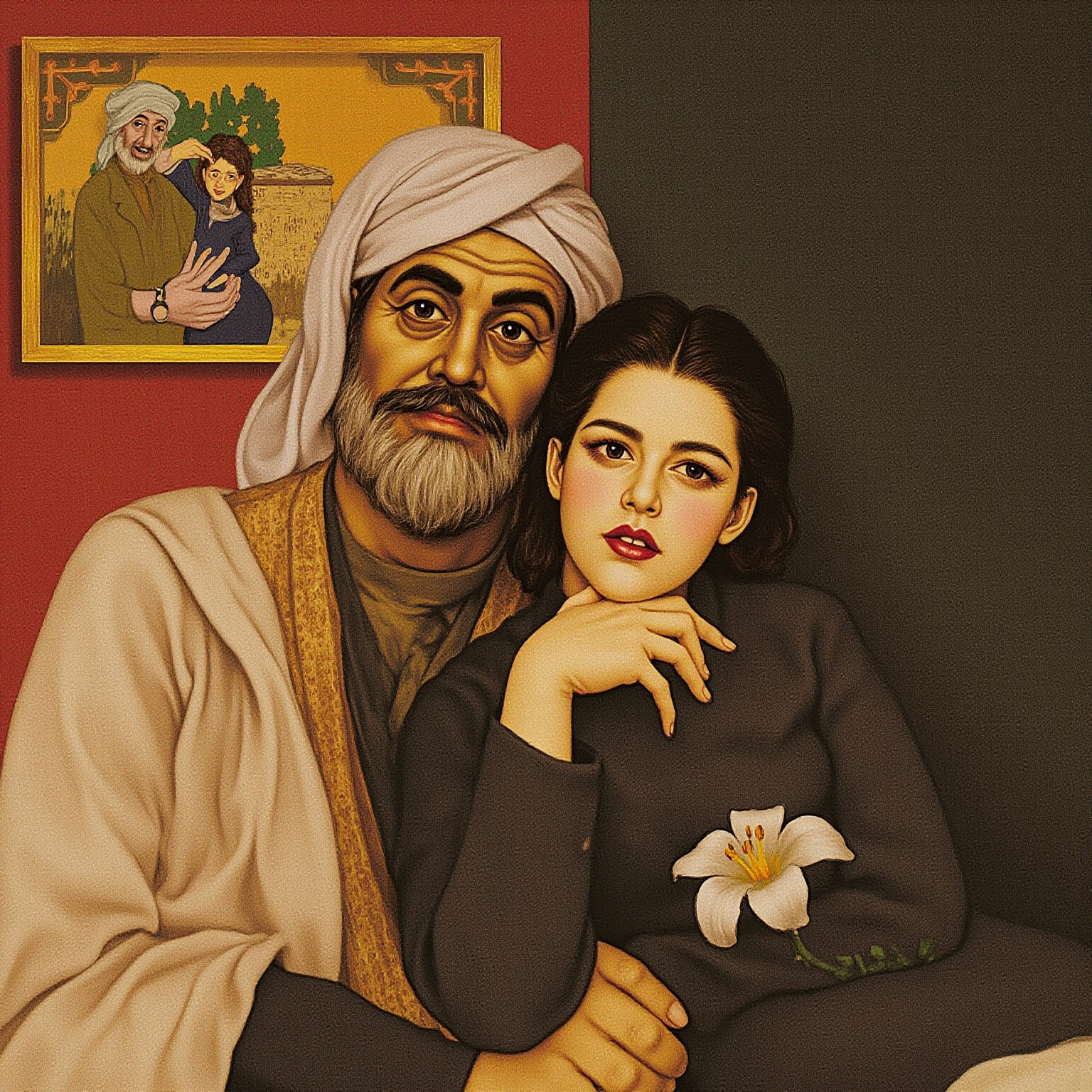
When I turned my head again, the window had vanished; in its place there was a solid wall.
我再次转过头去,气窗已经消失了;原来的地方只剩一堵严严实实的墙。
金句 · 第一部 · 气窗封死的那一瞬
Two Months and Four Days: Searching the Whole City for a Woman Who Does Not Exist
He starts looking for her. Two months and four days: streets, bathhouses, teahouses, opium dens, corner after corner of the city. Here Hedayat changes gear: the sentences shorten, the pace quickens, and you can feel him growing emptier with every block he covers. On a foggy night she appears silently at his door. He lets her in. She gets into his bed. She dies there. He closes her eyes with his brush. The scene is handled with total quiet, no crying out, just a fine brush, the same kind he uses to paint pen-case lids, pressed against her eyelids.
The next night he wraps her body and carries it south of the city. A strange hearse driver arrives with two gaunt horses. On the way back, the driver hands him an old glazed wine jug — the face painted on it is identical to the dead girl's. He recognizes this old man as his brother. The dead woman, the painted face, the man handing over the jug: all of it tangles into one. Hedayat is not after logic here. He wants the vertigo of the same woman folding back into his life again and again, wearing a new face each time, unrecognizable each time.
Part Two: The Same Story, Told Again From the Start, Coldly
The page turns and Hedayat wakes the narrator up. Part two retells his whole life in a colder register: raised by the same fat aunt who raised his cousin, the cousin he later marries. He calls her "the whore." She refuses to sleep with him. He learns his mother was once a temple dancer in India, and that his father and his father's identical twin fought a duel over her using a trial by serpent — the survivor went mad because of it. That survivor's son is the narrator himself: the son of a man driven insane. This piece of family history works like a rusted knife, sliding slowly through the rest of part two.
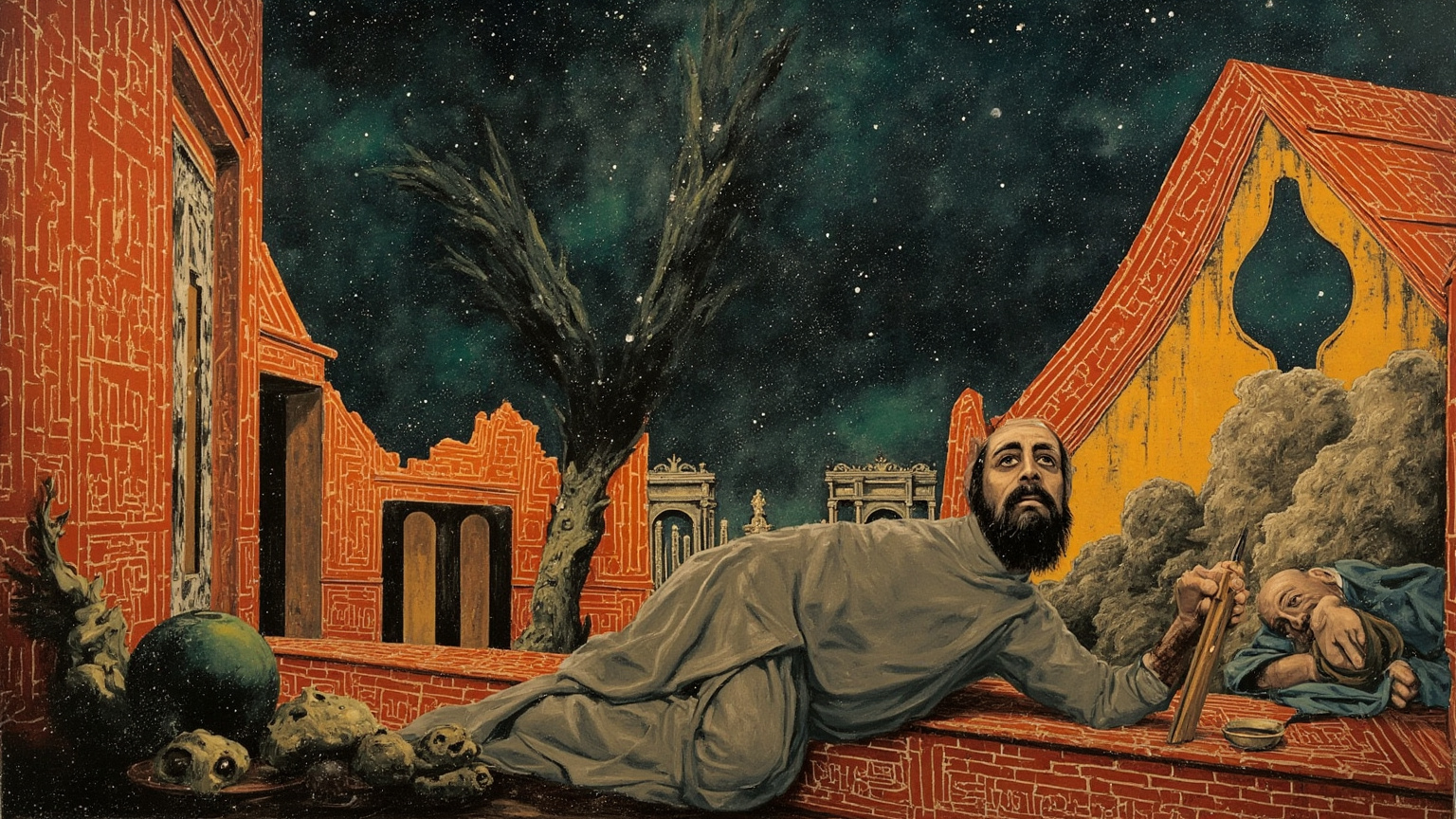
It was not my own face I saw in the mirror.
我在镜中看见的,不是自己的脸。
金句 · 第二部 · 杀妻之后的镜中一瞬
What unsettles most is the cypress tree. He saw the same scene as a child, by the Suren south of the city — the exact image his brush will spend a lifetime imprisoning. The painter was never creating anything; he was being copied out, stroke by stroke, by his own childhood. Hedayat lets this land lightly, but it is the heaviest blow in the book: what I paint is not what I want, it is what I cannot escape.
Killing the Wife, the Face in the Mirror, and the Very Old Self Who Walks Out at Dawn
Hatred hardens into a decision. At night he enters her room. When it is done he looks up at the mirror, and the face in it is not his own: it is the junk peddler's face from outside the window, white-haired, split-lipped, possessed by something. Hedayat gives this only a few lines, but the moment turns your stomach more than any scene of dismemberment could — he is the killer and the killed at once, and the face in the mirror is the man he is about to become.
The story jumps again. He wakes at dawn and watches a very old version of himself walk smiling out of the room, carrying a wrapped clay jar — it is the jar that smiles, painted with a girl's face identical to the dead girl's. His own body is caked in clotted blood and white maggots. Hedayat ends it there. This is one collapse seen at different depths, not two separate endings. The whole book keeps circling one thing: the presence of death annihilates everything illusory. He has finally become a figure inside his own painting: the painter, the old man in the painting, the girl in the painting, the owl on the wall, all of them seated together inside his one body.
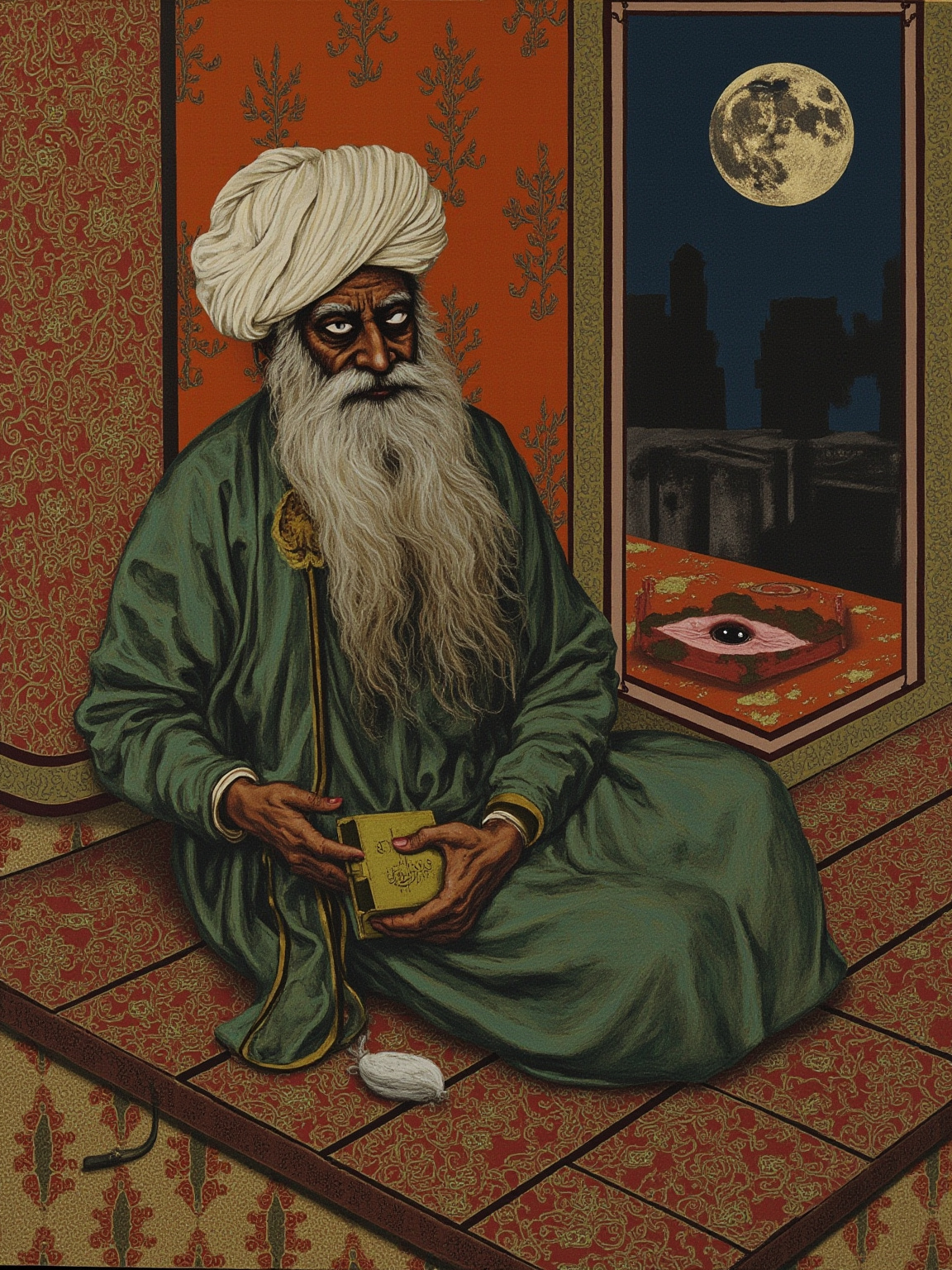
The existence of death erases all illusions; we are the offspring of death.
死亡的存在消灭一切虚幻之物;我们是死亡的后代。
金句 · 第二部 · 死亡作为唯一的实在
Why It's Remembered: It Invented a Persian Register for Nightmare
Hedayat did something no one else had done: he had a Persian narrator confess to the shadow of an owl, in a confession where time refuses to work — waking reality and opium dreams keep swallowing each other. Nothing else in Eastern literature of the 1930s came close to this. The register of modern Persian fiction that followed grew almost entirely out of this thin book. It invented a mode of confession where telling the story does not move the plot forward; it only peels back the same wound, layer after layer.
What makes it work is the repetition. The picture on the pen-case lid comes back again and again; the cypress by the river south of the city keeps returning to his painting; the childhood phrase "take off your scarf" keeps sounding through his life; the girl's face keeps surfacing, from the transom, from the jar, from the mirror. This is one of the most durable images in twentieth-century literature. Painters, playwrights, filmmakers have kept rewriting it. It holds its own next to Kafka and Carson McCullers: Kafka turns a man into a beetle, Hedayat turns a man into a figure inside the picture he is painting.
This isn't a book you read for what happens next. It's a book you read for the fact that the same picture gets painted ten times.
Theme: Death as the Only Reality
The whole book circles one thing: death is not a metaphor here, it is the reality that covers everything. At one point Hedayat has the narrator say, plainly, that the presence of death annihilates everything illusory, that we are the offspring of death, and that death rescues us from the temptations of life. Many readers treat this as the epigraph for the whole book. It is not a philosophical claim; it is the smell the narrator wakes up to every morning: the char of burnt opium, the sourness of wine, hooves passing the window as a hearse goes by. The repression of Reza Shah's Iran gives the book a period underlay, but Hedayat is not after a political indictment. He is after the chill of a man, before death, running every image he has lived through one more time.
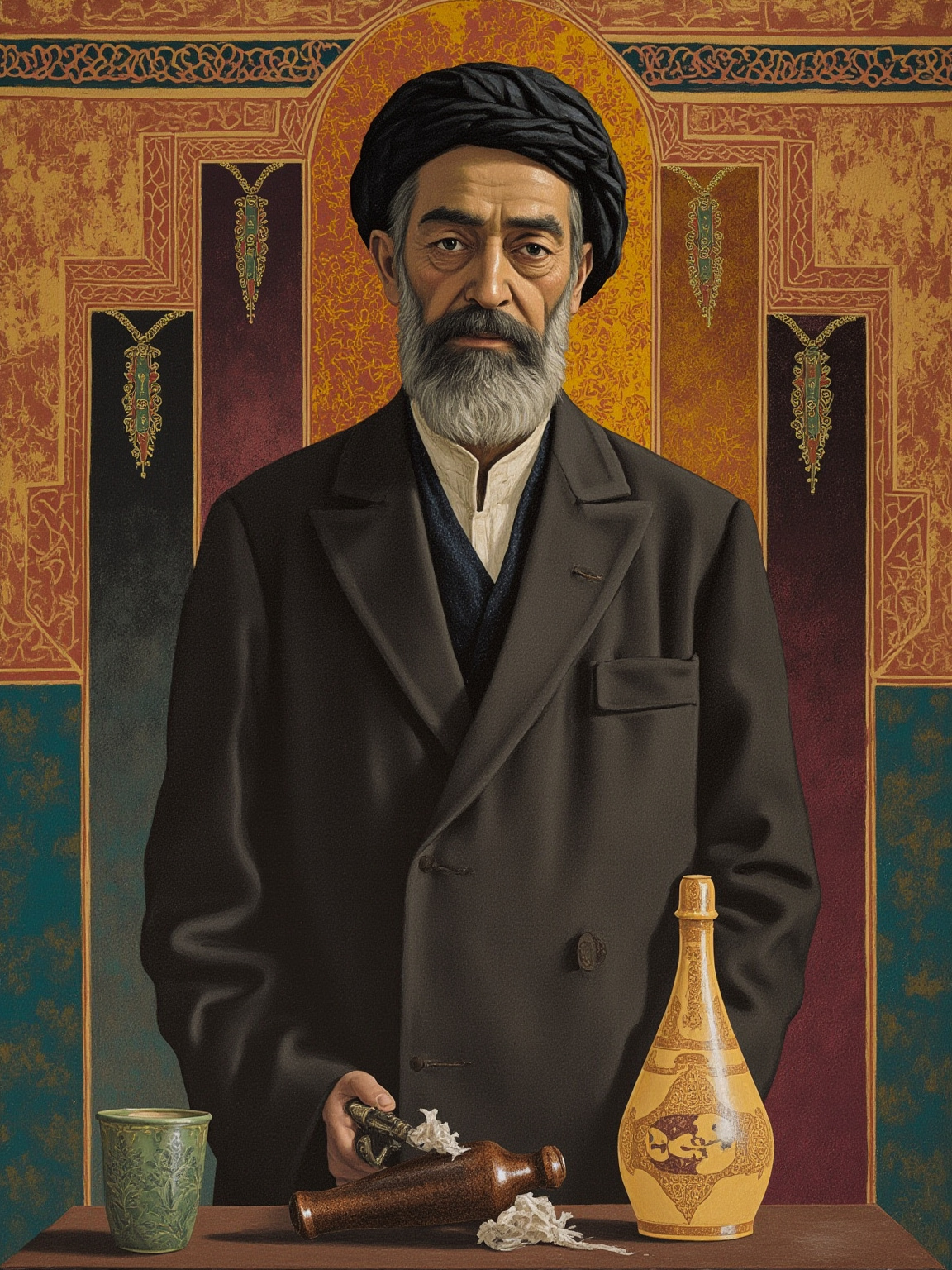
Desire and the will to kill are the same thing here too. The woman is craved and loathed at once, and in the end the two collapse together in the dark of the bed — love as another way of dying. That sounds like an overstatement, but follow him through that night in the book and you will see it is not a figure of speech: he paints her, searches for her, marries her, kills her, cradles her face to watch her die, and it is the same hand every time.
Why It's Still Worth Reading the Book Once You Know the Plot
A summary can hand you the skeleton, but it cannot hand you the vertigo of a room that grows larger than the city outside once the opium takes hold, or the faint horror of that thin brush pressed against a dead woman's eyelids — a touch only Hedayat's own sentences can deliver. His short Persian sentences have a dry texture, like a mud wall cracked open by the sun, and translation wears half of that away. That missing half is the flesh of the book. There are also the near-identical passages that repeat section after section, like the painting on his pen-case lid that never gets finished: you only feel yourself trapped under that cypress once you have sat, yourself, through the repetition.
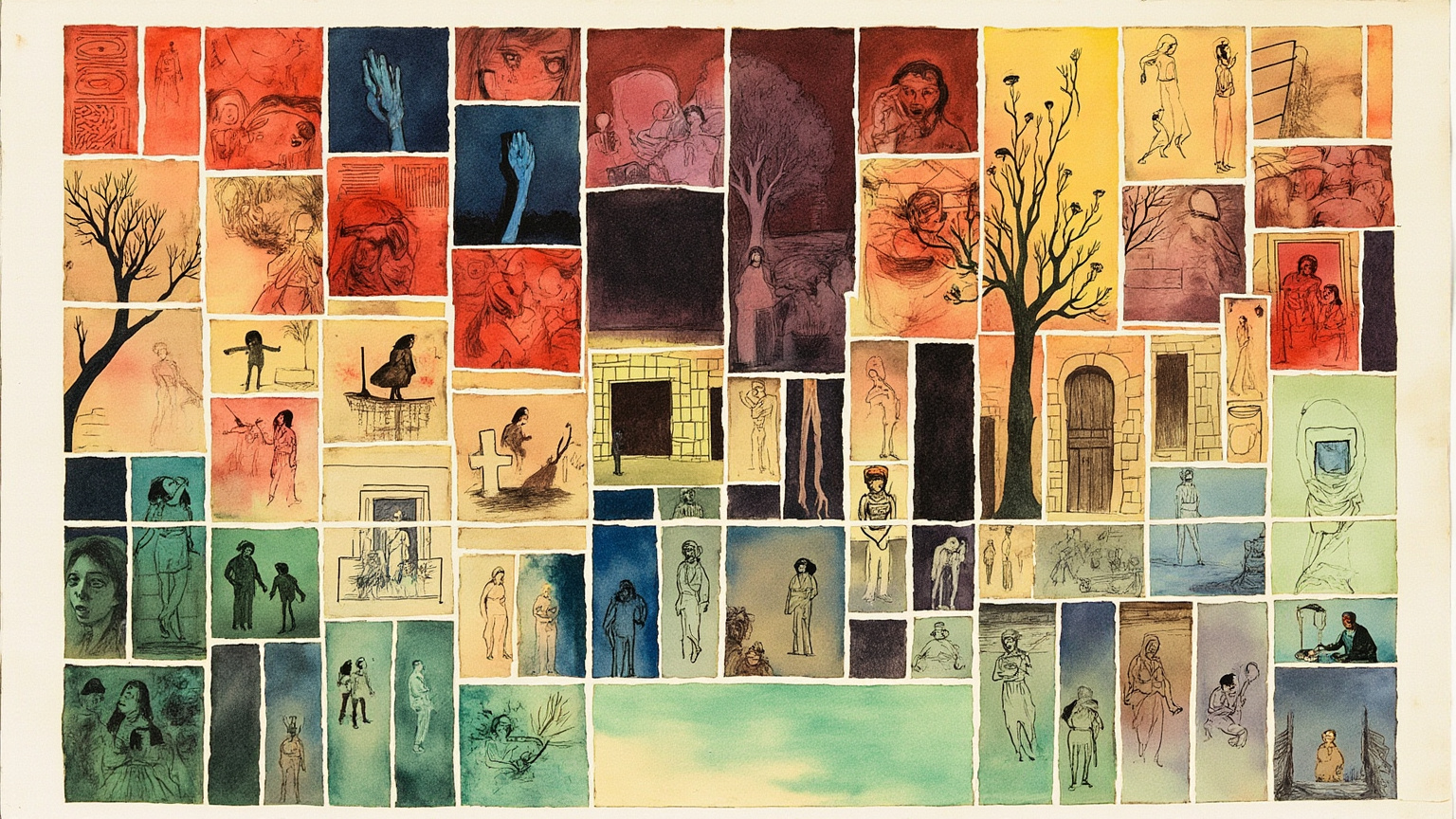
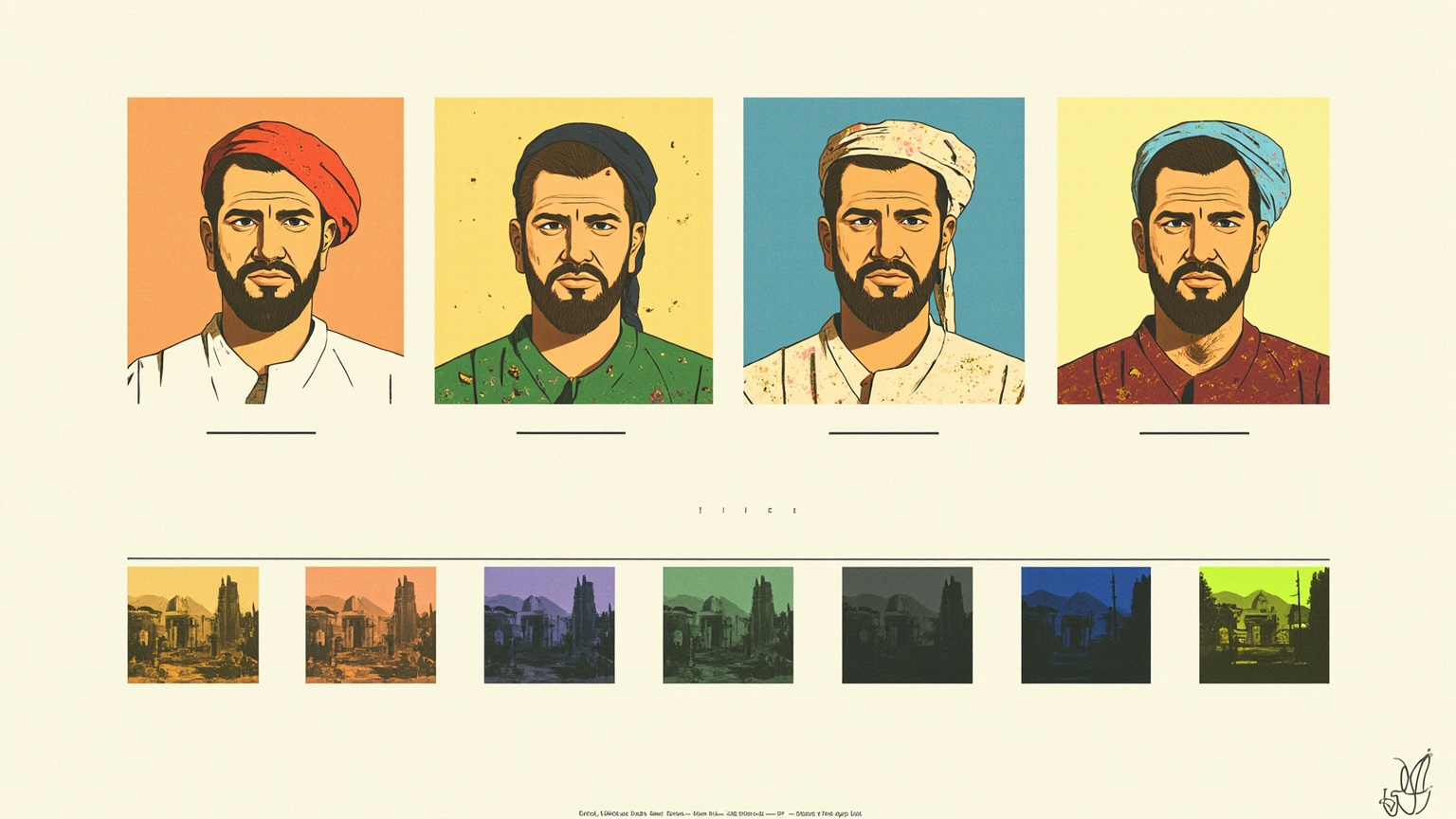
Art Direction4 plates
Before the guide was written, this book got a visual foundation — every illustration you just read grew out of it.